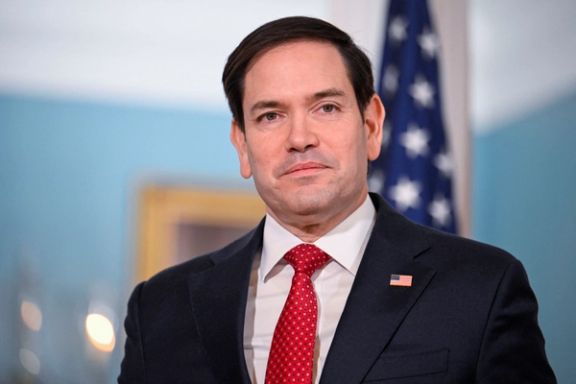
US Secretary of State Marco Rubio's trip to the Middle East will heavily focus on countering the destabilizing activities of Iran and its proxies, as well as securing the release of hostages held by Hamas, the State Department announced.
Rubio's itinerary includes stops in Israel, Saudi Arabia, and the United Arab Emirates from February 15-18, following participation in the Munich Security Conference and G7 Foreign Ministers' Meeting starting February 13.
The State Department emphasized that discussions with senior officials will center on advancing regional cooperation, stability, and peace,with a key component being addressing the threat posed by Iran.
“The trip will center on freeing American and all other hostages from Hamas captivity, advancing to Phase II of the ceasefire agreement in Gaza, and countering the destabilizing activities of the Iranian regime and its proxies.”
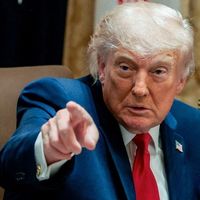
On February 4, Trump signed a directive reviving his so-called maximum pressure policy on Iran from his first term aimed at driving the Islamic Republic's oil exports to zero. After signing the memorandum, he said he would prefer a deal with Tehran to an Israeli attack on their nuclear sites.
Iranian President Masoud Pezeshkian insisted on Wednesday that the country would not yield to external threats after US President Donald Trump mooted the bombing of its adversary earlier this week.
A view of an empty hall at Beirut's international airport
While a fragile ceasefire between Lebanese Hezbollah and Israel continues to strain, Israel has accused Iran of smuggling cash to its largest military ally via Beirut Airport.
The Israeli military spokesman in Arabic, Avichay Adraee, wrote on X: “The Iranian Quds Force and the terrorist group Hezbollah have been exploiting Beirut International Airport international flights over the past few weeks in an attempt to smuggle funds allocated to arm Hezbollah with the aim of carrying out attacks against the State of Israel.”
The internationally brokered ceasefire, which began in November, has seen both sides accuse the other of dozens of breaches. Israel has accused Hezbollah of rearming after weeks of bombardment from Israel, targeting key infrastructure and the group’s top leadership.
Lebanon accuses Israel of territorial breaches and ongoing military action which has seen dozens of Lebanese killed amid the ceasefire.
“The IDF remains in contact with the ceasefire monitoring mechanism and continuously transmits specific information to thwart these transfers. Despite the efforts made, we estimate that some of these money smuggling attempts have succeeded,” Andraee added.
The initial six-week ceasefire has been extended to February 18 and the committee includes representatives from Israel, Lebanon, the US, France, and the UN.
On Monday, Lebanese media reported that incoming flights from Iraq to Beirut are being subject to inspection to prevent the transfer of money to Iran-backed militant group Hezbollah.
Saudi Arabian outlet Al Hadath quoted Lebanese media as saying that the inspections are underway without saying by who, while the Lebanese army has been taking a greater role in domestic affairs since the ceasefire began.
Lebanese newspaper Lebanon Debate reported on Monday that "similar to what happened previously in the cases of inspection of planes coming from Iran, the same thing happens with flights coming from Iraq, as the flights are subject to a thorough security inspection in order to verify the possibility of them transporting money or assets for the benefit of Hezbollah."
Just two weeks ago, Israel accused Iran of sending tens of millions of dollars to Hezbollah through clandestine cash deliveries, lodging formal complaints with the US-led committee overseeing the ceasefire, according to a report in The Wall Street Journal.
Iranian envoys have been flying into Beirut from Tehran with suitcases stuffed with US dollars to finance Hezbollah’s operations. Additionally, Israel has reported that Turkish nationals have been used as couriers to transport funds from Istanbul to Beirut, the report said.
Last year, The Telegraph reported that Iranian weapons were being stored at Beirut’s main airport, claims which were denied by the Lebanese air transport association.
Whistleblowers at the airport told The Telegraph they were concerned about increasing weapons supplies on direct flights from Iran.
They claimed that they had observed “unusually big boxes” arriving and the increased presence of high level Hezbollah commanders.
Israel is considering attacks on Iran's nuclear sites and views its Mideast adversary as vulnerable, US intelligence agencies assessed in the waning days of the Joe Biden administration, the Wall Street Journal reported on Wednesday.
Israel was considering significant strikes on Iran in 2025 and viewed President Donald Trump as more amenable to their plans, the paper cited officials familiar with the assessment as saying.
US intelligence cited the risk of further conflict in the Middle East and characterized Iran as weakened following an Oct. 26 Israeli attack on Iran, adding that Israel views the window for denying Iran a nuclear weapons capability as fast closing.
Iran denies seeking a nuclear weapon but Israel says is Mideast nemesis wants an atomic bomb and must be denied the power to destroy the Jewish state.
Trump, long an opponent of foreign wars, reimposed the so-called maximum pressure campaign on Iran of his first term this month but said he much preferred a deal and described any reports of a US-Israeli strike on Iran as "greatly exaggerated".
Diplomatic room for US-Iran talks for a nuclear deal appeared to narrow in the past week as Iran's Supreme Leader Ali Khamenei rejected the idea of negotiations and relatively moderate President Masoud Pezeshkian endorsed the stance.
Israel has publicly broached the idea of an attack in the past.
“Iran today is more exposed than ever to damage to its nuclear facilities," Israeli Defense Minister Israel Katz said in November.
Since the Oct. 7, 2023 attack on Israel by Iran-backed Hamas militants from Gaza, Israel has been locked in a region-wide conflict with Iran and its armed allies.
Escalating a conflict with Hezbollah in Lebanon in late September, Israel began to gain the initiative and solidified its advantage with a direct air attack on Iran in retaliation for a missile salvo from the Islamic Republic.
Israel and the United States said those attacks mostly knocked out Iran's anti-aircraft capabilities and left it exposed to any future strikes.
Analysts widely view Iran's fortified and underground nuclear sites as potentially beyond the ability of Israeli bombers to destroy and may require American help or collaboration.
Iran's President Masoud Pezeshkian insisted on Wednesday that the country would not yield to external threats after US President Donald Trump mooted the bombing of its adversary earlier this week.
"Trump stands at the podium and says, 'I want to negotiate,' but on the other hand, he is closing all the doors," Pezeshkian said during a speech in Bushehr province on Wednesday.
"He takes every decision necessary to cripple us, issues orders, and pressures the world to prevent dealings with Iranians. If you are truly a man of negotiation, then why do you do these things?"
On February 4, Trump signed a directive reviving his so-called maximum pressure policy on Iran from his first term aimed at driving the Islamic Republic's oil exports to zero. After signing the memorandum, he said he would prefer a deal with Tehran to an Israeli attack on their nuclear sites.
"I would love to make a deal with them without bombing them," he said on Fox News.
Pezeshkian, however, said “Iran will not back down or surrender in the face of any threat," in a sign that the Iranian political establishment -- from the president’s relatively moderate government to the ultra-conservative clerical establishment -- has coalesced against Trump’s hoped-for deal.
He also condemned efforts to limit Iran’s defense capabilities, saying, “They demand we abandon missiles and military strength so they can repeat what they did in Gaza, but they should know Iran will never surrender to such pressures.”
"The president said what needed to be said," Ali Khamenei said, addressing defense officials on Wednesday.
Following a few weeks of ambivalent signals regarding negotiations and a struggle in Tehran's political scene, Khamenei finally voiced his clear opposition to negotiations on February 7, saying talks with the US are "not smart, wise, or honorable."
'Trump is America's deal-maker-in-chief'
White House Press Secretary Caroline Leavitt on Wednesday said Donald Trump "has made it very clear that he will never allow Iran to have nuclear capabilities."
"That is a red line that he has drawn, and he will not allow that to happen."
Asked why Trump wants to reach a deal with Tehran instead of helping overthrow the Islamic Republic, Leavitt said, "He is the master of the art of the deal. He is America's deal maker in chief. He leads from a position of securing peace through strength."
While Leavitt did not answer the question about putting an end to the clerical establishment in Iran, Trump has publicly announced he does not aim for a regime change in Iran and only wants to prevent the country from acquiring nuclear weapons.
Iranians take photos during an exhibition displaying missiles at Imam Khomeini Grand Mosalla in Tehran January 7, 2022.
The head of the IRGC Intelligence Protection Organization dismissed negotiations with the United States, calling them a "red line" and warning that any threat to Iran’s national interests would be met with reciprocal action worldwide.
“If the US attempts any mischief, as the Supreme Leader has warned, we will respond decisively,” Brigadier General Majid Khademi said in the wake of US President Donald Trump's ultimatum for Iran to come to the negotiating table or risk military action.
“Should they threaten us, we will threaten them. If they act on their threats, we are fully prepared to retaliate, putting their national interests at risk across the world," added Khademi.
Last week, Trump reinstated his so-called "maximum pressure" policy on Iran, which includes efforts to drive its oil exports down to zero.
In several interviews, however, Trump said he preferred striking a deal to prevent Tehran from developing a nuclear weapon over bombing the country.
“Trump approached negotiations with deception, revealing some of his goals while hiding others,” Khademi said. “He aimed to dismantle Iran’s nuclear, missile, and conventional defense programs—capabilities essential for any nation.”
The IRGC commander also accused the US of misunderstanding the Iranian people while asserting that Trump had exposed America’s true nature. “As the Supreme Leader has stated, we have no limits on global engagement, but negotiations with the US remain off-limits.”
Supreme Leader Ali Khamenei voiced his clear opposition to negotiations with the US on February 7, saying such talks are "not smart, wise, or honorable."
Khademi said that any negotiation must be "intelligent, honorable, and rational," aligning with the Supreme Leader’s messaging.
Iran's Supreme Leader Ali Khamenei visits the defense industry achievements exhibition in Tehran, Iran, February 12, 2025.
Iran’s Supreme Leader on Wednesday praised the president for rejecting talks with the United States and said Tehran must continue its military progress after US President Donald Trump’s threat to stop Iran's nuclear program by force.
"The president said what needed to be said," Ali Khamenei said, addressing defense officials on Wednesday, adding, “(Masoud) Pezeshkian spoke the words of the people and conveyed their true sentiments."
During this week's rally marking the anniversary of the 1979 Islamic Revolution, Pezeshkian accused the US of duplicity, saying that President Donald Trump called for negotiations while continuing sanctions.
Following a few weeks of ambivalent signals regarding negotiations and a struggle in Tehran's political scene, Khamenei finally voiced his clear opposition to negotiations on February 7, saying talks with the US are "not smart, wise, or honorable."
The Supreme Leader spoke during a visit to an exhibition of the country’s latest military products, where he said Iran should further develop its military, including its missiles.
"Progress should not be stopped. We cannot be satisfied with our current level. If we previously set a limit for the accuracy of our missiles but now feel that limit is no longer sufficient, we must push forward," he said. "Today, our defensive power is well-known, and our enemies fear it. This is crucial for our country."
Khamenei made no mention of Trump during the event.
In spite of scattered protests around the country over economic conditions, he described this week's state-sponsored rallies as a message of unity from the Iranian people.
“Despite the constant, idiotic threats against us, the people of Iran showed the world their identity, their strength, and their unwavering resolve," he said.
Khamenei’s comments came a day after Iran's UN ambassador, Amir Saeid Iravani, condemned what he called "reckless and inflammatory statements" by Trump in interviews with The New York Post and Fox News, in which Trump said that he preferred striking a deal to prevent Tehran from developing a nuclear weapon rather than bombing the country.
Last week, Trump reinstated his so-called "maximum pressure" policy on Iran, which includes efforts to drive its oil exports down to zero.