Trampled US flag removed from Iranian presidential office threshold

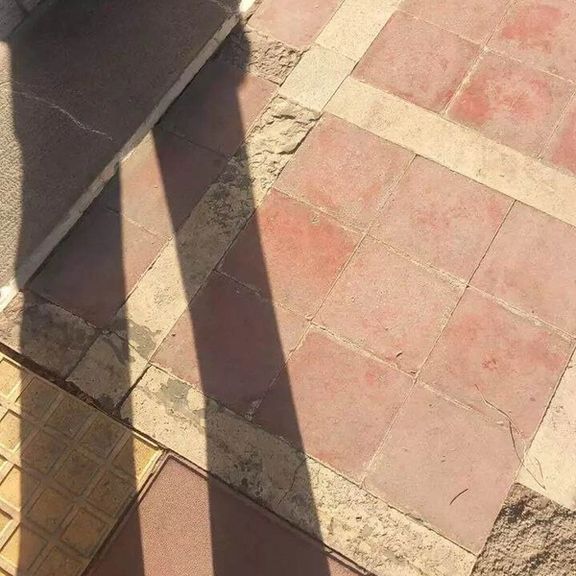
A US flag that had previously been painted on the ground in the courtyard of the Iranian president's office to be trampled by visitors, has now been removed.
A US flag that had previously been painted on the ground in the courtyard of the Iranian president's office to be trampled by visitors, has now been removed.
The flag was painted there during the Raisi administration but was erased a few weeks ago under Masoud Pezeshkian's term, Ensaf News reported on Friday.




A Iranian dissident rapper arrived in Berlin on Friday after being temporarily released on medical furlough from a prison in Tehran, where he was previously sentenced to death.
" Woman, Life, Freedom forever," Saman Yasin wrote in a post on X, sharing a video of his arrival in Berlin airport, without providing further details of how he had left Iran.
Yasin was arrested in October 2022 amid Iran's Woman, Life, Freedom nationwide protest movement sparked by the death of a young woman, Mahsa Amini, in morality police custody.
Yasin was initially sentenced to death on charges including "enmity against God, assembly and collusion to act against national security."
However, his death sentence was overturned by the Supreme Court in April last year. He was later sentenced to serve five years in prison in exile in Kerman province in southeastern Iran.
In July 2023, a source close to Yasin's family told Iran International that Saman was tortured and subjected to forced confessions during interrogations.
In October of last year, Saman Yasin was temporarily released from Tehran's Ghezel Hesar Prison on medical furlough after posting a bail of 40 billion rials (just over $50,000), according to his lawyer.
"My client, Saman Yasin, has been released on medical leave today after spending approximately 26 months in prison," his lawyer said. "This decision was made following a medical commission’s recommendation and with judicial approval, after securing bail."
Many Iranian dissidents have sought refuge in Europe following the protests, including acclaimed filmmaker Mohammad Rasoulof. Rasoulof left Iran on foot, crossing the rugged mountainous border into Iraq to escape an eight-year prison sentence imposed for his film about the 2022 uprising.
Yasin, along with dissident rapper Toomaj Salehi—who was also sentenced to death but later released on bail—and Behrad Ali Konari, were among several rappers detained in connection with the uprising.
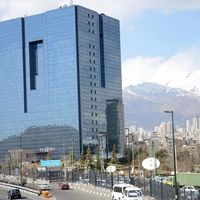
Iran and Russia have implemented a bilateral currency agreement to settle trade using their national currencies, according to the governor of Iran's Central Bank.
“The currencies of the two countries have been settled based on the agreed market exchange rate for trade,” Iran’s state media quoted Mohammad-Reza Farzin as saying in Moscow on Friday.
Farzin also highlighted progress in integrating the Russian Mir and Iranian Shetab card payment networks, saying that the first phase of the project has been launched.
The joint action plan between the central banks of Iran and Russia, Farzin added, has been implemented under three main areas: the use of national currencies in trade, connecting the banking and local messaging systems of the two countries and linking their card payment networks.
It was unclear if the development was related to an Iranian-Russian comprehensive strategic partnership agreement signed on Friday by Russian President Vladimir Putin and his Iranian counterpart Masoud Pezeshkian.
State-appointed Iranian clerics expressed conflicting views in their Friday sermons about negotiations with the United States, just days before President-elect Donald Trump is set to take office.
Clerics delivering the political speeches on the weekly Islamic holy day are appointed by Supreme Leader Ali Khamenei and reflect prevailing sentiment within the theocracy.
Tehran's interim Friday Prayer imam, Kazem Sedighi, spoke out against talks with Washington, dismissing the idea that Iran needs to reduce sanctions to address its current economic crisis.
Sedighi's remarks were in line with Iranian hardliners who continue to criticize the proponents of reconciliation with the West.
"To think that if the United States reconciles with us, our livelihood will prosper and our needs will be met goes against reason, experience, and the Holy Quran. God has not permitted a faithful community to live under the banner of disbelief," Sedighi said.
"Those who speak of reconciliation with the United States and trample on past experiences and the blood of martyrs should know that our people have sacrificed their blood and youth," he added.
Since Iran's regional military setbacks last year and the steep fall in the value of its currency, many officials and politicians loyal to the Islamic Republic have called for negotiations with the US, citing the need to transcend an economic crisis that has impoverished tens of millions of Iranians.
The Friday imam of Karaj, a city near Tehran, also criticized those who believe the promises of the "Enemy"—a term used by Iranian officials for the United States—but conceded that talks benefiting Iran could be permitted.
"Negotiations that safeguard national interests are acceptable as long as those interests are not compromised," Mohammad Mehdi Hamedani said, adding, "However, based on past experiences, if negotiations occur under conditions that fail to protect national interests, they will result in yet another outright loss."
Both clerics urged the public not to trust the US, arguing for the need to raise awareness about what they described as the duplicity of major powers and their empty promises. They urged the public not to trust non-state information and what they described as "propaganda by enemies."
Iranian officials have grown increasingly concerned about what they perceive as widespread ideological apathy among the Iranian population and a declining trust in the Islamic Republic, particularly following the 2022 nationwide anti-state protests.
Despite decades of strict media control and internet restrictions, Iranians continue to watch Persian-language satellite television channels broadcast from abroad and use circumvention tools to access uncensored information online.
US Congressman Joe Wilson called for action to counter Russia and Iran after they signed a strategic pact on Friday, saying US President-elect Donald Trump will solve the issue.
“To defeat Iran, stop Russia. @realDonaldTrump will fix it,” the South Carolina Republican representative wrote on X Friday after the presidents of Russia and Iran signed a 20-year pact at the Kremlin just three days before Trump’s inauguration.
In a separate post, Wilson praised Scott Bessent, Trump’s treasury secretary-designee, for his economic ambition and stance on Iran and Russia.
“I am so grateful for Scott Bessent, who will impose maximum pressure sanctions on Iran and Russia ... He will help create the Trump economic boom. He is a South Carolinian, and we could not be prouder,” Wilson wrote on X.
Analysts say the Moscow-Tehran pact signals a united front Moscow in the face of Trump’s return, as his advisors have reportedly drafted sanctions to push a Russia-Ukraine accord while pressuring Iran.
The spokesman for the Islamic Revolutionary Guards downplayed concerns in Tehran about incoming US President Donald Trump, who imposed heavy sanctions on Iran during his previous term.
"Some people express concern and attempt to alarm us over Trump’s return," Ramezan Sharif said on Friday. "We have faced and overcome every American president, all united in their hostility toward the Revolution. We endured Trump’s four-year term, and he, more than most, understands the strength of Iran."
During his first term, Trump enacted a series of measures to weaken Iran’s economy and diminish its regional influence, particularly targeting its nuclear program. He withdrew the United States from the 2015 nuclear deal with Tehran. His policy became known as "maximum pressure."
Earlier in December, Trump's newly appointed Middle East advisor, Massad Boulos, announced that the incoming administration plans to revive its maximum pressure strategy against Iran, signaling a clear intent to reinforce the country’s isolation.
The media have also highlighted this, with Bloomberg reporting on Thursday that advisers to Trump are devising a comprehensive sanctions strategy to ramp up pressure on Iran, citing sources familiar with the matter.
On Monday, The Economist described Iran as "vulnerable to a Trumpian all-out economic assault," while The Spectator warned, "Trump’s presidency could spell the end of Iran’s regime."