We weathered Trump before and will again, Iran's IRGC says
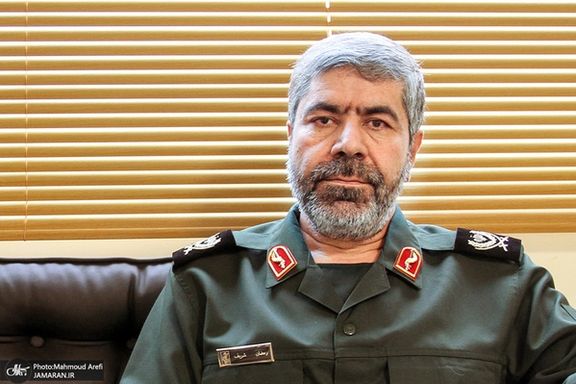
Ramezan Sharif, the spokesperson for the Islamic Revolutionary Guards (IRGC)
The spokesman for the Islamic Revolutionary Guards downplayed concerns in Tehran about incoming US President Donald Trump, who imposed heavy sanctions on Iran during his previous term.
"Some people express concern and attempt to alarm us over Trump’s return," Ramezan Sharif said on Friday. "We have faced and overcome every American president, all united in their hostility toward the Revolution. We endured Trump’s four-year term, and he, more than most, understands the strength of Iran."
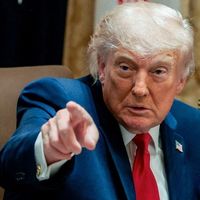
During his first term, Trump enacted a series of measures to weaken Iran’s economy and diminish its regional influence, particularly targeting its nuclear program. He withdrew the United States from the 2015 nuclear deal with Tehran. His policy became known as "maximum pressure."
Earlier in December, Trump's newly appointed Middle East advisor, Massad Boulos, announced that the incoming administration plans to revive its maximum pressure strategy against Iran, signaling a clear intent to reinforce the country’s isolation.
The media have also highlighted this, with Bloomberg reporting on Thursday that advisers to Trump are devising a comprehensive sanctions strategy to ramp up pressure on Iran, citing sources familiar with the matter.
On Monday, The Economist described Iran as "vulnerable to a Trumpian all-out economic assault," while The Spectator warned, "Trump’s presidency could spell the end of Iran’s regime."
Iran’s President Masoud Pezeshkian and his delegation were kept waiting for about an hour to meet Russian President Vladimir Putin during his trip to Moscow on Friday, a source told Iran International.
According to the source, the delegation from Iran was given the option to either wait in the lounge or return to their hotel, as Putin was not yet ready to meet.
Pezeshkian decided to leave the Kremlin under the pretext of saying prayers before returning for the delayed meeting.
Putin has routinely made world leaders await his arrival in what is widely viewed as a psychological tactic by the former KGB operative. In two of the most notorious instances, Putin kept German Chancellor Angela Merkel and former Ukrainian President Viktor Yanukovych waiting for around four hours.
Leaders from Japan, Mongolia and Israel were made to wait for up to three hours. In 2003, Putin kept Queen Elizabeth II of the United Kingdom waiting for almost 15 minutes, a rare slight for the revered monarch.
In 2012, then-US President Barack Obama had to delay post-meeting plans by 40 minutes due to Putin's tardiness.
Analysts believe Putin aims to throw off counterparts and gain an advantage in negotiations with the move, which has mostly been deployed with leaders not in favor with Moscow.
Russian President Vladimir Putin and his Iranian counterpart Masoud Pezeshkian signed a comprehensive strategic partnership agreement in Moscow on Friday.
At a joint press conference after signing the agreement, the two leaders said Russia and Iran would increase cooperation across a range of areas including politics, security, trade, transport and energy.
Before their meeting, Pezeshkian and his delegation were kept waiting for around an hour as Putin arrived late, a source told Iran International.
Iran and Russia have strengthened ties in recent years, pushed together by isolation led by the United States and shared strategic interest in resisting Washington.
In the strategic pact signed on Friday, the two countries agreed to strengthen cooperation in the fields of security and defense, Russian state-run TASS news agency reported.
"Russia and Iran have agreed that in the event of an attack on one party, the other party will under no circumstances support the aggressor," the report said.
Putin told the joint press conference that plans are advancing to export natural gas to Iran as part of the agreement, saying Russian supply to Iran could ultimately reach 55 billion cubic meters per year.
But he cited delays to Russia's efforts to build up nuclear power infrastructure in Iran, adding that Moscow is considering further construction to address the situation.
"We have a huge project in the nuclear power industry. One unit is already operating successfully. We are now discussing the possibility of building additional units."
During the press conference, Pezeshkian expressed support for resolving the Russia-Ukraine conflict through negotiations, saying Western countries must respect the security concerns of other nations.
"The agreements and policies signed today emphasize understanding, avoiding unilateralism, and cooperating with regional actors to resolve issues within the region, making the intervention of other countries in the Middle East unnecessary."
Both nations have faced Western sanctions - Russia due to its full-scale invasion of Ukraine and Iran over its support for armed groups in the Mideast, nuclear program and human rights abuses.
Moscow and Tehran have stepped up military cooperation and Russia has deployed Iranian drones and missiles in Ukraine, despite Tehran's denials.
In the Middle East, Iran and Russia have collaborated closely particularly in Syria, where the downfall of their longtime ally Bashar al-Assad was a major setback.
This evolving geopolitical landscape has further incentivized Tehran and Moscow to solidify their partnership. Analysts say the pact’s timing is a sign Moscow and Tehran are bracing for Donald Trump’s return to the White House this month.
Advisers to Trump, who takes office next Monday, are reportedly crafting a wide-ranging sanctions strategy to facilitate a Russia-Ukraine diplomatic accord in the coming months while at the same time squeezing Iran, people familiar with the matter told Bloomberg.
According to the source speaking to Iran International, following Putin's delay the Iranian presidential delegation was given the option to either wait in a lounge or return to their hotel.
Pezeshkian decided to leave the Kremlin under the pretext of saying prayers before returning for the delayed meeting.
Putin has routinely made world leaders await his arrival in what is widely viewed as a psychological tactic by the former KGB operative but usually employed with leaders Moscow views as an adversary.
Iranian President Masoud Pezeshkian emphasized Russia's role in the Middle East when he met with Vladimir Putin in Moscow on Friday to discuss strategic ties and regional cooperation.
Describing Iran-Russia relations as sensitive and strategic, Pezeshkian stressed Iran’s commitment to deepening ties, according to Iranian media covering the meeting.
He also stressed that regional issues should be resolved by the countries within the region without interference from external powers. "Our enhanced relations will thwart the plans of those seeking to destabilize the region and impose their policies," Pezeshkian said, while Russia is not part of the region.
During the meeting, the Iranian president confirmed plans to sign a long-awaited strategic agreement, saying it would strengthen Iran-Russia cooperation in economic, cultural, trade, and security areas.
He also highlighted progress on a joint project to build a new nuclear power plant in Iran and pointed to the removal of obstacles hindering the expansion of bilateral ties. "We have worked to remove barriers to expanding our relations," he added.
An Iranian couple sits in a park in Tehran, Iran, December 27, 2024.
The CEO of the Iranian Rare Diseases Foundation links the high prevalence of rare diseases in Iran to consanguineous marriages, emphasizing the need for genetic counseling and preventive measures.
"Familial marriages are the primary cause of the high prevalence of rare diseases in Iran, a situation unmatched by other countries," Hamid Reza Adraki said, adding, "Addressing this issue requires greater emphasis on genetic counseling and a reduction in familial marriages."
In Middle Eastern and Southern Indian populations, consanguineous marriages are commonly practiced.
Consanguineous marriage refers to a union between individuals who are second cousins or closer. First-cousin parents face an elevated risk of having a child with an autosomal recessive disease, and the likelihood of fetal loss from such disorders is higher compared to the general population.
Iran's President Masoud Pezeshkian attends a wreath-laying ceremony at the Tomb of the Unknown Soldier by the Kremlin Wall in Moscow, Russia on January 17, 2025.
Iran's foreign ministry spokesperson on Friday said President Masoud Pezeshkian will discuss Iran's nuclear program with Vladimir Putin during his ongoing trip to Moscow.
Without providing further details, Esmaeil Baghaei, the spokesperson for the Ministry of Foreign Affairs, added in an exclusive interview with RIA Novosti that "developments in Syria and Gaza will be key points of discussion during the Iranian president's visit to Moscow." He also emphasized the expectation that "Russia will play a more prominent role in pressuring Israel to uphold its commitments and stop the violence."
The visit comes at a time of significant regional upheaval. Last month, Iran and Russia lost their key Middle Eastern ally, Bashar al-Assad of Syria, when Islamic insurgents swept down from the north and seized Damascus within days.
Meanwhile, Iran’s nuclear program remains a contentious issue. The Islamic Republic began violating the enrichment limits set by the 2015 JCPOA nuclear agreement after the US withdrawal from the accord in 2018. Following President Joe Biden’s election, Tehran announced it would increase uranium enrichment to 20% purity, later escalating to 60%—a level widely regarded as just short of the threshold for producing fissile material suitable for nuclear weapons.
Negotiations with the US and the European E3 countries—the UK, France, and Germany—failed to resolve key differences, revive the JCPOA, or establish a new agreement. As a result, Iran is now believed to possess enough 60% enriched uranium to potentially produce four to five atomic bombs, should it choose to pursue nuclear weapons.