Former US negotiator urges last push for Iran talks, eyes military option
US Air Force mechanics take selfies as a B-1B bomber flies overhead
A former senior US official instrumental in crafting sanctions against Iran during the Obama administration argued in an op-ed that while Washington prepares for potential military action, diplomacy should be given one final chance.
Writing in Foreign Affairs on Thursday in an article titled “A Last Chance for Iran,” Richard Nephew weighed the virtues of negotiation and conflict with Washington's top Mideast foe.
Nephew, a former State Department sanctions expert, observed that Iran’s nuclear program had reached a critical stage, with the country now possessing nearly all the components required to produce a nuclear weapon.
At the same time, the international coalition enforcing sanctions has fractured, with nations such as China, India, and Russia undermining pressure efforts. This, he argues, complicates the path to a diplomatic resolution but does not negate its necessity.
Diplomacy alone, he cautioned, may not suffice. While military action carries significant risks, including the likelihood of only delaying Iran’s nuclear ambitions and potentially escalating regional instability, Nephew contends that the alternative, a nuclear-armed Iran, poses long-term dangers.
These include triggering a regional arms race and eroding US credibility in managing global non-proliferation efforts.
Nephew underscored the urgency of strategic preparation, advocating for a dual-track approach: a final, genuine attempt at negotiations to curb Tehran’s nuclear ambitions paired with readiness to act militarily should diplomacy fail. He emphasized that the stakes demand a calibrated response that addresses the immediate risks while preparing for the broader implications of a nuclear-capable Iran.
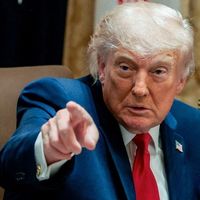
This is after US President-elect Donald Trump during an interview with Time magazine last month declined to rule out the possibility of war with Iran. His remarks came despite his repeated campaign assertions that he was not seeking to overthrow Tehran’s theocratic rulers through military force.
When asked by a Time reporter about the likelihood of war with Iran, referring to allegations by US law enforcement that Iran had plotted to assassinate him, Trump responded, "Anything can happen. Anything can happen. It's a very volatile situation."
Authorities in Iran summoned 58 individuals after a video emerged of them dancing at a wedding in Piranshahr in northwest Iran, according to the Kurdish human rights group Kurdpa.
The cases were initiated under orders from the city prosecutor. Those summoned are expected to attend an arraignment session in the coming days.
They face accusations of “propaganda against the state” for “dancing, celebrating, and symbolic acts” during the event, as well as for sharing a video of the gathering on social media.
According to Kurdpa, among those summoned are family members of slain teenage protester Kumar Daroftadeh and Amir Farastishad, both killed by state security forces in Piranshahr during Iran's Woman, Life, Freedom uprising sparked by the death in custody of Mahsa Amini in 2022.
White House national security adviser Jake Sullivan presented President Joe Biden with potential military options for striking Iran's nuclear facilities if Tehran advances toward a nuclear weapon before January 20, Axios reported, citing three sources.
Biden and his national security team reviewed scenarios during a meeting around a month ago but the president has not authorized any strike, the sources said.
The discussion was part of "prudent scenario planning" and was not prompted by new intelligence a US official told Axios.
Sullivan did not make any recommendation to Biden on the issue, but only discussed scenario planning, the report added citing a US official.
No active discussions about military action are currently underway, another source said.
The United States has long sought to prevent Iran from acquiring nuclear weapons, a concern that has driven years of diplomacy and sanctions.
Tehran asserts that its nuclear program is for civilian use only and has steadily expanded it since Donald Trump unilaterally withdrew the US from the 2015 nuclear deal, formally known as the Joint Comprehensive Plan of Action (JCPOA).
The Biden administration attempted to revive the agreement or negotiate a new one, which never materialised, leading Washington and its allies to consider other options to curb Iran's nuclear ambitions.
Tensions between the two countries have also been exacerbated by Iran's regional activities, including its support for militant groups and armed allied groups across the Middle East.
US president-elect Donald Trump has said that his only red line is for Iran to acquire nuclear weapons, while making clear that he does not seek war or regime change in the country.
Iran’s parliament speaker on Thursday acknowledged mounting public frustration with the government, particularly over its energy management.
"We live in a country with the world’s top oil and gas reserves, yet we lack electricity in summer and gas in winter," Mohammad Bagher Ghalibaf said Thursday.
"We must accept that today, people are complaining about the way we manage their lives... So we must acknowledge that we have not done the work as it should have been done," he added.
Ghalibaf’s remarks come amid growing public frustration over power cuts and gas shortages, as Iran’s energy infrastructure struggles to cope with one of its most challenging winters.
Iran’s President Masoud Pezeshkian vowed to crush the country’s adversaries during a ceremony marking the fifth anniversary of IRGC General Qassem Soleimani’s assassination in a US drone strike.
"We will stand firm on what is right. We will remain on this path and with strength, we will crush the faces of these dishonorable people," Pezeshkian said, alluding to Soleimani and those responsible for his assassination.
Soleimani is widely seen as the architect of Iran’s Middle East strategy. Leading the overseas force of the Revolutionary Guards, his impact on Tehran's regional policies outweighed that of any elected official, including the president.
Soleimani was killed on January 2, 2020, under the direct orders of then-US President Donald Trump, in a watershed moment in the Middle East, triggering a series of setbacks for the Islamic Republic.
"Martyr Soleimani had to expose the US and its enemies with his own blood," Pezeshkian said.
He accused Western powers of hypocrisy and destructive actions in the region. The killing of Soleimani, he suggested, was a turning point that revealed the "anti-human and barbaric" nature of the US, Israel, and Europe.
People celebrate New Year in post-Assad Syria, December 31, 2024
Syria’s new government seeks no discord with Iran but demands that it not undermine Damascus, Foreign Minister Asaad al-Shaibani told Al Jazeera on Wednesday.
“Iran is a neighboring country, and we do not wish to eliminate them, but we hope they reconsider their position and actions toward the Syrian people,” al-Shaibani said in an interview published Wednesday. He added that if Syria receives a positive response, it will “reciprocate and act accordingly.”
On the same day, Iranian Supreme Leader's special envoy Ali Larijani said on state TV that Iran’s relationship with Syria’s ruling faction depends on their actions.
“If their behavior is rational, we will have no issues with them,” he said. Larijani also expressed hope that Syria becomes a "democratic Islamic country capable of defending itself against Israel."
At the same time, Iranian Supreme Leader Ali Khamenei defended Iran's role in Syria’s civil war and its broader regional power projection. He dismissed criticism of Iran’s declining influence in the Middle East.
In December, the Bashar al-Assad government, a key pillar of Iran’s influence in the region, fell despite 13 years of Iranian military support.
Since the Syrian Civil War began in 2011, Iran invested heavily in keeping Assad in power, viewing his government as critical for maintaining access to Hezbollah and asserting power in the Levant. Assad’s fall disrupted these efforts, cutting Iran’s land route to Lebanon and weakening its ability to arm Hezbollah.
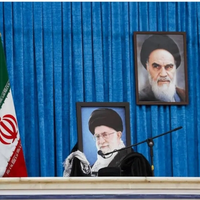
During a Wednesday ceremony marking the fifth anniversary of the death of Qasem Soleimani, Khamenei appeared to predict a revolt that would topple Syria's leaders.
“Do not be deceived by this false show; those who are strutting around today will one day be trampled under the feet of the faithful," Khamenei said. "Those who have encroached on the land of the Syrian people will one day be forced to retreat in the face of the power of Syria's youth.”