Iranian cleric warns of foreign infiltration in parliament
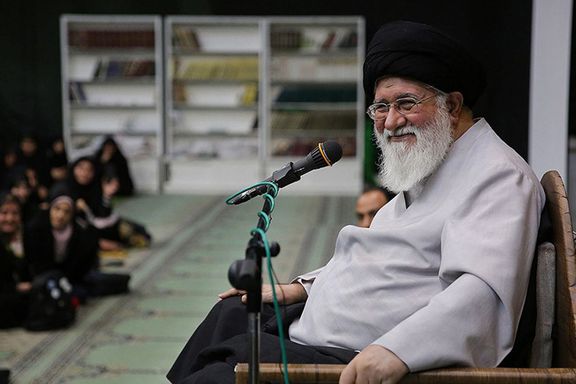
Prominent Iranian hardline cleric Ahmad Alamolhoda, the Supreme Leader's representative in Khorasan Razavi province, has warned that foreign powers are actively recruiting members of Iran's parliament as spies.
Alamolhoda made the allegations during a meeting in Mashhad with members of the parliament’s Basij on Tuesday.
The Basij is a paramilitary volunteer force under the command of the Islamic Revolutionary Guard Corps (IRGC) that maintains a presence within nearly all Iranian state bodies, including the parliament.
He said that foreign intelligence agencies do not directly send spies into the parliament. Instead, he alleged, they identify lawmakers whose views align with their own and then recruit them through intermediaries.
"In the Islamic Consultative Assembly, people with different ideas and viewpoints enter," Alamolhoda said. "The enemy comes and evaluates these people to see which ones are close to their goals, and then recruits them through several intermediaries."
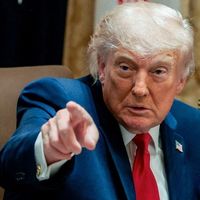
Some Reformist politicians in Iran are urging direct talks with Donald Trump to help resolve the country's serious economic crisis. However, others prefer indirect talks, highlighting hesitations among establishment figures.
In an interview with Etemad daily, prominent Reformist figure Ali Shakuri-Rad said on Tuesday that if Iran can carry out direct talks with the United States, it might even be able to stop Israeli Prime Minister Benyamin Netanyahu from what he called his outrageous behavior.
Referring to recent developments, including Elon Musk's reported meeting with Iran's UN ambassador, the visits of a Japanese deputy foreign minister Takehiro Funakoshi and Oman's Foreign Minister Sayyid Badr Albusaidi’s trips to Tehran, Shakuri-Rad stated that these “are clear signals indicating the United States is reaching out to Iran."
Remembering that Trump’s reported message carried by former Japanese Prime Minister Shinzo Abe in 2019 was ignored by Khamenei, Shakuri-Rad warned that "Tehran should avoid that kind of reaction to the US outreach." He said, "ignoring that particular message created serious problems for Iran."
Reformist politician, Ali Shakuri-Rad
"Such messages should not be left unanswered," the analyst said, adding that "Iran should not avoid direct talks with Washington, and should not give negative responses to the United States' messages as they provide opportunities for Tehran."
"Iran should not close the doors to negotiations with Trump," he said, adding, "We should negotiate with Trump and hope to protect our national interests through the talks."
Meanwhile, in an interview with pro-reform Jamaran News website, Mohammad Ghoochani a member of the government's news dissemination team said that "Iran will certainly hold indirect talks with the United States sometime during the next months although it might be in Tehran's interest to conduct direct negotiations."
Ghoochani said he personally believes that "It is essential to hold direct talks with America," adding that "holding direct talks does not mean we will accept whatever Trump might say."
Ruling out former security chief Ali Shamkhani's claim about being in charge of Iran's nuclear negotiations, Ghoochani reiterated that "the Foreign Ministry and Foreign Minister Abbas Araghchi will be leading the Iranian delegation in the talks."
However, he noted that Khamenei's advisor, Ali Larijani, "might also play a key role in negotiations with the United States," but he did not provide further details.
Recently, other moderate politicians including former Vice President Es'haq Jahangiri also called for direct talks with the United States and said Iran's ailing economy needs urgent attention.
According to centrist Entekhab website, Former President Hassan Rouhani, who has always supported negotiation with the West, also told his political allies in a meeting that "Iran's problems will not be solved without constructive interaction with the world." He said, "Lifting of sanctions and accepting FATF protocols are prerequisites for engagement with the West. He also pointed out that the government in Tehran should listen to the people's demands.
In a related development, a Reformist commentator highlighted the severity of the country's economic crisis in the Etemad newspaper. "The government is running out of time as the hardships in Iran have become unbearable," he warned. In what appeared to be a reference to Khamenei, he added, "It would be a mistake for the broader political structure to believe that only the presidential administration is responsible for resolving these issues. If the government fails, everyone fail.”
Iranian women hold posters of Lebanon's late Hezbollah leader Sayyed Hassan Nasrallah during a meeting ahead of the fifth anniversary of Iran's slain Revolutionary Guards commander Qasem Soleimani, killed in a US strike in Baghdad, in Tehran, Iran, January 1, 2025.
Iranian Supreme Leader Ali Khamenei defended Iran's involvement in Syria's civil war and his policy of power projection in the region, dismissing criticism of the country’s diminishing influence in the Middle East.
“Some people, due to a lack of proper analysis and understanding, claim that with the recent events in the region, the blood shed in defense of the shrine was wasted,” Khamenei said in a Wednesday ceremony to mark the fifth anniversary of the death of former Revolutionary Guards Quds Force commander Qasem Soleimani.
He was Iran’s most influential figure in coordinating armed allied groups in the region and was killed by the US in Iraq in 2020.
“They are making this grave mistake; the blood was not wasted,” Khamenei continued.
The defense of the shrine refers to a narrative promoted by Iran as a reason for its military presence in Syria and Iraq. This concept centers around the protection of Shi’a Islamic holy sites, particularly the Shrine of Sayyida Zainab in Damascus, Syria. Sayyida Zainab was the granddaughter of Prophet Muhammad. However, following the October 7 Hamas attack on Israel, Khamenei’s rhetoric expanded beyond shrine defense, openly advocating an all-out war against Israel.
The comments by Khamenei follow a series of regional setbacks for Iran in 2024, as its network of proxy and allied groups faced regular Israeli countermeasures.
Hamas's military power has been almost completely diminished by Israel. Israel has also intensified its campaign against Hezbollah with precise airstrikes, covert operations, and intelligence-led targeting of the group's assets in Lebanon and Syria. These actions aim to degrade Hezbollah’s capabilities, disrupt its supply lines, and prevent the transfer of advanced weapons from Iran.
In Yemen, the Houthis encountered resistance from local factions, and devastating air attacks by Israel, the US and UK. These setbacks underscore the diminishing reach of Iran’s “axis of resistance,” a strategy central to Khamenei’s regional ambitions.
In Syria, a key pillar of Iran’s influence, the Assad government fell after 13 years of Iranian support. Since the Syrian Civil War began in 2011, Iran has heavily invested in preserving Assad’s government, seeing it as vital for maintaining access to Hezbollah and projecting power across the Levant. The loss of Assad unraveled these investments and severed Iran’s land corridor to Lebanon, undermining its ability to supply Hezbollah with arms.
In a veiled reference to Syria's new strongman Ahmad al-Sharaa, Khamenei said: “Do not be deceived by this false show; those who are strutting around today will one day be trampled under the feet of the faithful. Those who have encroached on the land of the Syrian people will one day be forced to retreat in the face of the power of Syria's youth.”
This marks the third time Khamenei has promised to reclaim Syria from its new rulers. On December 11 and 23, he made similar vows, encouraging Syrian youth to resist Assad’s successors.
He also described Houthis and Hezbollah as symbols of resistance, adding that they would ultimately prevail. Without naming specific countries, he criticized certain nations for “sidelining their faithful youth,” whom he called “pillars of stability and strength,” warning that they risk facing Syria’s fate.
Iran International analyst Morad Veisi suggested that Khamenei’s rhetoric reflects a refusal to accept regional realities. “Rather than acknowledging his mistakes, he attempts to reshape facts to align with his vision,” Veisi said, adding that this approach has drained Iran’s resources and alienated its neighbors.
These remarks coincide with admissions by Hezbollah’s Secretary-General Naim Qassem, who acknowledged that Assad’s fall has disrupted the group’s primary supply route through Syria. Meanwhile, The New York Times reported that Assad’s downfall has caused confusion among Iranian officials.
Khamenei also praised Soleimani, saying that he utilized the potential of the region's youth to revive the Resistance Front. However, his statements contrasted with a prior speech in which he denied that Iran operates proxy forces in the region.
As Iran’s influence wanes and its regional allies face mounting challenges, Khamenei’s insistence on reclaiming Syria underscores the strain on the Islamic Republic’s strategy.
A day after protests erupted at two of Tehran's traditional bazaars over the worsening economic crisis and soaring inflation, the goldsmiths bazaar joined the strike on Monday, December 30.
The unrest in Tehran's largest traditional market comes amid growing warnings from politicians and economists about Iran's dire economic state. Reformist politician Ali Mohammad Namazi told conservative outlet Nameh News, "The situation of the Iranian economy is alarming."
Namazi criticized President Masoud Pezeshkian for failing to deliver on campaign promises to "lift sanctions, facilitate international trade, and expand relations with other countries." He added, "The public is now demanding accountability for these unfulfilled promises."
"Iranians are uncertain about their future," Namazi said, warning that unresolved problems could escalate into crises. He also noted that the current instability benefits those with access to insider information while making long-term planning impossible for ordinary citizens.
Namazi further highlighted the structural challenges facing Iran, even if sanctions were lifted. "Even in the best-case scenario, restoring oil production to normal levels would require at least four months of intensive work due to neglected maintenance of oil wells," he explained.
Economic strains and potential unrest
Nameh News emphasized the falling value of the rial and persistent high inflation as key issues plaguing Iran's economy. In response, IRGC commanders and Iran's judiciary chief have stated they are prepared to handle potential unrest. Namazi warned that if the economic freefall, particularly the decline of the rial, is not controlled, widespread protests could ensue.
Geopolitical complications
Iranian foreign policy analyst Ghasem Mohebali told Nameh News that hardliners within Iran oppose lifting sanctions because a normalized economy could weaken their influence. "Hardliners in Iran, like their counterparts in the region and beyond, benefit from ongoing tensions," Mohebali said. He pointed out that global players, including Iran, Russia, the United States, and even China, have vested interests in maintaining instability in the Middle East to advance their own agendas.
"China, for instance, prefers regional tensions to keep the US and Europe distracted from focusing on the war in Ukraine and applying pressure over East Asia," Mohebali added.
Political pressures on the Pezeshkian administration
Amid the crisis, President Pezeshkian faces pressure from reformists and hardliners alike. The IRGC-linked Javan newspaper reported that reformist figures, including former President Mohammad Khatami and former Majles Speaker Ali Akbar Nateq Nouri, are urging Pezeshkian to tell Supreme Leader Ali Khamenei that the government cannot resolve the crisis without negotiating with the West.
Former Vice President Es'haq Jahangiri echoed this sentiment, stating, "Iran is in a difficult situation, and Tehran needs to negotiate with Trump and accept his conditions."
Meanwhile, the hardliner Kayhan newspaper, linked to Khamenei’s office, criticized Pezeshkian’s advisers and called for a government reshuffle. "The current deadlocks are the result of poor advice given to the President," Kayhan warned, adding that advisers suggesting the government is incapable of solving the crisis "are not well-wishers."
Unlike reformists advocating negotiations with the Trump administration, hardliners like Kayhan cautioned against trusting the US and its allies. "How many more times must we try to deal with the 'Great Satan' and its followers?" the publication asked.
A nation at a crossroads
As economic pressures mount and political divisions deepen, Iran's government faces an uncertain path forward. With internal protests and geopolitical complexities converging, Pezeshkian’s administration must navigate mounting challenges while addressing growing calls for accountability and decisive action.
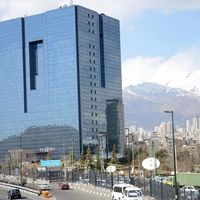
Iran’s economy minister announced on Tuesday that the Supreme Leader has approved revisiting two critical international conventions required to ease banking restrictions resulting from Iran's blacklisting by the money laundering watchdog, the Financial Action Task Force (FATF).
Abdolnaser Hemmati wrote on X, "The president informed me that the Supreme Leader has approved revisiting the Palermo and CFT bills related to the FATF in the Expediency Discernment Council."
The Expediency Discernment Council, which mediates disputes between parliament and the Guardian Council (a constitutional watchdog), became involved after parliament approved the legislation but the Guardian Council rejected the two bills concerning the Palermo and CFT conventions regulating money laundering and financing of terror groups.
The Financial Action Task Force (FATF), established by the G7 member countries to safeguard the international financial system, influences banking policies in most countries and guides businesses aiming to protect their own integrity and reputations.
Iran's status on the FATF blacklist has had a major impact on its international banking operations. The country remains on the list of high-risk countries with serious strategic deficiencies in countering money laundering, terrorist financing, and proliferation financing.
Iran needs to finalize legislation enabling the enactment of two international conventions: the International Convention for the Suppression of the Financing of Terrorism (CFT) and the UN Convention against Transnational Organized Crime (Palermo Convention).
The dispute between the parliament and the Guardian Council was referred to the Expediency Council in 2019 for arbitration.
The Expediency Council has stalled the matter since then, neither approving nor rejecting the bills. The inaction is apparently due to objections from hardliners, such as the Chairman of the Expediency Council Sadeq Amoli Larijani, who argue that joining the conventions would harm Iran's national security by exposing its dealings with regional Tehran-backed allies—precisely the activities these international agreements are designed to address.
“If you ask my personal opinion, Palermo and CFT are extremely detrimental to national security,” Larijani said in 2020.
Iran will remain on the FATF's list of High-Risk Jurisdictions Subject to a Call for Action until it fully implements its action plan, including ratifying the Palermo and CFT. Only then will the FATF consider next steps, such as suspending countermeasures.
The FATF says it remains concerned about the terrorist financing risk from Iran and its threat to the international financial system until these measures are implemented.
Even if Iran joins the FATF, more must be done to attract foreign investment, Mohammad Khazaei, Secretary-General of the Iranian Committee of the International Chamber of Commerce (ICC), said earlier in the year.
Iran's Supreme Leader Ali Khamenei and former Revolutionary Guards' Quds force commander Qassem Soleimani
Five years ago, Qassem Soleimani was killed under the direct orders of then-US President Donald Trump, in a watershed moment in the Middle East, triggering a series of setbacks for the Islamic Republic.
The decision to eliminate the mastermind behind Tehran’s expanding military and political influence from Iraq to Lebanon and Yemen demonstrated how removing a single figure can disrupt an entire system—and alter a region's dynamics.
Soleimani was a key architect of Iran’s Middle East strategy. Though not the commander-in-chief of the Revolutionary Guards, he was its most influential leader. His impact on the regime’s regional policies far outweighed that of any elected official, including Iran’s president.
The aftermath of his assassination revealed the strategic significance of Trump’s bold decision on January 3, 2020. The resulting shifts in regional power dynamics and successive defeats for Iran and its Quds Force highlighted how this single act disrupted Tehran’s ambitions.
General Kenneth McKenzie, then-head of US Central Command (CENTCOM), detailed the operation in his book Degrade and Destroy. McKenzie explained that Soleimani had been within US targeting range before, but former President Barack Obama refrained from authorizing his assassination due to fears of escalation. This restraint allowed Soleimani to consolidate his influence across the Middle East. Trump’s decisive move, however, ended that era.
McKenzie also noted that forces under Soleimani’s command carried out 19 attacks on US bases in Iraq in 2019 alone. A December 2019 strike that killed an American contractor became the immediate trigger for the decision to eliminate Soleimani.
The assassination dealt a major blow to Iran’s influence in the region, particularly to the Quds Force. It sent a clear message to Tehran: escalation would be met with decisive retaliation. Soleimani’s death exemplified this strategy and revealed vulnerabilities in Iran’s regional power structure.
Following Soleimani’s killing, Iran’s proxies, including Hamas, Hezbollah, and other militias, experienced significant operational setbacks. The regime struggled to fill the void left by Soleimani, a reality so stark that Supreme Leader Ali Khamenei publicly sought to downplay the impact. However, Iran’s diminished influence in the Middle East became undeniable.
More recently, Israeli Prime Minister Benjamin Netanyahu’s hardline policies have further altered the region’s dynamics. Tehran’s miscalculations, including encouraging Hamas’s October 7 attack on Israel, prompted an intensified Israeli campaign against Iran’s proxies.
These actions led to the defeat of Hamas, the weakening of Hezbollah, and even the collapse of Bashar al-Assad’s regime in Syria. As a result, Iran’s regional proxy network has been severely eroded, leaving its influence significantly diminished.
The decisions by Trump to eliminate Soleimani and by Netanyahu to target key Iranian and proxy leaders demonstrate how firm action against the Islamic Republic can reshape regional dynamics. Today, the effects of these decisions are evident in the weakened state of Iran and its proxies across the Middle East.