Iran set to slash fuel subsidies in sensitive move
A gas station in Iran
Iran is due to ease fuel price subsidies, according to documents reviewed by Iran International, in a politically sensitive move likely approved by the country's top leadership which is due to deepen economic pain.
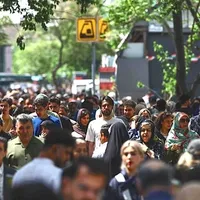
Costs of living are soaring in Iran while the currency has repeatedly plumbed new historic lows, posing a challenge to Iran's rulers as they face regional military setbacks and the return of a maximum pressure sanctions policy under Donald Trump.
Iranians had already sensed something was amiss when some fuel stations began installing eight-digit price displays at fuel stations.
The policy change comes in the form of a letter from the National Iranian Oil Refining and Distribution Company (NIORDC), part of the oil ministry, to fuel stations outlining steps to implement the plan.
It is set to massively reduce the monthly distribution of subsidized gasoline from the current 87 million liters to 42.5 million.
Under the new scheme, citizens will be entitled to 15 liters of subsidized gasoline monthly at 20,000 rials (2.5 US cents) per liter, up from the previous rate of 15,000 rials (2 cents).
The NPDC denied any change was forthcoming. The oil ministry “has no plans to change gasoline prices,” adding the ministry “does not have the authority to do so.”
A spokesperson for the Planning and Budget Organization last month underscored that any change in setting fuel products was treated as an utmost priority and "requires decision-making at the highest levels of national management."
Fuel price increases in Iran happen outside the budget, as in 2019 when gasoline prices rose with the Supreme Leader’s backing, bypassing parliamentary oversight.
Under the new policy, semi-subsidized gasoline will cost 80,000 rials (10 cents) per liter. The average income of Iranians per month is now around $150 while the costs for a family of four is at least $500 per month.
At least one third of the country is also living below the poverty line.
The government plans to simultaneously reduce the semi-subsidized gasoline quota from 100 liters to 50 liters per month and limit the allocation of gasoline to two vehicles per household and one vehicle per individual.
"We are the world's top country in energy, and we rank second in gas reserves. Yet, we cannot solve the energy problem," he said.
"Updating fuel dispensers and upgrading station infrastructure are routine measures to prevent disruptions in operations," the NPDC said in response to reports about the new space for price digits at fuel pumps.
Despite the denial, a recent television interview with President Masoud Pezeshkian fueled public concerns about rising costs. He said during the interview early in December that the state is short of foreign currency and without parliamentary allocation of dollars for imports, gasoline prices would rise.
Reports also suggest a brewing conflict between the government and parliament over accountability for the price adjustments, further complicating the public narrative.
Iran’s revised gasoline pricing strategy comes amid ongoing economic challenges, exacerbated by international sanctions. Analysts have noted the potential for further restrictions on Iran’s gasoline imports under a new US administration.
The Washington Institute highlighted that such sanctions could intensify Iran's economic struggles by targeting its refined oil imports, compounding existing sanctions on crude oil exports, levied for Iran's nuclear program, support for Russia's war on Ukraine, and human rights abuses at home.
Dutch supermarket chain Spar has been accused of helping Iran evade international sanctions, according to a report by Dutch newspaper de Volkskrant.
Leaked internal documents from a whistleblower suggest that Spar's license in Iran was used to facilitate transactions involving Iran’s Revolutionary Guard (IRGC).
Despite Dutch Ambassador Frank Mollen promoting Spar's operations in Tehran as an example of successful business engagement in August 2022, the documents reveal that Spar Iran was allegedly involved in questionable activities, such as importing Western technology and issuing Schengen visas for individuals connected to the IRGC.
Blue River, managing Spar's Iran operations, allegedly acquired Western equipment, like HP servers and laptops, under false pretenses, claiming they were for supermarket use. Security experts noted such technology is unnecessary for a small grocery chain.
Concerns also emerged over Spar Iran's S-Pay voucher system, which allows Iranians abroad to send credits to relatives in Iran. Leaked emails suggest plans to convert these vouchers into cash, potentially violating sanctions.
Iranian female singer Parastoo Ahmadi appeared at Tehran’s prosecutor’s office on Monday for an arraignment session.
During the session she was formally informed of charges against her for performing an online concert without a hijab, violating Iran’s dress mandates, Emtedad news website reported.
She was released on a 30-billion-rials (nearly $38,000) bail. Members of her band, who were also charged, were released on a 20-billion-rials (approximately $25,000) bail each.
On December 12, the Judiciary of the Islamic Republic issued a statement saying that Ahmadi's concert was held "without legal authorization and adherence to Sharia principles" and that "appropriate action" will be taken against the singer and production team.
The Caravanserai Concert, held December 11, quickly became one of the most discussed topics on Iranian social media.
Despite YouTube being restricted in Iran, the performance attracted over 1.5 million views over just three days, with clips widely shared online.
Iran’s judiciary chief has instructed prosecutors and law enforcement forces to address potential unrest over widespread fuel shortages and power and gas outages.
Highlighting growing dissatisfaction, Gholamhossein Mohseni Ejei directed the attorney general and provincial prosecutors to cooperate with security forces to prevent unrest, emphasizing that decisive action is needed to maintain stability during this critical period.
Nationwide measures to combat air pollution and the energy crisis, including the closure of government offices, schools, and public places as well as reduced industrial operations began earlier this month.
These closures are costing the country's economy an estimated 50,000 billion rials (over $63 million) daily.
Businesses struggle with full wage payments despite reduced hours, exacerbating existing financial burdens. These disruptions also threaten the government's projected 39% tax revenue increase for the next fiscal year.
Despite possessing vast oil and gas reserves, Iran's energy challenges are expected to persist due to the combined impact of international sanctions and domestic economic policies that have constrained investment. The potential reinstatement of broader sanctions under a future US administration could further exacerbate Iran's economic vulnerabilities.
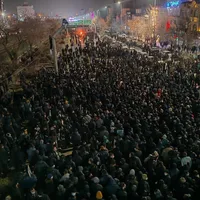
Violent protests shook Iran in November 2019, when the government suddenly tripled gasoline prices.
The Iranian parliament's security committee has requested the annulment of Mohammad Javad Zarif’s appointment as Masoud Pezeshkian’s vice president for strategic affairs on the grounds of his family holding dual citizenship.
On Monday, the committee’s spokesman cited a law that bans individuals with dual citizenship or close relatives with dual citizenship from holding sensitive positions as the basis for the action.
Zarif's children automatically received US citizenship after being born in New York while he served a large part of his career with the Iranian delegation at the United Nations.
Although his children now reside in Iran, the Law on the Appointment of Individuals to Sensitive Positions, enacted in October 2022, bans Zarif from holding his position as vice president for strategic affairs.
The law was not passed when he was chosen as foreign minister under former President Hassan Rouhani from 2013-2021.
Iran’s Foreign Ministry said it had maintained a sustained dialogue with Syrian opposition movements, adding, however, that Tehran is not currently in contact with the forces governing Syria.
Ministry spokesperson Esmail Baghaei said that while Iran has actively engaged with opposition groups, it does not maintain direct ties with Syria’s ruling faction, responsible for the overthrow of the decades-long Assad dynasty.
“Our involvement has always been about preventing ISIS's advance and the spread of terrorism to regional countries,” Baghaei said during a press briefing in Tehran on Monday.
“The issue of various terrorist groups operating in Syria has been a major concern since the beginning of developments in Syria 13 years ago,” he said.
Iran has long had a military presence in Syria, as has its armed allies such as Lebanese Hezbollah, designated as a terrorist group by nations such as the UK and US.
Responding to speculation about a message from Syria’s leadership via Turkey, Baghaei said that regional concerns, including Syria, are often addressed during multilateral discussions.
“Our stance is to preserve Syria’s sovereignty and territorial integrity while ensuring that the Syrian people determine their fate without foreign interference,” he added.
After the storming of the embassy
Baghaei described a coordinated effort involving Iran’s embassies in Damascus and Beirut to evacuate nationals.
“At present, no non-resident Iranian nationals remain in Syria,” he said, adding that Iranians, including military advisors and diplomatic staff, were successfully evacuated during the recent unrest which saw the Iranian embassy ransacked.
Prospects for nuclear negotiations
Turning to nuclear negotiations, Baghaei said Iran is committed to dialogue. “The Islamic Republic of Iran has never shut the door on negotiations. We have always participated in good faith, despite many concerns being unfounded,” he said.
Referencing the Joint Comprehensive Plan of Action (JCPOA), Baghaei said that Iran’s cooperation had yielded agreements in the past but criticized the lack of follow-through by other parties.
The Joint Comprehensive Plan of Action (JCPOA), commonly known as the Iran nuclear deal, was signed in 2015 between Iran and the P5+1 group of countries (the United States, United Kingdom, France, Russia, China, and Germany).
The agreement aimed to ensure the peaceful nature of Iran's nuclear program by imposing strict limits on its uranium enrichment activities and granting extensive access to international inspectors in exchange for the lifting of economic sanctions.
Despite its initial success in curbing Iran's nuclear advancements, the deal faced challenges, particularly after the United States unilaterally withdrew in 2018 under the Trump administration and re-imposed sanctions on Iran.
This withdrawal led to a gradual erosion of the agreement, with Iran scaling back its commitments in response and since, escalating its nuclear program beyond international limits.
Efforts to revive the JCPOA have been ongoing, reflecting its significance in promoting regional stability and preventing nuclear proliferation. However, negotiations remain complex, with both sides expressing concerns over compliance and mutual trust.
Baghaei denied reports of a message being sent from US President-elect Donald Trump.
Reporters ask questions during foreign ministry briefing on December 23, 2024 in Tehran.
Iran-Turkey relations and broader goals
Baghaei also highlighted the importance of maintaining strong ties with Turkey, describing it as a significant regional neighbor.
“We are committed to good-neighborly relations with Turkey, which benefit both nations,” he said. While acknowledging occasional differences, Baghaei expressed confidence in ongoing dialogue to resolve disputes.
Recent tensions between Iran and Turkey over Syria have highlighted the complexities of their regional relationship. While both nations have historically cooperated on various issues, their conflicting interests in Syria have created friction as each vies for power.
Iran, a staunch supporter of Syria's government under Bashar al-Assad, has expressed concerns over Turkey's help to the ruling group in Syria which ousted Assad after 13 years.
Turkey, on the other hand, justifies its actions as necessary to combat Kurdish militias, which it considers terrorists.
“The region’s security depends on collective adherence to international obligations and the rejection of foreign interference,” Baghaei added, Syria having played a critical role in Iran's regional foreign policy since the outbreak of Syria's civil war, with multiple bases spread out across Syria and forces in place.