• العربية
  • فارسی
Brand
  • Iran Insight
  • Politics
  • Economy
  • Analysis
  • Special Report
  • Opinion
  • Podcast
  • Iran Insight
  • Politics
  • Economy
  • Analysis
  • Special Report
  • Opinion
  • Podcast
  • Theme
  • Language
    • العربية
    • فارسی
  • Iran Insight
  • Politics
  • Economy
  • Analysis
  • Special Report
  • Opinion
  • Podcast
All rights reserved for Volant Media UK Limited
volant media logo

Iran’s car factory in Syria shuts down, reflecting broader setbacks

Nov 17, 2024, 07:15 GMT+0Updated: 15:21 GMT+0
Iran's car manufacturing company, Saipa, which is based in Tehran.

An Iranian state-owned car assembly plant in Syria has closed after nearly 20 years, marking yet another blow to Tehran’s economic ambitions in the war-torn country, where it continues to maintain a significant military presence.

The head of Iran-Syria chamber of commerce, Saeed Aref announced that Saipa, the sole Iranian automaker active in Syria, has ceased production, and no other Iranian factories in the country have become operational, citing unresolved issues between the two countries.

"Iranian companies are still active in providing infrastructure for Syrian industries, exporting technical and engineering services, and carrying out essential and specialized infrastructure repairs," he added.

The announcement comes as Supreme Leader Ali Khamenei’s special representative, Ali Larijani, visited Damascus and Beirut, signaling ongoing efforts to strengthen Iran’s regional influence. However, Iran’s economic footprint in Syria remains disproportionately small despite its costly military involvement during the civil war.

The story of Saipa’s factory in Syria began during the Mohammad Khatami administration in 2004, with construction initiated as part of an ambitious bilateral project.

By 2007, the Pride model’s production line was inaugurated in Homs in the presence of Syrian President Bashar al-Assad. The project, dubbed Siveco, saw Saipa owning 80% of the company while the Syrian government held a 20% stake.

During Mahmoud Ahmadinejad’s presidency, Saipa’s Syrian operations became emblematic of the Islamic Republic’s broader industrial ambitions abroad, with plans to produce up to 15,000 vehicles annually.

A similar initiative by Iran Khodro aimed to establish a factory in Syria in 2009. Yet, these ventures struggled to achieve success as civil war began in 2011, and repeated attempts to reach profitability largely faltered.

Iran’s economic struggles in Syria are accentuated by its massive financial outlays during the civil war. In 2020, Heshmatollah Falahatpisheh, a former member of Iranian Parliament’s National Security and Foreign Policy Committee, estimated that Iran spent $20 to $30 billion supporting Bashar al-Assad’s regime.

"We may have given $20 to $30 billion to Syria, and we need to get it back. This nation’s money was spent there," he said. Others have put the figure at more than $50 billion.

Despite this significant investment, Iran’s share in Syria’s post-war economy remains minimal. Mohammad Amirzadeh, Vice President of Iran’s Chamber of Commerce, lamented in 2021 that weak economic diplomacy had reduced Iran’s share in the Syrian market to just 3%, compared to Turkey’s dominant 30%.

But the real reasons might be economic, as Syrians prefer to deal with free-market economies with competitive quality and price, rather than Iran's government-controlled and isolated economy.

The shuttering of Saipa’s factory epitomizes the Islamic Republic’s inability to capitalize on its investments in Syria. While Turkey and other players secure substantial shares of the Syrian economy, Iran faces diminishing returns despite its critical role in supporting Assad during the war.

Most Viewed

Ghalibaf defends Iran-US talks amid hardline backlash
1
INSIGHT

Ghalibaf defends Iran-US talks amid hardline backlash

2
INSIGHT

Iran diplomacy wobbles as factions compete to avoid looking soft on US

3
VOICES FROM IRAN

Bread shortages, soaring prices strain households in Iran, residents say

4
ANALYSIS

The politics of pink: how Iran uses cuteness to rebrand violence

5

War-hit homeowners feel abandoned as Iran’s reconstruction aid fades

Banner
Banner

Spotlight

  • The future has been switched off here
    TEHRAN INSIDER

    The future has been switched off here

  • Lights out, then gunfire: Witnesses recount Mashhad protest crackdown
    VOICES FROM IRAN

    Lights out, then gunfire: Witnesses recount Mashhad protest crackdown

  • Family told missing teen was alive, then received his body 60 days later
    EXCLUSIVE

    Family told missing teen was alive, then received his body 60 days later

  • Is Iran entering its Gorbachev moment?
    INSIGHT

    Is Iran entering its Gorbachev moment?

  • Iran crackdown reaches cemeteries as graves of slain protesters defaced
    EXCLUSIVE

    Iran crackdown reaches cemeteries as graves of slain protesters defaced

  • Iran diplomacy wobbles as factions compete to avoid looking soft on US
    INSIGHT

    Iran diplomacy wobbles as factions compete to avoid looking soft on US

•
•
•

More Stories

Iran hangs 711 in 2024 as calls grow to halt executions

Nov 17, 2024, 00:00 GMT+0
•
Azadeh Akbari

At least 711 people have been executed in Iran since January, prompting female political prisoners at Evin prison in Tehran to call on authorities to stop issuing death sentences.

Norway-based Iranian rights group Hengaw on Saturday said 13 of the 711 executions the group has documented this year were political prisoners. The group also documented 21 fatalities in Iran’s prisons in 2024, including four deaths of political detainees and eight deaths attributed to torture.

“What we are experiencing is a tsunami of executions; it’s shocking and horrifying,” women’s rights activist Mina Khani from Hengaw told Iran International English on Saturday.

Khani expressed concern that, if executions continue at this rate, Iran’s death toll could approach 1,000 by year’s end.

“People at the height of the Woman, Life, Freedom movement could never have imagined that, in the shadow of a regional war partly driven by the Islamic Republic, there would be such killings,” Khani said.

Female prisoners urge end to death sentences

Death sentences continue to provoke resistance from political prisoners and activists. On Saturday, a group of female detainees in Tehran’s Evin Prison issued a letter calling on the public to prevent the Islamic Republic from “sacrificing lives in its vendetta against freedom and equality movements.”

Last week, Iran’s judiciary issued death sentences for six protestors accused of allegedly killing a government Basij militia member during the 2022 protests—a conviction that rights groups, including the Center for Human Rights in Iran (CHRI), have condemned for due process violations, torture-induced confessions, and insufficient evidence.

Rights groups say there are currently 42 political prisoners at risk of execution across Iran's prisons.

Student jailed for opposing dissident rapper's death sentence

In a further sign of Iran’s crackdown on dissent, student activist Khashayar Sefidi was transferred to Evin Prison on Saturday to serve a one-year sentence. Sefidi, who had opposed the death sentence of dissident rapper Toomaj Salehi, was charged with “propaganda against the Islamic Republic.” In a video before his transfer on Saturday he said, "I felt it was my duty, as a member of the community and a citizen, to protest against Toomaj Salehi’s death sentence and not remain silent in the face of this injustice."

Salehi, detained in September 2021 for releasing his protest song “Mouse Hole,” was arrested again in October 2022 during the Woman, Life, Freedom protests. Although his death sentence was overturned by Iran’s Supreme Court in June, Salehi remains imprisoned.

Sefidi’s case reflects a broader pattern of repression, as Iran’s judiciary continues to punish those protesting against executions. Nobel Peace Prize laureate Narges Mohammadi was recently given an additional six-month prison sentence after she protested the execution of another political prisoner in Evin's women’s ward, according to the Free Narges Coalition. The group reported that Mohammadi, already serving a lengthy sentence, was charged on October 19 with “disobeying and resisting orders” after her August protest.

Iran hangs 12 in one day amid rise in drug-related executions

Iran’s execution spree intensified on Wednesday as at least ten individuals, including a woman, an Afghan national, and two Kurdish citizens, were hanged at Ghezel Hesar Prison in Karaj on drug and murder charges, Iran Human Rights (IHR) reported. The executions took place amid protests by family members and opponents outside the prison, which were met with a crackdown by security forces.

IHR warned that drug-related executions have surged in recent years, with 2023 alone showing an 84 percent increase compared to 2022, rising from 256 to 471 cases.

According to Amnesty International, Iran carried out 853 executions in 2023, marking the highest number in eight years. Amnesty International noted that 64 percent of the executions in 2023 were for crimes that did not warrant the death penalty under international law, including drug-related offences, robbery, and espionage​.

Globally, a total of 1,153 executions were recorded last year, with Iran responsible for 74% of these and Saudi Arabia for 15%, according to rights group Amnesty International.

Iran says ready for nuclear talks as Trump admin prepares for maximum pressure

Nov 16, 2024, 20:32 GMT+0

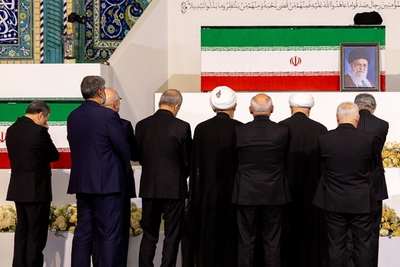
Iran's foreign minister on Saturday expressed Tehran's preparedness for the resumption of negotiations over its nuclear program but warned that the window will remain open for a limited period of time.

Abbas Araghchi told the state television that Iran is fully prepared for negotiations on its nuclear program and believes a deal is achievable through diplomacy.

"We believe the window for diplomacy is still open, albeit for a short time, provided the other parties demonstrate genuine willingness. Without such commitment, we will pursue an alternative course," he warned.

The 'short period of time' Araghchi mentioned refers to October 2025, when most restrictions against Tehran's nuclear program will be removed under the UN Security Council Resolution 2231, and the West will no longer be able to apply “snapback” sanctions.

Araghchi said the European powers will most probably try to use the snapback mechanism to restore sanctions against Iran over the next year. "The Iranian nuclear program's trajectory in the coming year will be challenging and sensitive, but we are prepared for any scenario. If confrontation becomes inevitable, we are ready to face it. Similarly, if cooperation is possible, we are prepared to embrace that path as well."

Earlier on Thursday, Iran's President Masoud Pezeshkian said in a meeting with IAEA Director General Rafael Grossi that Tehran was prepared to cooperate with the UN nuclear watchdog to clear up "alleged ambiguities about the peaceful nuclear activity of our country".

Iran preparing for Trump's 'maximum pressure'

Araghchi's Saturday remarks came hours after the Financial Times reported that Donald Trump’s incoming administration plans to revive its “maximum pressure” policy to “bankrupt” Iran’s capacity to support its so-called Axis of Resistance and pursue nuclear development.

Trump’s team is preparing executive orders for his first day in office that would tighten existing sanctions and introduce new ones on Iran’s oil exports, the FT report said citing unnamed sources.

Araghchi said on Saturday it was too early to analyze the Trump administration's approach to the Islamic Republic, but Tehran will adjust its behavior according to their actions.

He also noted the people nominated by Trump for the new US administration have a "radical tendency" in supporting Israel.

Araghchi also referred to a New York Times report about a meeting between Trump's close ally, Elon Musk, and the Iranian envoy to the United Nations, and called it a fabricated scenario possibly aimed at testing Iran's reaction.

The foreign minister said no Iranian official has met Elon Musk. When asked about Tehran's delay in dismissing the report, Araghchi explained that the NYT story was published at 01:00 a.m. (Iran time). Upon waking and seeing the report, he initially thought it didn’t warrant a response. He then waited for Iran’s UN envoy in New York to wake up and inquired why they hadn’t denied it. "They replied, 'We thought it was too insignificant,'" Araghchi told state TV.

The initial report by the New York Times raised significant questions about President-elect Trump's Iran policy, specifically whether he plans to intensify pressure on Tehran or pursue dialogue to ease tensions in the Middle East.

The Associated Press, quoting an unnamed American official, confirmed that the talks, held on November 12, were requested by the Islamic Republic, while the initial report had said the request came from Musk.

According to reports, the discussion spanned key geopolitical issues, including Iran’s nuclear program, its regional alliances with proxies, and the possibility of reducing tensions with the United States.

While Tehran is dismissing the reports, neither Elon Musk nor Trump's team has refuted the report, indicating that it could be an early move by the incoming administration to establish communication and engage with the Islamic Republic.

Hardline Iran daily says retribution against Trump can't be ruled out

Nov 16, 2024, 19:20 GMT+0
•
Niloufar Goudarzi

Tehran’s firebrand Kayhan daily rejected a Wall Street Journal report that Iran had provided written assurances to the Biden administration not to target Donald Trump, asserting that no such guarantees could ever be made.

“What reasonable mind could conceive that Iran would offer guarantees against holding the perpetrators of Martyr Soleimani’s assassination accountable?” the ultra-hardline daily, whose managing editor Hossein Shariatmadari is an appointee of Supreme Leader Ali Khamenei, asked on Friday.

"No one in Iran can absolve the criminal Trump or offer assurances to the Americans that the killers of Martyr Soleimani will not face punishment. Additionally, alongside the pursuit of retribution by the Iranian nation and the Islamic Republic, other nations and resistance groups in the region and around the world are also seeking justice for the blood of Martyr Soleimani..." Kayhan wrote.

Qasem Soleimani, the former commander of the IRGC's Quds Force, was killed in a 2020 US drone strike near Baghdad International Airport on orders from then-President Donald Trump. This act has made Trump and his aides targets of alleged Iranian retaliation plots.

Kayhan issued a veiled threat on Friday, writing: “While some may label Trump a fool, it is unlikely that he is so oblivious as to fail to understand that no guarantees exist to shield him from accountability and retribution.”

Kayhan's statements come at a time when there are reports of a meeting between Trump's ally Elon Musk and Iran's UN envoy in New York earlier this week. Other Iranian newspapers criticized Kayhan for potentially jeopardizing efforts to reduce tensions with the US.

Iranian officials on numerous occasions since 2020 have issued threats against Trump and top officials of his first administration, such as former CIA Director Mike Pompeo and National Security Chief John Bolton.

Details of one such alleged plot emerged last week when the US Justice Department unsealed murder-for-hire charges against Farhad Shakeri, a 51-year-old Afghan national accused of being connected to Iran’s Islamic Revolutionary Guard Corps in a plan to target Trump.

According to the Wall Street Journal, Iran had sent written assurances to the Biden administration last month, denying any intent to assassinate Trump. This communication responded to a private American warning issued in September, highlighting the administration’s stance that threats against Trump would represent aggression against the United States.

US officials underlined that any attempt on Trump’s life would be treated as an act of war, aligning with the administration’s public position, the Wall Street Journal wrote.

Kayhan’s editorial diverged from the Iranian government’s official position, which had already dismissed accusations of a plot to assassinate Trump as fabricated. Last week, the Iranian Foreign Ministry spokesman described the allegations as “suspicious, malicious, and baseless.”

In response, Kayhan questioned: “The idea that Iran’s alleged assassination plot against Trump is false and that the referenced report is baseless is true. But why is assassinating Trump considered a malicious act? Eliminating the murderer of Martyr Soleimani, Martyr Abu Mahdi, and countless other oppressed people is a noble, righteous, and necessary act—not a malicious one.”

The daily later softened its tone, noting that the Foreign Ministry had explained the use of the word “malicious” differently, seemingly clearing up the misunderstanding.

Since Trump’s election in 2016, Iranian politicians have been divided over how to address his tough stance on Iran. Some have advocated for diplomacy, while others have leaned toward strong defensive strategies, including nuclear deterrence.

Meanwhile, sources cited by Financial Times on Saturday revealed that Trump’s incoming administration plans to revive its “maximum pressure” campaign to cripple Iran’s ability to fund regional proxies and develop nuclear weapons. The team intends to tighten sanctions on Tehran, particularly its vital oil exports, immediately after taking office.

Iran needs nukes for regional balance, says lawmaker

Nov 16, 2024, 15:15 GMT+0
•
Niloufar Goudarzi

Tehran must embrace atomic bombs to achieve "regional balance," said an Iranian member of parliament on Saturday, adding fuel to an already heated discourse over the future of Iran’s deterrence policies.

“Our adversaries possess extensive and ready-to-deploy arsenals of nuclear warheads, leaving Iran at a significant strategic disadvantage,” Ahmad Naderi told local media on Saturday for the second time since last week. “Over the years, we have incurred costs equivalent to several times the expense of constructing an atomic bomb through our nuclear program, yet it has yielded no tangible security benefits.”

"I believe we must pursue atomic weapons testing, as no other path remains for us given the lack of regional balance," he added, in an apparent reference to setbacks by Iran's regional proxies.

This stance aligns with a recent call by 39 Iranian lawmakers urging the Supreme National Security Council to reassess the country’s defense strategy. They argued that Iran's current policies might be inadequate in addressing perceived threats, particularly from Israel.

The lawmakers also raised doubts about the long-term viability of Supreme Leader Ali Khamenei’s religious decree banning nuclear weapons, suggesting that evolving circumstances could warrant a shift in approach.

MP Mohammad Reza Sabaghian described nuclear weapons as essential for deterrence, arguing they are necessary for self-defense in light of Israel’s arsenal. Others, such as MP Hassanali Akhlaghi Amiri, suggested that Khamenei’s fatwa could evolve, as Islamic rulings can adapt over time to new circumstances. He explained that secondary rulings can replace primary ones when conditions change, implying the fatwa is not permanent.

Iranian officials have consistently portrayed the country’s nuclear program as peaceful, frequently citing Khamenei’s religious decree against weapons of mass destruction. However, growing calls from lawmakers advocating for nuclear armament highlight the increasing pressure Tehran faces. These debates unfold amid heightened tensions with Israel and global uncertainty as the United States transitions to a new administration.

A more immediate concern, however, is Israel’s recent military actions, which have significantly weakened Tehran’s proxies, Hamas and Hezbollah, and included large-scale airstrikes on military targets inside Iran.

The relatively moderate news website Rouydad24 linked these discussions to Iran’s preparations for the January 20 US presidential transition, highlighting a dual-track strategy: balancing internal demands for a more aggressive defense posture with external diplomatic efforts. The push for a tougher stance comes primarily from hardliners, while the diplomatic initiatives reflect the government’s approach to navigating the shifting geopolitical landscape.

"Some in Iran maintain that hostility and antagonism with the United States are insurmountable, irrespective of whether Trump or another figure is in power. Others, however, argue for recognizing opportunities and responding to positive signals," the publication wrote on Saturday.

Pointing to the current Iranian administration’s strategy, the publication highlighted the government's activation of various diplomatic channels, including public and covert efforts, to navigate the challenges ahead.

Hesamodin Ashna, an advisor in Hassan Rouhani’s former administration, also noted that Iran’s most experienced diplomats are actively working across multiple channels. He cited Ali Larijani’s visits to Syria and Lebanon, where discussions included regional ceasefires, alongside reported international meetings involving Iranian representatives.

The government “is utilizing all its diplomatic capacities to address the situation wisely,” he wrote on X on Saturday.

With tensions rising and the potential for international pressure increasing, Tehran appears to be exploring both hardline measures and broader diplomatic strategies to safeguard its national interests.

Agreement with Islamic Republic impossible, says Iran’s exiled Prince

Nov 16, 2024, 12:16 GMT+0

Iran’s exiled prince, Reza Pahlavi, has declared that reaching a reliable agreement with the Islamic Republic is impossible, pointing to its four-decade history of hostility with other countries and oppression.

Speaking to the US-based television network EWTN on Friday, Prince Reza Pahlavi said, “This regime in four decades has proven to be unreliable, dubious, untrustworthy, and I don't think it is ever possible to come to any deal with it.”

His comments follow reports that Tesla CEO and tech giant Elon Musk, now appointed to lead president-elect Trump's new Department of Government Efficiency, met this week with Iran's ambassador to the United Nations—an encounter Tehran denied on Saturday.

Pahlavi described the Islamic Republic as inherently hostile to principles such as equality, human rights, and freedom, emphasizing that it operates as an extremist ideological system.

“It is an ideological radical regime that wants to export its ideology, while repressing its own people at home and trying to change the world the way they want to see it abroad.”

In a separate interview with Newsmax, Pahlavi called for a policy of maximum pressure on the Islamic Republic, paired with maximum support for the people of Iran.

He said that the Iranian people are the only ones capable of enacting meaningful change. "The solution is to make sure that the Iranian people have a better equal playing field so they internally bring pressure that will force the regime to collapse.

"That should be the foundation of the approach to the Iranian solution, which will ultimately make America breathe easier — not by deploying its fleets to maintain stability, but by depending on a nation that is freed from a regime that, unlike them, celebrates martyrdom and death."

On November 14, Pahlavi released a video message announcing his readiness to lead Iran through a transitional period and the formation of a national government. Addressing Iranians, he urged them to take advantage of the Islamic Republic’s weakened state, which he attributed to its loss of legitimacy and international setbacks.

Highlighting Iran’s wealth in natural and human resources, Pahlavi condemned Tehran’s mismanagement, saying, “Our Iran is rich in natural resources and human capital, and its people should never have to worry about lack of water and bread, medicine and healthcare, or fuel and electricity in the heat and cold.”

Concluding his message, Pahlavi said, “Now is the time to decide. Let us move towards a bright and free, prosperous and flourishing future.”