• العربية
  • فارسی
Brand
  • Iran Insight
  • Politics
  • Economy
  • Analysis
  • Special Report
  • Opinion
  • Podcast
  • Iran Insight
  • Politics
  • Economy
  • Analysis
  • Special Report
  • Opinion
  • Podcast
  • Theme
  • Language
    • العربية
    • فارسی
  • Iran Insight
  • Politics
  • Economy
  • Analysis
  • Special Report
  • Opinion
  • Podcast
All rights reserved for Volant Media UK Limited
volant media logo

Iran could go nuclear by year's end, Republican congressman warns

Aug 19, 2024, 15:15 GMT+1Updated: 16:06 GMT+0
US Rep. Mike Turner (R-OH), Chairman of the House Intelligence Committee

As the US gears up for the 2024 presidential elections, Republicans are amplifying Iran concerns with GOP leaders saying Tehran may declare itself a nuclear weapons state this year.

On Sunday, Rep. Mike Turner, Chairman of the House Intelligence Committee, warned that Iran could declare itself a nuclear power "by the end of the year," a development he attributed to the Biden administration's lenient policies towards Tehran.

"What we see now with this administration, [Iran] might declare themselves a nuclear weapons state by the end of this year, with the reports have been- news reports have been out stating that there is a possibility," Turner said Sunday on CBS.

Turner, a Republican from Ohio, defended recent comments by former President Donald Trump, who has taken a softer tone on Iran while emphasizing the necessity of preventing the country from obtaining nuclear weapons. Last week, Trump said, "They can't have a nuclear weapon, and we were all set to make sure that they don't have a nuclear weapon," adding that the situation would drastically change if Iran were to achieve nuclear capability.

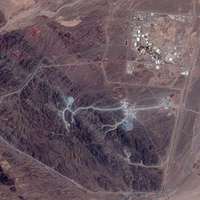
Iran's nuclear program has been a persistent source of global concern. While Tehran maintains its nuclear activities are purely civilian, the accelerating pace of uranium enrichment to levels far exceeding those required for energy production raises serious questions.

The International Atomic Energy Agency (IAEA) has repeatedly reported that Iran is not completely transparent about its nuclear advancements, but the international community's response has been largely limited to US-led sanctions.

Iran International reported last week that the country is intensifying its covert nuclear weapons program, bringing it closer than ever to developing a nuclear bomb. These claims echo earlier statements by high-ranking Iranian officials. Ali-Akbar Salehi, former head of Iran's nuclear agency, cryptically implied in early 2024 that Iran possesses all the components necessary for a nuclear weapon. Similarly, Kamal Kharrazi, a top advisor to Supreme Leader Ali Khamenei, admitted in 2022 that Iran has the technical capability to build a nuclear bomb but insisted it has no such intention.

These statements, coupled with the regime's increasingly assertive rhetoric, paint a disturbing picture of a country determined to expand its nuclear capabilities.

Islamic Republic officials have repeatedly stated that according to a fatwa (Islamic decree) by the Supreme Leader, the construction of an atomic bomb is not on Tehran's agenda. However, few in the international community believe in a fatwa that can be revoked at any moment.

In an interview with Iran International in February, leading nuclear weapons expert David Albright warned that this is the time when “Iran may decide to make nuclear weapons.”

According to Rep. Turner, "There is a possibility" that the Supreme Leader changes his decision and “Iran declares itself a nuclear weapon state by the end of the year.”

The concern over Iran's influence extends beyond its nuclear program. Turner highlighted recent reports of Iranian cyberattacks targeting the Trump and Biden-Harris campaigns, as well as an alleged Iranian plot against Trump.

He criticized the Biden administration for not holding Iran accountable for these actions, suggesting that the lack of a strong response has emboldened Tehran. “The Biden-Harris Administration must hold Iran accountable and make it clear that any attempt by Iran to murder former President Trump or members of his administration is an act of war.”

Critics of the Biden administration, including Turner, argue that the current US leadership has given Iran the "flexibility and freedom" to advance its nuclear ambitions and meddle in US elections.

Turner contrasted this with Trump's "maximum pressure campaign," which he claims had Iran "on the ropes" economically and militarily.

Another facet of the Iran issue that has captured media attention in recent weeks is Tehran's influence network in Washington. The controversy gained momentum as Vice President Kamala Harris has been accused of stonewalling questions about her national security adviser's purported ties to Iran.

Senator Tom Cotton accused the Biden-Harris administration of appeasing Iran, even as its proxies continue to attack Israel with impunity. "The ayatollahs should not have sympathizers in the White House," Cotton asserted.

As the election season heats up, the Republican focus on Iran is likely to intensify, with GOP candidates framing the issue as a matter of national security and a referendum on the Biden administration's foreign policy.
Most Viewed

Iran diplomacy wobbles as factions compete to avoid looking soft on US
1
INSIGHT

Iran diplomacy wobbles as factions compete to avoid looking soft on US

2
ANALYSIS

The politics of pink: how Iran uses cuteness to rebrand violence

3

Scam messages seek crypto for ships’ safe passage through Hormuz, firm warns

4
EXCLUSIVE

Family told missing teen was alive, then received his body 60 days later

5
INSIGHT

Is Iran entering its Gorbachev moment?

Banner
Banner

Spotlight

  • Diplomacy tolls at Hormuz as conflict returns to its doorstep
    OPINION

    Diplomacy tolls at Hormuz as conflict returns to its doorstep

  • Opposition to US talks grows in Tehran as ceasefire deadline nears
    INSIGHT

    Opposition to US talks grows in Tehran as ceasefire deadline nears

  • Tehran moderates see ‘no deal–no war’ limbo as worst outcome
    INSIGHT

    Tehran moderates see ‘no deal–no war’ limbo as worst outcome

  • The future has been switched off here
    TEHRAN INSIDER

    The future has been switched off here

  • Lights out, then gunfire: Witnesses recount Mashhad protest crackdown
    VOICES FROM IRAN

    Lights out, then gunfire: Witnesses recount Mashhad protest crackdown

  • Is Iran entering its Gorbachev moment?
    INSIGHT

    Is Iran entering its Gorbachev moment?

•
•
•

More Stories

Netanyahu to Iran: Attack Israel and suffer ‘heavy price’

Aug 19, 2024, 02:05 GMT+1

Prime Minister Benjamin Netanyahu has dared Iran and its Lebanese proxy group, Hezbollah, to attack Israel and face the consequences.

Speaking at the start of a weekly cabinet meeting on Sunday, Netanyahu issued a warning to Iran and Hezbollah, signaling Israel's readiness to defend itself against any threats from these adversaries.

"We are determined to defend ourselves, and we are also determined to extract a very heavy price from any enemy that dares to attack us, from any theater," Netanyahu stated.

He also underscored Israel’s commitment to its security principles, which he said will remain non-negotiable despite the complex nature of the peace talks. “We are conducting very complex negotiations,” Netanyahu said. “But I want to emphasize: We are conducting negotiations, and not give-and-give. There are areas where we can show flexibility, and there are areas where we can’t show flexibility — and we are standing firm on them. We know quite well how to distinguish between the two.”

These comments come as Israel continues to engage in indirect negotiations with Hamas, mediated by Qatar, the United States, and Egypt. The talks, held in Doha over the past week, are aimed at securing the release of Israeli hostages taken by Hamas during the October 7 attacks that killed approximately 1,200 Israelis. However, significant gaps remain between the two sides, particularly on the key issues of the Philadelphi Corridor, the Rafah Crossing, and the deployment of Israeli Defense Forces (IDF) in Gaza if an agreement is reached.

Netanyahu’s firm stance is consistent with the outline laid out by the White House in May, which has since been the basis for Israel’s negotiating position. Central to these principles is Israel's demand for control over critical border areas to prevent the smuggling of weapons into Gaza and ensure its long-term security. This demand has been a major sticking point in the talks, with Hamas refusing to agree to any arrangement that would allow Israeli forces to remain in Gaza after a potential ceasefire.

Despite the complexities of the negotiations, there has been some optimism among mediators. US Secretary of State Antony Blinken, who arrived in Israel on Sunday for another round of talks, is expected to push for progress, especially since Joe Biden urgently needs the ceasefire as a legacy of his presidency.

However, Hamas has already cast doubt on the prospects of a breakthrough. In a statement released shortly after Blinken's arrival, the militant group accused Netanyahu of setting new conditions to deliberately sabotage the negotiations. “We hold Netanyahu fully responsible for thwarting the mediators’ efforts and obstructing an agreement,” Hamas declared.

US Secretary of State Antony Blinken walks after his arrival in Tel Aviv, Israel, August 18, 2024.
100%
US Secretary of State Antony Blinken walks after his arrival in Tel Aviv, Israel, August 18, 2024.

Meanwhile, the situation on the ground remains volatile. Israeli fighter jets struck a Hezbollah rocket launcher in southern Lebanon on Sunday evening, in response to an attack on the Upper Galilee. The Israeli Defense Forces (IDF) have also reported ongoing rocket fire from Lebanon into northern Israel, further escalating the conflict with Hezbollah, an Iranian-backed militant group allied with Hamas.

The broader regional implications of the conflict are becoming increasingly apparent. Iran, which has been a key supporter of both Hamas and Hezbollah, has threatened retaliation following the assassination of senior Hamas and Hezbollah figures in Tehran and Beirut, which it attributes to Israel. This escalation comes at a time when the international community is growing increasingly concerned about the potential for the conflict to spill over into a broader regional war.

Iran has reportedly postponed its retaliatory strike on Israel to avoid derailing the ceasefire talks aimed at ending the Gaza war. However, the Islamic Republic has tried to avoid expressing public support for the negotiations and even downplayed the US-led mediation efforts arguing that Washington cannot be an “impartial” mediator as it backs Israel.

Iranian authorities are also skeptical about the support expressed by some Western countries for the people of Israel. A report by the Tehran Times, an Iranian newspaper fully owned and controlled by the government, even claimed that France, Germany, and Britain are considering recognizing Palestine as a state, contingent on significant concessions from Iran, including its recognition of Israel and a halt to support for resistance groups in the region.

“The initiative proposed by Paris and endorsed by London and Berlin aims to offer additional protections for Israel but does not establish any conditions to safeguard Palestinians against Israel's apartheid policies in the occupied territories, its massacres in Gaza, the abuse of Palestinian prisoners, or the growing number of illegal settlements in the West Bank,” the report added.

If the initiative is implemented, wrote the Tehran Times, the European trio will join Norway, Ireland, and Spain, who earlier this year became the latest group of European countries to recognize Palestine as a state.

Iran's threat of escalation risks regional war, UK and France warn

Aug 18, 2024, 18:11 GMT+1

The British and French foreign ministers have warned about the mounting danger of a full-scale regional conflict due to Iran's escalatory rhetoric, calling on all parties to show restraint.

In a joint op-ed published in the Guardian on Saturday, UK Foreign Secretary David Lammy and French Foreign Minister Stéphane Séjourné stress that Iran's threats of escalation could trigger a wider and more destructive war in the Middle East.

“Iranian threats of further escalation mean the risks of a full-scale regional war are rising,” the ministers cautioned. They described the current situation as a “destructive cycle of violence,” with the potential for a single miscalculation to ignite a deeper and more unmanageable conflict.

Since the assassination of Hamas leader Ismail Haniyeh in Tehran on July 31, Iran has been threatening retaliation against Israel. However, recent media reports suggest that internal divisions within Iran are causing hesitation regarding further escalation. Additionally, it appears that pressure from the Biden administration may be influencing Iran to reconsider its stance.

The European ministers underscored the implications any Iranian aggression could have, potentially undermining ceasefire negotiations related to Gaza. They emphasized that “it’s never too late for peace” and warned that an all-out regional conflict would serve no one's interests. "All parties must exercise restraint and focus on diplomatic solutions," they argued.

The situation in Gaza remains critical, with the ongoing war leading to civilian casualties. Hostages taken by Hamas during the October 7 attack are still held captive, including several French and British nationals. Meanwhile, the conflict between Israel and Hezbollah has intensified, further complicating the regional stability.

In response to these threats, the foreign ministers visited Israel in a joint diplomatic mission, marking the first time in over a decade that British and French top diplomats traveled together to the region. Their visit to Israel underscores a renewed commitment to collaborative action aimed at enhancing regional and European security.

As permanent members of the UN Security Council, the UK and France called for engagement with US-led diplomatic discussions, emphasizing the importance of adhering to UN Security Council Resolution 1701.

The ministers also acknowledged the role of American, Egyptian, and Qatari mediators in facilitating ongoing negotiations. They stressed that only “a deal can restore communities’ sense of security. Only a deal can open up the space for progress towards a two-state solution – the only long-term route to safety, security and dignity for Israelis and Palestinians alike.”

“There can be no delays or excuses,” the foreign ministers declared. “We must all come together and reconnect in the interests of peace.”

Argentine police thwart alleged terror plots on Jewish community

Aug 17, 2024, 12:55 GMT+1

Argentina's police have dismantled an "Islamist terrorist organization," allegedly plotting attacks on the Jewish community in the city of Mendoza, as detailed in an official statement released on Friday.

The Argentina Federal Police's Anti-Terrorism Unit arrested seven people linked to the suspected terrorist cell following a report of threats against a Jewish journalist by the Delegation of Argentine Israeli Associations (DAIA).

According to authorities, the suspected cell's activities primarily revolved around disseminating hate speech and plotting attacks via encrypted messaging platforms like Telegram and WhatsApp. The content of these messages revealed the cell’s deeply ingrained anti-Christian and anti-Jewish sentiments, along with ideological affiliations to international terrorist organizations such as ISIS and the Taliban, according to Argentine media.

During the investigation, law enforcement conducted eight raids, seizing firearms of various calibers—including shotguns, rifles, and revolvers—as well as knives, daggers, and katanas from the suspects' residences.

This recent incident comes on the heels of January's arrests of three individuals with Syrian and Lebanese citizenship, suspected of planning a terrorist attack.

Argentina, home to Latin America's largest Jewish population, witnessed an attack on a Jewish community center that killed 85 people in 1994, the deadliest incident of its kind in the country's history, along with the 1992 bombing of the Israeli embassy that resulted in 22 deaths.

In April, Argentina's highest criminal court attributed the attacks to Iran, asserting that Hezbollah militants executed them in alignment with Tehran's "political and strategic design." Iran has denied playing a role in either attack.

Since Javier Milei assumed Argentina's presidency in December 2023, there has been an intensified focus on national security, particularly concerning potential threats linked to Iran and its alliances with Bolivia and Venezuela.

In July, Milei announced plans to advance legislation enabling the trial of individuals in absentia of severe crimes, a move designed to facilitate the prosecution of Iranian leaders implicated in the attacks.

OpenAI disrupts Iranian influence campaign targeting US elections

Aug 17, 2024, 10:30 GMT+1

OpenAI said on Friday it had deactivated several accounts linked to an Iranian group allegedly exploiting its ChatGPT chatbot to create content to influence the US presidential election and other issues.

The operation, known as Storm-2035, was identified as a covert Iranian influence campaign that utilized ChatGPT to produce and disseminate content on various politically sensitive topics.

According to the Microsoft-backed artificial intelligence company, these included commentary on both sides of the US elections, the Israel-Hamas conflict, Israel's participation in the Olympic Games, and issues related to politics in Venezuela.

The content was shared through social media accounts and websites designed to mimic legitimate political news outlets, aiming to sway US voters.

OpenAI reported that the operation seemed to have had minimal impact in terms of audience engagement. The majority of the identified social media posts garnered little to no interaction, with few likes, shares, or comments. Additionally, there was no significant evidence of the associated web articles being circulated on social media platforms.

Earlier in August, a Microsoft threat intelligence report highlighted Storm-2035's activities, among other things, in orchestrating influence campaigns designed to sway voters, particularly in critical swing states.

These operations also included efforts to gather intelligence on political campaigns, potentially laying the foundation for future interference. The report disclosed that Storm-2035 established covert news sites aimed at left-leaning and conservative US voters, utilizing AI to plagiarize content and propagate polarizing political narratives.

Additionally, another group, Sefid Flood, has been preparing since March for potentially extreme influence operations, including intimidation or incitement of violence against political figures, with the intent to create chaos, undermine authority, and erode confidence in the integrity of elections.

Also, in May, OpenAI published an unprecedented report revealing that it had identified and disrupted five online campaigns that sought to deceptively manipulate public opinion and influence geopolitical dynamics. These efforts were orchestrated by state actors and private entities across Russia, China, Israel, and Iran.

This development unfolds against the backdrop of an increasingly competitive race between Democratic candidate Kamala Harris and her Republican opponent Donald Trump, as they approach the pivotal November 5th presidential election.

Last week, Trump disclosed that his campaign had been compromised in a cyberattack, which he attributed to a phishing email orchestrated by an Iranian hacking group.

Iran’s Araghchi touted as ‘pragmatic’ in US relations

Aug 16, 2024, 20:48 GMT+1

A prominent conservative political figure in Iran suggests that the nomination of Abbas Araghchi as the new Foreign Minister signals Tehran's readiness for negotiations with the West.

Abbas Salimi Namin stated in an interview with the Khabar Online website in Tehran that Araghchi's inclusion in the cabinet could accelerate the push for negotiations aimed at lifting US sanctions against Iran.

In his meeting with Iranian lawmakers ahead of the parliament's (Majles) vote of confidence on President Pezeshkian's ministers, Araghchi's comments were summarized by Iranian and international media into two key points: the 2015 nuclear deal (JCPOA) is beyond revival, and Iran should temper its hostility toward the United States.

The media in Tehran have also opined that Araghchi's appointment as Foreign Minister indicates that Iran is likely to adopt a pragmatic approach to its relations with the United States.

However, there was another angle in Araghchi’s remarks. He did not mention the need for reaching any agreement that could address the concerns of the United States. Instead, he underlined that diplomatic and military pressure is needed to have the sanctions lifted.

Salimi Namin in his interview said that the Majles will certainly give its vote of confidence to Araghchi and this will impact the minister's ability to negotiate for the lifting of sanctions on Iran.

While many observers and lawmakers in Iran are pessimistic about the result of the vote of confidence for some of Pezeshkian's ministers, almost all who have spoken publicly about the matter, including Mohammad Bagheri Banai, a member of the "independent" MPs fraction are adamant that Araghchi will face any challenge.

Salimi Namin further said that like former president Ebrahim Raisi, Pezeshkian has also promised to open up to the world in a bid to solve the nation's financial problems. That comparison might not bode well for the future of US-Iran relations, as the Raisi administration effectively scuttles the nuclear talks in Vienna by constant deals, which finally ended when Russia invaded Ukraine.

Namin reiterated that Araghchi's appointment will strengthen support for trying to have the sanctions lifted. This, in other words, means that Iran is no longer going to work toward what it called "reviving the JCPOA," as it appears that Tehran has finally realized that the United States is no longer interested in the 2015 nuclear deal and is looking for a new package deal that would address several regional security issues as well.

In another development, according to Nameh News, a 2021 videoshowing the hardline editor of Kayhan newspaper, Hossein Shariatmadari strongly defending Araghchi has gone viral on social media. The video shows Shariamadari in a talk show on the IRGC- linked Ofogh channel of the Iranian state TV saying Arghchi's views are different from those of former Foreign Minister Mohammad Javad Zarif.

Shariatmadari also praised the former nuclear negotiator for what he called "not giving any concession to US negotiators during the Vienna talks" in 2014 which led to the signing of the 2015 nuclear deal. "Without him, we would have lost many things," said Shariatmadari.

Meanwhile, Iran's Former ambassador to the United Nations, Majid Takht Ravanchi has said that the situation for both Iran and the United States is different from what it was ten years ago. As far as an agreement with Iran is concerned, the US Congress will make it difficult for any government in Washington to make a deal with Tehran. Ravanchi reiterated however that in Washington only hardliners believe the Iranian regime is illegitimate and others are open to talks with Tehran.