Iran's military leaders pledge support to incoming government
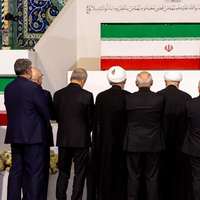
Iran’s top military commanders meet with president-elect Masoud Pezeshkian on July 7, 2024
Iran's top military commanders from the Revolutionary Guard and the traditional army, met with President-elect Masoud Pezeshkian on Saturday, a week after he won a runoff against a hardline candidate.
The military leaders included Chief of Staff Mohammad Bagheri, IRGC Chief Hossein Salami, Army Commander Abdolrahim Mousavi, Police Chief Ahmad-Reza Radan, and Defense Minister Mohammad Reza Ashtiani.
Despite a history of tensions with some past governments, Bagheri declared, "The armed forces are ready to assist the new government in advancing the country's affairs."
Last week, the IRGC chief-commander had congratulated Pezeshkian on his election victory, stressing the Revolutionary Guard's "all-out preparedness" for enhanced cooperation with the incoming administration.
President-elect Masoud Pezeshkian during a meeting with senior IRGC commanders in Tehran, July 14, 2024
The IRGC, founded after the 1979 Islamic Revolution, has grown into a powerful entity with substantial military, economic, and political influence. Its hardline stance contrasts sharply with the reformist agenda of greater political openness, economic liberalization, and improved relations with the West.
Administrations, like those of Presidents Mohammad Khatami and Hassan Rouhani, pushed for engagement with the West, while the IRGC remains committed to preserving revolutionary principles and resisting Western influence. This has led to frequent power struggles, with the IRGC often undermining their policies and supporting hardline candidates.
Former centrist President Hassan Rouhani sharply criticized the IRGC in 2017 for exerting influence over political and economic affairs. However, Pezeshkian, who is presented by some as a reformer, has pledged to follow policies charted by Supreme Leader Ali Khamenei.
Economically, reformist attempts to curb the IRGC's dominance in sectors like construction, telecommunications, and energy have been met with resistance, as the IRGC seeks to maintain its economic stronghold.
Iran has slammed what it calls "Iranophobic" statements by the office of the Argentine president, as Javier Milei doubles down on countering potential threats from Iran.
Argentina designated Hamas a terrorist organization on Friday and ordered a freeze on the financial assets of the Iran-backed Palestinian group.
President Milei's office highlighted the Palestinian militant group's deadly cross-border attack on Israel last October, which resulted in 1,200 deaths and 250 hostages taken, marking the deadliest assault in Israel's 76-year history. The statement also underscored Hamas' close ties to Iran, which Argentina blames for two deadly attacks on Jewish sites in the country in the 1990s.
Nasser Kanaani, the spokesperson for Iran's Ministry of Foreign Affairs, stated on Saturday that "uncovering the truth and resolving the case definitively is only possible if the relevant parties in Argentina distance themselves from political motives and remain uninfluenced by the interference of third parties."
Kanaani also urged Argentine officials to refrain from anti-Iranian statements and actions, warning against exposing Argentina’s national interests and bilateral relations to the "Iranophobic scenarios of the Israeli-American axis of evil."
Argentina's statements and designations come just days before the 30th anniversary of the AMIA bombing, which killed 85 people and injured hundreds more in Buenos Aires, marking the worst such attack in the country’s modern history. The other attack, on the Israeli Embassy in Buenos Aires in 1992, killed over 20 people. Argentina’s judiciary has accused members of Lebanon’s Iran-backed Hezbollah of carrying out both attacks.
The US, European Union, and several other countries have long designated Hamas, which rules the Gaza Strip, as a terrorist organization.
Since Javier Milei took office as Argentina's president in December 2023, there has been increased focus on national security, especially regarding potential threats from Iran through its alliances with Bolivia and Venezuela.
The Argentine government has expressed concerns about the potential introduction of Iranian agents into the country via Bolivia and Venezuela. Iran has been using these countries as bases to conduct activities linked to terrorism and drug trafficking.
The Milei government has heightened surveillance and border controls to prevent the infiltration of Iranian agents. This move follows the broader strategy of ensuring that the country's security apparatus is robust against any covert operations that might be directed from Iran through its Latin American allies.
The country has formally requested Interpol to arrest Iran’s interior minister, Ahmad Vahidi, for his alleged role in the attack that claimed 85 lives. Argentina has taken a significant step in its pursuit of justice for the victims of the 1992 Israeli embassy and 1994 bombing of AMIA - a Jewish community center in Buenos Aires.
Mahmoud Najafi Arab, Head of Tehran Chamber of Commerce, Industries, Mines and Agriculture (TCCIMA)
The Iranian pharmaceutical industry is facing a dual crisis of currency shortages and frequent power outages, significantly impacting production and operations.
Mahmoud Najafi Arab, head of Tehran Chamber of Commerce for Industries, Mines and Agriculture (TCCIMA) stated that Iran’s pharmaceutical and medical equipment sectors are struggling to secure both foreign currency and local rials, in an interview with state-affiliated ILNA News agency on Saturday.
"There is a problem of foreign currency supply in all industries, and the pharmaceutical and medical equipment industries are no exception," he stated. This financial strain hinders the companies' ability to obtain the necessary working capital and import essential medicines.
Iran's export revenues have drastically declined because of US oil and banking sanctions. The stringent government control over imports and the private-sector also exacerbates these difficulties, making it increasingly challenging for the industry to operate smoothly.
Adding to the financial woes, power outages have become a regular occurrence, affecting drug production units across the country. "This industry, like other industries in the country, is affected by power shortages, and spends these hot days of the year with power outages," Najafi Arab said. These blackouts, occurring twice a week, disrupt manufacturing processes and contribute to the industry's ongoing struggles.
Persistent power cuts due to aging infrastructure and natural gas shortages have caused significant disruptions in Tehran's industrial hub. Each outage severely impacts industries, taking about 24 hours to restart operations, thereby increasing losses.
Activists staging a protest in Milan, Italy to condemn the death sentence of Sharifeh Mohammadi
Dozens of activists have taken to the streets in Milan, Italy, on Saturday to protest the death sentence of Iranian labor activist Sharifeh Mohammadi.
The demonstrators, holding pictures of Mohammadi, chanted slogans demanding the abolition of the death penalty in Iran, emphasizing their solidarity with Iranian labor activists and their opposition to capital punishment.
The death sentence for Mohammadi, a female labor activist in Iran, has ignited widespread condemnation. Convicted on fabricated charges of armed rebellion, she has become a symbol of Tehran's harsh crackdown on dissent. The announcement came just a day before Masoud Pezeshkian's victory in the July 5 presidential runoff, who has been presented as a "reformist" politician.
The Campaign to Defend Mohammadi, initiated on Instagram by her family, asserts that the sentence is based on the pretext of her decade-old membership in an independent, public, and legal labor organization, underscoring the verdict's perceived injustice.
Previously, Italian labor organizations such as the Confederazione dei Comitati di Base (Cobas) and the Confederazione Generale Italiana del Lavoro (CGIL) called for the abolition of the death sentence and the release of Mohammadi. They urged the Italian government and European Union institutions to mobilize and demand that the Islamic Republic revoke her conviction.
In a statement, the Italian organizations described the death sentence for Mohammadi as "part of a systematic strategy by security institutions to instill fear and marginalize social movements in Iran's future political developments."
Five French and eight Danish labor unions have issued statements protesting the death sentence of Mohammadi and called for her immediate release.
Additionally, Robin Korte, a member of the North Rhine-Westphalia regional parliament in Germany, has undertaken political sponsorship of Mohammadi, emphasizing international support for her cause.
According to human rights groups, Mohammadi was deprived of basic prisoner rights during her detention, including in-person visits and phone calls. She was denied visits by her family, particularly her child, and was not permitted to contact them by phone for an extended period. The physical and psychological torture inflicted on Mohammadi by Ministry of Intelligence officials was so severe that even prison authorities expressed concern for her life.
Eighty-five political prisoners in Evin Prison also initiated a hunger strike on Thursday to protest the "unjust sentence" of execution for Mohammadi. Unions and activists in Iran, including The Syndicate of Workers of Tehran and Suburbs Bus Company, have also condemned the charges against the labor activist. In a statement, they called the accusation of "rebellion" against her "completely baseless" and "pure falsehood," demanding her immediate and unconditional release.
Arrested in December 2023, Mohammadi is among the latest victims in a wave of executions aimed at quelling dissent. According to the United Nations, 834 Iranians were executed last year, marking a record high and a 50 percent increase from the previous year. Of those executed, at least 22 were women, making Iran the world's leading executioner of women. The 2023 figures were the highest since 2014, as reported by Iran Human Rights.
American foreign policy experts, lawmakers and advocacy groups continue to criticize the Biden administration's Iran policy, demanding answers on the nuclear issue and offering recommendations.
Former national security advisor John Bolton tweeted on Friday that the White House has failed to hold Iran responsible for the mayhem in the Middle East.
"Biden still has not acknowledged Iran as the chief aggressor in the Middle East. Americans must know that Tehran is using terrorist proxies like Hamas and Hezbollah to wipe out Israel, and the U.S. is next. This is a failure for our national security," Bolton, who is both a critique of Biden and former President Donald Trump said.
Earlier in the week, Senator Lindsey Graham (R-SC), who co-authored Public Law 117-263, Section 5593 of the Iran Nuclear Weapons Capability and Terrorism Monitoring Act of 2022, accused the administration of violating the law by missing crucial deadlines.
The law mandates a biannual assessment to Congress on Iran’s uranium enrichment and nuclear weapons development progress which led the United Nations' nuclear chief Rafael Grossi to admit recently that Iran is "weeks not months" away from a nuclear weapon.
In a letter to Avril Haines, the Director of National Intelligence, Senator Graham stated that the administration is "in violation of the law" for missing two Section 5593 assessment deadlines in the past year and failing to submit Section 7413 assessments when Iran reaches major enrichment thresholds.
A coalition of US foreign policy and advocacy organizations this week urged policymakers to intensify their focus on countering the Iranian nuclear threat.
The Vandenberg Coalition and the Foundation For Defense of Democracies Action led the letter signed by nine other organizations, which provides a comprehensive list of recommendations for US and allied policymakers to “degrade and reverse Iran’s nuclear campaign, deter Iranian terror and empower Iranian dissidents.”
According to the letter, Tehran continues to fund terrorism, develop dangerous weapons, oppress its own people, and take foreign hostages, demonstrating a longstanding resistance to reform. It emphasizes that Iran has accelerated its nuclear program, necessitating a comprehensive response from US policymakers.
The coalition asserted that "The election of Masoud Pezeshkian as Iran's President will neither resolve these issues nor alter Iran's trajectory," emphasizing that Iran’s security policy remains firmly under the control of the Supreme Leader. They further stated that the President lacks authority over the security services or the actions of the Islamic Revolutionary Guard Corps (IRGC).
The letter, addressed to US policymakers, outlined a set of measures designed to address the multifaceted challenges posed by Iran. The strategies include:
- Degrade and Reverse Iran’s Weapons Program: Use international pressure, trigger UN arms embargo provisions, and require regular reporting on Iran’s nuclear activities.
- Deter Iran from Aggression and Terrorism: Strengthen alliances, expand sanctions, and hold Iran accountable for proxy actions.
- Empower Internal Dissidents: Provide Iranian dissidents with knowledge, resources, and internet access, highlight their plight, and offer reform support programs.
- Ensure American Defense: Provide adequate defense resources, develop military options to prevent nuclear acquisition, and enhance border security and cyber resilience.
Tehran's covert actions and refusal to fully cooperate with the International Atomic Energy Agency (IAEA) have heightened suspicions about its intent to develop nuclear weapons, potentially triggering a regional arms race.
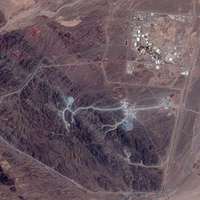
Recent reports from the Institute for Science and International Security (ISIS) and the Washington Post indicate that Iran plans to significantly increase its uranium enrichment at Fordow, one of its most secretive nuclear sites. Experts have warned that within a month, Iran could produce enough weapons-grade uranium for five nuclear weapons at Fordow.
In June, the UN nuclear watchdog's Board of Governors passed a resolution censuring Iran and demanding it resolve outstanding issues with the IAEA regarding its advancing nuclear program. The IAEA's June report stated that Iran continues to expand its nuclear activities in ways that "have no credible peaceful purpose." The IAEA has demanded Iran enhance cooperation with the agency and reverse its recent barring of inspectors.
Oil and gas industry workers staging a protest in southern Iran, July 2024.
Amid soaring inflation and worsening economic conditions in Iran, the ongoing oil and gas workers' strike has expanded to 24,000 workers as it entered its 23rd day on Friday.
Commencing on June 19 under the initiative of the unofficial Council for Organizing Oil Contract-Workers' Protests, the strike has united workers from “123 companies” in the oil and gas sector.
The workers, who are calling for significant changes including eliminating intermediary contractors, wage increases, and improved working conditions, have warned that the strikes will escalate if their demands are not met.
Also, the US-based Human Rights Activists News Agency (HRANA) reported on Saturday that workers at the Iranian Offshore Oil Company employees on Lavan Island in the Persian Gulf staged a workplace protest, voicing their discontent over the unaddressed demands.
Additional concerns of the contract workers in the oil and gas industry include substandard dormitory conditions, inadequate working conditions, and insufficient workplace safety measures, all of which have yet to be sufficiently addressed.
Adding to the tensions, protesting workers have been receiving threatening text messages from supporters of the contractors, which many see as an attempt to suppress the growing dissent, according to Alireza Mirghaffari, a member of the Supreme Council of Labor Associations.
In recent years, Iran's oil and gas sector has increasingly replaced regular employees with contract workers who endure harsh conditions and low pay.
In February, assurances were given that the Job Classification Act (JCA) would be implemented, with workers receiving their salaries accordingly by May. However, this promise still needs to be fulfilled. The absence of job classifications results in workers being trapped in precarious temporary positions for years, with inconsistent pay rates for the same work.
The JCA covers only some of Iran's wage earners, leaving their jobs unclassified, which has become the norm.
Initially, the strike involved 8,000 oil contract workers from over 60 contracting companies. With the number of strikers now reaching 23,000, the protest is rapidly gaining momentum.
These protests are part of a broader wave of labor unrest in Iran, driven by delayed wages, low pay, and layoffs that have intermittently disrupted various industrial sectors since 2018.
Over the past decade, many components of the oil and gas industry have been outsourced to influential regime insiders as intermediary contractors. These contractors underpay workers and subject them to harsh working conditions. Traditionally, oil workers in Iran enjoyed the highest salaries and best benefits.