• العربية
  • فارسی
Brand
  • Iran Insight
  • Politics
  • Economy
  • Analysis
  • Special Report
  • Opinion
  • Podcast
  • Iran Insight
  • Politics
  • Economy
  • Analysis
  • Special Report
  • Opinion
  • Podcast
  • Theme
  • Language
    • العربية
    • فارسی
  • Iran Insight
  • Politics
  • Economy
  • Analysis
  • Special Report
  • Opinion
  • Podcast
All rights reserved for Volant Media UK Limited
volant media logo

Former Iranian President Seeks Airtime to Address Debate Accusations

Jun 21, 2024, 10:30 GMT+1
Iranian former president Hassan Rouhani

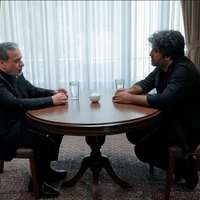
Iran's former president Hassan Rouhani has demanded airtime on Iranian state television for the second time this week to address what he says are "accusations" against him by some presidential debates.

Drawing from Supreme Leader Ali Khamenei's earlier call for contenders to avoid "slander and refrain from smearing each other," Rouhani's office asserted that these actions have been directed towards him.

During debates, conservative candidates frequently criticized Rouhani's 'reformist' tenure, with Alireza Zakani, Tehran's Mayor and a presidential candidate, remarking, "Rouhani's eight-year tenure was a dark era that worsened the country's situation."

His letter, cited by Iranian media, criticized certain candidates for allegedly “flouting moral and legal standards”, urging the Islamic Republic of Iran Broadcasting (IRIB) to “honor its commitment to provide equitable airtime”.

Hardliners have been accusing Rouhani for Iran's current economic crisis that worsened after the United States withdrew from the 2015 nuclear deal six years ago and imposed economic sanctions.

The former president also lodged a complaint following the broadcast of the first debate on Monday.

After his initial complaint, IRIB urged Rouhani to clarify the precise nature of the allegations and specify when they were made during the debates. Despite this, his subsequent complaint, like the first, lacked specific details.

Most Viewed

Iran diplomacy wobbles as factions compete to avoid looking soft on US
1
INSIGHT

Iran diplomacy wobbles as factions compete to avoid looking soft on US

2
ANALYSIS

The politics of pink: how Iran uses cuteness to rebrand violence

3

Scam messages seek crypto for ships’ safe passage through Hormuz, firm warns

4
EXCLUSIVE

Family told missing teen was alive, then received his body 60 days later

5
INSIGHT

Is Iran entering its Gorbachev moment?

Banner
Banner

Spotlight

  • Diplomacy tolls at Hormuz as conflict returns to its doorstep
    OPINION

    Diplomacy tolls at Hormuz as conflict returns to its doorstep

  • Opposition to US talks grows in Tehran as ceasefire deadline nears
    INSIGHT

    Opposition to US talks grows in Tehran as ceasefire deadline nears

  • Tehran moderates see ‘no deal–no war’ limbo as worst outcome
    INSIGHT

    Tehran moderates see ‘no deal–no war’ limbo as worst outcome

  • The future has been switched off here
    TEHRAN INSIDER

    The future has been switched off here

  • Lights out, then gunfire: Witnesses recount Mashhad protest crackdown
    VOICES FROM IRAN

    Lights out, then gunfire: Witnesses recount Mashhad protest crackdown

  • Is Iran entering its Gorbachev moment?
    INSIGHT

    Is Iran entering its Gorbachev moment?

•
•
•

More Stories

US Backs Canada's Terrorist Designation of IRGC, Offers Global Support

Jun 21, 2024, 08:40 GMT+1

US State Department spokesman on Thursday welcomed Canada's decision to designate the Iran's Revolutionary Guard (IRGC) as a terrorist group, pledging support for other countries considering similar actions.

“The IRGC’s terrorism and lethal plotting threaten the entire world, and we stand ready to provide support as other countries consider designating the IRGC as a terrorist organization,” stated Matthew Miller.

The spokesman elaborated that the US is prepared to supply information to other countries regarding IRGC activities, emphasizing the regular practice of sharing intelligence and other pertinent information with allies and partners about the actions of terrorist supporters globally.

Following years of campaigning by activists, Canada's recent designation of the IRGC as a terrorist group comes after uncovering plots where the entity raised funds and recruited agents within Canada.

The US designated the IRGC in 2019, and Canada had already imposed multiple rounds of sanctions on terrorist entities supported by the IRGC, such as Hezbollah, Hamas, the Palestinian Islamic Jihad, and the Taliban, which further Iran’s interests and foreign policy.

This designation has reignited calls for global action, with senators in Australia urging their government to follow Canada's lead.

What Does Canada's IRGC Terror Listing Really Mean?

Jun 21, 2024, 07:55 GMT+1
•
Negar Mojtahedi

There's been a lot of reaction after the Canadian government designated the Islamic Revolutionary Guard Corps (IRGC) as a terror entity, but what does it entail and how will it be implemented?

Canada is a favorite destination for Iranians who want to emigrate to free countries where they can build better lives. One reason is the relative ease of obtaining visas, while it is much tougher to enter the United States. But among tens of thousands who immigrate there are also former member of the IRGC and Iranian government officials with ties to the now terror-listed entity. The question is what will happen to people who still maintain ties to the regime in Iran, especially financial and political connections.

It may be months before Canada sees the impact of the designation in terms of any potential deportation, but one aspect that is immediate and far reaching is financial, according to policing and financial crime expert Gary Clement.

Clement, a former RCMP Superintendent, who spent 30 years with the Mounties, told Iran International the terror designation has teeth.

"It opens the door to look at going after any of the finances or freezing bank accounts and everything from the terrorist group. So I think that's going to be a tremendous benefit and enables the fact that any money cannot be collected for the benefit of this group in any way, " said Clement.

The listing process stems from the Anti-Terrorism Act of 2001, and is set out in section 83.05 of the Criminal Code.

According to the law, entities can only be listed as terrorists, but an entity can be a person, group, partnership, fund or an unincorporated association or organization.

Canada's criminal code specifies that it’s a crime to provide property or financial services that could benefit a terrorist group.

That aspect of the criminal code is what leads to consequences, said Clement on why the designation has serious implications.

"Anyone that's deemed to be part of this or trying to get individuals on board, can lead to terrorist charges," said Clement.

Clement said it's now up to banks, brokerages, and other financial institutions to report if they hold terrorist property and freeze it.

Clement, who managed the national police force's financial crime program, said the terror listing allows various Canadian institutions to share more information with law enforcement.

"Anything that came in from FINTRAC [The Financial Transactions and Reports Analysis Centre of Canada] that relates to this group or may have related to this group, that information can now be shared with law enforcement because they're a terrorist group."

Jonathan Wilkinson, the Liberal Member of Parliament (MP) for North Vancouver, BC, which is a predominately Iranian-Canadian riding, has been advocating for the IRGC terror listing for several years.

"I was very pleased. I think it's very important for us to be able to go after the financial, assets that may exist in this country. I think it's very important for us to be able to go after some of the folks that are tied to the IRGC that may be living in this country," Wilkinson said.

A Global News Investigation uncovered more than 700 regime-linked associates operating in Canada, threatening and intimidating Iranian-Canadian dissidents on Canadian soil. That investigation also revealed that Masih Alinejad, an American human rights activist was warned by the FBI not to travel to Canada because she would not be safe from the long arm of the Iranian regime.

Wilkinson said on a political level, Canada's Minister of Public Security, would be responsible for overseeing how they determine who is an IRGC agent, working in conjunction with intelligence and law enforcement like the RCMP and Canadian Security Intelligence Service (CSIS).

If someone is a family member of the IRGC, Wilkinson said, they would only be impacted if they "knowingly" aided an IRGC agent, but that is something that is yet to be determined in the coming months. Just being related to an IRGC does not lead to any charges.

When it comes to the deportation of IRGC members, Wilkinson said it would a lot less complicated for those who are not full Canadian citizens, but "in the context of Canadian citizens, that is something that we are going to be working through the Immigration Department, it is more complicated," he said.

Independent Toronto area MP Kevin Vuong has been advocating for the Iranian-Canadian community, and the victims families of flight PS752 that was shot down by the IRGC over Tehran in 2020 killing 176 people onboard.

He's been fighting alongside the families for justice and to enlist the IRGC as a terrorist entity.

One of the those victims was a student Vuong taught at the University of Toronto who later became his friend, Mohammad Amin Jebelli.

While he welcomes the decision to enlist the IRGC, he questions why now?

"This is more than just symbolic. There is real teeth behind this, which kind of begs the question, why did the Trudeau government refuse to take this definitive, concrete action for so long?"

Vuong said instead of speculating 'why', he chooses to focus on ensuring that actions will be taken to carry out the proscription.

"What's key for me now is now that they are a listed a terror group, that actions will be taken to ensure that Iranian Canadians are safe, but also that all Canadians are safe. And that means prosecuting the IRGC and kicking out their operatives from from being able to operate on Canadian soil," he said.

With the designation, Vuong said, anyone supporting the terror group would be charged and prosecuted under Canada's judicial system.

Vuong believes the issue is one of national security for all Canadians - but especially for the Iranian and Jewish communities who have been most impacted.

"It was the IRGC that train and equip Hamas to be able to commit those unspeakable atrocities of October 7th. Unfortunately, all these terrorist groups are linked and they work with one another," said Vuong.

Iran Summons Italian Envoy to Protest Canada’s Listing of IRGC as Terrorist

Jun 20, 2024, 22:55 GMT+1

Iran’s Foreign Ministry on Thursday summoned the Italian ambassador in Tehran, who is responsible for protecting Canada's interests in Iran, to lodge the Islamic Republic’s protest at Ottawa’s designation of the IRGC as a terrorist entity.

The Foreign Ministry said the it expressed Tehran’s “strong protest” against the “unlawful and internationally illegal” action of the Canadian government.

”In addition to warning about the consequences of this action, Iran's right to take necessary measures and reciprocal actions was emphasized,” a statement by Iran’s Foreign Ministry said.

The Italian ambassador vowed to promptly convey the message to the Canadian government, the statement added.

Another Iranian Whistleblower Arrested Ahead of Presidential Election

Jun 20, 2024, 22:02 GMT+1

Security forces have arrested Vahid Ashtari, a social media activist and whistle-blower, to serve his jail term, shortly after he released documents against Parliament Speaker Mohammad-Bagher Qalibaf.

The announcement was made Thursday evening in a tweet by Mehdi Keshtdar, managing editor of the judiciary’s news agency (Mizan).

In a video clip tweeted a few hours before his arrest, Ashtari said he had not received any official summons to serve the sentence. Ashtari said in the video that he was in Qazvin but had been informed by colleagues and friends that security forces were looking for him to arrest him.

Ashtari is well known for his revelations of corruption against presidential candidate Qalibaf and his family and other officials.

The whistle-blower is a member of Edalat Khahan (Justice Seekers), a political group of mainly university students loyal to Iran's Supreme Leader Ali Khamenei and close to former nuclear negotiator Saeed Jalili who is also running for presidency in the June 28 snap elections.

In April 2022, Ashtari’s revelations sparked the Layette-gate scandal that led to calls for Qalibaf’s resignation and resurfacing of other alleged corruption cases against his family.

Ashtari made his latest revelation about the case on Wednesday by releasing a document that proved Qalibaf’s daughter lied about the matter in an election-related interview with the state television Tuesday.

Earlier this month, the judiciary also arrested journalists and whistle-blowers Saba Azarpeik and Yashar Soltani, also known for their revelations against Qalibaf, to serve sentences not yet executed.

Nuclear Deal, Sanctions Becoming Major Topic in Iran Election

Jun 20, 2024, 18:40 GMT+1
•
Maryam Sinaiee

The nuclear issue and the crippling impact of sanctions on the Iranian economy, so far largely avoided by the candidates, appear to be turning into an important part of discussions and debates.

The turning point came Monday when former Foreign Minister Mohammad-Javad Javad Zarif made a bold entrance into the election scene alongside the pro-reform candidate Masoud Pezeshkian with a fiery speech at a televised roundtable discussion.

“The whole of Pezeshkian’s candidacy, even if he is not elected, was worth the few minutes that Zarif spoke to the people on TV. These words were anti-spell to the one-sided slanders of the extremists. The reign of lie will not last,” Mohammadreza Javadi Yeganeh, professor of sociology at Tehran University, tweeted after Zarif’s speech Monday.

Zarif who has always insisted that the 2015 JCPOA agreement with world powers was signed with Supreme Leader Ali Khamenei’s full approval, defended the Rouhani administration and his own performance in crafting the deal and its immediate economic outcome.

He also showed a few graphs to prove the deal and the lifting of sanctions had helped Iran's economic growth in 2016 and 2017 and asserted that hardliners’ ability to sell more oil since 2021, in which they take huge pride, was solely due to US President Joe Biden loosening the sanctions.

Ultra-hardliner Saeed Jalili who is one of the top three contenders to the presidency said Tuesday in response to Zarif’s remarks, “Today I heard that [someone] has said it was Trump [who imposed sanctions on Iran] and that [Joe] Biden had a different approach. Why did you not continue [your talks with him] during the nine months of your time when Biden was [president]?”

In fact, The Rouhani administration did participate in in indirect talks with the United States from April to June 2021, but they did not reach an agreement before the end of his term and the election of hardliner Ebrahim Raisi, who took office in August of that year.

“Biden not only did not remove Trump’s sanctions but also imposed tens of other sanctions,” Jalili added.

“Mr. Zarif's statements yesterday were wrong, and he was unfair. I will answer his insult tomorrow [in televised campaign programs],” ultra-hardliner candidate Alireza Zakani, who many believe is playing a supporting act to Jalili, said Tuesday.

Zarif has thrown all his weight behind Pezeshkian, a former lawmaker and health minister previously little known to many ordinary Iranians, particularly the younger generation, who may potentially cast their ballots for Pezeshkian if swayed to vote rather than boycott the elections.

The former foreign minister accompanied Pezeshkian Tuesday morning at a campaign trip to Isfahan, Iran's third-largest city and delivered a short speech at his campaign meeting in Tehran in the evening of the same day when he urged Iranians to vote for Pezeshkian. “Not voting is voting for the [hardliner] minority,” he said.

So far Pezeshkian has made no indication that he intends to propose Zarif as his foreign minister to the newly elected, hardliner-dominated parliament if he is voted president.

In a meeting on Wednesday with his former deputies and ministers, former President Hassan Rouhani also accused Jalili and the three other hardliner candidates, namely Zakani, Mohammad-Bagher Ghalibaf, and Amir-Hossein Ghazizadeh, of only believing in “war and confrontation”.

“They say we have no way other than fighting and confronting the world powers and defeating them and that [Iran] will never win in the United Nations and negotiations with big countries,” Rouhani, who was barred from running in the elections of the Expediency Council in March by the Guardian Council, said.

At an economic roundtable discussion Wednesday, conservative candidate Mostafa Pourmohammadi also touched upon the issue of the nuclear deal and sanctions. He said his government would complete the “unfinished” business of the JCPOA, which he describes as "not perfect" while accusing hardliners of sabotaging the talks.

“Pressures and damages [caused by sanctions] are serious and certain imprudent actions have increased the damages,” the conservative Pourmohammadi who insists he will negotiate even with the "bitterest enemy" said.