Iranian officials continue to laud the missile attacks by the Islamic Revolutionary Guard Corps (IRGC) on positions in Pakistan, Iraq, and Syria.
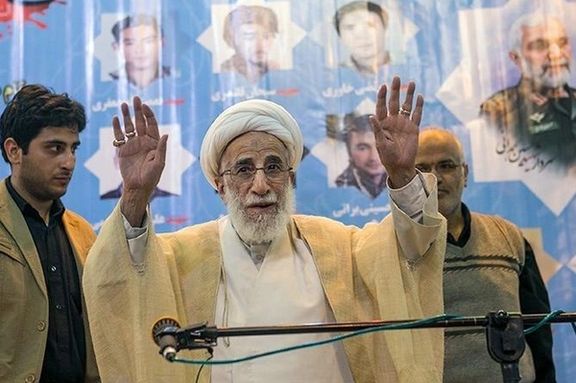
Ahmad Jannati, Secretary of the Guardian Council, hailed the missile operations, stating, "the recent intelligent and powerful missile operations by the IRGC against terrorist forces once again demonstrate the comprehensive and faith-based prowess of the Islamic Republic."
Vice-President for Parliamentary Affairs, Mohammad Hosseini also said that "the action by the armed forces was very valuable and demonstrated that our words were not merely for appeasing the people."
On Tuesday, the Islamic Revolutionary Guard Corps (IRGC) claimed a series of missile and drone operations against Iraq, Pakistan, and Syria. They claimed a “spy headquarters” in Erbil, Kurdistan Region of Iraq, as well as ISIS centers in Syria and Jaish al-Adl militants’ group inside Pakistani territory were targeted.
President Ebrahim Raisi said the attacks were a step towards "tranquility" during the Wednesday cabinet session, though it has inflamed already mounting tensions in the region into new fronts.
The missile strike on Tuesday marked Iran's first significant incursion into Pakistan's sovereign territory. In retaliation for Iran's missile attack, Pakistan targeted several locations inside Iranian territory early on Thursday, resulting in the death of nine, including three women and four children, according to official Iranian news agencies.
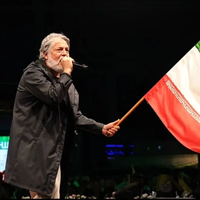
A noose is seen as people hold Iranian flags during a protest on the day of the Munich Security Conference, in Munich, Germany February 17, 2023.
At least 12 prisoners in Iran charged with political or security-related offenses now face death sentences amidst a record year of executions.
The US-based Human Rights Activists News Agency (HRANA) reported that the men are detained in prisons around the country.
The report emphasizes the involvement of branches 26 and 28 of the Tehran Revolutionary Court, led by Judges Iman Afshari and Mohammad Moghiseh, in issuing death sentences for eight of the individuals in two separate cases.
Charges against them include allegations of "insurgency, corruption on earth, membership in opposition parties, and collaboration with foreign countries." Despite repeated assertions of the baselessness of the accusations in letters published by human rights organizations in recent years, the prisoners now find themselves on death row.
HRANA, after scrutinizing the current status of the 12 prisoners, has declared that the report illustrates a "repetitive and alarming pattern of human rights violations in Iran." The human rights organization condemns instances of confessions obtained under torture as “blatant injustices and clear violations of the fundamental rights of these individuals.”
The organization additionally emphasized, "In terms of access to their chosen legal representation, these prisoners have never effectively exercised this right, and their trials have been short and riddled with numerous flaws, indicative of their deprivation of fair trial proceedings."
As the regime struggles to contain dissent, hundreds of Iranians were killed last year, many of whom were political prisoners, with a spike in executions for drug related offences.
Iranian Defense Minister Mohammad-Reza Ashtiani expressed support for the attacks carried out by Yemeni Houthi rebels on commercial ships headed for Israel.
Ashtiani, echoing sentiments from other Iranian officials, commented on the Houthi actions, stating, "The Yemenis' opposition to the passage of ships bound for Israel resonates with people worldwide. The action by the Yemenis is a reflection of global desires, as they align with the aspirations of people worldwide. The Yemenis are moving in the direction of the world's wishes, undoubtedly achieving victory, and we commend their efforts."
In a speech on Tuesday, Iran's Supreme Leader Ali Khamenei applauded the Houthi rebels for striking a blow to what he referred to as the "vital arteries of Israel." The Shiite Houthi group, known as Ansarullah, has received substantial financial and military support from the Islamic Republic over the years.
Despite accusations of supporting Houthi rebels, Iran's Foreign Minister, Hossein Amir-Abdollahian, recently rejected such claims. In an interview with CNBC at the World Economic Forum in Davos, he stated that individuals from Yemen and other regional countries defending the Palestinians are acting independently. Amir-Abdollahian claimed that Iran, while having supported the group militarily and financially for years, does not control their actions.
The Houthi attacks on global shipping, including vessels linked to the United States and Israel, have escalated since November in the wake of the Gaza war. The Houthi blockade aims to force a ceasefire on Israel's retaliatory attacks for the October 7invasion of Israel by Hamas, killing 1,200 mostly civilians and the kidnapping of over 250 more.
The US State Department condemned recent Iranian airstrikes in Pakistan, Iraq, and Syria, urging a peaceful resolution to the escalating tensions in the region.
“We do condemn those strikes. We’ve seen Iran violate the sovereign borders of three of its neighbors in just the past couple of days,” Miller stated in Washington. “Certainly, we always want to see peace and stability maintained, especially in this region, where it’s been the focus of our diplomatic efforts since October 7th.”
The condemnation follows Pakistan's announcement that Iran violated its airspace, resulting in an attack on a border village that claimed the lives of two children and left three women injured.
The Iranian assault, reportedly targeting the Pakistan headquarters of Jaish Al-Adl, a group labeled as a "terrorist organization" by Iran since its inception in 2012, utilized both missiles and drones.
The deputy governor general of the restive Sistan and Baluchestan province told Iranian state TV that airstrikes carried out by Pakistan targeted a border village, killing three women and four children, all non-Iranian citizens.
Pakistan's Foreign Ministry announced in a statement that the country had undertaken "a series of highly coordinated and specifically targeted precision military strikes against terrorist hideouts in Sistan and Baluchistan province of Iran."
Pakistan earlier took diplomatic measures, recalling its ambassador from Iran and preventing Tehran's envoy from returning to Islamabad.
State broadcaster presenter Zhila (Jila) Sadeghi during a TV show (January 2024)
Iran's state television is trying to overcome women’s unwillingness to vote in the March elections by changing its decades-long dress code for female presenters.
On Tuesday, Iran's state broadcaster (IRIB) took an uncommon step by featuring a female presenter wearing an outfit that deviated from the traditional dress code enforced on women in Iran. This attire has historically subjected many Iranian women to various forms of trouble, including being denied entry into government buildings.
Zhila (Jila) Sadeghi who hosted a morning program wore a cream-colored, tailored jacket over a long, frilly black skirt and a patterned headscarf of red, gold and cream, and lots of make-up which made her look very much like hijab-wearing women in some other countries of the region, particularly Turkey and Lebanon. In the past, she had mostly appeared on air wearing a chador.
Most female presenters wear a long black veil (chador) over a lighter colored headscarf that tightly covers their hair and neck. Others wear a less condoned outfit consisting of a long coat (manteau), wide-legged trousers and a large headscarf coming down to the chest to disguise their figures as much as possible. Make-up, particularly lipstick, is not tolerated.
State broadcaster presenter Zhila (Jila) Sadeghi in two different episodes
Sadeghi's strikingly different attire, particularly given her reputation as a staunch regime advocate, made significant waves in Iranian media and social media. While the media in Tehran reported on IRIB's new approach without extensive commentary, presumably due to concerns about censorship, it did not escape the notice of social media users.
On social media, many users interpreted this move as a hypocritical attempt to portray a more favorable image of the regime's stance on hijab ahead of the elections, rather than a genuine shift in the regime's approach to the issue. Some pointed out that over the past year, authorities in Iran have shuttered numerous businesses, confiscated many vehicles, and harassed thousands of women over hijab-related issues, leading to the tragic deaths of two young women, Mahsa (Jina) Amini and Armita Geravand, both of whom sustained fatal head injuries from hijab enforcers.
Ali Ahmadnia, journalist, pointed out on Twitter that not long ago a woman wearing the same kind of outfit would be detained by hijab police and accused of being “the enemy’s foot soldier who wants to undermine religious beliefs”. “But now there is a TV host wearing a jacket suit on air. What things we have not witnessed!” he tweeted.
However, some observers stressed that a television host does not have the autonomy to decide her on-air appearance, suggesting that Sadeghi's attire must have been dictated or at least approved by individuals with significant decision-making authority within the organization or even the regime.
Iran is set to hold parliamentary and Assembly of Experts elections on March 1, with the latter responsible for appointing Supreme Leader Ali Khamenei's successor. Authorities, including Khamenei, who have historically argued that high voter turnout is a testament to the regime's legitimacy, appear to be deeply concerned about the possibility of very low turnout in the upcoming elections.
Polls conducted so far indicate that turnout may even be lower than the 2020 parliamentary elections and 2021 presidential elections both of which set the lowest turnout records in the history of the Islamic Republic. Some estimates indicate a turnout as low as 10 percent.
Disillusioned with the regime’s claims of improving ordinary people’s lives, frustrated by lack of social and political freedoms and vast corruption, as well as harsh treatment of critics and dissidents, many Iranians have made up their minds not to vote in any elections again because they don’t expect their votes to change anything.
The Iranian armed forces are set to launch an air defense drill on Thursday in the Persian Gulf and the Gulf of Oman.
IRNA, the Iranian state news agency, reported that the drill will be conducted over an area of 600 kilometers.
The Iranian army and the IRGC’s naval and air forces will participate, IRNA added.
Qader Rahimzadeh, an Iranian air defense commander, said that several state-of-the-art systems will be on display for the first time in this drill.
Dozens of manned and unmanned aircrafts will use “the tactics of the day” to attack the critical sites identified in this drill, Rahimzadeh claimed.
Fars news agency, affiliated with the IRGC, reported that this is the fifth air defense drill in which the IRGC and the Iranian army jointly take part.
The drill comes against the backdrop of rising tensions in the region. Over recent days, the IRGC attacked several positions in Iraq’ Kurdistan region, Syria and Pakistan in what it called an attempt to target terrorists and Israeli agents. Pakistan retaliated by attacking several locations in southeastern Iran early Thursday.
Also, following the Israel-Hamas conflict, Iran-backed Houthis have time and again targeted trade vessels in the Red Sea, the Gulf of Aden, and the Bab el-Mandeb Strait.
Two days after the resolution was approved, the US and UK targeted dozens of Houthis’ sites in Yemen. Though the raids have degraded Houthis’ military capabilities, they have failed to prevent the militant group from its destabilizing actions.
The Islamic Republic has avoided any direct involvement in the Israel-Hamas conflict. However, the regime has used its proxy groups in the region such as Houthis and Hezbollah to attack Israeli and American targets.