Iran's Oil, Gas Sectors Reportedly On Strikes

Reports circulating on social media indicate that some sectors within Iran's oil and gas industry began engaging in strikes on Saturday in protest to low pay and dismal work conditions.
Reports circulating on social media indicate that some sectors within Iran's oil and gas industry began engaging in strikes on Saturday in protest to low pay and dismal work conditions.
Activists suggest that the continuation of such strikes, coupled with the potential involvement of other critical sectors, could lead to serious challenges for the government, while the economy overall is in crisis.
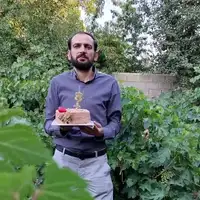
In a video message, Mohammad Javad Sabouri, a former employee of the South Pars Oil and Gas Company, urged support from various segments of the population to rally behind nationwide strikes by oil and gas industry personnel in the South Pars (Persian Gulf) region. The primary objective is to disrupt the economic machinery of the Islamic Republic, he noted.
However, details about the location and companies affected by the strikes are still not available.
The development harkens back to actions taken last April when workers from Iran's oil, gas, and petrochemical industries initiated a strike, demanding wage increases in response to an annual inflation rate exceeding 50 percent. Contract workers in cities like Asaluyeh, Dehloran, Gachsaran, and Kangan ceased work, pushing for a 79% raise based on their proposed list. Currently, most workers earn around $120-150 per month, while a family of four requires $450 for basic needs.
Recent months have witnessed a surge in protests against economic hardship, with workers, guild members, and retirees across various industries and regions expressing their discontent. The demonstrations have frequently faced crackdown by security forces.



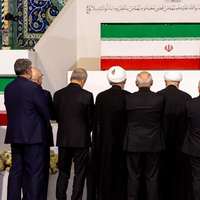
The Coordination Council of Teachers Associations in Iran expressed concern over the deaths of over 20 school students in a deadly bomb attack in the city of Kerman this week.
The council pointed out that a number of students attended the event without the presence of their families, attributing it to the planning of the ministry of education. The students are considered victims of what the council described as “the propaganda policies of the education system.”
On the fourth anniversary of IRGC General Qasem Soleimani's death, a twin bombing occurred at his gravesite on Wednesday, resulting in the death of about 90 people. Iranians are now questioning the ongoing impact of the commander's legacy, especially considering that during Soleimani’s burial procession in 2020, about 60 people were crushed to death in a stampede.
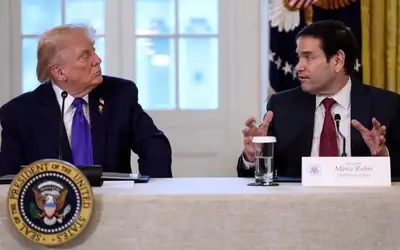
In the aftermath of the targeted killing of Qasem Soleimani in January 2020, former US President Donald Trump referred to him as "the number-one terrorist anywhere in the world."
Following Hamas' actions in Israel on October 7, Soleimani's name resurfaced in Iran's state-affiliated media. While many officials hailed the attack as a fulfillment of Soleimani's efforts, they simultaneously denied any direct involvement in the planning or execution of the operation.
Abdollah Naseri, a former CEO of state news agency IRNA, criticized the Iranian authorities for an extensive propaganda campaign, portraying Soleimani as a national hero. Naseri stated that Soleimani has been a 30-year burden on the nation without making any substantial contributions to the people's wellbeing.
Former football star, Ali Karimi, is now a social heavyweight in Iran, with 15 million Instagram followers - no longer as a soccer hero but as a political influencer.
Living in exile in Europe, Karimi became one of the influential voices during anti-regime protests in 2022, using his influence on social media to defend young women and men, who were facing heavily armed vigilante and security forces.
For years, soccer spectators have been loudly chanting his name in stadiums, despite the authorities' disdain for him. His messages prove remarkably effective and influential during critical moments, to the extent that state television hosts have officially insulted him, labeling him as dishonorable and unworthy.
As an example of his style, on January 3, Karimi posted a twelve-word Persian tweet and received 103,000 likes, more than most famous Western politicians can ever dream of. It simply said, “Have you ever seen an honorable and decent person support this regime? I haven’t seen one.”
Ali Karimi, as a social phenomenon, prompts three questions for observers of Iran: How did a soccer player emerge as the voice of opposition in a country where professional soccer is state-owned? Why can't the government simply ignore him? And what are the underlying themes of Karimi's messages that have elevated him to a position of greater influence than even the most renowned artists, politicians, and religious authorities in the country?
Message: expressing the feelings of the main streets
Let's begin with the last question. Ali Karimi has attained an intuitive grasp of conveying the sentiments of ordinary people on the streets, in bazaars, taxis, shops, barbershops, gatherings, and even at funerals. His messages mirror the conversations that take place among people in these everyday settings, resonating like precious gems in their hands. Millions of individuals share and transmit his messages among themselves. He adeptly seizes the moment, creating opportunities for dialogue or progression, and hands the metaphorical ball to the people, allowing them to take shots at the government's policies.
Karimi transmits his messages, often in very brief format, vis social media to people in Iran. The impact that his messages and posts by other activists have among the people is the reason why Iran had blocked almost all global social media platforms. Islamic Republic’s leaders, including its 84-year-old ruler Ali Khamenei detest the Internet and messaging apps mainly for this reason.
Upgrade to the voice of the voiceless
Over a span of 15 years, Ali Karimi evolved into a prominent advocate for the non-elite population in opposition to the government. During the waves of the Green Movement protests in 2009, he was among the players who sported green wristbands during a match against South Korea. Renowned for his dazzling dribbling skills, Karimi enjoys popularity among Iranians and stands as an emblematic figure in Asian soccer. He has harnessed his popularity to engage in charitable endeavors and express his political dissent.
Karimi gradually transformed from a national soccer star into an influential figure in the national public spotlight. His open criticism of Mohammad Javad Zarif's anti-Israel positions, the ban on women entering stadiums, the role of IRGC commanders in managing soccer in the country, the downing of the Ukrainian airliner in 2020, and the nationwide protests in 2019 gradually made him a civil and political activist.
Government’s concern
The substantial number of followers, reposts, and likes garnered by Karimi's messages in the digital realm, coupled with the fact that there are over 60 million smartphones in the hands of Iranians, has granted him a platform that the government cannot disregard. With the official state radio and television news website receiving approximately just 124,000 monthly visitors, it is evident that authorities are apprehensive about Ali Karimi's influence, and they cannot afford to overlook him. His exceptional reach has prompted the propaganda machinery and government officials to issue threats against him.
Reza Naqipour, deputy head of the presidential office and the former Head of Security of the Football Federation threatened Ali Karimi with the hashtag of "Ruhullah Zam" (journalist, kidnapped in 2019 by IRGC intelligence and executed in 2020). "One day you will return the way that we like, not the way you like!" which means the threat of kidnapping and execution.
This week, Iran’s state television tried to discredit Karimi for a tweet he posted on January 3, following a deadly twin bombing in Kerman, where around 90 people visiting the gravesite of Qasem Soleimani were killed. Karimi said, "Go for free food and drink, but you will get a hard revenge," referring to regime’s policy of feeding people who attend its events. But what officials do not understand is that people receive Karimi's messages directly from him and pay little attention to the government television. Tens of thousands on social media came to his support by posting comments or liking and re-posting other messages.
The already critical precipitation situation in Iran has significantly deteriorated, especially in Tehran Province, according to a report from the Ministry of Energy.
More than one hundred days into the current water year, nationwide rainfall remains unsatisfactory, with a 44.3% decrease compared to the long-term average.
In Tehran Province, there has been a staggering 67% reduction in precipitation compared to the long-term average for the current water year. The available water volume in the reservoirs of the five dams supplying water to Tehran Province has dropped to less than 300 million cubic meters, posing a significant risk given the current climatic conditions.
Mohsen Ardekani, CEO of Tehran Province Water and Wastewater Company, noted that despite meteorological predictions, this year's autumn rainfall in Tehran has fallen by 55%. He stressed the importance of effective demand and consumption management in securing Tehran's water supply. Ardekani urged citizens in Tehran to actively participate in water consumption management, calling for a 10% reduction in consumption and the avoidance of unnecessary usage to ensure a sustainable water supply in the province.
The persistent drought in Iran has led to criticism of the government's environmental mismanagement. Reports indicate that a quarter of Iran's farmers have lost their livelihoods in the past seven years due to water scarcity, resulting in economic impacts, soil erosion, desertification, and hazardous dust storms affecting approximately half of Iran's population, according to the country's health ministry.
The Islamic Republic of Iran has launched a targeted campaign on X (formerly Twitter), with cyber agents revealing the identities of anonymous dissident users.
As part of the online campaign, several people were arrested in what appears to be a broader intimidation effort against those critical of the regime. Despite widespread reporting and warnings about the severity of the matter, the accounts of Iran’s cyber agents behind such actions remain active.
No one knows how the regime agents uncover anonymous users' identities and expose them on social media, or send messages to them to silence them. It could be the result of a vast and sophisticated intelligence operation, where accounts are scrutinized for clues, and detailed cross referencing leads to identifying users. Also, individuals who use Iranian social media platforms expose their personal information to the government, who controls these platforms.
The so-called "cyberies" employ various methods, with one of the most commonly used techniques being the creation of simple trends, such as "share a black&white photo of yourself" or "what is difficult about your job?". In these trends, individuals innocently share photos or details about their lives, unwittingly assisting in the identification of their accounts.
Another method involves the use of paid accounts on X, which allows calling Application Programming Interfaces (APIs). Calling APIs allows the X user to access servers and retrieve all data on individuals interacting with his/her posts, helping them narrow down information to identify the actual person behind the account. According to IRGC’s Basij paramilitary chief Gholamreza Soleimani, there are a significant number of these cyber units, with him stating in 2021 that there were "3,500 cyber battalions" supporting the regime online. Additionally, Iranian applications used for everyday activities like banking services and online shopping serve as another key source of information.
“The Islamic Republic’s accounts used in this campaign have been reported to X by thousands of people alongside warnings about the gravity of the matter,” read a post by the activist account 1500 Tasvir, which runs popular Instagram and Twitter accounts. Highlighting that the failure to deactivate these accounts directly endangers Iranian lives, the group said, “Nevertheless, all of these accounts are still active in pursuit of this nasty act of oppression.”
For years, the Islamic Republic has blocked Twitter for Iranians while exploiting the platform for its propaganda, with senior officials and leaders openly – yet hypocritically – actively using it. Millions of Iranians are paying monthly fees for VPNs to skirt the blocking of X and other platforms.
However, recent developments indicate the regime is now using X as a tool to help identify, interrogate and consequently detain dissidents. Addressing tech tycoon Elon Musk -- the X owner, 1500 Tasvir said that the Islamic Republic has “weaponized” the platform into a tool of suppression.
An Iranian online activist told Iran International that the regime's cyber agents exposed her identity after she posted criticisms of the Islamic Republic's propaganda campaign regarding the twin blasts in Kerman. Despite exercising caution to avoid sharing personal information online, the activist revealed that the cyber agents went ahead and disclosed her identity, hometown, educational history, and workplace, warning her that she is under the regime's watch.
Earlier in the week, the Prosecutor's Office in Yazd province announced the arrest of an individual for posting messages on X regarding the Kerman explosions and casualties. The account holder was identified by the cyber agents of the Intelligence Ministry and was transferred to prison. The Prosecutor's Office has accused the individual of having ties to Israel and alleges that they "published insulting tweets about the martyrs of Kerman."
Also on Friday, Iran’s prosecutor-general threatened legal action against individuals publishing norm-breaking content about the twin bombing in Kerman. The bombing targeted a large public gathering commemorating Qasem Soleimani, the late commander of the IRGC's Quds Force, who was killed by a US drone strike in January 2020. Nearly 90 people were killed in the incident and 284 were injured.
Despite the warning, numerous individuals have taken to social media to express their dissatisfaction with the government's perceived inadequate security measures leading to the deadly incident in Kerman. Critics argue that the failure to ensure the safety of public gatherings resulted in this deadly attack.
Another victim of the new intimidation campaign was Nasrin Shakarami, whose 16-year-old daughter Nika was found dead 10 days after she left home to take part in an anti-government protest on September 20, 2022. The cyber agents threatened to disclose her home address in the city of Karaj, near the capital Tehran. They said they would take her from her home, force her into a naked walk of shame around town, and kill her. Shakarami had published a post after the Kerman incident, pointing out that how come none of senior officials or even the family members of Soleimani were not attending the ceremony at his burial site.
As a countermeasure, Iranians have launched a campaign to raise global awareness about the exposures through the hashtag #BanTerroristAccounts. Dissidents plead for support in reporting government accounts revealing personal information, emphasizing the life-and-death stakes for those affected. Individuals and organizations are urged to join the global effort to shed light on the critical issue and shut down government-affiliated accounts using the hashtag.
Iran's Statistical Center recently announced a decline in the country's unemployment rate to 7.6 percent this fall from 10.6 in the same period in 2019.
The report didn’t explain the reason for the decline, but, a comparison of the new numbers for the labor force (employed or seeking jobs) with four years ago indicates that in fact, 3.6 million job seekers have given up. This might explain the decline in the official unemployment rate.
The reason for the declining unemployment rate is not the creation of new jobs, but a decline of those seeking employment. This is more logical given deep recessions and an economic crisis since 2018, when the United States withdrew from the JCPOA nuclear accord and imposed economic sanctions.
The unemployment rate is defined as the ratio of unemployed individuals actively seeking jobs to the total active members of society, or the labor force. The unemployment rate can only decrease when either job seekers find jobs, or the unemployed give up looking for work. In Iran's case, the second scenario has occurred.
Iran's Statistical Center 's figures indicate that around 44.3 percent of individuals aged 15 and above were active (employed or in job search) during the fall of 2019. However, the recent report shows that the active labor force has declined to 41.5 percent.
If 3.6 million individuals were not discouraged from job hunting and remained active, the real unemployment rate this fall would have exceeded 18%.
Additionally, details from the Statistics Center's report indicate that two million of the country's 24.77 million employed individuals have incomplete employment, working less than 44 hours per week.
Earlier, the Parliament Research Center had highlighted that a large percentage of younger people had given up seeking employment, stating that the real unemployment rate in the country is 2.5 times higher than the official figures.
World Bank statistics also reveal a decrease in the ratio of employed individuals in Iran compared to the labor force population over the past four years.
President Ebrahim Raisi's administration, without acknowledging these realities, has claimed a significant reduction in the unemployment rate by only calculating unemployed individuals seeking jobs against the total active population.
Low Employment Rates among Educated Youth and Women
The details of the new report from the Statistical Center indicate that 43 percent of those seeking jobs hold higher education degrees.
This highlights a significant challenge for young graduates in finding jobs. Additionally, the economic participation rate of women is remarkably low, with approximately 11.4% of Iranian women in working age being employed.
In other words, nearly 91% of women above the age of 15 in Iran are without any occupation, even in family-related businesses such as farming and agriculture.
The World Bank statistics reveal that, among regional countries, only Iraq and Yemen have a worse employment situation than Iran.
In comparison, the employment ratio of working women to the total female population above 15 years of age is around 57% in Qatar and 49% in the UAE. A similar situation prevails in Kuwait and Bahrain, with the female workforce ratios above 56% in the Republic of Azerbaijan and Armenia.
Even in the traditionally conservative Saudi Arabia, which had a comparable employment ratio with Iran in early-2010s, the figure has now increased to more than 29%, surpassing Iran by 2.5 times. A similar situation is observed in Oman.
Economic Indicators: Inflation, Unemployment, and Wage Disparities
The combined rates of unemployment and inflation constitute the "misery index," with Iran consistently ranking among the top countries in the region, facing high misery scores.
It is evident that wage disparities in Iran are also the worst in the region, with the average income of employed individuals in Saudi Arabia, the United Arab Emirates, and Qatar being 7 times, 13 times, and 18 times higher than in Iran. Even in Azerbaijan and Armenia, the average wages are approximately double those in Iran.
This substantial wage gap exists while the Raisi administration has increased the minimum wage by about 20% for the coming fiscal year, starting on March 22. However, the increase is not even half of the the annual inflation rate in the country. Another notable point is that a significant portion of employed women in Iran do not receive wages as they work in family-related jobs, especially in agriculture.
The World Bank estimates that only 60 percent of employed women in Iran receive wages. In contrast, in Qatar, 100 percent of employed women receive wages, 94 percent in the United Arab Emirates, and in Saudi Arabia, it is over 88 percent.
Moreover, the International Monetary Fund (IMF) figures reveal that the gender pay gap in Iran is approximately 23 percent in public sector occupations and around 36 percent in non-governmental jobs, indicating a significant gender-based wage disparity in Iran.