Iran-Backed Houthi Rebels Threaten To Target Israeli Ships

Houthi rebels in Yemen, backed by Iran, have warned of targeting Israeli ships in support of Hamas, another Tehran-backed militia in its war with Israel.

Houthi rebels in Yemen, backed by Iran, have warned of targeting Israeli ships in support of Hamas, another Tehran-backed militia in its war with Israel.
An unidentified source, speaking to the Iran-linked Al-Mayadeen network on Saturday, asserted the capability of their forces to target Israeli ships regardless of their location, as reported by the IRGC-affiliated Fars News agency.
The Houthi movement, officially known as Ansarullah, is an Islamist political and armed organization with support from Iran.
The unnamed source also emphasized that Yemen's armed forces aim to target all Israeli ships, whether destined for Israel or not.
Yahya Saree, the spokesperson for the Yemeni militants, and Mohammed Abdul-Salam, the spokesman for Yemen's Houthi Ansarullah movement, had previously stated separately that they would continue their attacks against Israeli targets until the cessation of attacks on Gaza. Israel has been pounding the enclave to uproot the Islamist group, which has made the war exceedingly bloody hiding deep among the civilian population and underneath the coastal sliver’s non-military facilities. Hamas declared war against Israel on October 7, when it killed about 1,400 mostly civilians and took over 240 hostages to Gaza.
The announcement follows the denial by Iranian Foreign Minister Hossein Amir-Abdollahian of responsibility for a drone attack intercepted by the US Navy in the Red Sea on Wednesday. The Pentagon reported that a US Navy warship had shot down a drone originating from Yemen, without specifying the responsible party. The incident occurred after Houthi forces in Yemen, backed by Iran, had earlier vowed to target Israeli ships in the Red Sea. The Houthi attack aligns with calls by Iran's ruler Ali Khamenei, to ban the shipment of oil and food to Israel.

Former Iranian Parliament Speaker Gholam Ali Haddad Adel, a figure close to Iran's ruler Ali Khamenei, has cautioned against Iran's participation in the Gaza war.
In a TV interview on Friday, the close relative of Supreme Leader Ali Khamenei stated that “Israel aims to transform the Gaza conflict into a war between Iran and the United States.”
The Expediency Council also warned that if such a scenario unfolds, the primary beneficiary of a secure existence would be the "Zionist regime”, the term used to refer to the Jewish state now at war with Iran-backed Hamas.
The proscribed terror group invaded Israel on October 7 and the US immediately backed the country’s right to defend itself in the wake of an attack which was the single most deadly day for Jews since the Holocaust.
His warning aligns with the recent sentiments expressed by former President Hassan Rouhani, who cautioned against Iran getting entangled in the Israel-Hamas conflict in Gaza. Rouhani highlighted the risk Iran faces due to its role in fueling the conflict and underscored the potential consequences of direct or indirect involvement, stating that “a wrong decision could draw the flames of war towards Iran.”
Former Foreign Minister Mohammad Javad Zarif also weighed in, stating that if Iran is dragged into the Israel-Gaza war, the consequences would fall on the people, not the state officials.
The conflict has resulted in the most severe escalation in the Gaza Strip since Hamas took control in 2007. Iran's proxies in Syria, Lebanon, Iraq, and Yemen have become involved, despite Tehran's continued denials of direct involvement.
The United States has strongly supported its ally Israel, mobilizing warships and troops in response to the attack. As a result, the alliance has also since led to US facilities in Syria and Iraq coming under fire from Iran's proxies in dozens of attacks.

Washington sanctioned an Iran-backed militia group in Iraq on Friday for targeting US troops, after it approved the release of billions of dollars to Iran this week.
The US Treasury on Friday named six people that have been sanctioned because of their affiliation with Kata’ib Hezbollah., which itself has been added to the US terror list. Among those targeted is a member of the IRGC Quds Force, who the administration says facilitates travel and training of Kata’ib Hezbollah fighters in Iran.
"Today’s action sends a message to Kata’ib Hizballah and all other Iran-backed groups that the United States will use all available measures to hold to account any opportunistic actors who seek to exploit the situation in Gaza for their own ends," a Treasury official said.
Iran proxies have been attacking US forces ever since Israel invaded Gaza in retaliation for the October 7 Hamas terror attack.
On Friday, a Pentagon official told Iran International that multiple one-way drones had been launched against US positions in Syria and Iraq, bringing the number of such attacks to 62 in 31 days.
It’s not clear if the newly introduced sanctions can have a meaningful impact on the dynamics on the ground. The regime in Iran and its proxies have been dealing with various forms of sanctions for a long time.
The sanctions will freeze assets of the sanctioned individuals and entities in the US and generally bar Americans from dealing with them. But this will hardly deter the militia if they have little or no material relation or connection with the US.
The Biden administration seems to be reluctant to widen or deepen the conflict. Despite all the tough talk from Biden and his team, the American military has only launched a few airstrikes on IRGC-affiliated positions in Syria and Iraq to deter their daily attacks.
Biden critics say his leniency in dealing with Iran is at least partly to blame for the current situation by emboldening Tehran to advance its regional agenda with relative impunity.
"President Biden’s failure to respond to attacks by Iran and its proxies has put American troops in danger, said Senator Tom Cotton Tuesday. “We have to make Iran once again fear us before more Americans die.”
In the past few weeks, the US has deployed warships and air defense systems to the region, amid concerns that Israel’s onslaught of Gaza could trigger other groups such as Hezbollah in Lebanon to officially enter the scene, putting the whole region ablaze and endangering American troops stationed across the Middle East.
According to Reuters, the US military is taking new measures “to protect its Middle East forces during the ramp-up in attacks by suspected Iran-backed groups” and is leaving open “the possibility of evacuating military families if needed.”
The United States has 900 troops in Syria, and 2,500 more in neighboring Iraq.
On Thursday, Senators Lindsey Graham and Richard Blumenthal introduced legislation that urges Biden to attack Iran in case an American soldier was killed in Syria or Iraq.
“If an American is killed… then the target should be in Iran,” said Senator Graham in the press briefing for the initiative. “They need to pay a price they haven’t paid yet. That price should be the IRGC infrastructure… and the oil refineries.”
Many US lawmakers, including some within Biden’s Democratic Party, have become more critical of the administration due to what they see as letting the Iranian regime off the hook and refilling its coffers.
“Pres. Biden and his team decided early on that, if they were just nice to Iran, Iran would be nicer to us. As a result of that, Iran has been able to earn billions more from oil and got $4.5B in money via the IMF,” said Senator John Kennedy in an interview Friday.
The administration’s decision earlier this week to grant another sanction waiver to enable Iraq to pay Iran for electricity has enraged many lawmakers.
“Make no mistake,” Rep. John James wrote in a post on X, “the money we're allowing Iran to have will go toward killing Americans and Jews, and Biden is allowing it to happen with his ignorance, naivety, and complete lack of understanding of how global politics works. We must hold them accountable.”
The administration says that the Iranian government will not receive in hard currency in cash and can only purchase non-sanctionable goods with the funds that will be kept in Oman. However, critics say that if Tehran can import food and medicine with the funds, it can allocate it own dollars and euros from oil exports to destructive activities.

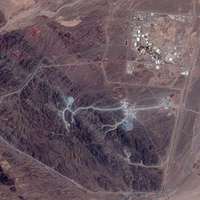
A senior official from the US National Security Agency (NSA) has said that alongside the Gaza war, Israel has faces cyber-attacks and disinformation from Iran and others.
Rob Joyce, the head of the Cybersecurity Directorate at the NSA, emphasized the pressure of these events, but also stated that most of them do not constitute major attacks and do not have a significant impact.
According to him, some of the attacks are carried out using the "Wiper" method, while others involve ransomware attacks, which have occurred in the past as well.
In recent days, the Israeli National Cyber Directorate issued a statement warning about the presence of an Iranian malware called "Wiper" in the country's internet infrastructure.
According to this senior official from the National Security Agency, Israel is currently concerned about three different threat groups in the cyber domain, with the Islamic Republic being at the forefront.
Due to the close relationship between the Islamic Republic and Hamas, the leaders of the United States' national security have warned about Iran's involvement in this conflict, citing its cyber capabilities and the current tensions.
Israel and Iran have a long history of cyber operations against one another, with Israel scoring successes in sabotage by cyber warfare against Iran’s nuclear program and other sensitive targets.
Recently, Christopher Wray, the director of the FBI, emphasized that if the current conflict in Gaza escalates, there may be an increased threat to the vital infrastructure of the United States by Iran and other cyber groups.
Rob Joyce identified "hacktivist" groups as the second threat against Israel. These hacker groups are often independent and have political and social objectives.
In the current battle in Israel, it is difficult to determine the affiliation of hacktivists to the warring governments.
The last threat refers to ransomware groups. These cyber criminals have considered the current conflict, which has created tensions and divisions in the world, as an opportune time for exploitation.
The head of the Cybersecurity Directorate at the National Security Agency emphasized that Israel's ongoing battle has led the country to improve its cyber defense capabilities.
According to him, Israeli institutions have established appropriate structures and processes to protect their vital infrastructure from attackers.
Rob Joyce noted that currently, most of the destructive activity against Israel comes from the Islamic Republic of Iran and hacktivist groups.
He refrained from commenting on the possible role of Russia in the current cyber threat situation.
The head of the Cybersecurity Directorate emphasized that the dissemination of false information and disinformation campaigns have likely had the greatest impact on the current conflicts.
It was reported in October that a hacking group with ties to Iran, known as the Crambus espionage group, executed an extensive intrusion into the computer systems of a Middle Eastern government.
The espionage group’s intrusion spanned an eight-month period from February to September 2023. The cyber attackers employed a range of tactics during the operation, including the theft of sensitive files and passwords, Symantec revealed.

Iranian proxy militias targeted al-Harir and al-Assad air bases hosting US forces in northern Iraq on Friday, adding to their tally of nearly 60 such attacks since October 7.
A statement from the Islamic Resistance of Iraq said the strikes were in response “to the attacks perpetrated by the enemy against our people in Gaza.”
Tehran-backed militia groups have continued to attack US targets in the region while the Islamic Republic itself refrains from any direct involvement in the ongoing conflict between Israel and Gaza.
Hamas started the ongoing war with a terror attack on Israel on October 7, killing more than 1,200, mostly civilians, and taking more than 240 people hostage.
Deputy Pentagon Press Secretary Sabrina Singh stated on Thursday that 58 attacks have been conducted on US bases in Iraq and Syria since October 17.
On Thursday, the commander of Iran's Quds force Esmail Qaani echoed the support of Iranian’s regime’s top officials for the “Axis of Resistance” by saying they “will undertake all necessary measures during this historic battle”.
"The Resistance Axis" is a coalition of Iran-backed armed groups in the Middle East, controlled by the Quds Force, an arm of the Iranian Revolutionary Guard Corps (IRGC).
As part of its efforts to control the conflict, the United States has asked China to use its influence to prevent Iran from getting directly involved.
However, the current US administration is facing criticism for what skeptics call a "soft stance" on Iran, notably referring to Joe Biden's recent move enabling the release of billions of dollars to Iran by waiving sanctions for four months allowing Iraq to transfer money that it owes Tehran abroad.

The commander of Iran's Revolutionary Guard extraterritorial Quds force says the ‘resistance front’ headed by Tehran supports Hamas militants in their conflict with Israel.
“In support of the Axis of Resistance, we will undertake all necessary measures during this historic battle.” Esmail Qaani told the commanders of the Tehran-backed groups on Thursday, Iran's semi-official Tasnim news agency reported.
"Resistance Axis" refers to an alliance of Iran-backed armed groups in the Middle East controlled by the Quds Force, that oversees financial and military support to Tehran’s proxies in Iraq, Syria, Lebanon, Yemen and elsewhere.
It appears that while Iran's leadership and diplomatic apparatus attempt to maintain a distance from the ongoing war, hardliners such as IRGC commanders continue to push the boundaries.
Supreme Leader Ali Khamenei has publicly endorsed Hamas ideology to destroy Israel and has made statements that can be interpreted as signals to proxy groups in the region, to attack Israeli ships and other targets, while rejecting any responsibility for such attacks. The same tactic has been used regarding attacks on US forces in the region.
Additionally, the Iranian Foreign Minister, Hossein Amir-Abdollahian, addressed the ongoing conflict between Israel and Hamas during an interview with CBS on Wednesday, stating, "We did not want this crisis to escalate."
The ongoing war began with Hamas fighters rampaging into Israel on October 7, killing more than 1,200 people and taking at least 240 hostages.
The United States has also warned Iran not to escalate the conflict in the region.
As reported by Reuters, US President Joe Biden urged Chinese President Xi Jinping on Wednesday to dissuade Iran from taking provocative steps that might aggravate the war.