• العربية
  • فارسی
Brand
  • Iran Insight
  • Politics
  • Economy
  • Analysis
  • Special Report
  • Opinion
  • Podcast
  • Iran Insight
  • Politics
  • Economy
  • Analysis
  • Special Report
  • Opinion
  • Podcast
  • Theme
  • Language
    • العربية
    • فارسی
  • Iran Insight
  • Politics
  • Economy
  • Analysis
  • Special Report
  • Opinion
  • Podcast
All rights reserved for Volant Media UK Limited
volant media logo

Experts Urge Iran To Focus On Economic Development And US Relations

Iran International Newsroom
Sep 13, 2023, 13:53 GMT+1Updated: 17:30 GMT+1
Iranian President Ebrahim Raisi during an event on the country’s economy in Tehran on September 10, 2023

Iranian academic Mahmoud Sariolghalam, an expert on development and political science, says Iran should strive to reach a deal to eliminate US sanctions.

Sariolghalam also insisted in an interview with Khabar Online that membership in the Shanghai Cooperation Organization and BRICS will not help Iran unless it maintains healthy relations with the rest of the world. The biggest service Iranian lawmakers, policy makers and decision-makers can do to the nation is trying to relieve the country of the sanctions and pave the way for constructive international relations. 

A graduate of the USC and the Ohio State University, Dr. Sariolghalam who teaches at the Beheshti University in Tehran, suggested in this interview that Iran should start liberalization before democratization and prioritize economic development before starting political development as a way out of its current crisis. 

He also added that having experts as members of the parliament is part of the way out of the crisis. He said the main concern for officials should be one of economic development because a country without an income cannot have social or cultural growth. 

Emphasizing the need for expertise within the government, Sariolghalam highlighted that economic development and governance are akin to sciences like medicine and engineering. He went on to state that holding numerous conferences each year is not necessary to grasp this concept. He further underscored that given the current state of affairs in Iran, the country cannot progress in a manner comparable to the development seen in countries like South Korea, Singapore, Mexico, Brazil, and Indonesia.

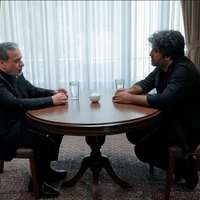
Iranian academic Mahmoud Sariolghalam (undated)
100%
Iranian academic Mahmoud Sariolghalam

Hinting at the pitfalls of government and military control of the economy, he pointed out that in countries like China, Turkey, and Mexico, governments separated the realms of resource management and ownership to foster development. Conversely, India achieved development when its military recognized the necessity of separating ownership from the state.

Sariolghalam said officials need to understand that high significance is attached to expertise in Qatar and Saudi Arabia to ensure their development. He added that the ability to communicate with the outside world should be a key criterion for appointing ministers and electing lawmakers. He warned that during the next 20 years, a vast gap will emerge between Iran and Arab countries.

He also cautioned that Iran cannot grow if the government wishes to control 95 percent of all resources and leave only 5 percent for the private sector. Elsewhere in the interview, Sariolghalam said the West's problem with Iran is not about the nuclear issue, it is about Iranian officials' attitude toward Israel and the Jewish people. The JCPOA could not solve the conflict between Iran and the West and that is why it was not successful.

Meanwhile, in another interview with Khabar Online, former commander of the IRGC navy Hossein Alaei, who has been known as an academic in the Iranian universities as well as a reformist political figure during the past three decades, said that "halfway through President Ebrahim Raisi's four-year term of office, the government is beginning to realize that Iran's economic problems will not be solved unless the sanctions are lifted."

He also added that Iran's membership in international organizations such as BRICS and SCO can be helpful only in the absence of sanctions. Speaking about the hindrances to Iran's development, Alaei said that US sanctions are the main obstacle. 

The former commander emphasized that Iranian officials must alter their approach towards the West, particularly the United States. He regarded Iran's enmity with the US as the nation's most pressing issue, noting that the current sanctions make it unlikely for any country to consider cooperating with Tehran. He urged a reduction in this perilous level of hostility towards the United States.

"All officials should make economic development their number one priority," Alaei underlined.
Most Viewed

Ghalibaf defends Iran-US talks amid hardline backlash
1
INSIGHT

Ghalibaf defends Iran-US talks amid hardline backlash

2
INSIGHT

Iran diplomacy wobbles as factions compete to avoid looking soft on US

3
VOICES FROM IRAN

Bread shortages, soaring prices strain households in Iran, residents say

4
ANALYSIS

The politics of pink: how Iran uses cuteness to rebrand violence

5

Scam messages seek crypto for ships’ safe passage through Hormuz, firm warns

Banner
Banner

Spotlight

  • Tehran moderates see ‘no deal–no war’ limbo as worst outcome
    INSIGHT

    Tehran moderates see ‘no deal–no war’ limbo as worst outcome

  • The future has been switched off here
    TEHRAN INSIDER

    The future has been switched off here

  • Lights out, then gunfire: Witnesses recount Mashhad protest crackdown
    VOICES FROM IRAN

    Lights out, then gunfire: Witnesses recount Mashhad protest crackdown

  • Family told missing teen was alive, then received his body 60 days later
    EXCLUSIVE

    Family told missing teen was alive, then received his body 60 days later

  • Is Iran entering its Gorbachev moment?
    INSIGHT

    Is Iran entering its Gorbachev moment?

  • Iran crackdown reaches cemeteries as graves of slain protesters defaced
    EXCLUSIVE

    Iran crackdown reaches cemeteries as graves of slain protesters defaced

•
•
•

More Stories

US House Overwhelmingly Passes Sanctions Bill On Iran

Sep 13, 2023, 07:24 GMT+1
•
Iran International Newsroom

The US House of Representatives has voted 410-3 for a bill that hardens the sanctions against the Supreme Leader and the President of the Islamic Republic of Iran.

The Mahsa Amini Human Rights and Security Accountability Act (MAHSA) requires the President to report to Congress every year whether those officials should remain under current sanctions.

Ali Khamenei and Ebrahim Raisi were first sanctioned by President Donald Trump by an executive order in 2019. The Mahsa Act would make it much more difficult to lift those sanctions for the current and future administrations.

The resolution will have to pass the Senate to become law. The Senate is controlled by Democrats, who may not be as eager as the majority Republicans in the lower chamber to consider the bill.

The Mahsa Act was first introduced in January 2023, a few months after Mahsa Amini, a 22-year-old woman, was killed in hijab police custody in Tehran, triggering months of widespread protest which challenged the Islamic Republic like never before.

Referring to the regime’s human rights abuses following the protests, Rep Michael McCaul, the Chairman of House Committee on Foreign Affairs, called out the international community for “failing to compel” the oppressors of the Iranian people “to stop this abuse”.

“We have many sanction laws designed to address Iran’s regime’s human rights violations,” McCaul said, “however, it is clear that many officials and institutions in Iran have not yet been sanctioned for their role in these abuses.”

McCaul also attacked the Biden administration for its “political agenda” in dealing with Iran’s government and said: “We must not sell off the Iranian people to reach a bad nuclear deal.”

Young Iranian American activists who had worked hard for months to ensure support for MAHSA Act were jubilant on social media, and more confident about advocating a tougher US stance toward the Islamic Republic.

The rift between the House and the Biden administration over Iran policy has become clearer in recent weeks: first over Robert Malley, US Special Envoy on Iran, whose security clearance has been revoked and is currently the subject of a FBI investigation, and then the prisoner swap deal that would release $6 billion of Iran’s assets frozen in South Korea.

Secretary of State Antony Blinken has signed off a sanction waiver to allow international banks to transfer the funds. He had done so last week, AP reported, whereas the Congress was informed of the measure only on Monday (September 11).

Earlier on Tuesday, Senator Ted Cruz (R-TX) lambasted the US government for its secret deal with the Islamic Republic and said: “The Biden administration must keep their deal secret because if they disclosed it, the law requires them to come to Congress and defend it, and this appeasement is utterly indefensible.”

Jim Risch (R-ID), Ranking Member of the Senate Foreign Relations Committee, warned that the prisoner swap deal “creates dangerous incentives to capture Americans abroad”. He pointed out that striking such a deal “is tone deaf on the anniversary of Mahsa Amini death."

September 16 marks one year since the killing of Mahsa Amini.

The bill bearing her name was not the only Iran-related bill to pass the House on Tuesday. The Representatives also voted to target Iran’s production and exports of missiles and drones by sanctioning those involved in such programs. The last of the bills was specifically designed to condemn the Islamic Republic’s persecution of the Baha’i minority.

All three bills passed almost unanimously, indicating an increasingly united front against Iran’s rulers in the US House of Representatives.

European Parliament Gets Into Hot Debate Over Bloc’s Iran Policy

Sep 12, 2023, 22:52 GMT+1
•
Iran International Newsroom

Members of the European Parliament Tuesday grilled EU’s foreign policy chief Josep Borrell over the bloc’s Iran policy as he tried to defend the trite strategies.

The plenary session opened in Strasbourg to discuss the effectiveness of European measures “one year after the murder of Mahsa Amini” in custody of the Islamic Republic’s hijab police that ignited the Women, Life, Freedom protests, the boldest revolt against the regime since its establishment in 1979.

Opening remarks by European Parliament President Roberta Metsola a day earlier sounded vapid as she reiterated that “Parliament proudly stands with the brave, defiant women and men who continue to fight for equality, dignity and freedom in Iran...” She also “strongly” condemned the Iranian regime for “taking EU and dual nationals hostage” and called for “the immediate release of EU official Johan Floderus and Professor Ahmad Reza Jalali.”

EU foreign policy chief Joseph Borrell opened similarly, claiming that "the EU has stood united over the past 12 months on Iran.” “The last 12 months marked a clear change in our relations with Iran. We've adopted nine consecutive rounds of sanctions...Our relations with Iran are at a low point, but we need to keep diplomatic channels open."

EU foreign policy chief Joseph Borrell during a European parliament session about the situation in Iran on September 12, 2023
100%
EU foreign policy chief Joseph Borrell during a European parliament session about the situation in Iran on September 12, 2023

After Borrell, dozens of MEPs took turns decrying what they dubbed as toothless measures against the regime that failed to prevent killing of protesters, taking hostages, supplying arms to Russia and wreaking havoc across the region through the Revolutionary Guards as well as its proxy militias. Their demands included labeling the IRGC as a terrorist outfit, more comprehensive sanctions against the regime's human rights abusers, and refusing any negotiations with the regime until all EU citizens unjustly held are freed.

German MEP Hannah Neumann said, "Mr. Borrell, it's time to clearly spell it out: The EU's Iran policy of the last 44 years has failed. Stop meeting regime representatives! Start meeting the many different people that advocate for a free Iran! Stop financial flows of the regime and start exploring avenues for the diaspora to send home remittances for strike funds!”

“Spell out the truth: This regime terrorizes its own citizens and the whole region, it systematically uses rape to force political prisoners into confessions, and it is already preparing to crack down on the protests planned for September 16 (the death anniversary of Mahsa Amini). Mr. Borrell, you have to stop stabilizing a brutal regime while the people in Iran are prepared to die for its downfall!" she added.

German MEP Hannah Neumann during a European parliament session about the situation in Iran on September 12, 2023
100%
German MEP Hannah Neumann during a European parliament session about the situation in Iran on September 12, 2023

Guy Verhofstadt, a former Belgian prime minister, denounced EU’s approach and strategy on the Islamic Republic, saying, “Let's be honest: the policy and the strategy of Europe towards Iran is purely symbolic. It has nothing to do with stopping the regime.”

“This parliament wants another approach! I request that in two months, we revisit this matter on the plenary of this parliament so that we can see the change in your strategy and that you can also convince your colleagues, the ministers of foreign affairs, because a new course of action is not solely your responsibility,” he added.

“What is happening in Iran is a disgrace. It's a regime of violence and murder,"Verhofstadt underlined.

Charlie Weimers, a Swedish conservative democrat, noted that “EU leaders have expressed support for the protests against the mullahs. But the EU has continued its failed policy of appeasement.”

He called on all the decision makers to “unite -- from left to right -- for a new EU policy: Maximum support for the people. Maximum pressure on the regime.”

Bart Groothuis, a Dutch MEP, called on the bloc to “expel all Iranian ambassadors from Europe” and cut diplomatic ties “until all European hostages are freed."

Borrell, the High Representative for Foreign Affairs and Security Policy, took the floor again after the MEPs, saying, “I don't think it is acceptable to say that the European Union supports this regime, which is what I just heard... You've expressed your moral indignation, and that's okay, but I don't think that that is actually going to solve miraculously the problems.”

"We've been working to help support Iranian women in their fight for their fundamental rights and will continue to do so. We are also working with the member states to try and solve many of the cases of European citizens that have been illegally detained in Iran. And we're trying to help and provide support for them to come back to Europe,” he stated.

Regarding calls for the designation of IRGC as a terrorist group, Borrell reiterated his earlier position that a national authority or court should find the IRGC complicit in terrorism before the EU takes a step to designate it.

Borrell claimed that "At the moment, we don't have that, and well, I can't take this step. We need the unanimity of the 27 member states and that is the basis. So, I'm afraid I can't do this. If you think that I'm wrong, tell me why."

His remarks came despite numerous efforts by MEPs and activists to provide the necessary groundwork for the EU to act on calls to list the IRGC as a terror group. In July, two MEPs stated that according to the “Common Position 2001/931/CFSP, Article 1(4) which sets out the parameters for the inclusion of persons and entities on the EU terrorist list,” the IRGC can be listed without any legal barriers. In June, a similar line of arguments was put forth by Iran’s exiled prince Reza Pahlavi, citing a group of French-Iranian lawyers who reasoned that there are no legal obstacles for the EU to blacklist the Revolutionary Guards.

In January, the European Parliament overwhelmingly passed a resolution calling on the EU and member states to designate the IRGC as a terrorist group, as it does not have such an authority. If the resolution garners enough support, it is then upon the national governments of the EU member states to make the final decision. The listing of the IRGC must have a unanimous vote by all 27 EU members in the EU Council.

US Insists It Has Strict Control Over Iran’s Released Funds

Sep 12, 2023, 20:06 GMT+1

The United States can freeze $6 billion in Iranian funds released in a prisoner swap deal into Qatari accounts if needed, according to the State Department.

In August, the United States agreed to unblock $6 billion of Iran’s money frozen in South Korea for the release of five US dual nationals held hostage by Tehran, insisting that the agreement restricts the funds to purchases of food and medicine.

However, the State Department’s statement came after Iran’s President Ebrahim Raisi told NBC News that the money will be spent on whatever the Iranian people need.

"This money will be budgeted for those needs and the needs of the Iranian people will be decided and determined by the Iranian government," Raisi said.

Although some Iranian officials have acknowledged that the funds can be spent only for “non-sanctionable” goods, the foreign ministry insisted early on that Iran can do whatever it wanted with the released money.

"The Treasury Department has strict oversight over the use of those funds. We have visibility into how they are used, and we have the ability to police their use," State Department spokesperson Matthew Miller told reporters, adding that the criterion is that the funds be spent for humanitarian purposes.

The funds are currently being transferred from South Korea to Qatar via Switzerland and the hostages will be allowed to leave when all the money is deposited in a special Iranian account in Qatar.

There has been strong criticism of the Biden administration’s move in Congress. Many Republicans have accused the White House of caving in to Iran and by offering a large ransom endangering the lives of other Americans.

Raisi And Rouhani Could Face Off In Iran’s Assembly Of Experts Election

Sep 12, 2023, 17:56 GMT+1
•
Behrouz Turani

While many expect a dull Iranian election in March, some anticipate a notable showdown: Hardliner President Ebrahim Raisi against his predecessor, Hassan Rouhani.

The competition, however, does not take place in the parliamentary election, but in the simultaneously held Assembly of Experts where 88 clerics will be elected to a body most likely to determine Supreme Leader Ali Khamenei's successor at one point during its 8-year term.

Iranian journalist Ehsan Mazandarani's tweet highlighted the potential for a competition between Raisi and Rouhani should they both decide to run in the Tehran Province. Both individuals currently serve as members of the Assembly of Experts in the Tehran Province. It's worth noting that the Tehran Province has 16 representatives in the assembly, whereas the Province of Semnan has only one delegate.

Readers speculated that the Guardian Council might even disqualify Rouhani for the election to make sure that Raisi can make it to the Assembly smoothly without having to face Rouhani who appears to be more popular among the voters. A safe way out of trouble for Rouhani would be naming himself a candidate from his birthplace province of Semnan.

This makes sense, another reader pointed out, only if Iranians bother to take part in the March 2024 election. The latest two elections in Iran, the parliamentary vote in 2020 and the presidential election in 2021 had turnouts barely over 20 percent in most constituencies. That was too low in a country where an election turnout less than 60 percent was considered too bad.

Hassan Rouhani (L) and newly elected Ebrahim Raisi in August 2021
100%
Hassan Rouhani (L) and newly elected Ebrahim Raisi in August 2021

The disqualification of reformist and moderate candidates and the government's overwhelming biased campaign in favor of hardliners such as Raisi are said to be the reasons for the low turnout. With the massive protests in 2022 many observers are led to believe that the situation is likely to be even worse in March.

While there is significant concern among politicians regarding the parliamentary election and its turnout, there is a noticeable absence of discourse regarding the Assembly of Experts, where competition is minimal. Few Iranians can name three or four Assembly of Experts members, and even fewer are aware of the body's activities. Over the past 30 years, Khamenei has not permitted the assembly to scrutinize his performance. Rather than the Assembly supervising the leader's activities, it is Khamenei who imparts guidance to the Assembly of Experts during their annual meetings.

Some politicians, such as the Parties House Chairman Manouchehr Mottaki have politely and cautiously reminded that before deciding whether to take part in the elections or not, the people will look at the government's performance. What he meant was possibly the adverse impact of people's unhappiness about the government's economic performance which has made life difficult for nearly all walks of life in Iran.

Mottaki said that many Iranian political parties and their leaders fear that the March 2024 elections are likely to have low turnouts. Meanwhile, his comment about "some of the parties willing to take part in the elections," indicated that some of them may not be interested in the elections for the time being.

Equally pessimistic about the upcoming elections was hardliner politician Bijan Moqaddam who is close to the powerful core of the Islamic Republic. He said in an interview with Nameh News that the government's performance will have an impact on the election turnout. Meanwhile, to downplay the importance of the two last elections' extremely low turnout, Moqaddam said that the high turnout in the previous decades have raised people's expectations.

He remarked, "There are approximately six months left before the elections, and the government's actions could potentially stimulate increased participation." Moqaddam may have placed undue optimism in the Raisi administration's capacity to bring about positive change within this relatively brief timeframe.

Advisor To Supreme Leader Acknowledges Sanctions Impact On Iran

Sep 12, 2023, 15:27 GMT+1

A senior official has acknowledged that Iran's plans to assume a leading role in the region by 2025 have fallen flat, blaming sanctions and ignoring impacts of nuclear issues.

Mohammad Sadr, a member of Iran's Expediency Council, made the remarks in reference to Iran's ambitious long-term development plan encapsulated in the Twenty-Year Vision Document of Iran, in place since 2005. 

Initiated on the recommendations of the Expediency Council, an advisory board for the Supreme Leader which also settles disputes between Iran's parliament and Guardian Council over legislation, 2025 was meant to be the culmination of the grand plan.

However, Sadr said: “The realization that robust economic growth is imperative for establishing a stronger international presence has prompted these nations to actively seek foreign investments and attract foreign capital, leading to ongoing advancements in their economic landscapes.”

Heavily sanctioned for years, foreign direct investment (FDI) in Iran has been a major hindrance. Meanwhile, the United Arab Emirates, with a population of just 10 million, has dwarfed Iran to be MENA's top FDI nation.

According to the World Investment Report 2023 issued by the United Nations Conference on Trade and Development, the value of foreign direct investment inflows to the UAE in 2022 amounted to $22.737 billion, ranking 16th globally in FDI inflows in 2022. It was also ranked top in the West Asia region.

Sadr attributed Iran's failings on sanctions, saying that “countries eager to engage with Iran encounter impediments in expanding their relations due to concerns regarding potential sanctions-related repercussions, thereby impeding the development of these relationships.”