Iranian Supreme Court Overturns Two Death Sentences
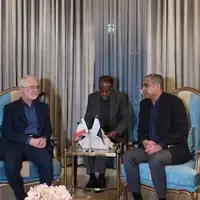
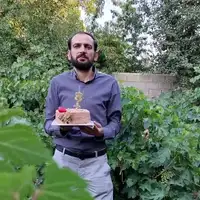
Mohammad Ghobadlou (left) and Abbas Deris
The Iranian Supreme Court has revoked the death sentences of Mohammad Ghobadlou and suspended the execution order against Abbas Deris.
The decisions come amidst widespread protests and international scrutiny surrounding the country's handling of detainees from the nationwide demonstrations sparked by the death of Mahsa Amini in police custody. The protests spread across many cities, leading to mass arrests and several individuals sentenced to death without proper trial.
Ghobadlou, a 22-year-old detainee, was charged with ‘moharebeh’ or “waging war against God" and "corruption on earth" and had been given a death sentence by the Supreme Court. The accusations against him included the alleged killing of a police officer and injuring five others by hitting them with his car. In January, he was given a stay of execution but in May the court upheld the death sentence regardless of his lawyer’s objections and documents that could potentially exonerate him. However, today, the country's highest court overturned and revoked his death sentence.
Amir Raisian, Ghobadlou's lawyer, said, "The verdict in Branch 1 of the country's Supreme Court has been overturned, and the case will be referred to a same level court for consideration of my client's mental health issues and issuing a verdict."
An execution order against Abbas Deris, 49, who was arrested during the infamous Mahshahr canebrake crackdown in 2019, has also been suspended. During the protests, one of the bloodiest crackdowns in the history of the Islamic Republic, Deris was arrested with his 29-year-old brother Mohsen, who was acquitted of the ‘moharebeh’ charges. However, the elder brother faced a death sentence, which was upheld by Branch 39 of the Supreme Court in May and his lawyer, Fereshteh Tabanian, announced that a retrial had been registered. In response to overwhelming support on social media and appeals from his family and children, the court has now ordered the halt of the execution, and his case will be re-examined.
Iran's government has postponed the implementation of tighter diesel rationing as the anniversary of last year's anti-regime protests is approaching in September.
Iran International has obtained information that the security organs have advised the government to delay the implementation of its plan to decrease the fuel quota for diesel-powered vehicles until after the death anniversary of Mahsa Amini, who was beaten to death by the hijab police in September 2022. The tragic event ignited months of protests that became the boldest uprising against the regime since its establishment in 1979.
Informed sources told us that the administration of Ebrahim Raisi planned to introduce a tight rationing system aimed at reducing diesel consumption by 25 percent, adding that security officials deemed the possible protests and strikes by truck drivers "dangerous" in the current situation.
Truckers, who do the heavy lifting of transporting goods mainly to and from Iran’s border areas and ports across the country, have already held several rounds of weeks-long strikes that brought the flow of goods and the supply chain to a grinding halt. Prices of fuel and equipment are already among their numerous grievances amid high inflation, and the regime seems unable to cope with new rounds of union action that can take place.
A strike by Iranian truck drivers in 2018
Reza Gheibi, an economic journalist, told Iran International Tuesday that the Raisi administration’s plan to remove subsidies for essential goods last year has already taken its toll on the consumer market, with food prices recording the highest rate of inflation. Earlier in the day, the price of bread in Iran’s northeastern Razavi Khorasan province increased by 40 percent, triggering concerns that a similar price hike will be implemented across the country.
The regime, which has one of the world's largest oil and gas reserves, sells gasoline and diesel at extremely low, subsidized prices, charging less than 10 US cents for gasoline per gallon, or less than 3 cents per liter, while that of diesel is even 50 percent lower. Second only to Venezuela, Iran has the world’s cheapest gasoline price.
For years there has been talk of adjusting prices, but since 2018 Iran’s currency has dropped 12-fold and any increase needs to be huge to be meaningful in US dollars. However, fuel price hikes risk fanning the flames of further unrest. Before the regime dares to raise the prices in line with international market rates, it is inching towards decreasing its expenditures on fuel subsidies via curbing consumption, thus the policy of stricter rationing.
According to Gheibi, changes in the prices or quotas of diesel are even more sensitive than gasoline because of its consequences for the country’s transportation fleet.
The managing director of the National Iranian Oil Refining and Distribution Company said earlier in July that a total of 220 million liters of liquid fuel (gasoline and diesel) are used by the transportation fleet per day in Iran. Jalil Salari added that “If only this consumption volume were to be reduced by 10%, it could be spent on replacing the aging transportation fleet and infrastructure as well as in the oil industry.”
Amid reports of imminent fuel price rises and stricter rationing, the regime has put an unknown number offuel stations on securityalert and is conducting security drills in the middle of the night.
In November 2019, a government decision to increase fuel prices by 50–200 percent triggered a cycle of protests and unrest across the country that lasted for over two weeks. During this time, at least 1,500 civilians were killed by security forces.
Earlier this year, it started piloting a new plan in a number of small cities according to which citizens are still allowed to buy 60 liters (15.8 US gallons) of gasoline per month at the cheap price of 15,000 rials per liter, or less than 3 US cents. The new plan reportedly caps the premium gasoline at 150 liters (40 gallons) per individual per month.
In addition to extremely low prices that do not encourage saving fuel, Iran also faces gasoline and diesel shortages due to a lack of refiningcapacity. The low prices also lead to millions of liters of fuel being smuggled out of Iran daily, part of a large-scale global smuggling network. Iran’s heavy subsidies for fuel and electricity cost the country at least $50 billion a year, while the government struggles to secure foreign currencies amid US economic sanctions.
While the country is hugely dependent on revenues from crude oil exports, due to sanctions and mismanagement, it has failed to modernize the energy sector in general, with power shortages most of the year. Systemic corruption also further cripples the weak system.
The situation has been grave in recent years but since the administration of Ebrahim Raisi assumed office in 2021, the entire energy management system is going haywireeven faster, drawing backlash from not only the public but even regime officials.
In a recent report, Amnesty International has expressed concern over Iranian authorities' intensifying oppression of women and girls who defy compulsory hijab.
The human rights organization is calling for international communities to stand by Iranian women who choose not to wear headscarves in public and has published detailed analysis of police patrols enforcing the veiling and threatening legal action against those who defy it. They have said it signals a resurgence of Iran’s morality police. Agnès Callamard, Amnesty International’s Secretary General, commented, “Morality policing in Iran is back. The authorities are not fooling anyone by removing the insignia of the ‘morality’ police from uniforms and patrol vans… while emboldening the enforcers of the Islamic Republic’s oppression.”
The report coincided with videos circulating on social media showing women being violently assaulted in Tehran and Rasht and security forces using teargas against people trying to help women escape arrests.
Callamard added, “Today’s crackdown is intensified by mass surveillance technologies capable of identifying unveiled women in their cars and pedestrian spaces.”
According to official announcements from Iran's Police Force spokesman, since April 15, 2023, more than a million women have received text messages warning that their vehicles could be confiscated after being caught on camera without their headscarves. Additionally, numerous women have been suspended or expelled from universities, denied access to banking services and public transport, and hundreds of businesses have been forcibly closed for not enforcing compulsory veiling.
Amnesty International has repeatedly called for the abolition of compulsory hijab, the quashing of all convictions and sentences related to defying veiling laws, and the unconditional release of all detainees. Furthermore, the organization urges the international community to take strong action, including legal pathways, to hold Iranian officials accountable for the human rights violations perpetrated against women and girls.
Bernard Phelan, a 64-year-old Irish man with dual French citizenship, revealed the harrowing experiences he endured during his imprisonment in Iran.
In an interview with RTÉ's Six One News, Phelan, a Paris-based tourism consultant, said he had been detained in Iran in October, marking his fifth visit to the country.
Phelan was arrested amid anti-regime protests that erupted across the country after the death of Mahsa Amini in police custody in September. Allegedly, Phelan had been capturing images of the protests and a mosque that had been set ablaze.
In mid-May, Iran eventually released Phelan, who had been sentenced to 6.5 years in prison on charges of "providing information to another country."
During his time in detention, Phelan faced severe physical and psychological hardships, leading to post-traumatic stress disorder (PTSD). He recounted the haunting words of a judge who warned him that he would "die in prison." This threat was a part of what he described as "white torture," a tactic employed to break prisoners psychologically.
"There are nightmares. I don't sleep well, I'm on sleeping tablets - nightmares of being on the floor and being kicked by somebody," Phelan noted.
Human rights organizations have raised concerns over what they call "hostage diplomacy" by Iran, where an undisclosed number of Western prisoners are being held. These individuals face charges of espionage or other alleged crimes, and some have been languishing in detention for extended periods without access to legal representation or a fair trial.
In response to the allegations, the Islamic Republic maintains that the prisoners are lawfully held for valid reasons and denies any wrongdoing.
Mahsa Moguei's father holding a photo of her daughter
It has been seven days since the families of Mahsa Moguei, a 19-year-old girl who was shot dead by the oppressive regime, were detained by the regime.
Hengaw Human Rights Organization, a Kurdish rights group, reported on Tuesday that there is still no information available concerning the situation of Mahsa Moguei's father, brother, and mother.
Mahsa Moguei, a taekwondo champion, tragically lost her life during protests advocating for women's rights and freedom in Fooladshahr, Isfahan, on September 22, 2022 when security forces opened fire.
Simultaneously, families are also concerned about the whereabouts of Zahra Saeedianjoo' who was also detained due to her expression of sympathy towards the families of protesters who were killed during the demonstrations.
Despite numerous appeals from Saeedianjoo's family, security and judicial authorities in the southern Khuzestan province have remained silent, failing to provide any updates about her situation to her family or her legal representative. Zahra is the sister of Milad Saeedianjoo, one of the many protesters killed in Izeh.
Sixteen days ago, security forces transferred Saeedianjoo from her residence in Tehran to a secure unit in Ahvaz.
In response to yet another detained prisoner, Afra Moslehi, the daughter of Ali Moslehi, took to Twitter to express her concern about her father. She said: "Where is Ali Moslehi?" This journalist was detained at his home in Kashan by the Islamic Republic's security forces on July 20.
The reasons for the journalist's detention and his current place of captivity have not been disclosed.
Moslehi was previously arrested in July 2012 for publishing materials related to the "Green Movement" and was released on bail in September of the same year.
The Islamic Republic authorities evade responsibility for the continued and unexplained killings of protesters and also regularly pressure on their families by detaining and imprisoning them.
A group of hikers in the mountainous region of Opert, situated on the border of Semnan and Mazandaran provinces (file photo)
A hiker, who was injured in a recent attack in a village in Iran's Semnan province, has disclosed that one of his companions suffered permanent paralysis.
The hiker, whose identity remains undisclosed, conveyed details of the attack, which targeted tourists, to Faraz news website on Tuesday. He recounted that the attackers were “approximately 18 or 19 years old, wearing cargo pants, and concealing their faces with keffiyehs."
"They targeted both men and women, but the men seemed to bear the brunt of their aggression. Unfortunately, my teammate now faces a life of paralysis due to the impact of the shocker on his back," he said. A shocker – or electroshock weapon is an incapacitating weapon that delivers an electric shock that temporarily disrupts muscle functions. It does not normally cause lasting damage but can cause permanent disability to muscle or nerve tissue.
The attack occurred on Friday when a group of tourists was exploring the picturesque mountainous region of Opert, situated on the border of Semnan and Mazandaran provinces. The assault was orchestrated by an unidentified armed group.
Pictures shared on social media revealed that the attackers were armed with firearms and electric shocker devices. In addition to the paralyzed hiker, multiple individuals sustained injuries and bruises.
During the attack, the group justified the assault, citing it as a response to "hiking on the third night of Muharram," a time when Shiites mourn the martyrdom of their third Imam.
Iran International has been unable to independently verify these details, and so far, no official reactions have been reported regarding this incident.
However, over recent years, there have been numerous reports of restrictions imposed on Iranian tourists and nature enthusiasts.
This recent attack coincides with the regime's ongoing push for obligatory hijab, adding to concerns over personal safety and freedom of expression.