Four Iranian Teachers Face Court For 'Damaging Image Of Regime’

Four teachers from Iran’s northern city of Rasht have been accused of "damaging the image of the regime" due to participating in a protest.
Four teachers from Iran’s northern city of Rasht have been accused of "damaging the image of the regime" due to participating in a protest.
The Rasht Prosecutor's Office issued the summons and accused the teachers of participating in activities under the banner of the "Teachers' Association", which has now been declared illegal according to the decree.
The Coordination Council of Iranian Teachers' Trade Associations expressed deep concern, fearing that the accused educators might face imprisonment and lashing, as reported in a picture of the order issued on Friday.
Additionally, the order explicitly states that any form of activity under the title of the “Teachers' Trade Association” is considered unlawful, further restricting the rights and freedom of educators in Iran.
This incident follows a series of mass trials held over the past two months in different cities, including Shiraz, Ahvaz, and Yazd, where a total of 24 teachers faced similar charges and trials.
On June 27, the association publicly protested the mass trials and issuance of what they deemed "unfair sentences" for educators. They called upon the authorities of the Islamic Republic to discontinue the practice immediately.
In a powerful show of solidarity, thousands of working and retired Iranian teachers signed a petition urging the regime to release their imprisoned colleagues and halt the harassment faced by educators.
The teachers launched the campaign last Friday, aiming to gather 100,000 signatures advocating for the release of detained educators and an end to the systematic harassment they face.
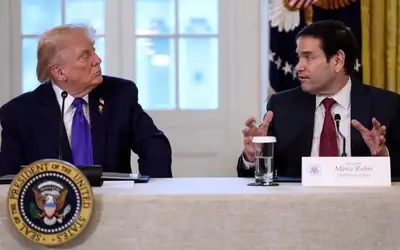



US Secretary of State Antony Blinken has spoken of the US repairing ties with the E3, united in a joint commitment to restricting the regime's nuclear capabilities.
Speaking at the Aspen Security Conference, Anthony Blinken also expressed concern regarding Iran's actions abroad and said the regime had "gone global" by taking action against dissidents around the world, in countries including in the United States, in addition to stepping up assassination attempts on the likes of Jewish and Israeli targets.
Blinken said recent nuclear discussions have brought the US closer to its E3 allies, the UK, Germany and France, with whom he acknowledged there had until recently, been "real division". "We’re working very closely together to deal with some of the excesses committed by the regime," he said.
He admitted he feels "real concern" over Iran's nuclear progress and told the conference: “We have the concern that after having put its nuclear program in a box with the JCPOA, with that agreement no longer in force, Iran has speeded ahead with the production of fissile material for a nuclear weapon.
Blinken also acknowledged the courage of Iranian women and girls leading what he called "extraordinary protests" and expressed concern over the measures taken by the regime to suppress them.
He also voiced concern about Iran's actions in the region, particularly its support for groups involved in destabilizing activities. Blinken highlighted the dangerous exchange of technology between Iran and Russia, with drones provided to Russia having a devastating impact in Ukraine.
Many Iranian activists and some US lawmakers, however, criticize the administration for its continuing contacts with Tehran to reach agreements, that could free billions of dollars in frozen assets further enabling the regime.
Hardliners dominating Iran's parliament and others in the regime do not know what to expect from elections next March, with no signal so far from the Supreme Leader.
The fact that hardliners are Ali Khamenei’s preferred political force has been proven in the past, but others have to wait and see if the Supreme Leader will allow them to compete in the upcoming parliamentary vote.
Some are speculating that possible coalitions among relatively moderate groups could boost their chances success, but whether they will be approved by the Guardian Council controlled by Khamenei is entirely unclear.
If most political forces outside the hardliners are banned from running, the elections will turn into another low-turnout event, further eroding legitimacy.
Some are warning, however, that powerful groups of politicians do not want high voter turnout, so that conservatives and hardliners keep control of the legislature, despite deep public anger at multiple crises gripping the country.
While insiders wait to see in what direction the wind will blow, most ordinary Iranians have long given up on regime politicians and elections to shape a better future for them. One of the slogans in recurring nationwide protests has been, “No conservatives, no reformists.”
Moderate conservative Politician Mehrdad Lahooti told reporters in Tehran that politicians such as former parliament speaker Ali Larijani, who do not belong to the regime’s leading political factions, might form a coalition with moderate conservatives in a bid to increase their chance of being elected during the March 2024 parliamentary elections.
He called Larijani a national political figure whose influence goes beyond the boundaries defined by political factions. Lahooti added that both the moderate conservatives and the independents have already started their election campaigns. However, there is no indication in the media showing independent politicians starting electoral campaigns, while candidate registration for the March 2024 vote is still three months away.
In a recent interview with IRGC-linked Fars news agency, Mansour Haqiqatpoor a politician close to Larijani accused some conservative circles of trying to tarnish the former Speaker’s image by spreading the rumor that he has sougt political asylum in Scotland. Refuting the rumors, Haqiqatpoor said Larijani will certainly speak about the upcoming elections soon but reiterated that there is no indication yet that he is interested, although that can change in the coming months.
In fact, Larijani and other moderate, centrist, independent and proreform politicians are waiting to see a signal from Khamenei and his instruction to the Guardian Council.
Haqiqatpour said: "Larijani is the Supreme Leader's soldier. If he receives a signal that the leader does not want him to nominate himself as a candidate, he will certainly not put a step forward, but if he comes to the conclusion that the leader wants him to come forward, he will surely announce his candidacy."
Meanwhile, former presidential candidate and pragmatist politician Mostafa Hashemi Taba told reporters that "some powerful groups do not want the people to go to the polls" in March. By "powerful people" Hashemi was likely alluding to officials at Khamenei's office, the top echelon of the IRGC and its intelligence service and last but not least, the mighty ultraconservative Paydari Party, that wants to hold all the political power and not share it even with other conservatives.
Hashemi Taba further explained that groups with a radical approach want to continue the rule of the all-conservative government. He added: "I see no indication of any effort on the part of the country's officials to hold a high-turnout election, and I do not believe that this situation is going to change during the coming months.
In another development, Bijan Moghaddam, a political analyst close to Khamenei's office told Nameh News website in Tehran: "Usually conservative groups have two objectives in every election: To win the election, and to ensure a high turnout." He added that high turnout can be an outcome of either a coalition between all the conservative groups, or competition."
So far, it appears that the regime's choice between the two options is to forge a major coalition rather than holding a competitive election.
In a shocking move, morality police in Iran detained female athletes in the southern port city of Bandar Abbas on the Persian Gulf during their morning workout.
The news was brought to light by Mohammad Hossein Ajorlou, a reporter, and husband of Niloofar Hamedi, a journalist who is in prison for covering the death of Mahsa Amini in 2022 after her arrest for violating hijab rules.
According to Ajorlou, the incident took place Thursday, at approximately 5:30 in the morning. The morality police patrol intervened during the female athletes' routine workout session at the popular coastal boulevard.
Some local runners present at the scene have expressed their dismay over the incident. One of the runners described the scene: "In the mornings, when we go to the coastal boulevard to run, there are all kinds of crowds. Some have not collected their hookahs from the night before, some of them are still drunk and are speeding past us in their cars. A number of addicts are looking for a piece of bread in the garbage bins, but the police arrest athletes.”
The incident has sparked outrage among the community, as the female athletes were merely engaged in a peaceful morning workout.
The names and identities of the arrested female athletes have not been disclosed at this time, and it remains uncertain under what charges they were detained.
In the aftermath of the nationwide protests following the tragic death of Mahsa Amini, the Islamic Republic has intensified its efforts to enforce mandatory hijab.
However, a resilient wave of Iranian women and girls has chosen to defy these restrictive measures by appearing in public places without hijab.
Saman Yasin jailed on charges of participating in protests has released an audio message from behind bars emphatically asserting his innocence.
The singer, who has been in detention for ten months, denies any involvement in criminal activities and expresses his desire for a better life for all citizens.
In the audio file, Yasin, 27, and a resident of Tehran, refutes allegations of being a political figure or a member of any political group. He addresses his supporters and fellow citizens, seeking their understanding and support during his challenging ordeal.
One of the significant points raised by Yasin is a government ban for him and other political detainees to choose their own defense attorneys. A notorious judge, Abolqasem Salavati, has denied him the right to select his preferred lawyer, leaving him with an assigned attorney.
Yasin says that his attempts to communicate with the lawyer have remained unanswered, as the lawyer is unable to proceed without the judge's approval.
Earlier reports by government media claimed that Yasin faced charges in Branch 15 of the Revolutionary Court for allegedly participating in protests and supporting gatherings and singing revolutionary songs. Additionally, he was accused of being involved in activities intending to undermine the country's security.
Rejecting these accusations, Saman Yasin's family says that he made confessions under duress and torture. In his audio message, Yasin vehemently denies all charges and describes them as baseless lies orchestrated to harass him.
Amid talks of a prisoner swap deal with the United States, the Iranian regime has detained another American citizen, further complicating efforts to lower tensions.
Semafor news website in Washington DC cited three people briefed on the case as saying that the new arrest is now a crucial part of stepped-up negotiations between the two countries.
The article, published on Friday, did not disclose the identity of the American, saying that it withheld the name to avoid jeopardizing negotiations over his/her release. Previously, the US has prioritized securing the release of three Iranian Americans, businessmen Siamak Namazi and Emad Sharqi, as well as environmentalist Morad Tahbaz, held by Iran on trumped-up charges of espionage. Two individuals with US permanent residency -- Jamshid Sharmahd and Shahab Dalili -- are also imprisoned in Iran.
The negotiations -- which have taken place without public announcements in Oman as well as other countries -- are geared towards facilitating the exchange of Iranians convicted of crimes in Western countries for the release of US nationals held hostage in Iran, as well as the release of billions of dollars of Iran’s funds frozen in overseas banks.
While Iran has around $20 billion frozen in Iraqi, South Korean and Japanese banks due to US sanctions, what has often been mentioned as being discussed is $7 billion in two Seoul banks.
Despite claims by several Iranian officials who have for months publicly suggested that a deal was in the making, the Biden administration said in June that it continues contacts with Tehran, but no nuclear or prisoner release agreement is imminent.
According to Semafor’s sources, the inclusion of the fourth American in the talks may prompt Tehran to raise its demands.
The Biden administration has so far declined to reply to Semafor’s inquiry about the case of the fourth American citizen, but National Security Advisor Jake Sullivan implicitly confirmed it last week during an interview on Face the Nation. “We have tried very hard to secure the release of the four unjustly detained Americans in Iran, we have done so since the day that President Biden took office,” he said on Sunday.
A person directly briefed on the case and close to one of three Iranian American families told Semafor on Thursday that “Multiple senior officials at the State Department in the last few weeks have privately emphasized that the US and Iran have already agreed the fourth American will be part of any deal and there are no delays being caused by [the person’s] inclusion.”
In the past decade, Iran's Revolutionary Guard have arrested dozens of dual nationals and foreigners, mostly on unproven allegations of espionage and breach of security, in what human rights organizations have said is essentially hostage taking to extract concessions from Western governments.
In November 1979, a group of leftist students backed by the new revolutionary government occupied the US embassy in Tehran and took 54 Americans hostage for 444 days. Later, the same strategy was used in Lebanon where multiple Westerners were taken hostage in the 1980s by militant groups linked to Tehran.
Tehran denies any policy of hostage taking and insists all foreigners are tried legally. However, it has frequently shown readiness for prisoner exchanges and receiving monetary payments and participated in swaps in the past.
In March 2022, Nazanin Zaghari-Ratcliffe, an Iranian-British citizen held in Iran for nearly six years, was freed along with British-Iranian businessman Anoosheh Ashoori after the UK paid a four-decade-old £400m ($522 million) debt to Iran. Iran's foreign minister Hossein Amir-Abdollahian claimed at the time that the payment by Britain had nothing to do with the release of the Zaghari-Ratcliffe and Ashoori.
The latest case was in June when two Iranian-Austrian citizens named Kamran Qaderi and Masoud Mosaheb and a Danish individual were released in the framework of a recent prisoner exchange agreement with Belgium mediated by Oman. A week earlier, Olivier Vandecasteele, a Belgian aid worker, returned to his country in exchange for the release of Assadollah Asadi, an Iranian agent disguised as a diplomat in Europe who was convicted of a terror plot in France in 2018.