Imprisoned Iranian Singer Proclaims Innocence in Audio Message

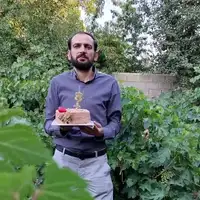
Saman Yasin jailed on charges of participating in protests has released an audio message from behind bars emphatically asserting his innocence.
Saman Yasin jailed on charges of participating in protests has released an audio message from behind bars emphatically asserting his innocence.
The singer, who has been in detention for ten months, denies any involvement in criminal activities and expresses his desire for a better life for all citizens.
In the audio file, Yasin, 27, and a resident of Tehran, refutes allegations of being a political figure or a member of any political group. He addresses his supporters and fellow citizens, seeking their understanding and support during his challenging ordeal.
One of the significant points raised by Yasin is a government ban for him and other political detainees to choose their own defense attorneys. A notorious judge, Abolqasem Salavati, has denied him the right to select his preferred lawyer, leaving him with an assigned attorney.
Yasin says that his attempts to communicate with the lawyer have remained unanswered, as the lawyer is unable to proceed without the judge's approval.
Earlier reports by government media claimed that Yasin faced charges in Branch 15 of the Revolutionary Court for allegedly participating in protests and supporting gatherings and singing revolutionary songs. Additionally, he was accused of being involved in activities intending to undermine the country's security.
Rejecting these accusations, Saman Yasin's family says that he made confessions under duress and torture. In his audio message, Yasin vehemently denies all charges and describes them as baseless lies orchestrated to harass him.

Amid talks of a prisoner swap deal with the United States, the Iranian regime has detained another American citizen, further complicating efforts to lower tensions.
Semafor news website in Washington DC cited three people briefed on the case as saying that the new arrest is now a crucial part of stepped-up negotiations between the two countries.
The article, published on Friday, did not disclose the identity of the American, saying that it withheld the name to avoid jeopardizing negotiations over his/her release. Previously, the US has prioritized securing the release of three Iranian Americans, businessmen Siamak Namazi and Emad Sharqi, as well as environmentalist Morad Tahbaz, held by Iran on trumped-up charges of espionage. Two individuals with US permanent residency -- Jamshid Sharmahd and Shahab Dalili -- are also imprisoned in Iran.
The negotiations -- which have taken place without public announcements in Oman as well as other countries -- are geared towards facilitating the exchange of Iranians convicted of crimes in Western countries for the release of US nationals held hostage in Iran, as well as the release of billions of dollars of Iran’s funds frozen in overseas banks.
While Iran has around $20 billion frozen in Iraqi, South Korean and Japanese banks due to US sanctions, what has often been mentioned as being discussed is $7 billion in two Seoul banks.
Despite claims by several Iranian officials who have for months publicly suggested that a deal was in the making, the Biden administration said in June that it continues contacts with Tehran, but no nuclear or prisoner release agreement is imminent.
According to Semafor’s sources, the inclusion of the fourth American in the talks may prompt Tehran to raise its demands.
The Biden administration has so far declined to reply to Semafor’s inquiry about the case of the fourth American citizen, but National Security Advisor Jake Sullivan implicitly confirmed it last week during an interview on Face the Nation. “We have tried very hard to secure the release of the four unjustly detained Americans in Iran, we have done so since the day that President Biden took office,” he said on Sunday.
A person directly briefed on the case and close to one of three Iranian American families told Semafor on Thursday that “Multiple senior officials at the State Department in the last few weeks have privately emphasized that the US and Iran have already agreed the fourth American will be part of any deal and there are no delays being caused by [the person’s] inclusion.”
In the past decade, Iran's Revolutionary Guard have arrested dozens of dual nationals and foreigners, mostly on unproven allegations of espionage and breach of security, in what human rights organizations have said is essentially hostage taking to extract concessions from Western governments.
In November 1979, a group of leftist students backed by the new revolutionary government occupied the US embassy in Tehran and took 54 Americans hostage for 444 days. Later, the same strategy was used in Lebanon where multiple Westerners were taken hostage in the 1980s by militant groups linked to Tehran.
Tehran denies any policy of hostage taking and insists all foreigners are tried legally. However, it has frequently shown readiness for prisoner exchanges and receiving monetary payments and participated in swaps in the past.
In March 2022, Nazanin Zaghari-Ratcliffe, an Iranian-British citizen held in Iran for nearly six years, was freed along with British-Iranian businessman Anoosheh Ashoori after the UK paid a four-decade-old £400m ($522 million) debt to Iran. Iran's foreign minister Hossein Amir-Abdollahian claimed at the time that the payment by Britain had nothing to do with the release of the Zaghari-Ratcliffe and Ashoori.
The latest case was in June when two Iranian-Austrian citizens named Kamran Qaderi and Masoud Mosaheb and a Danish individual were released in the framework of a recent prisoner exchange agreement with Belgium mediated by Oman. A week earlier, Olivier Vandecasteele, a Belgian aid worker, returned to his country in exchange for the release of Assadollah Asadi, an Iranian agent disguised as a diplomat in Europe who was convicted of a terror plot in France in 2018.
Days after Iran’s notorious hijab or ‘morality’ returned to streets, top officials refuse to take responsibility due to “concern over the upcoming elections".
A public disagreement has arisen regarding who ordered the return of the 'morality' police, which vanished from the streets following nationwide protests sparked by the death of Mahsa Amini in the custody of hijab patrols last September.
According to Tehran's leading reformist daily, Etemad, President Ebrahim Raisi's aides have advised him against implementing any plan that could provoke people until after the next presidential election in 2025 to secure his re-election. They have even suggested indirect criticism of negative reactions to hijab violations to make a positive impression on public opinion.
However, Etemad cited an unnamed senior official of the police as saying that the hijab patrols have returned by the direct order of the president as the head of the Supreme National Security Council. The interior minister is only tasked with implementing the plan as the representative of the Supreme Leader Ali Khamenei in Law Enforcement Command.
The police official emphasized their role as the sole executor of orders from higher authorities within the government and the Interior Ministry, adding that officials shifted responsibility to the police force to shield themselves from potential criticism.
As the police blamed the presidential administration, several government officials claimed that the decision was not made by the president himself.
Ali Bahadori Jahormi, the government's spokesperson, emphasized in a twitter post that the judiciary is responsible for dealing with “social abnormalities," including civil disobedience acts like women defying the Islamic Republic's strict dress code. He stated, "It is the responsibility of the judiciary to decide how to implement the law." Vice President for Women and Family Affairs Ensieh Khazali also denied that the hijab patrols returned upon the president's order.
Tasnim news agency, affiliated with the Revolutionary Guard, claimed that after the publication of the official order by the president and the chief justice to reinstate the hijab police, certain government officials contacted the agency and asked them to remove the part mentioning the president.
The ultra-hardliner daily Kayhan expressed support for the police's approach in enforcing hijab regulations, warning officials against backing down from their stance merely in fear of losing “a handful of votes.”
The morality or hijab police returned to the streets of Tehran and other cities ahead of the first anniversary of Mahsa Amini's death, immediately leading to online uproar as well as a few bouts of street protests, the biggest of which broke out in the northern city of Rasht.
A video which went viral on Saturday shows Tehran's morality police arresting a teenage girl without compulsory hijab, while the girl was screaming “I’m not coming with you” as they tried to push her into their unmarked van.
People on social media have reacted to the incident saying if Iranians do not pour into the streets on the death anniversary of Amini in mid-September, the regime will tighten the noose.
Iran’s former president Mohammad Khatami also warned that the return of morality police may lead to the regime's “overthrow by itself and social collapse”. “It seems that the danger of self-overthrow, which has been talked about many times, stands out more than ever with the return of morality police."
In addition to street patrols, the regime has intensified its crackdown on celebrities who have published photos of themselves without mandatory hijab or appeared in public without head covering as an indirect threat against ordinary people.
Only this week, several actresses as well as TV and radio personalities have been given odd sentences, such as washing corpses for burial and attending counseling sessions as well as bans, as a humiliation and intimidation tactic.
Dadban, a group of pro-bono lawyers in Iran defending political prisoners and rights activists, also revealed that one of the regime’s judges in the capital Tehran – identified as Ali Omidi – has taken a prominent role in issuing heavy sentences against those who protest mandatory hijab.
Iranian media and politicians have been engaged in heated debate this week regarding the return of the morality or hijab police to the streets of Iran.
Many pointed out that it was the morality police who arrested Mahsa Amini and caused her fatal injuries in September 2022, leading to the largest and longest nationwide protests.
According to Rouydad24, a more reputable website among government-controlled media, the extent to which the renewed debate is a genuine discussion remains uncertain. Some believe it is part of the Islamic Republic's usual "bad cop, good cop" tactic to show that what many view as a bad idea has supporters. What is clear, is that no one in the regime is prepared to assume responsibility for the return of the menace hijab enforcement poses for both citizens and officials.
The website saw the development as one of the outcomes of hardliners having grabbed all power and the emergence of an all-conservative establishment in Iran. It argued that the morality police are going to remain in the streets regardless of the debate in the media and among politicians.
The project, however, could just as well be some sort of preparation ahead of the anniversary of the protests in September and a move to intimidate women as the driving force of dissent and social movements in Iran.
Some media outlets attributed the return of the morality police to a 10-day sit-in by vigilante groups outside Judiciary's headquarters in Tehran demanding hijab enforcement.
Lawmaker Ahmad Alirezabeigi, however, told Khabar Online website in Tehran that Interior Minister Ahmad Vahidi has initiated the move to overshadow and possibly avert the parliament's motion to impeach him.
The outspoken lawmaker also said hijab is not among the priorities of Iranians while they are struggling with a thousand economic problems. In the meantime, social media users and foreign-based media including Iran International TV have broadcast video clips that show confrontations between women and government hijab enforcers.
Meanwhile, Moeineddin Saeedi another lawmaker said in response to hardliners who claimed "hijabless women shake God's heavens by showing their hair," that "God's heavens will shake harder by the actions of those who embezzle tens of trillions of rials."
While some conservatives, including the Speaker of Parliament, Mohammad Bagher Ghalibaf have said that the new measures to uphold hijab, including the returning of the morality police, are not based on existing laws and new legislation is needed, some hardline clerics and officials such as Deputy Police Chief Qasem Rezaei are adamant that the morality police are going to remain in the streets forever.
Etemad Online quoted Rezaei as saying: "Hijab is our red line. The morality police is not for just a certain juncture. Protecting values and families is necessary under any circumstances."
Rouydad24 quoted the editor of Hardline Daily Kayhan Hossein Shariatmadari as saying that current punishments for women who defy compulsory hijab are not hard enough as they can pay a fine and get away with it.
In the meantime, President Ebrahim Raisi's reaction has been cautious. He said law enforcers should take measures within the scope of current laws, which effectively means he does not wish to interfere in a sensitive matter in an election year when he needs everybody's support to send whoever he wants to parliament next March.
The so-called morality or hijab police park their vans in the streets and stop women who have “insufficient” hijab, sometimes shoving them into their vans and putting them under arrest. That was exactly the reason why Mahsa Amini was taken into a van and later murdered at a police station in September 2022. If this happens again, no one will know who the culprit is.
Dozens of rights activists, prominent lawyers and former prosecutors have written to the UN Human Rights chief urging him to try to prevent the execution of an Iranian boxer.
Mohammad Javad Vafa'i Sani who was imprisoned for his role in anti-government protests in 2019 was informed on Wednesday that his execution verdict had been finalized, according to the letter sent to the UN official dated July 19.
"We ask that you make an urgent public call for the Iranian authorities to halt Vafa'i Sani's imminent execution sentence," said the document, signed by 83 people including the former head of the International Criminal Court Judge Sang-Hyun Song, more than a dozen current and former UN human rights officials as well as former prosecutors.
Iran's judiciary was not immediately available to comment on the matter. However, his lawyer Babak Paknia said in a tweet that the judiciary had not notified them about the verdict.
A spokesperson for the UN High Commissioner for Human Rights Volker Turk said: "We have received information on this case and are following up on it and gathering additional information."
Iran was rocked by major protests last year sparked by the death of 22-year-old Mahsa Amini in September 2022 while in the custody of the country's morality police.
Since then, at least seven people have been executed for verdicts linked to the unrest, which the clerical rulers have accused the country's foes of fomenting.
Turk has been pushing for a trip to the country and a meeting with Iran's Supreme Leader Ayatollah Ali Khamenei, although there has been little if any indication those efforts are bearing fruit.
Top Iranian psychiatrists have protested rulings on two actresses who defied hijab, saying the diagnoses by the judiciary are unqualified.
Azadeh Samadi and Afsaneh Baygan were claimed to have "mental illness and anti-family personality" according to judges rather than mental health professionals after they were caught defying Iran's tough hijab laws.
Leading psychiatrists have said “the diagnosis of mental disorders falls squarely within the purview of psychiatrists, rather than judges.” They expressed deep concern about the language and rationale employed in the ruling, particularly in the context of diagnosing a condition termed "antisocial personality."
They have deemed the judges' conclusions "unscientific and strange," emphasizing that it is crucial for accurate psychiatric assessments to be conducted by qualified professionals in the field.
The campaign is being led between The Scientific Association of Psychiatrists, The Scientific Association of Psychosomatic Medicine, The Scientific Association of Psychotherapy, and the Psychological Association of Iran which published an open letter addressed to Gholamhossein Mohseni Ejei, the Chief Justice, voicing their concerns and objections.
The associations underscore the necessity of avoiding the unwarranted labeling of individuals' behaviors with psychiatric diagnostic titles. Such an approach, they argue, “not only lacks scientific validity but also may result in exacerbating the stigma surrounding mental illnesses, leading people to be more reluctant in seeking essential mental health services.”
The two women now face imprisonment, a travel ban, and restrictions on using virtual platforms.