Activists Call On UN Rights Chief To Prevent Execution Of Iranian Boxer

Dozens of rights activists, prominent lawyers and former prosecutors have written to the UN Human Rights chief urging him to try to prevent the execution of an Iranian boxer.

Dozens of rights activists, prominent lawyers and former prosecutors have written to the UN Human Rights chief urging him to try to prevent the execution of an Iranian boxer.
Mohammad Javad Vafa'i Sani who was imprisoned for his role in anti-government protests in 2019 was informed on Wednesday that his execution verdict had been finalized, according to the letter sent to the UN official dated July 19.
"We ask that you make an urgent public call for the Iranian authorities to halt Vafa'i Sani's imminent execution sentence," said the document, signed by 83 people including the former head of the International Criminal Court Judge Sang-Hyun Song, more than a dozen current and former UN human rights officials as well as former prosecutors.
Iran's judiciary was not immediately available to comment on the matter. However, his lawyer Babak Paknia said in a tweet that the judiciary had not notified them about the verdict.
A spokesperson for the UN High Commissioner for Human Rights Volker Turk said: "We have received information on this case and are following up on it and gathering additional information."
Iran was rocked by major protests last year sparked by the death of 22-year-old Mahsa Amini in September 2022 while in the custody of the country's morality police.
Since then, at least seven people have been executed for verdicts linked to the unrest, which the clerical rulers have accused the country's foes of fomenting.
Turk has been pushing for a trip to the country and a meeting with Iran's Supreme Leader Ayatollah Ali Khamenei, although there has been little if any indication those efforts are bearing fruit.
Top Iranian psychiatrists have protested rulings on two actresses who defied hijab, saying the diagnoses by the judiciary are unqualified.
Azadeh Samadi and Afsaneh Baygan were claimed to have "mental illness and anti-family personality" according to judges rather than mental health professionals after they were caught defying Iran's tough hijab laws.
Leading psychiatrists have said “the diagnosis of mental disorders falls squarely within the purview of psychiatrists, rather than judges.” They expressed deep concern about the language and rationale employed in the ruling, particularly in the context of diagnosing a condition termed "antisocial personality."
They have deemed the judges' conclusions "unscientific and strange," emphasizing that it is crucial for accurate psychiatric assessments to be conducted by qualified professionals in the field.
The campaign is being led between The Scientific Association of Psychiatrists, The Scientific Association of Psychosomatic Medicine, The Scientific Association of Psychotherapy, and the Psychological Association of Iran which published an open letter addressed to Gholamhossein Mohseni Ejei, the Chief Justice, voicing their concerns and objections.
The associations underscore the necessity of avoiding the unwarranted labeling of individuals' behaviors with psychiatric diagnostic titles. Such an approach, they argue, “not only lacks scientific validity but also may result in exacerbating the stigma surrounding mental illnesses, leading people to be more reluctant in seeking essential mental health services.”
The two women now face imprisonment, a travel ban, and restrictions on using virtual platforms.

In the last 10 years, approximately 5,000 executions have taken place in Iran, including dozens of children.
The news was released this week in the latest recent report by Dadgostar, the news agency of US-based Human Rights Activists in Iran (HRANA).
Over the past decade, Iran has witnessed an alarming rate of executions with at least 4,800 individuals put to death by the Islamic Republic. The report highlights the concerning trend of an average of 10 citizens being executed every week since May of the current year alone.
Of the executed individuals, 2,196 faced drug-related charges, raising serious concerns about the use of capital punishment for offenses that do not qualify as the "most serious crimes."
Disturbingly, the report also reveals that 41 "child-criminals" were among those executed, with at least one of them being charged with drug-related offenses.
Human rights organizations have also expressed deep concern over the imminent execution of six Arab prisoners, further emphasizing the need for urgent international attention on Iran's approach to capital punishment.
HRANA, in its report, underscored that Iran, as a member of the International Covenant on Civil and Political Rights, is bound by the principle that the death penalty should only be applied to the "most serious crimes." Any deviation from this principle is considered a violation of the right to life, as stated by international law.

The Coordination Council of Iranian Teachers' Trade Associations raised concerns over the ‘illegal’ detention of prominent teacher activist Esmail Abdi.
The council accused the security institutions, particularly the interrogators, of holding Abdi "hostage" with extra-legal interference, sparking outcry from educators and human rights advocates.
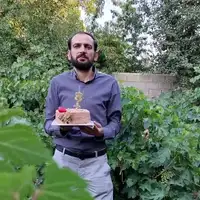
Esmail Abdi is currently celebrating his birthday in prison, despite the fact that, according to the law, he should have been released approximately 10 months ago.
The former leader of the Tehran Teachers Association was arrested in 2015 and subsequently sentenced to six years in prison by court order. However, before the completion of his sentence, a previous case of a 10-year suspended sentence was unexpectedly implemented, leading to ongoing uncertainty and concern about the fairness of the legal process.
The situation surrounding Abdi's continued detention has garnered international attention and prompted the Iranian Teachers' Association to express hope for his prompt release, hailing him as a "hero of resistance."
The charges against Abdi involve "collusion against national security," a common accusation used against activists and dissenting voices in Iran. His case is not isolated, as a court case has been filed against numerous teachers in recent months, according to trade unions. Many activists have reportedly been subjected to court orders, allegedly orchestrated by security institutions with the cooperation of radio and television networks, leading to further imprisonment and harassment.

Famous Iranian actress Afsaneh Baygan (Bayegan), who defied hijab, was sentenced to prison and mandatory psychologist visits for "anti-family personality."
In the wake of the recent sentencing of actresses Azadeh Samadi and Leila Boloukat for opposing mandatory hijab, Afsaneh Baygan, another prominent actress, has also faced legal repercussions.
On Wednesday, it was revealed that Tehran Criminal Court had handed down rulings against Baygan, ordering her to visit psychological centers weekly for "treatment of mental illness related to anti-family personality" and submit a "health certificate" at the end of the treatment period.
In addition to the psychological evaluation, Baygan received a "two-year suspended imprisonment" sentence for wearing a hat in public places, as stated by Mehdi Kouhian, a lawyer.
Further penalties included "reading a book and summarizing its manuscript within two months," a "two-year ban on exiting the country," and "prohibition of direct or mediated use of cyberspace" by disabling SIM cards and telephone lines associated with the actress.
These court decisions have sparked widespread reactions from social media users and the film industry. It comes amid a growing trend of female filmmakers and actresses appearing in public without wearing hijab, a movement that gained momentum during the "Women, Life, Freedom" protests last year.
The sentencing of these actresses reflects a broader issue of individual rights and freedom of expression in Iran, with artists and activists facing strict repercussions for their stance on mandatory hijab and other societal norms.

A court in Iran has sentenced an actress to four months in a remote prison and banned her from acting and social media activity for two years due to her rejection of hijab.
As reported by the reformist Ham-Mihan newspaper on Tuesday, Leila Bolukat has also been prohibited from leaving the country for two years and ordered to summarize a book within one month, although the name of the book has not been disclosed. Previously, a dissident was sentenced to handwrite three books by Supreme Leader Ali Khamenei.
The forty-two-year-old Bolukat was indicted in June on charges of “damaging public morality and chastity through removing [her] hijab and publishing photos of it on her personal accounts on social media accounts.”
In the photos mentioned by the court, Bolukat was seen wearing a hat instead of the required headscarf, with her hair falling on her shoulders.

Two other actresses, Afsaneh Bayegan and Azadeh Samadi who also appeared in public wearing hats instead of headscarves were indicted by the judiciary in the past few weeks.
Deputy Islamic Culture and Guidance Minister Mohammad Hashemi confirmed on Tuesday that the government prevented a film company from hiring another actress, whose name was not disclosed, also for rejecting hijab.
“This actress [who removed her veil] is not permitted to work for the time being due to her obvious infringement of the law,” Hashemi said, apparently referring to Shaghayegh Dehghan who was indicted last month for sharing a photo of herself without the compulsory veil taken on a Tehran street.

Hashemi also mentioned that around 1,000 artists have "broken the laws," and 300 other actors and artists have refused to conform to the system even after authorities spoke with them and informed them of the legal consequences of their defiance. As a result, the ministry has imposed various limitations on their activities, including work bans.
Disregarding forced hijab has become common in large Iranian cities after last year’s popular protests ignited by the death of a young woman in hijab police custody. The authorities are now worried that ordinary girls and women may be emboldened by celebrities’ defiance of the compulsory hijab and follow suit.
Recent videos and photos taken in public places in Tehran and other cities and posted on social media show a significant increase in the number of women without head coverings and wearing ordinary clothing rather than the long tunic and trousers that the authorities have been trying to enforce for all women. This shift in behavior was a rare sight just a year ago in the Islamic Republic.
Courts in Iran have been issuing strange and unprecedented punishments for defiance of hijab in the past couple of months, such as sentencing a woman to ritual washing of corpses for burial at a Tehran funeral home for one month, in addition to a cash fine of 31 million rials ($60) for not wearing the hijab in her car while driving.

The news about actress Azadeh Samadi being sentenced to counseling sessions at “an official counseling center to cure her anti-social personality disorder” has also gone viral on social media since July 14. The court has additionally decided that Samadi cannot use her phone for six months and all her social media accounts are “confiscated”.
The Directors Guild of Iran and the Iran Producers Guild, in a joint statement on July 15, condemned Samadi's sentencing and called it "an insult to the intelligence of all cinema people." These influential unions also pledged support to Iranian actresses and filmmakers who face similar court decisions aiming to humiliate them. They demanded an apology to Samadi for the verdict, which they deemed "weird."