• العربية
  • فارسی
Brand
  • Iran Insight
  • Politics
  • Economy
  • Analysis
  • Special Report
  • Opinion
  • Podcast
  • Iran Insight
  • Politics
  • Economy
  • Analysis
  • Special Report
  • Opinion
  • Podcast
  • Theme
  • Language
    • العربية
    • فارسی
  • Iran Insight
  • Politics
  • Economy
  • Analysis
  • Special Report
  • Opinion
  • Podcast
All rights reserved for Volant Media UK Limited
volant media logo

Blinken To Visit Riyadh, Amid Shift In Saudi Foreign Policy

Iran International Newsroom
Jun 3, 2023, 10:11 GMT+1Updated: 17:55 GMT+1
US Secretary of State Antony Blinken with Saudi foreign minister Faisal bin Farhan in Washington in 2021

US Secretary of State Antony Blinken will visit Saudi Arabia next week, amid Riyadh’s shifting foreign policy drawing closer to Beijing and a détente with Iran.

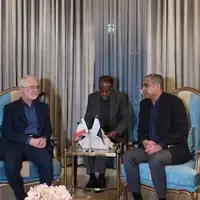
While the US was making the announcement, Saudi Arabia’s foreign minister Faisal bin Farhan met with his Iranian counterpart Hossein Amir-Abdollahian in South Africa during the BRICS summit and pledged to visit Tehran soon.

Blinken’s visit will be the second high-level mission in one month to mend fences with the region’s ascending power and the dealmaker in OPEC+. In May, national security adviser Jake Sullivan also visited the kingdom.

Although no breakthroughs are expected, Reuters quoted analysts as saying that the aims of the trip include to regain some sway with Riyadh over oil prices, to fend off Chinese and Russian influence, and to nurture hopes for an eventual Saudi-Israeli normalization.

In a brief statement, the State Department said Blinken would visit Tuesday to Thursday to discuss economic and security cooperation as well as for a US-Gulf Cooperation Council meeting and a conference on combating Islamic State militants.

But the Saudi decision in March to re-establish diplomatic relations with Iran after seven years of bitter animosity, signaled a serious shift in Riyadh’s foreign policy especially that the deal was forged with Chinese mediation in Beijing.

Iranian Foreign Minister Hossein Amir-Abdollahian meets with Saudi Arabia's Foreign Minister Prince Faisal bin Farhan Al Saud in Cape Town, South Africa, June 2, 2023
100%
Iranian Foreign Minister Hossein Amir-Abdollahian meets with Saudi Arabia's Foreign Minister Prince Faisal bin Farhan Al Saud in Cape Town, South Africa, June 2, 2023

Other regional developments followed that further demonstrated a shift by Saudi Arabia, which feels it is in a position to act independently. Riyadh helped re-habilitate Syria’s dictator Bashar al-Assad among Arab nations by inviting him to an Arab summit in May. Assad is a close ally of Iran.

Perhaps equally important was an announcement on May 31 by the United Arab Emirates, a close Saudi ally, that it has withdrawn from the US-led maritime security coalition in the region.

"As a result of our ongoing evaluation of effective security cooperation with all partners, two months ago, the UAE withdrew its participation in the Combined Maritime Forces," the Ministry of Foreign Affairs said in a statement.

The Combined Maritime Forces is a 34-nation task force, headquartered at the US naval base in Bahrain, working on security, counterterrorism and counter-piracy in the Red Sea and Persian Gulf areas. But in fact, the US and Israel were trying to forge a regional coalition to contain Iran, including an air defense network.

President Joe Biden seriously annoyed Riyadh both before and after getting elected. In 2019 he said that he would treat Saudi Arabia like "the pariah that they are" and, soon after taking office in 2021, releasing a US intelligence assessment that Saudi Crown Prince Mohammed bin Salman approved the operation to capture or kill dissident Saudi figure Jamal Khashoggi.

But Riyadh began losing faith in its long-standing alliance with Washington, when even former President Donald Trump refused to retaliate against a major Iranian drone and missile attack on Saudi oil installations in September 2019.

"They (the Saudis) wanted to see rubble bounce in Tehran after Abqaiq," Reuters quoted David Des Roches of the US National Defense University, saying about the attack on the oil installations. Riyadh had expected Trump to respond by ordering air strikes.

Saudi leaders also observed that while it was under the constant danger of missile and drone attacks by Iran and its proxy allies in Yemen, the Biden administration was trying to restore the 2015 JCPOA nuclear deal, which would end major sanctions against Tehran, indirectly enabling it to build up its military power and proxy forces in the region.
Most Viewed

Iran diplomacy wobbles as factions compete to avoid looking soft on US
1
INSIGHT

Iran diplomacy wobbles as factions compete to avoid looking soft on US

2
ANALYSIS

The politics of pink: how Iran uses cuteness to rebrand violence

3

Scam messages seek crypto for ships’ safe passage through Hormuz, firm warns

4
EXCLUSIVE

Family told missing teen was alive, then received his body 60 days later

5
INSIGHT

Is Iran entering its Gorbachev moment?

Banner
Banner

Spotlight

  • Diplomacy tolls at Hormuz as conflict returns to its doorstep
    OPINION

    Diplomacy tolls at Hormuz as conflict returns to its doorstep

  • Opposition to US talks grows in Tehran as ceasefire deadline nears
    INSIGHT

    Opposition to US talks grows in Tehran as ceasefire deadline nears

  • Tehran moderates see ‘no deal–no war’ limbo as worst outcome
    INSIGHT

    Tehran moderates see ‘no deal–no war’ limbo as worst outcome

  • The future has been switched off here
    TEHRAN INSIDER

    The future has been switched off here

  • Lights out, then gunfire: Witnesses recount Mashhad protest crackdown
    VOICES FROM IRAN

    Lights out, then gunfire: Witnesses recount Mashhad protest crackdown

  • Is Iran entering its Gorbachev moment?
    INSIGHT

    Is Iran entering its Gorbachev moment?

•
•
•

More Stories

US Lawmakers Introduce Bill To Target Iranian Oil Exports

Jun 3, 2023, 09:49 GMT+1

Teo members of US House of Representatives have introduced legislation to target those who help the Iranian regime avoid US sanctions.

"Stop Harboring Iranian Petroleum Act" (SHIP Act) introduced by Reps. Mike Lawler (R-NY) and Jared Moskowitz (D-FL) requires the president to impose sanctions on foreigners assisting Iran's oil exports.

The export of Iranian oil has steadily increased since late 2020, after President Joe Biden won the election and announced his readiness to negotiate with Tehran to revive the JCPOA nuclear deal.

The oil sales provide the regime with a significant source of revenue, funding activities such as terrorism and the development of nuclear and ballistic weapons.

“The SHIP Act is an important step in preventing Iran from using that partnership, especially in maritime trading with China, to benefit themselves financially,” Lawler said. “The SHIP Act will unequivocally sink Iran’s aspirations of regional dominance and poke holes in their trade relationships.”

The new legislation will target operators of ports that accept sanctioned vessels; anyone who offloads, transports, transfers or sells Iranian petroleum products; and refinery owners who process Iranian petroleum products.

“Adult family members and anyone who engages in a significant transaction with or provides material support for sanctioned individuals would also be subject to sanctions,” added a report by Jewish Insider.

Property freezes and visa bans will be included in the sanctions that would remain in effect until Iran ceased supporting terrorism and its nuclear, biological, and chemical weapons programs.

“This legislation will impose additional sanctions and deny Iran the ability to destabilize activities across the region, fund terrorist groups, violate human rights, and commit acts of oppression,” Moscowitz said in a statement.

Iranian Group Says Nerve Agent Was Used In Attacks On Schoolgirls

Jun 2, 2023, 21:02 GMT+1
•
Maryam Sinaiee

A popular dissident Twitter account, 1500tasvir, says preliminary results of tests done on clothing of poisoned schoolgirls in Iran suggests the use of a nerve agent.

In a series of tweets Wednesday, the group which is based abroad said samples of clothing of poisoned students it had received from Iran were tested by a group of experts who used the GC-MS technique to detect the gases absorbed by the clothing.

Tests indicated that the clothing items had been exposed to a set of molecular masses including those with a mass of 99 which suggested the presence of fluoromethyl phosphate, the report said, adding that fluoromethyl phosphate is the common agent among many highly toxic gases such as sarin, cyclosarin, soman.

The 1500tasvir report also said identifying the exact type of gas used in the attacks requires two high-resolution mass spectroscopy experiments on the molecular mass which the experts will carry out and urged families of victims to send more samples including hair samples.

The poisonings started in the religious city of Qom in central Iran November 30, spread throughout the country, and continued until the end of April, sending hundreds of students to hospitals and at least one case of death was reported.

The city of Qom with a population of over 1.2 million is home to most of Iran's religious seminaries and an important Shiite shrine.

Many ordinary Iranians have been suspicious of involvement of the regime itself, or religious extremists protected by the regime, calling the attacks “state terrorism”. Some argued that because teenagers and young people were playing a major role during the protests, and many young girls had removed their headscarves in protest, regime hardliners wanted to punish them.

Some of the victims reported falling ill after an aroma, resembling tangerines, or a putrid stench filled the air in their classrooms. Hundreds had to be hospitalized with some staying in hospital for up to a week due to the severeness of their symptoms including palpitation, headache, nausea, cough, sore throat, or temporary paralysis and weakness but most others were released within hours. In some cases, symptoms lasted for weeks.

In a statement on April 28, the intelligence ministry denied any indication that poisonous substances had caused the illness of students and said samples taken from the scene of the incidents examined by “the most reliable laboratories” in the country had not yielded any suspicious materials.

The ministry claimed illness of students was caused by stink bombs (stinkpots), pepper sprays, tear gas and similar substances used by students to disrupt classes and accused “foreign enemies” and media outside Iran, particularly those broadcasting in Persian, of using school poisoning incidents to ignite unrest because the Mahsa protests that started in mid-September had begun to subside.

A young woman lies in hospital after reports of poisoning at an unspecified location in Iran in this still image from video from March 2, 2023.
100%
A young woman lies in hospital after reports of poisoning at an unspecified location in Iran in this still image from video from March 2, 2023.

The ministry also mentioned spurious causes, such as gas fuel leak from vehicles and urban gas, smoke from trash burning outside schools, and mass psychogenic illness resulting from stress and said nearly all the students hospitalized following the incidents had recovered by simple treatments such as oxygen, saline and dextrose intravenous injections, and sedatives to treat anxiety.

During the height of the attacks, state media tried to downplay the seriousness of the incidents and authorities warned the local media to avoid reporting of the incidents.

Senior Cleric Claims Religion In Iran Weak, 50,000 Mosques Closed

Jun 2, 2023, 17:53 GMT+1

A senior Iranian cleric says around 50,000 of Iran's 75,000 mosques are closed, showing the declining numbers of Iranians attending. 

Expressing regret over the low numbers engaged in worship, Mohammad Abolghassem Doulabi, who serves as the liaison between Ebrahim Raisi’s administration and the country’s seminaries, said on Thursday that the numbers are a "worrying admission” for a state built around the principles of Islam.

Doulabi, who is also a member of the Assembly of Experts – a deliberative body empowered to appoint the Supreme Leader – said the outcome of religion in Iran has led to people leaving religion.

Emphasizing the weakening of religiosity among society and in turn, a weakening legitimacy of a government ruling by religious diktat, he said: “When people look at the output of the religion, they decide to enter the religion or leave the religion," with reasons including “the humiliation of people in the name of religion," “falsification of religious concepts and teachings,” and “depriving people of a decent life and creating poverty in the name of religion.”

He made the remarks as growing numbers of Iranians of all ages are becoming weary of the regime's justification of Islam as the base of its brutal dictatorship, reflected by months of violent protest since September in the wake of the death in morality policy custody of Mahsa Amini, arrested for the inappropriate use of her hijab.

Iran’s Intelligence Minister Says ‘Enemy’ Wants To Overthrow The Regime

Jun 2, 2023, 16:26 GMT+1

The enemy pursues regime change in Iran; Intelligence Minister Esmail Khatib told a gathering of Iranian diplomats in Tehran on Friday.

Islamic Republic official offer refer to the United States and sometimes to its allies as ‘the enemy’.

“The enemy is definitely after regime change and will not relinquish that goal. That regime change is aimed at altering the nature and essence of the Islamic Republic,” Khatib said.

The Iranian regime has blamed months of protests as a plot by foreigners and even insists that the Woman, Life, Freedom movement is a ploy by enemies to ideologically defeat the clerical political system.

Officials and senior clerics have made the issue of forced hijab a political red line and insist that if they retreat and allow women freedom in their attire, the foundations of the regime will crumble.

Ayatollah Ahmad Alamolhoda, a firebrand religious hardliner, in a speech on Friday echoed Khatib’s remarks, saying that the “enemy” encourages women to unveil because it wants to weaken and put an end to clerical rule in Iran.

Alamolhoda, a staunch supporter of Supreme Leader Ali Khamenei is the father-in-law of President Ebrahim Raisi.

Khatib also claimed that the hardliner government of president Raisi has had foreign policy success and added, “The foreign ministry will have a busy year this year.”

Iran re-established diplomatic relations with Saudi Arabia in March, but is still under Western, particularly US sanctions for persisting to expand its nuclear program.

Iran’s Appointment At UN Leadership Angers International Community

Jun 2, 2023, 15:25 GMT+1
•
Iran International Newsroom

Amid campaigning against Iran's appointment as chair of the UN Human Rights Council’s Social Forum, the Islamic Republic has gained another UN leadership position.

The regime was appointed Thursday as one of the vice-presidents of the UN General Assembly which will begin next September, drawing reactions from several members and dozens of activists. The body also appointed Iran’s envoy Heidar-Ali Balouji as the rapporteur of the Disarmament and Non-Proliferation Committee of the General Assembly and a member of the board of this committee.

The US mission in UN dissociated itself from the election and expressed its opposition to Iran's leadership throughout the UN system, saying: “Iran cannot act as an honest broker in its role as a Vice President of the General Assembly, because it has shown, time and time again, that it does not seek to enhance global peace and security, but rather works against it.”

Heidar Ali Balouji, the first Counselor of the Permanent Mission of the Islamic Republic of Iran to the United Nations (undated)
100%
Heidar Ali Balouji, the first Counselor of the Permanent Mission of the Islamic Republic of Iran to the United Nations

After the election of the vice presidents of the 78th Session of the General Assembly, US Ambassador to the body, Chris Lu, said “Iran’s record, unfortunately, speaks for itself. It defies UN Security Council arms embargoes, violates the human rights of its own citizens, and exports violence and weapons, fostering insecurity and inciting violence throughout the Middle East and across the globe.”

Another US envoy, Robert Wood, referred to Iran’s persistent violations of UN Security Council resolution 2231, including pertaining to its ballistic missile program, its ongoing efforts to undermine international security, and its failure to fully cooperate with the International Atomic Energy Agency (IAEA), underlining that “a representative of Iran’s government is unfit to serve in a leadership position within this committee, even if such a position is largely ceremonial.”

Israel’s Foreign Ministry also called the decision “shameful,” saying: “In addition to murdering its own citizens, attacking innocents around the world and racing towards a nuclear weapon with the goal of wiping Israel off the map, Iran will now serve in a senior UN position.”

“This is the same country that calls for the destruction of another member state of the organization it represents,” it added, referring to the Islamic Republic's repeated call that Israel must be obliterated from the face of the Earth.

Noting that such an appointment “defies all logic and reason,” the ministry added that it is “an insult to the millions of Iranians protesting for their basic freedoms and to the justice, peace and global stability that the UN is supposed to stand for.”

The decision has caused outrage among Iranian people and activists, such as opposition figure Nazanin Boniadi, who called it “an absolute disgrace."

In May, the appointment of Iran's UN ambassador Ali Bahraini to the chair of the UN Human Rights Council 2023 Social Forum also sparked much anger and indignation. The forum to be held in Geneva on November 2 and 3 will focus on the contribution of science, technology, and innovation to the promotion of human rights including in the context of post-pandemic recovery.

After launching a petition to the UN Secretary General Antonio Guterres to cancel the appointment, UN Watch -- an independent human rights organization -- submitted a resolution to the UN to overturn the decision late in May.

Earlier in the week, a group of 26 Iranian rights groups expressed fury over the appointment, saying that according to the UN Special Rapporteur on human rights in Iran, the violence of the security forces of the Islamic Republic during the nationwide protests led to the death of hundreds, including dozens of children and women, while hundreds of other protesters were seriously injured, and thousands were arrested.