• العربية
  • فارسی
Brand
  • Iran Insight
  • Politics
  • Economy
  • Analysis
  • Special Report
  • Opinion
  • Podcast
  • Iran Insight
  • Politics
  • Economy
  • Analysis
  • Special Report
  • Opinion
  • Podcast
  • Theme
  • Language
    • العربية
    • فارسی
  • Iran Insight
  • Politics
  • Economy
  • Analysis
  • Special Report
  • Opinion
  • Podcast
All rights reserved for Volant Media UK Limited
volant media logo

Iran's Nuclear Negotiator Says Messages Being Exchanged With US

Iran International Newsroom
Feb 12, 2023, 09:16 GMT+0Updated: 17:25 GMT+1
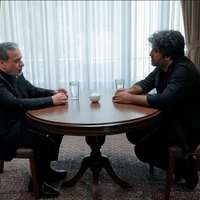
Ali Bagheri-Kani in Vienna attending nuclear talks in February 2022

Iran’s chief nuclear negotiator, Ali Bagheri-Kani, says “negotiations in the framework of exchanging indirect messages between the two sides continue.”

The government’s official news website IRNA Sunday published an interview Bagheri had with Al Manar TV in Lebanon, where he tried to reassure the public that the chance to revive the 2015 nuclear agreement is not lost and talks are taking place.

The Islamic Republic faces multiple economic and political crises that have deepened in the past six months, as 18 months of indirect talks with the United States failed to produce a result and popular protests dealt a further blow to Tehran’s political standing.

The Biden Administration announced in October that its focus has shifted from the nuclear issue to supporting the rights of Iranian protesters and increasingly a negative mood emerged about the chances of any new talks.

“In the past year and a half when talks were taking place, the speed of negotiations might have increased and decreased at times but there was a continuity. Now also [talks] are taking place in the framework of exchanging messages between the two sides,” Bagheri said.

The Biden Administration has not explicitly denied exchange of messages with Tehran.

Iran International reported in January that the State Department did not deny information obtained by the network that US Iran Envoy Robert Malley had held meeting in New York with Tehran’s UN ambassador.

In response to questions submitted by Iran International on January 17, State Department spokesperson Ned Price said, “We have the means to deliver specific and firm messages to Iran when it is in America’s interest to do so.”

The contents of Malley’s meetings with the Iranians remain unclear, but the issue of Americans held hostage in Tehran or regional issues are all intertwined with the nuclear negotiations.

In early November, President Joe Biden told a citizen who asked him about the nuclear talks during an election campaign event that the “JCPOA is dead.” Bagheri commented about this and said that later US officials spoke about this – referring to comments that diplomacy will continue – and “in practice messages are being exchanged.”

Bagheri also did not deny that Qatar is playing a mediating role

There was little else new in what Iran’s chief negotiator had to say about the nuclear talks or the increasingly tense relations with the West. He repeated Supreme Leader Ali Khamenei’s accusation that the West instigated the protests in Iran.

He also reiterated that Iran’s most important “red line is the issue of guarantees”, that in case of a deal “the other party discharges its commitments.” Throughout the talks Tehran has been insisting on receiving guarantees from the United States that it will not pull out of an agreement, similar to President Donald Trump’s decision in 2018. Tehran is also insisting that it should receive the economic benefits once sanctions are lifted.

The US has said that it cannot guarantee an accord, which is not a treaty, beyond the term of the current administration.

However, on the issue of sanctions, Bagheri appeared to demand that only economic sanctions imposed by the Trump administration, not mentioning many new sanctions imposed by the current administration on companies and individuals.

Facing a worsening economic crisis and a popular revolt, Tehran wants to exhibit an aura of normalcy and hope. The target of positive statements about the chances of talks with the West is more the domestic audience that fast is losing hope in the future.
Most Viewed

Iran diplomacy wobbles as factions compete to avoid looking soft on US
1
INSIGHT

Iran diplomacy wobbles as factions compete to avoid looking soft on US

2
ANALYSIS

The politics of pink: how Iran uses cuteness to rebrand violence

3

Scam messages seek crypto for ships’ safe passage through Hormuz, firm warns

4
EXCLUSIVE

Family told missing teen was alive, then received his body 60 days later

5
INSIGHT

Is Iran entering its Gorbachev moment?

Banner
Banner

Spotlight

  • Diplomacy tolls at Hormuz as conflict returns to its doorstep
    OPINION

    Diplomacy tolls at Hormuz as conflict returns to its doorstep

  • Opposition to US talks grows in Tehran as ceasefire deadline nears
    INSIGHT

    Opposition to US talks grows in Tehran as ceasefire deadline nears

  • Tehran moderates see ‘no deal–no war’ limbo as worst outcome
    INSIGHT

    Tehran moderates see ‘no deal–no war’ limbo as worst outcome

  • The future has been switched off here
    TEHRAN INSIDER

    The future has been switched off here

  • Lights out, then gunfire: Witnesses recount Mashhad protest crackdown
    VOICES FROM IRAN

    Lights out, then gunfire: Witnesses recount Mashhad protest crackdown

  • Is Iran entering its Gorbachev moment?
    INSIGHT

    Is Iran entering its Gorbachev moment?

•
•
•

More Stories

Germany Sees Increase In Iranian Spying On Dissidents Since Protests

Feb 11, 2023, 08:37 GMT+0

Germany has acknowledged an increase in spying by Iranian agents on exiled Iranians since the start of mass protests last year, Welt am Sonntag newspaper reported on Saturday.

Nationwide unrest triggered by the death of a young woman detained by Iranian morality police last year has led to "increasing indications of possible spying on opposition events and individuals" in Germany, the federal government said in response to an information request from the far-left Linke Party.

"Opposition groups and individuals (...) are considered by the rulers in Iran as a threat to the continued existence of the regime," the government said in its response.

It said the country's domestic intelligence service had identified 160 individuals with links to Germany as well as the Iranian Revolutionary Guards.

The Islamic Republic has persecuted exiled dissidents for four decades, often threatening, assassinating or kidnapping activists in Europe, including a former prime minister and several journalists.

The Revolutionary Guards' "extensive spying activities" are directed in particular against pro-Israeli and pro-Jewish targets in Germany, the newspaper cited the government as saying.

Demonstrations that first erupted in September over the death of a 22-year-old Kurdish woman who had been placed in detention by police enforcing the Islamic Republic's strict restrictions on women's dress have turned into the biggest protests in years.

Reporting by Reuters

Prominent Iranian Opposition Figures Pledge Unity, Urge World Support

Feb 10, 2023, 22:36 GMT+0
•
Iran International Newsroom

In a historic event eight leading Iranian opposition figures have called for support from democratic countries to change the regime in Iran and establish democracy.

At an event at Georgetown University's Institute for Women, Peace and Security (GIWPS) -- titled ‘The Future of Iran’s Democracy Movement' -- held on Friday on the eve of the 44th anniversary of the establishment of the Islamic Republic, the prominent activists pledged unity for the single purpose of bringing democracy to Iran.

The speakers, all emphasizing the importance of unity against the Islamic Republic also argued that now is not the time to argue about the exact form of a future democratic government in Iran.

Both constitutional monarchy and a republican form of government have their supporters among Iranians.

Exiled Prince Reza Pahlavi, Nobel laureate Shirin Ebadi and Canada-based activist Hamed Esmaeilion, whose daughter and wife were killed in the shooting down of Flight PS752 downed by Iran’s Revolutionary Guard in 2020, as well as US-based author, journalist and women’s rights activist Masih Alinejad, actresses and activists Nazanin Boniadi and Golshifteh Farahani, former captain of Iran’s national soccer team Ali Karimi and Secretary General of Komala Iranian Kurdish party Abdullah Mohtadi were four women and four men who spoke at the event.

Pahlavi, Boniadi, Alinejad and Esmaeilion were present in the room, while Ebadi, Mohtadi and Farahani delivered video messages.

Clockwise - Prince Reza Pahlavi, Shirin Ebadi, Masih Alinejad, Hamed Esmaeilion, Nazanin Boniadi, Abdullah Mohtadi, Golshifteh Farahani and Ali Karimi
100%
Clockwise - Prince Reza Pahlavi, Shirin Ebadi, Masih Alinejad, Hamed Esmaeilion, Nazanin Boniadi, Abdullah Mohtadi, Golshifteh Farahani and Ali Karimi

The event can become a turning point in shaping a united leadership abroad to represent the democracy movement in Iran, where activists have no chance of publicly defending it. Thousands of protesters are still in prison and dozens face the death sentence.

All speakers emphasized that the protest movement is alive and strong in Iran and it needs support from democratic countries. They pledged to work for a new form of government that would be democratic, secular and bring equality, justice and progress to Iran.

The activists representing the protest movement said that they are working on a charter for their group by the end of February and hope to lay the foundations for political representation of the aspirations of protesters in Iran and gain support for isolating the Islamic Republic.

Nobel Laureate Shirin Ebadi referring to the Islamic Republic's ruler Ali Khamenei said, "Dictator say hello to the end."

"It's not a time for infighting. The overthrow of the regime is not possible without unity and empathy," said Ebadi.

"Let's leave differences for the election. We will move hand-in-hand to a better future," she said in her video message.

Abdullah Mohtadi, a Kurdish political leader said that because of Mahsa Amini's killing by the regime, Islamic Republic's falsehood has been shattered.

Actress Golshifteh Farahani, also speaking on behalf of Ali Karimi, said that now is the time for unity and any Iranian sowing divisiveness is committing treason.

Well-known US-based activist Masih Alinejad emphasized the urgency of isolating the Islamic Republic in the world arena.

Hamed Esmaeilion, Nazanin Boniadi and Prince Reza Pahlavi emphasized emphasized equality, justice freedom and the common destiny binding Iranians.

Alinejad said that the group was working on a charter for a transition that would be ready at the end of the month. "We must agree on minimal principles," she said, adding: "The world must prepare itself for a day without the Islamic republic."

"The next wave [of protests] will come and it will be heavier," Esmaeilion said.

"We can organize and plan so, when the next wave comes, all of us are ready and we can transition away from the Islamic republic."

Prince Reza Pahlavi, who has long campaigned for a secular and democratic Iran rather than any restoration of the monarchy, said, "The time has come to consolidate our positions, put aside differences. The time has come to put aside slogans, roll up our sleeves and begin our work."

Updated at 22:00 GMT

US, Qatar Reportedly Discuss Talks To Revive Iran Nuclear Deal

Feb 10, 2023, 11:03 GMT+0

US Special Envoy for Iran Robert Malley met Thursday with the Qatari foreign minister in Washington over efforts to kickstart the stalled talks to revive the 2015 nuclear deal, Qatari sources said. 

Deputy Prime Minister and Minister of Foreign Affairs Sheikh Mohammed bin Abdulrahman Al Thani and Malley also discussed bilateral relations in addition to a number of issues of common interest.

Late in January, Al Thani visited Tehran where he delivered messages from world powers that are party to the Joint Comprehensive Plan of Action, particularly the US which does not have direct contact with the Islamic Republic. 

“Qatar has been always passing on messages about the return of the JCPOA parties to their commitments. Today, we received JCPOA-related messages from the Qatari side,” Iran’s foreign minister Hossein Amir-Abdollahian stated. 

The Qatari foreign minister also urged all parties to return to the agreement.

Talks to revive the JCPOA reached a deadlock last September after 18 months of negotiations.

These statements come as US officials have repeatedly said that their focus is not on the JCPOA negotiations any longer, but Washington is rather focused on the Islamic Republic’s suppression of its people and Tehran’s military support for Russia in the invasion of Ukraine.

The European parties to the JCPOA have also expressed a similar view, with Germany saying that "Berlin's main focus is on supporting the protest movement in Iran."

Under US Pressure, Lula Delays Brazil Docking Of Iran Warships -Reuters

Feb 10, 2023, 08:12 GMT+0

Brazil postponed the request of two Iranian warships to dock in Rio de Janeiro in January, under pressure from Washington, Reuters has said in an exclusive report.

The decision came at a time when Brazilian President Luiz Inacio Lula da Silva was planning his trip to Washington to meet President Joe Biden, sources told Reuters.

On January 13, Brazil granted permission for the IRIS Makran & IRIS Dena ships to dock in Rio's port during January 23-30, according to a post in the official government gazette.

That window has been scrapped, with the ships now authorized to dock between February 26 and March 3, the Brazil's foreign ministry said.

In the meantime, Iranian state media was presenting the scheduled docking of the two ships as a sign of Islamic Republic’s power and influence in America’s backyard.

A US official with direct knowledge of the situation said the prospect of Iranian warships in Rio ahead of Lula's meeting with Biden on Friday "was something unpleasant we wanted to avoid."

"There were a lot of behind-the-scenes conversations about this at many different levels," the official said, adding it was good news that the dates would no longer coincide.

A Brazilian military source confirmed that the federal government, via the foreign ministry, had shifted the dates and blocked the Iranian ships from docking.

"It's true that there was a veto (from the government)," said the source, speaking on condition of anonymity. "The Iranian ships could not come during this period."

Diplomacy with Iran was one of the policies of Lula's previous presidential mandate, and he has declared neutrality in the Ukraine conflict.

Draft Resolution In Congress Voices Support For Secular, Democratic Iran

Feb 8, 2023, 21:23 GMT+0
•
Iran International Newsroom

A large group of US Congresspeople have expressed support for a democratic, secular, and non-nuclear “Republic of Iran,” in a draft resolution that comes after five months of antigovernment protests.

Condemning violations of human rights and state-sponsored terrorism by the Iranian Government, the bipartisan group of Representatives submitted a resolution on Tuesday, which was referred to the Committee on Foreign Affairs. The motion was introduced by California's Republican lawmaker Tom McClintock and is cosponsored by 165 other representatives. 

The resolution “calls on relevant United States Government agencies to work with European allies, including those in the Balkans where Iran has expanded its presence, to hold Iran accountable for breaching diplomatic privileges, and to call on nations to prevent the malign activities of the Iranian regime’s diplomatic missions, with the goal of closing them down and expelling its agents." 

It also emphasizes that Washington “stands with the people of Iran who are legitimately defending their rights for freedom against repression, and condemns the brutal killing of Iranian protesters by the Iranian regime; and recognizes the rights of the Iranian people and their struggle to establish a democratic, secular, and nonnuclear Republic of Iran.”

The resolution mentions the popular antigovernment protests in 2017, which resulted in at least 25 deaths and 4,000 arrests, and the protests in November 2019, when about 1,500 people were killed during less than two weeks of unrest, as well as the current wave of protests ignited by the death of Mahsa Amini, a 22-year-old Kurdish Iranian woman who was arrested in mid-September 2022 by the morality police that enforce the regime’s mandatory dress code laws. 

Noting that women and youth have led the 2022 protests in Iran to demand social freedom and political change, the resolution describes the uprising as “rooted in the more than four decades of organized resistance against the Iranian dictatorship.” The ongoing unrest have been most recently led by women who have endured torture, sexual and gender-based violence, and death. 

It also mentions executions and death sentences in recent months and calls for measures to force the government to cease such repression.

In the 116th Congress, the House of Representatives passed House Resolution 752, "Supporting the rights of the people of Iran to free expression, condemning the Iranian regime for its crackdown on legitimate protests, and for other purposes,” it adds, urging the Administration to work to convene emergency sessions of the United Nations Security Council and to work with United States partners and allies to condemn the ongoing human rights violations perpetrated by the Iranian regime and establish a mechanism by which the United Nations Security Council can monitor such violations. 

Iranian protests (file photo)
100%
Iranian protests

The resolution also mentions efforts by the international community against the crackdown on dissent in Iran, saying that on November 24, 2022, the United Nations Human Rights Council established a fact-finding mission to conduct an independent investigation into the ongoing deadly violence related to the protests in Iran that began on September 16, 2022. It also mentioned the resolution adopted by United Nations Economic and Social Council (ECOSOC) on December 14, 2022, to expel Iran from the Commission on the Status of Women (CSW) for the remainder of its 4-year term ending in 2026. 

Enumerating other actions by the US against the human rights violations by the clerical regime, the House resolution referred to the Department of State’s 2021 Country Reports on Human Rights Practices, released on April 13, 2022, which cites that “Iran’s government and its agents reportedly committed arbitrary or unlawful killings, most commonly executions for crimes not meeting the international legal standard of ‘most serious crimes’ or for crimes committed by juvenile offenders, as well as executions after trials without due process.”

“On October 25, 2021, the United Nations Special Rapporteur (UNSR) on the situation of human rights in the Islamic Republic of Iran, Javaid Rehman, told the United Nations General Assembly that almost all executions in the country constituted an arbitrary deprivation of life, noting the extensive, vague and arbitrary grounds in Iran for imposing the death sentence, which quickly can turn this punishment into a political tool,” read the resolution. 

The resolution also condemns the Iranian regime’s arbitrary and brutal suppression of “ethnic and religious minorities, including Iranian Kurds, Baluchis, Arabs, Christians, Jews, Baha’is, Zoroastrians, and even Sunni Muslims,” noting that it deprived them of their basic human rights, and has in many cases executed them.