EU's Borrell Still Hopes For A Nuclear Deal With Iran

EU’s top diplomat Josep Borrell says that if Iran “took a further step in its military assistance to Russia” a nuclear deal with the West will be endangered.

EU’s top diplomat Josep Borrell says that if Iran “took a further step in its military assistance to Russia” a nuclear deal with the West will be endangered.
But in an interview with the WSJ, Borrell appeared determined to continue efforts for a nuclear deal despite less interest by the United States, the United Kingdom, France and Germany, initial signatories of the JCPOA.
Nuclear talks that began in April 2021 to restore the 2015 deal known as the JCPOA, and lasted 18 months, failed to produce an agreement. Iran presented new demands last year, which effectively stopped the talks before popular protests broke out in Iran in September and Tehran began delivering kamikaze drones to Russia.
Tehran’s new demands in the talks, that Washington called “extraneous,” and its military assistance to Moscow, in addition to a bloody crackdown on protests brought formal talks to an end.
Borrell said that he has warned Tehran not to expand its military cooperation with Russia by refraining to deliver missiles in addition to hundreds of Kamikaze drones it has already supplied. He added that if Iran takes this step the US and Europe will lose interest in restoring the JCPOA.
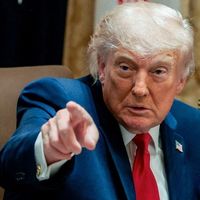
Borrell blamed former US President Donald Trump for the deal’s collapse, when he exited the JCPOA in May 2018 and imposed heavy sanctions on Tehran.
Critics of the accord have insisted that the JCPOA was a “weak” agreement that would have allowed the Islamic Republic to have an unfettered nuclear program once most of its provisions expired by 2030.


Shortly after reports surfaced that Iran plans to construct a drone factory in Russia, Ukrainian sources say Moscow intends to "swarm" Ukraine's air defenses.
Newsweek said on Monday that Moscow is set to receive a new batch of Iranian-made Shahed drones, according to a Ukrainian military intelligence official.
Vadym Skibitsky, the deputy head of the Main Intelligence Directorate within Ukraine's defense ministry, told Ukrainian outlet RBC that Russia will shortly receive another delivery of Shahed-131 and -136 drones, or unmanned aerial vehicles, from Tehran.
Skibitsky did not specify a time scale for the reported delivery, but suggested that previously, Russia had received batches of between 250 and 300 "suicide" or "kamikaze" drones. "Stocks need to be replenished," he said, adding that Russia was attempting "to use what they have left in the most effective way."
He added that Russian forces have "used approximately 660 Shahed drones" to date, but will be expecting to have up to 1,750 at their disposal.
Emphasizing that a small amount—5 to10 [UAVs] cannot have such an effect, the deputy chief of Ukraine's military intelligence said that Russian forces were looking to send the drones in "swarms" that could breach Ukrainian air defense systems.
On Sunday, The Wall Street Journal quoted officials from a country aligned with the US as saying that a high-level Iranian delegation traveled to Russia in early January to make preparation for a drone factory. The report claimed that Moscow and Tehran are cooperating on plans to construct a factory that could make at least 6,000 Iranian-designed drones.
Russia is planning a major offensive to coincide with the one-year anniversary of the war in Ukraine on 24 February, according to Ukraine’s defense minister, Oleksii Reznikov.

The Wall Street Journal reports that Moscow and Tehran are cooperating on plans to construct a new factory in Russia that could make at least 6,000 Iranian-designed drones to be used in the war on Ukraine.
The WSJ quoted officials from a country aligned with the US as saying that a high-level Iranian delegation traveled to Russia in early January to visit the site for the factory and decide on details to kick off the project.
The Iranian delegation was reportedly led by both sanctioned Brigadier Geneneral Abdollah Mehrabi, head of the Islamic Revolutionary Guard Corps Aerospace Force Research and Self-Sufficiency Jihad Organization, and Ghassem Damavandian, the chief executive of Iran’s Quds Aviation Industry.
The Islamic Republic has already provided Russia with hundreds of drones it has used to hit military and civilian targets in Ukraine.
The officials say the drone factory is part of a $1 billion deal between the two allies. Moscow has provided Iran with weapons seized on the battlefield in Ukraine that they are trying to reverse engineer, the officials added.
The Biden administration has warned that Russia and Iran are developing a “full-fledged defense partnership.” The White House says Moscow was training Iranian pilots to fly Russian jet fighters, with the intent of providing Tehran with the fighters by year’s end.

A UN watchdog report shows Iran is inconsistent in meeting its nuclear obligations, the United States, Britain, France and Germany said in a joint statement Friday.
The International Atomic Energy Agency (IAEA) criticized Iran on Wednesday for making an undeclared change to the interconnection between the two clusters of advanced machines enriching uranium to up to 60% purity, close to weapons grade, at its Fordow plant.
Iran said the IAEA's position on Tehran's nuclear work was not correct.
“Iranian claims that this action was carried out in error are inadequate. We judge Iran’s actions based on the impartial and objective reports of the IAEA, not Iran’s purported intent,” the Western powers said in their statement.
The IAEA Board of Governors comprised of more than 30 countries has already censured Iran several times for breaching its obligation. The Board took action twice in 2022, as a warning to Iran that the West can take the issue to the UN Security Council.
According to the 2015 nuclear accord with Iran known as JCPOA, signatories can trigger the automatic re-institution of international sanctions imposed by the Security Council in the early 2010s that were lifted when the deal was made. In this case, since the United States has withdrawn form the agreement, the three European countries can resort to the ‘trigger mechanism.’
The IAEA found the change during an unannounced inspection on Jan. 21 at the Fordow Fuel enrichment Plant (FFEP), a site dug into a mountain where inspectors are stepping up checks after Iran said it would dramatically expand enrichment.

"As stated by the Agency, this unnotified change is inconsistent with Iran's obligations under its NPT-required Comprehensive Safeguards Agreement," the four countries said in their statement, referring to the Treaty on the Non-Proliferation of Nuclear Weapons.
"The IAEA inspector's interpretation was incorrect but we reported it to the agency ... We immediately provided the explanation to the IAEA on the same day," Iranian nuclear chief Mohammad Eslami said on Thursday.
Eslami in a television program Friday night tried to justify Iran’s nuclear program in general terms, claiming that the country needs nuclear power generation and nuclear medicine. Iranian officials often make misleading statement to the domestic audience, not mentioning that a high degree of uranium enrichment is not needed for civilian purposes. Nuclear reactors use less than 5-percent enriched uranium, while Iran has so far accumulated enough 60-percent uranium for one nuclear bomb.

The production of high-enriched uranium by Iran at Fordow carries significant proliferation-related risks and is without any credible civilian justification, the joint statement said.
Fordow is so sensitive that the 2015 nuclear deal between Iran and major powers banned enrichment there. Since the United States pulled out of the deal in 2018 and reimposed sanctions against Iran, the Islamic Republic has breached many of the deal's restrictions on its nuclear activities.
The Western powers warned, “We call on Iran to comply with all its legally-binding international obligations under its Comprehensive Safeguards Agreement with the IAEA and to fully cooperate with the Agency in the application of effective safeguards at Fordow.”

French President Emmanuel Macron has expressed concern over the progress of Iran’s nuclear program, warning of consequences for Theran if it continues its atomic project.
After a dinner meeting in the Elysee Palace with Israeli Prime Minister Benjamin Netanyahu on Thursday, Macron called for “firmness in the face of Iran’s headlong rush, which if continued would inevitably have consequences.”
The French president also noted “that Iranian support for Russian aggression in Ukraine exposes Iran to sanctions and increasing isolation,” while Netanyahu said Israel is considering sending military aid to Ukraine, which seems Israel plans to drop its more neutral stance over the conflict in the hope of securing a more anti-Iran Western position towards Tehran.
While Macron met Netanyahu in Paris, French Foreign Minister Catherine Colonna flew to Saudi Arabia and the UAE. France is a major arms supplier to both countries, with Riyadh becoming the biggest purchaser of French weapons in 2020.
Macron also mediated a regional summit in Jordan in December about the future of Iraq.
France is an important power in the eastern Mediterranean, where it maintains a significant naval and aerial presence and enjoys an historic role in Lebanon.
Before the Israeli premier took off for Paris earlier Thursday for his first meeting with Macron since he returned to power late last year, Netanyahu said the focus of his conversations with Macron would be “our joint efforts to stop Iran’s aggression and its drive toward a nuclear weapon.”
France agrees that "firmness" is needed in dealings with Iran, a diplomatic source told AFP, calling its nuclear program "dangerous" and highlighting its role in the Ukraine war.

Iran’s Atomic Energy Organization has dismissed a report by the UN nuclear watchdog on an undeclared change to uranium enriching equipment at its Fordow plant.
Iranian state media quoted Mohammad Eslami, the chief the Atomic Energy Organization of Iran, on Wednesday saying the IAEA report was “incorrect” and “disappointing”.
Claiming that the agency's reports "about no country except Iran are immediately published in the media", Eslami added "The agency inspector's take after his visit to Fordow was incorrect, but he immediately reported it to the agency."
The UN nuclear watchdog criticized Iran on Wednesday for making an undeclared change to two clusters of advanced machines enriching uranium to up to 60% purity.
The International Atomic Energy Agency found that the interconnection between the two clusters of centrifuges changed during an unannounced inspection on January 21 at the Fordow Fuel enrichment Plant (FFEP), a site dug into a mountain where inspectors are stepping up checks after Iran said it would dramatically expand enrichment.
In a public statement summarizing that confidential report, the IAEA said its chief Rafael Grossi "is concerned that Iran implemented a substantial change in the design information of FFEP in relation to the production of high-enriched uranium without informing the Agency in advance."
"This is inconsistent with Iran's obligations under its Safeguards Agreement and undermines the Agency’s ability to adjust the safeguards approach for FFEP and implement effective safeguards measures at this facility."