US Hails Western Coordinated Actions Against Islamic Republic

The United States has lauded the punitive measures by European countries against officials of the Islamic Republic’s Revolutionary Guards.

The United States has lauded the punitive measures by European countries against officials of the Islamic Republic’s Revolutionary Guards.
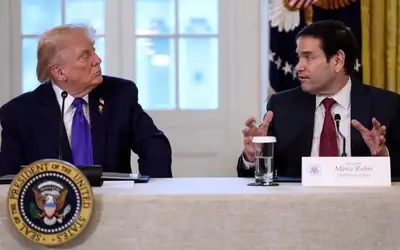
In response to our correspondent, US State Department Spokesperson Ned Price said Wednesday, “We applaud our European allies' latest designations of IRGC officials,” noting that “Our European allies recognize the threat and challenges posed by the IRGC and Iran.”
“We've enjoyed exceptionally close cooperation and coordination with Europe on confronting these challenges,” he added.
About the possibility of resuming talks to revive the 2015 nuclear deal, he said that “The JCPOA has not been on the agenda for months. Iran consistently turned its back on chances to pursue mutual return to JCPOA.”
He noted that “As a result of what Iran is doing around the world and to its own people, we've focused on sending clear messages to Iran.”
“Stop killing your people, stop sending drones to Russia,” Price stated addressing the Islamic Republic.
The West on Monday stepped up pressure on Iran over its crackdown on protests and arms supply for the Russian invasion of Ukraine as the US, European Union and United Kingdom imposed fresh sanctions on Tehran.
“Concurrently with the United Kingdom and the European Union, the United States today is taking further action to press for accountability for the Iranian regime’s human rights abuses by imposing sanctions on 10 additional Iranian individuals and one additional Iranian entity,” read a statement by Secretary of State Antony J. Blinken.
This is the ninth round of designations targeting actors responsible for the crackdown since the nationwide protests began in September 2022.
The Biden administration Monday imposed sanctions on Iran’s Islamic Revolutionary Guard (IRGC) Cooperative Foundation and some senior Iranian officials.
The measure was meant to step up pressure on Tehran over its deadly crackdown on protests as regime security forces have killed and seriously injured hundreds of civilians.
The is the latest move taken in coordination with Britain and the European Union to denounce the regime’s deadly clampdown on protests following the death of Mahsa Amini in police custody in September.
The US Treasury said in a statement that the new action targets a "key economic pillar of the IRGC, which funds much of the regime’s brutal suppression; as well as senior security officials coordinating Tehran’s crackdown at the national and provincial levels."
The Treasury described the IRGC Cooperative Foundation as an economic conglomerate established by senior officials of the group to manage its investments and presence in sectors of Iran's economy.
The IRGC Cooperative Foundation was previously designated by Washington under different sanctions but was designated under a human rights authority in Monday's action.
Also targeted were five of the IRGC Cooperative Foundation's board members, Deputy Minister of Intelligence and Security Naser Rashedi, and four senior IRGC commanders in Iran.
The action freezes any US assets of those designated and generally bars Americans from dealing with them.
The UK imposed sanctions on more Iranian individuals and entities on Monday over the country's "brutal repression" of its people. The European Union also introduced new sanctions against Iran on Monday for a "brutal and disproportionate use of force" against protesters.

A group of people have held a gathering in Zaventem airport in Brussels on Monday to stop the expulsion of two Iranian refugees by the Belgian government.
The demonstrators held the gathering to prevent Mohammadreza Hamian and Alireza Hesam, both 22, to be sent home after their asylum application was rejected in December despite their attempts to gather as many documents as possible.
The men had arrived in Belgium after taking part in anti-government protests against the clerical rulers in Iran. However, they now fear for their lives.
“We have been in a closed reception center for 80 days, and no one hears our voice,” one of them told RTBF, the Belgian Radio-television of the French Community.
"The whole world knows what is happening in Iran for a few months. We were in the streets asking for freedom. The whole world knows what we risk if we go back to Iran ," they told RTBF from the center.
“Returning to Iran equals death, like what happened to many other young people like us in Iran ,” they say.
A Monday flight will take them to Turkey, and then they might be sent back to Iran.
Ali Amerian, the lawyer of these two asylum seekers, and Darya Safaei, an Iranian member of the Belgian Parliament, have asked the government to stop their deportation.
Nicole de Moor, the Secretary of State for Asylum and Migration said “asylum is really reserved for those who fear individual persecution, which was not the case for these two people, according to the independent analysis of our asylum authorities.”

Britain on Monday sanctioned more Iranian figures over human rights violations including the recent execution of British-Iranian dual national Alireza Akbari.
The sanctions included an asset freeze on Iranian deputy prosecutor general Ahmad Fazelian, who the British foreign office said was responsible for an unfair judicial system that used the death penalty for political purposes.
Others sanctioned include Kiyumars Heidari, commander in chief of Iran's ground forces; Hossein Nejat, deputy commander of the Islamic Revolutionary Guard Corps; the Basij Resistance Force and its deputy commander, Salar Abnoush.
Iran's security forces mainly controlled by the Revolutionary Guard and supported by the hardliner judiciary have killed around 500 civilians since anti-regime protests erupted in September.
The Basij Cooperative Foundation, linked to the Basij militia, and Qassem Rezaei, deputy commander of Iran's law enforcement forces, were also sanctioned.
"Those sanctioned today, from the judicial figures using the death penalty for political ends to the thugs beating protestors on the streets, are at the heart of the regime’s brutal repression of the Iranian people," British foreign minister James Cleverly said.
"The UK and our partners have sent a clear message through these sanctions that there will be no hiding place for those guilty of the worst human rights violations."
The European Union also imposed new sanctions on Iranian regime officials and entities for rights violations and the delivery of killer drones to Russia.
With reporting by Reuters

The European Union cannot list Iran's IRGC as a terrorist entity until an EU court has determined that they are, the block's foreign policy chief said Monday.
EU ministers, however, on Monday agreed on a new package of sanctions against Iran, the Swedish EU presidency said.
"Ministers adopted a new package of sanctions against Iran, targeting those driving the repression. The EU strongly condemns the brutal and disproportionate use of force by the Iranian authorities against peaceful protesters," the presidency said in a tweet, without giving further detail.
Spokesman of Iran foreign ministry Nasser Kanaani in Tehran had said earlier in the day that the Iranian government is not without option if the EU lists the IRGC as a terrorist organization. He added that any move against the Revolutionary Guard will be regarded as a hostile act against the security of the Islamic Republic and “its results will affect the offenders.”
Iranian officials, apparently concerned over a possible move by the EU following an overwhelming vote by the European Parliament last week, have been implicitly threatening the block with violent consequences.
The European Parliament has called on the EU to list the Revolutionary Guards as a terrorist entity, blaming it for the repression of domestic protests and the supply of drones to Russia.
"It is something that cannot be decided without a court, a court decision first. You cannot say I consider you a terrorist because I don't like you," Josep Borrell, the EU's high representative for foreign affairs, told reporters as he arrived for a meeting of EU foreign ministers in Brussels.
He said the court of an EU member had to issue a concrete legal condemnation before the EU itself could act.
There have been numerous Iranian terror acts in Europe, where courts have indicted top officials. In addition, IRGC’s record in organizing attacks elsewhere are well-documented. Critics say that Borrell is focused on re-starting nuclear talks with Iran after the previous long round of negotiations in 2021-2022 ended last September without success.
The United States has said it is not pursuing the revival of the 2015 nuclear deal, or the JCPOA, and instead its attention is on the popular movement in Iran and on Tehran’s supply of kamikaze drones to Russia.
The IRGC was set up shortly after the 1979 Islamic Revolution to protect the Shi’ite clerical ruling system and provide a counterweight to the regular armed forces.
It has an estimated 125,000-strong military with army, navy and air units. It also commands the Basij religious militia, a volunteer paramilitary force loyal to the clerical establishment which is often used to crack down on anti-government protests.
Arriving at the same meeting, German Foreign Minister Annalena Baerbock said the EU must talk about putting the IRGC on the sanctions list.
"We still see in Iran a brutal regime against its own population. The Iranian regime, the Revolutionary Guards terrorize their own population day after day," Baerbock said.
Tehran has also detained several European nationals and the bloc has become increasingly critical of its continuing violent crackdown on protesters and the transfer of Iranian drones to Russia.
The Iranian diaspora in Europe has become politically active since popular protests broke out last year and has been putting pressure on European politicians to act against the clerical regime in Iran.
With reporting by Reuters

Iran’s foreign minister says EU officials including Josep Borrell have stated they are not looking to implement a proposed resolution against the Revolutionary Guard.
In an interview with ICANA new agency about the recent resolution adopted by the European Parliament to designate the IRGC as a terrorist organization, Hossein Amir-Abdollahian said “the European Parliament has made an emotional decision and rationality did not rule their meeting”.
“We have been trying to get the European Union to change its direction for months, and …they concluded that this issue should not be raised in the European Union as the decisions of the council of ministers are binding. However, they passed the resolution in the European Parliament as a show,” he added.
The Iranian foreign minister claimed that according to conversations with Joseph Burrell and the rotating president of the European Union, they are not seeking to implement the resolution and that the resolution is only an expression of the feelings of some European Parliament members.
Regarding the possibility of Iran's withdrawal from the NPT by expelling IAEA inspectors he threatened that “a small number of European political leaders have no experience in diplomacy, including the German foreign minister, so if they do not correct their positions, anything is conceivable.”
Iranians launched a movement to ask European politicians to designate the IRGC as a terror group, as it was responsible for leading most of the security forces who killed, maimed and arrested protesters.