Iran President Vows ‘No Mercy’ In Dealing With Protesters

The Iranian president has called the anti-government protesters “opponents”, threatening that the Islamic Republic will deal with them with “no mercy”.

The Iranian president has called the anti-government protesters “opponents”, threatening that the Islamic Republic will deal with them with “no mercy”.
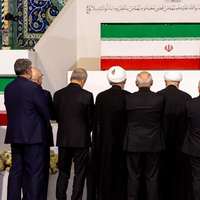
“We will show no mercy to the hostile opponents,” President Ebrahim Raisi said in a speech to members of the Revolutionary Guards Basij militia and supporters of the regime in Tehran Tuesday,
Raisi also accused the exiled Mujahedeen-e Khalq Organization (MEK), which he referred to as hypocrites, as well as monarchists and “all anti-revolutionary currents” of being behind the current protests which began in mid-September following the death of Mahsa Amini in police custody.
The regime has already shown an iron feast in dealing with peaceful protesters two among whom it has executed while dozens of others face a risk of being hanged after unfair trials without due process.
Security forces have cracked down heavily on protesters, killed over 500 hundred and arrested over 18,000 so far.
Raisi once again claimed that the protesting youths have been“deceived” by those who are hostile to the Islamic Republic. “The nation’s arms are open to embrace all those who were lured [to protest],” he said while reiterating that the people on the streets are rioters. “The recent riots were [similar to] the Battle of Trench [fought by the Prophet Muhammad against his foe Abu Sufyan] with everyone joining in [with the enemy].”
Raisi stated that the Islamic Republic will not back down from its position as it is determined only to “move forward” under the leadership of Supreme Leader Ali Khamenei.
Within the past couple of months Iranians have been calling for the downfall of the Islamic regime, blaming the Supreme Leader as the main culprit behind the killing of hundreds of innocent demonstrators.
A top British lawmaker has advised all Britons and citizens of western countries to leave Iran immediately as the Islamic Republic detained seven people with links with the United Kingdom.
Alicia Kearns, chair of the House of Commons Foreign Affairs Committee, said Monday that the Iranian regime had shown it would “happily” arrest people as it seeks to blame foreign countries for escalating anti-government protests.
In a statement on Monday, the Revolutionary Guards (IRGC) said that it had arrested seven people with “direct links” to Britain in the central Kerman province including some dual nationals. The IRGC also alleged that the network, which called itself ‘Zagros’, acted under the direct guidance of elements in Britain to organize and carry out “subversive conspiracies” during the ongoing protests.
Iranian state media claim that the seven people who were apprehended were arrested while trying to escape the country.
“If I was a British foreign national in Iran, I would absolutely be leaving, because there is evidence that they will use them in any game of chess they can and they will face brutal repression. I would encourage anyone who is Western to try to leave Iran as safely as they can,” added Kearns.
Iran’s foreign ministry has alleged the arrests of citizens linked to Britain proved that London has played a “destructive role” in recent protests in Iran.
The British foreign ministry said it was seeking further information from Iranian officials on reports that British-Iranian dual nationals had been detained.
Following Supreme Leader Ali Khamenei’s lead, Iranian officials claim that the ongoing antigovernment protests across Iran – ignited by death in custody of 22-year-old Mahsa Amini -- are instigated by foreign enemies.

Some protesters who have experienced sexual harassment and assault in the hands of the security forces in detention have shared their harrowing stories with Iran International.
Female and male victims including some as young as eighteen have told Iran International TV that sexual violence against detained protesters is quite widespread. Their stories are very difficult to verify due to victims’ fear of disclosing personal information and retribution against them and their families.
One of the victims said she and others who were arrested with her were stripped naked in front of male officers at Vali Asr Garrison in Tehran, groped in the genital area, sprayed with cold water, and repeatedly tased to force them to consent to make so-called televised “confessions” against themselves and others. “They threatened us with rape,” the victim who was freed on bail after twenty days said.
“There were two female and two male officers in the van [that took us to Enghelab Police Station]. The men body searched us in the most disgusting manner,” another female victim from Tehran who was arrested with others on Enghelab Avenue said, adding that the male officers told them to shut up when they protested to being touched by them when there were female officers present.
A victim from the religious city of Mashhad in northeastern Iran, said she and eleven others were stripped in front of male officers and then forced to squat jump while the officers “frenziedly laughed.” Others have also said officers had groped their backsides and squeezed their breasts during arrest and interrogations. Many say they were threatened with rape or even rape of their family members.
These incidents have been reported from detention centers, prisons, and sometimes in places outside the official system such as warehouses out of town in several major cities including Esfahan, Rasht, Tehran, Karaj, Bandar Abbas, Ahvaz, Tabriz, Sanandaj, Amol, and Mashhad.

There are some reports of much worse violence. Armita Abbasi, a young woman of 20, was reportedly raped brutally after being arrested on October 10. She was taken to a hospital in Karaj on October 18 by security forces with multiple injuries including internal bleeding, a shaved head, and evidence of repeated rape. Reportedly, they tried to pressure the doctors to attribute the rape trauma evidence to a time prior to her arrest. Her trial, according to her mother, has been scheduled for January 26.
Influential Sunni cleric Mowlavi Abdolhamid Esmail-Zehi in his Friday sermon December 23 referred to reports of rape and torture of detainees. In a tweet on December 5, Abdolhamid had said the accounts of sexual assault on female detainees to humiliate them or to force them to make false “confessions” against themselves corroborate the allegations made by the media and urged the judiciary to investigate such allegations.
Ladan Boroumand, cofounder and research director of the Abdorrahman Boroumand Foundation for the Promotion of Human Rights and Democracy in Iran, told Iran International that the government is using sexual violence to demonstrate that it knows no boundaries when it comes to achieving its goal of suppressing the protest movement, to humiliate the detainees, and to instil fear in other people.
In a report on December 21 entitled “Brutal Repression in Kurdistan Capital”, Human Rights Watch said it has documented serious abuses, including sexual harassment and assault against detainees. Two women arrested together during the first week of protests in September told the global rights watchdog that security forces beat, sexually assaulted, and threatened them with rape during arrest and while they were held at the police station.

American tycoon Elon Musk says the use of satellite internet services in Iran has increased and around 100 Starlink devicesare active in the country now.
SpaceX Chief Executive said in a tweet on Monday that “approaching 100 Starlinks active in Iran”, three months after he confirmed he would activate the service in the country to help Iranians circumvent internet restrictions imposed by the government amid nationwide protests.
Back in September Twitter billionaire had announced he would activate Starlink in Iran as part of the United States effort “to advance internet freedom” and facilitate “the free flow of information” to Iranians.
The Iranian regime has been severely restricting Internet access in general and access to popular social media platforms, such as Instagram, that play a key role in protester communications. These restrictions have caused many problems for those who rely on social media to promote their businesses and hugely damaged e-commerce.
The Islamic Republic has been witnessing mass protests that erupted after the death of 22-year-old Mahsa Amini in police custody in mid-September for wearing what the authorities deem “inappropriate attire.”
The government is extremely nervous that people use the Internet and social media to share news and images about protests, possibly motivating a larger segment of the population to join demonstrations.
Earlier this year, several US lawmakers and the former US official Victoria Coates, who served as senior advisor to the energy secretary in the Trump administration, called on entrepreneur Elon Musk to activate Starlink satellite access for Iranians.
Reports on social media during September and October said that private entities have smuggled Starlink reception equipment into Iran.

Iran's foreign ministry said Monday the arrests of citizens linked to the UK reflected Britain's "destructive role" in the recent antigovernment protests.
Iran has accused Western countries, Israel and Saudi Arabia of fomenting the unrest by people from all walks of life in the country, one of the most sustained challenges to the country's ruling theocracy since the 1979 Islamic Revolution.
Asked by a reporter to comment on Sunday's announcement in Tehran of the arrest of seven people linked to Britain, foreign ministry spokesperson Nasser Kanaani said: "Some countries, especially the one you mentioned, had an unconstructive role regarding the recent developments in Iran.
"Their role was totally destructive and incited the riots."
London’s Metropolitan police detained a man Monday near the office of Iran International under the Terrorism Act after warnings in November that elements connected with Tehran’s intelligence services were trying to target the network’s journalists.
Iran's Revolutionary Guards said on Sunday that the seven, including some who held dual nationality, were arrested over anti-government protests that have rocked the country for over three months.
The British foreign ministry had said it was seeking further information from Iranian authorities on the reports that British-Iranian dual nationals had been arrested.
Tehran's allegations of foreign involvement in the protests have been accompanied by arrests of dozens of dual nationals, part of an official narrative designed to shift the blame away from the Iranian leadership.

Iran’s Attorney General says no final decision has been made regarding a complaint by the family of Mahsa Amini whose violent death in police custody led to protests.
Mohammad Jafar Montazeri said Sunday, “The Legal Medicine Organization announced its comprehensive and expert opinion in this case, but Amini's family filed a complaint against the medical council of the country.”
He added that the complaint has been referred to the medical board for expertise, and the experts of the medical board have not yet announced their final opinion.
The 22-year-old Iranian woman Mahsa Amini, also known as Jina Amini, died in a hospital in Tehran September 16, suffering from severe head trauma after being arrested by Iran’s ‘morality police’ apparently for improper hijab.
Police claimed that she had a heart attack at a police station, collapsed, and fell into a coma before being transferred to a hospital. However, eyewitnesses, including women who were detained with Amini, reported that she was severely beaten and that she died because of police brutality, which was denied by authorities.
Mahsa's father, has repeatedly emphasized that “he saw himself that there were traces of blood on his daughter's body, in the back of her neck and ears, and many parts of her body, including her legs, were bruised.”
Family lawyers December 9 issued a statement warning that government insistence on their narrative will damage the transparency of the proceedings.