Iran's Battered Currency Drops To A New Historic Low

The Iranian currency rial dropped to a new historic low Saturday amid popular protests, strikes and a government determination to use force against all opposition.
The Iranian currency rial dropped to a new historic low Saturday amid popular protests, strikes and a government determination to use force against all opposition.
The battered rial dropped to a low of 370,000 against the US dollar, an almost 50-percent decline in 15 months. when the current hardliner president Ebrahim Raisi was elected.
Iran has been rocked by nationwide antigovernment protests since September after a 22-year-old woman, Mahsa Amini, was killed in police custody. She was arrested for violating the country’s forced hijab rules. But since then, protests have turned against the ruling regime, with many Iranians demanding a secular and democratic form of government.
The Iranian currency began to lose most of its value in 2018 when the United States pulled out of the nuclear accord known as JCPOA and imposed crippling economic sanctions. Since then, the currency has fallen more than tenfold against the dollar.
Although the Islamic Republic has been able to partly circumvent the sanctions by illicit oil exports to China at discounted prices, but the volume of around one million barrels per day is not sufficient to sustain the economy, which is mostly dependent on oil export revenues.
Negotiations with the Biden administration for a new nuclear agreement have failed.
The effective devaluation of the rial will make the already 50-percent annual inflation rate even worse and the ensuing financial pressure on ordinary people can deepen antigovernment resentments and intensify the protests.

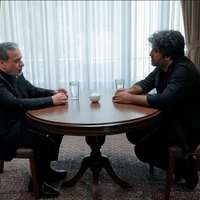

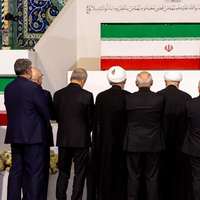
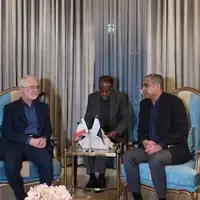

A day after Nato’s chief said war in Ukraine could ‘spin out of control,’ US spokesman John Kirby said Russia was offering Iran “unprecedented” military support
Jens Stoltenberg, secretary general of the 30-member Nato, warned of the dangers of Ukraine-Russia fighting escalating into a conflict between Russia and the US-led alliance.
Kirby, the White House security spokesman, charged Friday that Moscow was “seeking to collaborate with Iran on areas like weapons development and training,” and said Washington was “concerned that Russia intends to provide Iran with advanced military components.”
Kirby left analysts to speculate that Iran was interested in S400 air-defense systems, which could be useful against US or Israel attacks. Moscow has exported S400s to Turkey, a Nato member, and is currently transferring the system to India. Saudi Arabia reportedly shelved plans to buy S400s in 2021.
After decades trying to develop domestic arms production under international sanctions, Iran may see further potential in Moscow. “Senior [US] administration officials” have been widely quoted that Russia is ready to send Sukhoi SU-35 fighter jets to Iran, which has been unable to acquire modern fighters since the 1990s.
While the SU-35 would be no match for jets held by regional powers, including Israel’s US-made F-35s or the European and US planes of the Persian Gulf Arab states, they would represent an upgrade on Tehran’s Cold War-era US-made F-4 Phantoms, F-14 Tomcats, and F-5 Tigers and their locally-made versions.
Iranian weapons to Russia?
Contradictory accounts emerged this week on arms going the other way. After Kirby was one of two US officials saying on-the-record Wednesday that US had no evidence of Iran transferring missiles to Russia for use in Ukraine, the Washington Post Saturday quoted a US “military official” and an official “from a Nato member state” that Russia had acquired Iranian ballistic missiles.
Ned Price, the US State Department spokesman said Wednesday it was not the US assessment that Iranian military support could “tip the balance” in the Ukraine war.
But the US official quoted by the Post also said Iran would receive “up to $1 billion, in addition to other, still unknown inducements,” for establishing drone productions inside Russia – which would be welcome foreign exchange for Tehran, which has billions in oil revenue frozen abroad by banks wary of US punitive sanction under Washington’s ‘maximum pressure’ sanctions.
Presumably ahead of this drone production beginning in Russia, Iran had agreed to supply “up to 6,000 aircraft,” the official claimed, presumably meaning drones. The Post quoted a second official that Iran had agreed to supply “thousands”.
There were reports Saturday morning that Russian forces had the previous night launched at Ukrainian targets a dozen Iranian-made drones, mostly shot down. This came after a lull in their use since mid-November put down by Ukrainian officials either to Russia running out of supplies or the drones malfunctioning below zero degrees Celsius.
US arms to Ukraine now at $20 billion
The US announced Friday the 27th batch of US weapons for the Ukrainian armed forces, bringing the total supply since February to over $20 billion. Despite the European Union sending $2 billion in arms to Ukraine, Kyiv has criticized France and Germany for not sending enough.
The United Kingdom – whose foreign minister James Cleverly Friday spoke of “sordid deals” between Iran and Russia – has sent $2.3 billion in weapons to Ukraine and intends to match that figure in 2023. Ukraine has used military drones from Turkey and the US, as well as the Soviet-era drones used this week to attack infrastructure deep within Russia.
With Stoltenberg saying Wednesday that any terms to end the conflict should be decided by Ukraine, its president Volodymyr Zelenskyy said Saturday that the city of Bakhmut was now “burnt ruins.” In the week he was named Time magazine’s ‘Man of the Year’ and Politico’s “most powerful person in Europe,” Zelenskyy accused Russia of genocide.
The United States announced new military aid for Ukraine Friday and vowed to disrupt Russian Iranian ties, including the possible supply of missiles by Tehran.
White House national security spokesman John Kirby told reporters Washington was very concerned about the "deepening and burgeoning defense partnership" between Iran and Russia, and would work to disrupt that relationship, including on drones.
Earlier, Barbra Woodward, the British envoy to the United Nations said Friday Moscow is seeking hundreds of ballistic missiles from Tehran and offering unprecedented military support in return.
Woodward said Iran had sent hundreds of drones that Russia had used in Ukraine.
Iran has already supplied Kamikaze drones to Russia that have been used to attack civilian infrastructure in Ukraine, including the power grid.
Tehran and Moscow have denied Western accusations that Russia is using Iranian drones to attack targets in Ukraine, where officials warned on Friday of a winter-long power deficit after repeated Russian attacks on its energy infrastructure.
Two senior Iranian officials and two Iranian diplomats told Reuters in October that Iran had promised to provide Russia with surface-to-surface missiles as well as more drones.
Washington was sending a $275 million package of aid to Ukraine to strengthen air defenses and defeat drones, he said.
"Russia is now attempting to obtain more weapons, including hundreds of ballistic missiles," Woodward told reporters. "In return, Russia is offering Iran an unprecedented level of military and technical support."
Iran’s point-to-point inflation for the previous Iranian calendar month – which ended November 21 – was about 50 percent with food inflation recorded at above 70 percent in 12 provinces.
According to a recent report by EcoIran website, as the government lifted import subsidies for essential goods earlier this year, food prices have jumped an average of 67.7 percent compared with the same period in the previous year. The news outlet said that at least 12 provinces are in a red state in terms of food inflation, referring to a very critical condition.
The inflation rate for food items was especially high in the province of Sistan-Baluchestan, reaching a whopping 84 percent, with Lorestan province hitting 78 percent to be tat second place. The two provinces are low-income regions where the quality of the items they consume are also lower than in other provinces.
The figures indicated a slower rise in prices as the inflation of food items even reached 100 percent in some provinces in previous months. According to the data published by the Statistical Center of Iran (SCI) in late July, the overall nationwide point-to-point annual food inflation rate in June 2022 compared with the same period in 2021 was 87 percent, but in four provinces the rate reached almost 100 percent.
Most price increases happened since early May when the government scrapped a food import subsidy to save around $15 billion annually. The move immediately triggered a massive rise in prices for basic food staples, such as bread, dairy products, cooking oil and meat. Although the government has repeatedly said its oil exports are steadily increasing despite sanctions by the United States, economic conditions keep deteriorating, with Iran's battered currency, the rial, hitting historic lows in the recent months with sporadic recuperations.
The rial has been in a freefall since the current wave of protests and strikes have rocked the country following the death in custody of Mahsa Amini, hitting a low of more than 360,000 rials against the US dollar in November. The US dollar rose from 295,000 rials to 365,000 in two months, but that is just an early signal of what is to come considering the ongoing protests.
Despite assurances by President Ebrahim Raisi’s government that it has stopped printing money, Mahmoud Jamsaz, an economist in Tehran, insisted that simply the format of government borrowing has changed, not the fact that it is adding to the money supply. This in turn fuels more inflation, impoverishing tens of millions of people who were modest wage earners or members of the middle class, able to live relatively comfortable lives before. It is not clear how much foreign currency the government has injected into the market since the first week of September when the rial began to fall. Often, the Central Bank of Iran (CBI) withholds such information.
There have been unconfirmed reports that people associated with the government have been sending their capital out of the country as protests show no signs of stopping. Unlike past nationwide unrest, this time it is clear that protesters want an end to the clerical regime of the Islamic Republic and will not be easily satisfied with minimal concessions, even if the hardliner core of the regime decides to offer an olive branch.
As antigovernment protests continue in Iran, the government will face a multitude of additional economic problems and energy crisis in the coming months.
Canada imposed fresh sanctions on Iran, Russia and Myanmar Friday, citing human rights violations by their governments.
Sanctions were imposed on 22 individuals in Iran, who included senior members of the judiciary, prison system and law enforcement, as well as political leaders, such as senior aides to Iran's Supreme Leader Ayatollah Ali Khamenei and figures in state-directed media outlets, the statement added.
Sanctions on Iran came a day after the Islamic Republic hanged a man convicted in a sham trial of injuring a security guard with a knife and blocking a street in Tehran, the first such execution over recent anti-government unrest. Nationwide protests erupted after the death of 22-year-old Kurdish Iranian woman Mahsa Amini in police custody on September 16.
Western countries have issued repeated statements condemning the government in Tehran for gross disregard of the rights of protesters and have imposed some sanctions on individuals and entities. But they have not imposed more serious economic sanctions or designation of it top leaders for killing of civilians.
The measures also included sanctions against 33 current or former senior Russian officials and six entities involved in alleged "systematic human rights violations" against Russian citizens who protested against Russia's invasion of Ukraine, the Canadian foreign ministry said in a statement.
Since Russia's invasion on Feb. 24, Canada has imposed sanctions on more than 1,500 individuals and entities from Russia, Ukraine and Belarus.
"There is more work to be done, but Canada will never stop standing up for human rights," Canadian Foreign Minister Melanie Joly said.
Two United States spokesmen said Wednesday that Washington had no evidence Iran had transferred missiles to Russia for use in Ukraine.
Comments from White House security spokesman John Kirby and State Department spokesman Ned Price came after Associated Press reported Moscow was “looking to Iran once again to resupply the Russian military with drones and surface-to-surface missiles.”
AP cited “two officials familiar with the matter.” The news agency also quoted a “UN diplomat” who claimed Iran had “plans to sell Russia hundreds of missiles and drones in violations of the 2015 [UN] Security Council resolution that endorsed the nuclear deal between Tehran and six world powers.”
Price spoke Wednesday of the US “voicing concerns” that “Russia could look to Iran for ballistic missile technology” but said Washington had no “information to share at this point regarding current deliveries of ballistic missiles.”
Kirby said that with Russia’s “defense industrial base…being taxed…We know they're having trouble keeping up with that pace…[and] having trouble replenishing specifically precision guided munitions.”
However, Price reiterated US concerns over the close military cooperation between Moscow and Tehran. “We’ve voiced our concerns that Russia could look to Iran for ballistic missile technology. We’ve voiced our concerns that cooperation between Iran and Russia could extend to other realms – sharing knowhow, expertise, I hesitate to say best practices but perhaps worst practices when it comes to the suppression of peaceful protesters.”
Iran support cannot ‘tip the balance’
Price said it was not the US assessment that Iranian military support could “tip the balance” in the Ukraine war, and referred back to the first US claims, made July, that Iran was planning to send “dozens” of drones, or UAVs (unmanned aerial vehicles). Tehran said early November these had been supplied before the current phase of the Ukraine conflict, which began February.
“I’m not in a position to go beyond that,” Price said, “but Iran has indeed provided at least dozens and perhaps much more of these Iranian drones to Russia for use inside of Ukraine. The Ukrainians, using their own capabilities but also using the air defense capabilities that the United States and many of our partners have provided, have in fact been able to…neutralize many of these UAVs.”
Price suggested that Iran should use revenue, which has been depleted by four years of ‘maximum pressure,’ to prioritize “the needs of its own people” rather than make “important contributions to Russia’s war effort.” Iranian drones had helped Moscow’s attempt to “weaponize winter,” Price said, “to turn off the lights, to turn off the water, to attempt to freeze Ukraine and Ukrainians into submission.”
Meanwhile reports this week said the United Nations is also investigating Iran’s delivery of drones and possibly other weapons to Russia to see if they constitute any violations. Reuters quoted Guterres as saying that “any findings will be reported to the Security Council, as appropriate, in due course.”