• العربية
  • فارسی
Brand
  • Iran Insight
  • Politics
  • Economy
  • Analysis
  • Special Report
  • Opinion
  • Podcast
  • Iran Insight
  • Politics
  • Economy
  • Analysis
  • Special Report
  • Opinion
  • Podcast
  • Theme
  • Language
    • العربية
    • فارسی
  • Iran Insight
  • Politics
  • Economy
  • Analysis
  • Special Report
  • Opinion
  • Podcast
All rights reserved for Volant Media UK Limited
volant media logo

Iran Media Looks Beyond Nuclear Deal As Negotiations ‘Fail’

Iran International Newsroom
Nov 24, 2022, 20:15 GMT+0Updated: 17:57 GMT+1

With nuclear talks frozen and the US and Europe levying further sanctions, Iranian commentators are looking at life under permanent US ‘maximum pressure.’

IRNA, the official news agency, November 24 portrayed Iran’s acceleration of its nuclear program since 2019 as a series of responses to United States, Israeli or European actions – beginning 2018 with the US “covenant-breaking” in leaving the 2015 Iran nuclear agreement, the JCPOA (Joint Comprehensive Plan of Action), and imposing ‘maximum pressure’ sanctions.

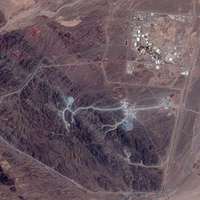
Iran’s announcement Tuesday that it was enriching uranium to 60 percent at the Fordow site was yet another “reaction to the excesses of the West,” IRNA argued, just as enrichment to 60 percent at Natanz, another nuclear site, in April came in response to “sabotage actions” at the site attributed to Israel.

In fact, Iran decided to start 60-percent enrichment in early 2021 just as the new US administration had announced its readiness to return to the JCPOA and talks in Vienna were about to begin.

Tehran announced the latest move as a reply to a resolution raised by France, Germany, the United Kingdom, and the United States passed November 17 at the board of the 37-member board of the International Atomic Energy Agency (IAEA). The US and ‘E3’ had “tied a technical and legal case…to events inside the country and protests turned into riots,” IRNA argued. “The troika of Europe and the United States stopped the nuclear talks under the pretext of unrest inside Iran.”

Casting further doubts on talks, IRNA argued, was the looming return to power of Benjamin Netanyahu, which it suggested would “definitely intensify…the Zionist regime’s delusional claims against the Islamic Republic of Iran.”

‘Impasse’ in diplomacy

Separately, Fararu, a privately owned news agency, carried a discussion with Hosseini Kanani-Moghadam, head of Iran’s conservatively-inclined Green Party, and Fereydoun Majlesi, a former diplomat who has for some time been pessimistic over the JCPOA.

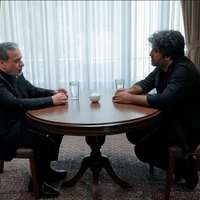
Ali Bagheri-Kani Iran's chief negotiator in Vienna talks on August 4, 2022
100%
Ali Bagheri-Kani Iran's chief negotiator in Vienna talks on August 4, 2022

Majlesi argued that “the West” had long given up hope of negotiating with Iran and sought to re-use tactics that had undermined the Soviet Union. “Western countries,” he said, had judged that President Ebrahim Raisi’s government, which took office in 2021, inclined against the JCPOA with ministers asking why Iran accepted nuclear restrictions while gaining nothing from the agreement.

The result was an “impasse” in diplomatic efforts to restore the JCPOA – an impression confirmed, Majlesi said, by the French president and Canadian prime minister recently meeting “supporters of subversion in our country,” a reference to exiled activists and social-media ‘influencers.’ This accelerated an “agenda against Iran” over “recent years” that had “led to significant economic pressures” aimed at “impoverishing Iran.”

Kanani-Moghadam argued that Iran retained political levers “in the event of the escalation of hostile policies,” including “complete withdrawal from the JCPOA” (presumably ending all nuclear restrictions but staying within the Nuclear Non-Proliferation Treaty), or even leaving the NPT.

Bagheri-Kani in India: Focus on economy

Post-JCPOA thinking were also evident in discussions during the visit to India of Ali Bagheri-Kani, deputy Iranian foreign minister and leading nuclear negotiator. While IRNA Thursday reported Bagheri-Kani attacking “the atmosphere created by some western media regarding the developments in Iran,” its focus was business.

While Bagheri-Kani’s brief as one of five deputy ministers is politics, his interview with Asia International News Agency(ANI) also focused on economics, and how commerce might continue should US ‘maximum pressure’ last. ANI noted that bilateral trade had risen 46 percent between 2011-12 and 2019-20.

While criticizing the US for disrupting world energy security with sanctions against Iran, Russia, and Venezuela, Bagheri-Kani highlighted potential for Iran to help India over energy in return for food exports, presumably through barter or non-dollar arrangements. He also stressed that India’s project for developing Chabahar port, in Sistan-Baluchistan province, was continuing.

New Delhi has been slow to develop the port in fear of US punitive action under ‘maximum pressure.’ Once a major buyer of Iranian oil, India has grown increasingly frustrated at Washington’s approach. It abstained, along with Pakistan, at the recent vote condemning Iran at the IAEA board.
Most Viewed

Iran diplomacy wobbles as factions compete to avoid looking soft on US
1
INSIGHT

Iran diplomacy wobbles as factions compete to avoid looking soft on US

2
ANALYSIS

The politics of pink: how Iran uses cuteness to rebrand violence

3

Scam messages seek crypto for ships’ safe passage through Hormuz, firm warns

4
EXCLUSIVE

Family told missing teen was alive, then received his body 60 days later

5
INSIGHT

Is Iran entering its Gorbachev moment?

Banner
Banner

Spotlight

  • Diplomacy tolls at Hormuz as conflict returns to its doorstep
    OPINION

    Diplomacy tolls at Hormuz as conflict returns to its doorstep

  • Opposition to US talks grows in Tehran as ceasefire deadline nears
    INSIGHT

    Opposition to US talks grows in Tehran as ceasefire deadline nears

  • Tehran moderates see ‘no deal–no war’ limbo as worst outcome
    INSIGHT

    Tehran moderates see ‘no deal–no war’ limbo as worst outcome

  • The future has been switched off here
    TEHRAN INSIDER

    The future has been switched off here

  • Lights out, then gunfire: Witnesses recount Mashhad protest crackdown
    VOICES FROM IRAN

    Lights out, then gunfire: Witnesses recount Mashhad protest crackdown

  • Is Iran entering its Gorbachev moment?
    INSIGHT

    Is Iran entering its Gorbachev moment?

•
•
•

More Stories

EXCLUSIVE - US 'Greatly Concerned' Over Tehran's Violence Against Protesters

Nov 23, 2022, 19:45 GMT+0
•
Iran International Newsroom

The State Department told Iran International Wednesday that the US is “greatly concerned” over the Islamic Republic’s “escalating violence” against protesters.

In response to questions sent by Iran International, the State Department said that the US is particularly worried about violence in Mahabad, a Kurdish majority city in western Iran. Government security forces escalated violence against protesters in Kurdish majority cities in the region on November 16 and since then more heavily armed units have been deployed to the region.

“Iran's leaders are blaming so-called separatists, and they continue to blame the United States, for the protests unfolding across their country. In fact, Iran's leaders have no one to blame but themselves,” the State Department said in an email.

Since the protests began in mid-September, top officials of the clerical regime have been blaming foreign “enemies” for fomenting the uprising, the biggest since the establishment of the Islamic Republic 43 years ago. After government intelligence and security forces failed to end the unrest, the government began blaming “separatists” for encouraging and supporting the protests and particularly targeted Iranian Kurds.

But the State Department said, “The regime's brutal crackdown, along with years of denying Iranians their human rights and perpetrating state-sponsored violence against women, show that Iran's leaders seem incapable of listening to their own people.”

Activists have called for large protests Thursday across the nation to support the Kurdish cities targeted by military units. Already there have been protests in other cities to condemn the violence. A significant number of Kurds in Iran are Sunnis and this week a prominent Sunni religious leader, Mawlana Abdolhamid of the Sunni Baluch population in southeastern Iran voiced support for them. The Baluch have also also brutally targeted by government forces since September 30.

“We continue to pursue accountability for those involved and support the Iranian people in their pursuit of freedom,” the State Department said.

More uranium enrichment

On the question of Iran expanding its nuclear program by more uranium enrichment at a new atomic site, the department said the US is aware of Iran’s claims that it is enriching at 60-percent and already has a large stockpile of highly enriched fissile material “for which it has no credible civilian use.”

After 18 months of negotiations to revive the Obama-era nuclear accord known as JCPOA, talks came to an impasse in August, with the US dismissing Iranian demands that it said were outside the JCPOA framework.

Last week the governing board of the International Atomic Energy Agency (IAEA) passed a resolution that censured Tehran for lack of cooperation with the UN watchdog. Iran responded by threatening “an appropriate response” and later announced it had started enrichment at its Fordow nuclear facility.

“Iran's apparent notion that it could somehow pressure the IAEA or its Member States on the issue of ongoing safeguards investigations into possible undeclared nuclear material and activities in Iran by further escalating its uranium enrichment activities is deluded,” the State Department wrote to Iran International.

The dispute with the IAEA concerns undeclared nuclear activities two decades ago, but the international watchdog is demanding clear answers from Tehran. Foreign Minister Hossein Amir-Abdollahian said Thursday that Iran expects the IAEA to shelve its investigation before a deal is made to revive the JCPOA.

“As we have made clear, Iran's continued nuclear escalations are unconstructive, and they will not provide Iran with any leverage,” the State Department told Iran International.

UK Suggests Russia Will Look For More Iran Drones

Nov 23, 2022, 16:37 GMT+0
•
Iran International Newsroom

The United Kingdom defense ministry said Wednesday that Russia had used hundreds of Iranian-made drones in Ukraine but none since around November 17.

The Ministry of Defence in London tweeted that Russia had “likely conceived of the UAV [unmanned aerial vehicles] campaign to make up for its severe shortage of cruise missiles.” Reports of the Russian forces using Iranian drones, mainly Shaheed-136, surfaced in September, but were until November denied by Tehran.

Although the use of Iranian-made drones had met with “limited success” with most of those launched neutralized, the British ministry said Moscow would “probably seek resupply” as “Russia can probably procure UAVs from overseas more rapidly than it can manufacture new cruise missiles domestically.” The drones had been both one-way or ‘kamikaze’ and reusable UAVs, the ministry said.

Some former Iranian military sources were quoted elsewhere as saying that the country can produce around 20 drones a month, which is well short of Russian’s needs.

Both sides in the Ukraine war have deployed drones, with Ukraine utilizing Turkish-made Bayraktars along with US-supplied Switchblade drones. The Russian-backed governor of Crimea province said Tuesday that five attacks, including one targeting the Balaklava power station and three on Russian naval ships, had been repelled.

The British Ministry of Defence in its tweets Wednesday said Moscow had used Iranian-made drones “largely…against tactical military targets and the Ukrainian electricity grid.” France, Germany, the United Kingdom, and the United States have condemned Russia’s deployment of Iranian drones as an alleged violation of arms-trade provisions in the 2015 Iran nuclear deal.

The aftermath of a drone hit on buildings in Kyiv on October 17, 2022
100%
The aftermath of a drone hit on buildings in Kyiv on October 17, 2022

Iran ‘Sticking to its positions’

Iranian foreign minister Hossein Amir-Abdollahian said Tuesday that Tehran had “sold very few Iranian drones in the framework of defense cooperation with Russia 11 months before the start of the Ukraine war.” Amir-Abdollahian said Iran and Ukrainian military officials had met in a third country to discuss the issue, and that “we are continuing our investigations.”

Amir-Abdollahian appeared to suggest that the Ukrainian foreign minister Dmytro Kuleba had told him by telephone that a drone captured by Ukrainian forces had Russian markings but “looks like an Iranian witness drone,” a model rendered in English as ‘Witness-136.’ This, Amir-Abdollahian argued, was “proof that Iran is sticking to its positions.”

The foreign minister said Iran was committed to diplomatic solutions both to the Ukraine war and the current stand-off in talks aimed at restoring the 2015 nuclear agreement, the JCPOA (Joint Comprehensive Plan of Action). Amir-Abdollahian reiterated Iran’s view than the International Atomic Energy Agency (IAEA) should shelve its enquiry into unexplained uranium traces found in sites not declared as nuclear-related.

‘Exchange of messages should continue’

Amir-Abdollahian suggested that while efforts continued to revive the JCPOA, differences with the US remained on three issues, on which the three European JCPOA signatories were lining up with Washington. “One of these issues is solving the remaining issues of the agency [over the uranium traces], and the other issue is related to economic guarantee,” he said, referring to Iran’s expectation of being cushioned against the economic effects of the US again leaving the JCPOA and imposing sanctions, as it did in 2018 under previous president Donald Trump.

The foreign minister said that “the exchange of messages [with the US] should continue.” American officials have in recent weeks suggested that their focus is no longer on JCPOA restoration, and along with the three European states and the European Union have imposed new sanctions on Iran over military links with Russia and its response to domestic unrest.

US Condemns Iran Upping Nuclear Enrichment At Fordow Plant

Nov 22, 2022, 20:26 GMT+0
•
Iran International Newsroom

A White House official said Tuesday the United States was watching “with deep concern” as Iran stated it was enriching uranium to 60 precent at a second atomic site.

“We certainly have not changed our view that we will not allow Iran to achieve a nuclear weapons capability,” National Security Council spokesman John Kirby told reporters. “All options” were being prepared for US President Joe Biden, Kirby said.

Mohammad Eslami, chief of the Atomic Energy Organization of Iran, had announced earlier Tuesday that enrichment to 60 percent had begun Monday at the Fordow underground facility, which is around 110 miles (190km) south of Tehran. Iran in April 2021 began enriching to 60 percent at the Natanz site after an attack on the facility it blamed on Israel.

The ISNA news agency reported Iran had informed the IAEA over its decision to use relatively advanced IR-6 centrifuges to enrich to 60 precent at Fordow.

Britain, France and Germany also condemned Iran's plans to expand its nuclear program after the UN nuclear watchdog IAEA said Iran was enriching uranium, with plans to further expand enrichment at two plants.

"Iran’s step is a challenge to the global non-proliferation system," the three nations said in a joint statement provided by the British government. "This step, which carries significant proliferation-related risks, has no credible civilian justification."

"We will continue to consult, alongside international partners, on how best to address Iran’s continued nuclear escalation."

Eslami said the move had come after Iran had warned it would “seriously react to any resolution and political pressure.” Last Thursday the 35-nation governing board of the International Atomic Energy Agency (IAEA) passed a resolution drafted by the US and European allies censuring Iran over an alleged lack of co-operation over uranium traces found by agency inspectors at sites not declared as nuclear-related.

Tehran has demanded that an IAEA enquiry into the uranium traces be shelved as a condition for reviving the 2015 Iran nuclear agreement, the JCPOA (Joint Comprehensive Plan of Action). Iran has now responded to the IAEA resolution with its latest nuclear expansion beyond the caps set by the JCPOA, which set enrichment at a 3.67 percent maximum and limited centrifuges to the first-generation, less efficient IR-1. The 2015 agreement banned any enrichment at Fordow.

Prospects for reviving the JPCPOA, which former US president Donald Trump abandoned 2018 while imposing ‘maximum pressure’ sanctions on Iran, have dimmed since 18-month-long talks floundered earlier this year. The US and the three western European JCPOA signatories – France, Germany, and the United Kingdom – have slapped new sanctions on Iran on a variety of grounds including its response to a wave of protests and supply of military drones to Russia.

Tehran’s installation of more efficient advanced centrifuges, its enrichment to 60 percent, and stockpiling of enriched uranium have together drastically reduced the time it would take Iran to assemble sufficient ‘weapons grade’ uranium,’ enriched to 90 percent, for an explosive device. Iran denies it has any intention of building a nuclear bomb.

Israel Intel Chief Foresees Iran Enriching Uranium To 90%

Nov 21, 2022, 20:20 GMT+0
•
Iran International Newsroom

Israel’s military intelligence chief has claimed Iran is near to escalating its nuclear program with 90-percent-enriched uranium, widely deemed ‘weapons grade.’

In an address to a conference of Tel Aviv University’s Institute for National Security Studies, Major-General Aharon Haliva said Monday he saw “at this point time… no real danger to the regime” from domestic protests but that “the moment is coming…when Iran entertains enrichment at 90 precent, even if only symbolically.” He said this would present “the greatest test of the international community.”

Shortly before leaving office 2021, then president Hassan Rouhani said Tehran had reached the capacity to enrich to 90 percent, and would do so “if one day our reactors need it.” This was just two years after Iran began enriching above 3.67 percent, the limit set by the 2015 nuclear agreement abandoned by the United States in 2018.

While 90-percent-enriched uranium can be used in some research reactors to produce medical isotopes, Rouhani’s remarks were seen as an attempt to secure leverage in talks to revive the 2015 agreement, the JCPOA (Joint Comprehensive Plan of Action), and so remove US ‘maximum pressure’ sanctions introduced in 2018.

Major-General Aharon Haliva, Israel’s military intelligence chief
100%
Major-General Aharon Haliva, Israel’s military intelligence chief

Israeli leaders opposed the JCPOA and have criticized talks aimed at reviving it, while Israel is generally thought responsible, since 2010, for a series of killings of Iranian scientists and attacks on Iranian nuclear facilities, which have inflicted damage but also hardened attitudes in Tehran.

‘On the whole field, from nuclear to riots’

While some analysts and security officials in Israel have seen the over-riding dangers of nuclear proliferation as a reason to support the JCPOA, Haliva’s address Monday reflected a view of Iran as wider threat. “Iran is on the whole field, from nuclear to riots,” he said, claiming Tehran had considered disrupting the soccer World Cup, which started Sunday in Qatar.

“The only thing holding them back is how the Qataris will react,” Haliva said, presumably referring to Tehran’s generally good relations with Doha, which has sometimes mediated between Iran and the US. Monday saw Iran lose their opening game in the World Cup 6-2 to England.

Haliva said that current protests in Iran, which began mid-September, were different to earlier ones: “I think the protests have already shifted, to a degree, to the realm of a popular uprising…When you look at some of the incidents, even the hours at which they are taking place, the damage to national institutions, to symbols of the state, at the number of fatalities, there is something different happening here that is greatly troubling the regime.”

But while he suggested “prophecy, in the context of the conduct of societies,” was not the role of military intelligence, Haliva cautioned against expecting any dramatic changes in the near future. “At this point in time I see no real danger to the regime,” he said.

Iran Promises ‘Firm Answer’ As Nuclear Rhetoric Sharpens

Nov 20, 2022, 14:32 GMT+0
•
Iran International Newsroom

Elections in the United States and Israel have further dimmed prospects for reviving the 2015 Iran nuclear agreement, with some analysts now proclaiming it dead.

Mohammad Eslami, a vice-President and head of the Atomic Energy Agency of Iran, promised Saturday a “firm answer” to Thursday’s United States-sponsored resolution censuring Tehran at the governing board of the International Atomic Energy Agency. Speaking in Esfahan, Eslami evoked the “self-sacrifice” of the 23,000 “martyrs” from the province who died in the 1980-88 war with Iraq.

This was not the only talk this week of war. In a piece headlined ‘The Post Iran nuclear deal world won’t be pretty’ in the influential US magazine Foreign Policy, columnist Anchal Vohra suggested the US, or “the West,” could “even consider direct military intervention” to curb Iran’s nuclear program. Short of that, Vohra wrote, US might be “accelerating” supply to Israel of refueling tankers and other equipment that could assist an Israel strike on Iran.

Incoming Israeli prime minister Benjamin Netanyahu, whose government will include members of the Religious Zionism party, will inherit developed plans for attacking Iran, outgoing defense minister Benny Gantz said November 9. Recent reports have suggested the US is opposing the appointment of Religious Zionism leader Bezalel Smotrich to the defense portfolio.

Vohra’s Foreign Policy analysis, which drew on one published by Iran International in September, suggested that steps to pressure Iran, as military preparations were made, might include greater efforts on penalizing Chinese entities importing Iranian oil and petroleum products.

But in an informal survey of analysts, Vohra found little expectation that such steps would change Iran’s approach to the talks, which began April 2021, to revive the 2015 nuclear agreement, the JCPOA (Joint Comprehensive Plan of Action). Tehran has drawn ‘red lines’ that it shows no sign of erasing. These include ‘guarantees’ of economic measures to cushion Iran against the US later leaving a revised agreement, and insisting that the International Atomic Energy drop enquiries into uranium traces found in sites linked to Iran’s nuclear work before 2003.

JCPOA: dead or comatose?

The US argument that such ‘red lines’ go beyond the JCPOA left the analysts surveyed by Vohra divided as the whether the JCPOA was dead or comatose. “While in a deep coma…none of the parties wants to declare it dead, which would be an admission of foreign-policy failure,” said Mark Fitzpatrick, associate fellow at the International Institute for Strategic Studies. “It is hard to imagine that the deal could be restored,” said Ali Vaez, senior advisor at the International Crisis Group.

Ali Vaez, a senior advisor at the International Crisis Group (file photo)
100%
Ali Vaez, a senior advisor at the International Crisis Group

While President Joe Biden maintains his intention is to work diplomatically to revive the JCPOA – and that he is continuing ‘maximum pressure’ sanctions purely to that end – the Republican Party’s capture of the House of Representatives after the November 8 elections may well see growing Congressional opposition to the 2015 agreement, especially with so much focus on current protests in Iran and on Tehran’s supply of military drones used by Russia in Ukraine.

Vohra suggested that both the US and Iran may feel their leverage is growing. Iran’s President Ebrahim Raisi told the United Nations General Assembly in September that Tehran had neutralized ‘maximum pressure’ in many cases. Some Iranian analysts also argue that looming energy shortages due to curbs on Russian exports may incentivize European states to seek JCPOA revival as a way to lift sanctions on Iran’s crude oil.

‘Threat to Europe’

But the European signatories of the JCPOA – France, Germany, and the United Kingdom – as well as the European Union, which has chaired JCPOA revivals talks, are showing greater affinity with the US and a growing reluctance to deal diplomatically with a Tehran linked closer to Russia. Ursula von der Leyen, President of the European Commission, Friday played down the challenge over energy supplies while arguing that Iran’s “weapons proliferation” was a threat to Europe. 

“It took us too long to understand a very simple fact that while we work to prevent Iran from developing nuclear weapons, we must also focus on other forms of weapons proliferation, from drones to ballistic missiles,” she said. “It is a security risk not just for the Middle East, but for us all.”