US Will Never Allow Iran To Acquire Nukes, Biden Tells Israel's Lapid

President Joe Biden told Israeli Prime Minister Yair Lapid Wednesday the United States will never allow Iran to acquire a nuclear weapon, the White House said.
President Joe Biden told Israeli Prime Minister Yair Lapid Wednesday the United States will never allow Iran to acquire a nuclear weapon, the White House said.
Israel opposes a return to the 2015 deal, which would lift sanctions on Iran and would limit its nuclear program for a few years.
Former president Donald Trump pulled out of the deal in 2018 and reimposed harsh sanctions, prompting Tehran to violate the pact's nuclear limits. Biden has vowed to revive the agreement while ensuring the security of Israel, Iran's regional arch foe.
"The President underscored US commitment to never allow Iran to acquire a nuclear weapon" in a call in which Biden and Lapid also discussed "threats posed by Iran," the White House said in a statement.
In its own readout of the call, Lapid's office said they "spoke at length about the negotiations on a nuclear agreement, and their shared commitment to stopping Iran’s progress towards a nuclear weapon."
The nuclear deal appeared near revival in March. But indirect talks between Tehran and Washington then broke down over several issues, including Tehran's insistence that the International Atomic Energy Agency (IAEA) close its probes into uranium traces found at three undeclared sites before the nuclear pact is revived.
Biden and Lapid in July signed a joint pledge to deny Iran nuclear arms, a show of unity between allies long divided over diplomacy with Tehran. But Lapid said last week that if the 2015 deal is revived, Israel will not be bound by it.
With reporting by Reuters

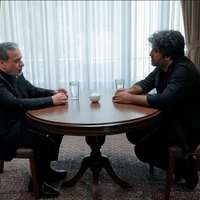

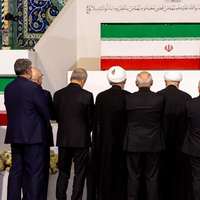
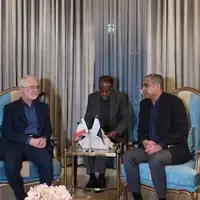

Iran’s foreign minister has said that reviving the 2015 nuclear deal requires “stronger guarantees” from Washington and ending “politically motivated probes.”
Hossein Amir-Abdollahian told a press conference in Moscow Wednesday that while Iran was “carefully reviewing” a text circulated by the European Union August 8, a “sustainable deal” needed “stronger guarantees from the other party.”
Reports following the United States August 24 input on the EU text suggest Washington and Tehran are far closer in efforts to restore the 2015 agreement, the JCPOA (Joint Comprehensive Plan of Action). A former senior official in the International Atomic Energy Agency (IAEA) told Iran International Tuesday that two to three weeks were needed.
In line with that timetable, the IAEA governing board is due to meet September 12-16. The meeting comes three months after the 35-member body passed a resolution – moved by the US and three European states – censuring Iran over its failure to satisfy the agency over uranium traces found by inspectors in three sites undeclared as nuclear-related.
Amir-Abdollahian: ‘Close this case’
Reiterating recent statements by President Ebrahim Raisi and Mohammad Eslami, head of the Atomic Energy Agency of Iran, Amir-Abdollahian said the agency should “close this case” as “such politically motivated demands are unacceptable.” The agency, the foreign minister said, should “focus only on its technical task.”
This contradicts claims made by a US official to Reuters August 23 that Iran had dropped such a demand – although it has also been suggested that Tehran and Washington might find a way to kick the issue into the long grass.
Iran argues that after the IAEA published in 2015 a final assessment of Iran’s nuclear work before 2003, it then resumed enquiries after allegations made in 2018 by Israeli prime minister Benjamin Netanyahu supposedly based on documents stolen in Iran. The US argues, regardless of the JCPOA, that Iran should explain the uranium traces under its basic ‘safeguards’ commitments as a signatory of the Nuclear Non-Proliferation Treaty.
Congressional hurdle?
Aside from the IAEA board meeting September 12-15, the Biden administration’s efforts to renew the JCPOA may be affected by Congressional elections due November 8. A recent poll for CBS found that Republican gains may be less than earlier projected, but US politics remains volatile given a range of issues including abortion, gasoline prices, and the polarizing role of former president Donald Trump.
While Iran is hardly uppermost in voters’ mind, the nuclear deal interests many representatives. A letter circulating since Sunday, expressing concerns over renewing the JCPOA and opposing any easing of sanctions, had attracted over 40 signatures of members of the House of Representatives by early Wednesday, including 30 Democrats.
According to outlines of a possible agreement to revive the JCPOA reported by the Jerusalem Post, Biden would lift many US sanctions five days in advance of a review by Congress that is required under the Iran Nuclear Agreement Act passed 2015. Should the two houses of Congress reject the deal, Biden could still override their wishes.
Various reports on the emerging agreement over JCPOA revival refer to a number of phases lasting 165 days. This could allow either the US or Iran to back away if they felt the other side was not taking their agreed steps – with the IAEA probe possibly caught up in the process.
If a UN nuclear watchdog probe is not shelved, there will be no return to the 2015 nuclear deal, Iran's atomic chief, Mohammad Eslami reiterated on Wednesday.
Eslami spoke at length with the Iranian Students' News Agency (ISNA) in Tehran, reiterating his earlier position that UN’s nuclear watchdog, the International Atomic Energy Agency (IAEA) must shelve an investigation about Iran’s past nuclear activities before a new agreement restores the 2015 nuclear deal, JCPOA.
ISNA asked Eslami if IAEA’s questions about traces of uranium found at three previously undeclared sites are in essence a PMD (possible military dimension) inquiry or a safeguards issue. “In my view, these are all political excuses, similar to the PMD [issue]. The sites they name and the accusations they make are the same that comes out of the Zionists’ and hypocrites’ mouths. They have been repeating these for years.”
In April 2018, Israel revealed a throve of documents it said were stolen from a nuclear warehouse in Tehran that showed Iran had engaged in a secret nuclear program before 2003 with military dimensions. These documents at least partly shared with the IAEA rekindled interest in re-examining the pre-2003 undeclared Iranian nuclear program. The Israeli revelation came days before President Donald trump announced the US withdrawal from the JCPOA.
After a long delay, Tehran allowed the IAEA to inspect sites that Israel named in 2019 based on the documents it said were taken out of Iran. It was during this inspection that the UN watchdog found traces of uranium, which were not supposed to be there. This raised the likelihood of PMD.
Iran provided explanations to the IAEA, that until now the agency finds not fully convincing and demands satisfactory answers, as talks to revive the JCPOA have reached a critical stage.
The exact contents of a draft agreement presented by the European Union to reach an agreement is not known, but it is clear that the IAEA demands are linked to the finalization of a deal.
Eslami insisted in his interview with ISNA that Israel is behind IAEA’s demands for more explanations by Iran, a position Tehran has been espousing for a long time. “The same mouth that says it wants to bomb and obliterate Iran’s nuclear industry, also presents these fake documents,” Eslami said referring to Israeli military threats to prevent Iran from producing nuclear weapons.
ISNA asked the nuclear chief why then Iran allowed the IAEA to go and investigate these sites. “Unfortunately, the previous government [of President Hassan Rouhani] accepted that they come and see these sites. They came and saw, and questions continued,” Eslami said. He made an accusation that IAEA’s probe “is the continuation of the same sabotage and terror,” referring to a series of operations against Iran’s nuclear scientists and sensitive sites widely attributed to Israel.
Eslami also rejected reports that Iran has relinquished its demand to shelve the IAEA probe. “What we wrote was decisive. Our aim and insistence is that if this case is not closed by the date when [JCPOA] ‘re-implementation’ is to take place, there will be no ‘re-implementation, and we will not retreat and we cannot retreat.”
Israeli Prime Minister Yair Lapid and former Prime Minister Benjamin Netanyahu have rebuked each other after their Monday meeting over the Iran nuclear deal.
The two leaders held a meeting Monday evening at the prime minister's office to discuss the restoration of the 2015 Iran nuclear deal, officially known as the Joint Comprehensive Plan of Action (JCPOA), and the talks between Iran and world powers which appeared to have advanced in the past week.
After the briefing with Lapid,opposition leader and Likud Party head Benjamin Netanyahu said he was "more concerned about Iran” than before the meeting. He accused Lapid and Defense Minister Benny Gantz of failing to prevent a “disastrous Iran nuclear deal” and wasting time by not campaigning in the United States against The Islamic Republic.
“I have a clear message for the ayatollahs in Tehran: On November 1, we’ll bring strong and decisive leadership to Israel that will ensure that with or without a deal, they will never have nuclear weapons,” Netanyahu said, referring to Israel’s upcoming parliamentary elections.
Lapid’s Yesh Atid party also attacked Netanyahu in a tweet, accusing him of endangering the security of Israeli citizens. “While Netanyahu continues to produce and direct tone-deaf videos, the Israeli government led by Lapid will do everything to guard national security interests,” the party said in its tweet Monday evening.
The Prime Minister, however, said in a statement that he doesn't want a feud with Netanyahu over Israel’s positioning vis-a-vis the prospect of a restored Iran nuclear deal.
“There is great importance in a united Israeli stance against the Iranian effort to obtain a nuclear weapon. I call on the opposition leader and everyone not to let political considerations harm our national security,” Lapid said in a statement.
The two Israeli leaders had exchanged barbs before the Monday briefing.
In a statement before his meeting with the Prime Minister, Netanyahu had accused Lapid and Ganz of falling asleep on the watch and letting Iran "finalize a deal which jeopardizes our future…Lapid and Gantz' incompetence will be remembered in history as the Iranian nuclear fiasco.”
Responding to Netanyahu’s accusations, Lapid had said all Netanyahu had done when he was prime minister was giving press conferences and presentations. “The damage he caused during his tenure to Israel's two most important strategic issues — the fight against the Iran nuclear weapon and relations with the US — is serious and deep and we are still repairing it,” he said.
Iranian officials have not commented on the argument between Israeli leaders but in a press conference Sunday, President Ebrahim Raisi dismissed Israeli threats against Iran and referring to theassassination of Iran's nuclear scientists said no matter what Israel does, it cannot stop Iran and deprive the Iranian nation of "its inalienable right to access peaceful nuclear technology”. He also insisted that the Islamic Republic is not pursuing nuclear weapons.
The IRGC-linked Fars news agency on Sunday said analysts in Tehran believe that Israel and the United States are strategic partners and Tel Aviv's positions on the Vienna talks plays a complementary role to Washington's policy.
"Whenever the US is in trouble in negotiations with Iran and has failed to fulfil its purpose, the Zionist regime steps onto the scene to play a complementary role," senior analyst Seyed Mostafa Khoshchesm told Fars. “"The Israeli regime plays the role of a bad cop and conducts terror operations, cyber and sabotage attacks against Iran to serve the US interests," he said.
Tehran and Washington have agreed to restore the 2015 nuclear deal and will announce terms in two to three weeks, a former IAEA official told Iran International.
Speaking Tuesday, the once senior official at the International Atomic Energy Agency, who is close to the United States government, said President Joe Biden had resolved to take the step in advance of November’s mid-term US Congressional elections.
The official said Washington had informed Israel of the decision, and that four Arab states – Egypt, Jordan, Saudi Arabia, and the United Arab Emirates (UAE) – had been told during Biden’s July Middle East tour that the US would help them develop nuclear technology. While the Israeli leadership has consistently opposed the 2015 agreement, the JCPOA (Joint Comprehensive Plan of Action), Prime Minister Yair Lapid and opposition leader Benjamin Netanyahu are vying over the Iranian ‘threat’ as the November 1 parliamentary election approaches.
The former IAEA official gave no indication as to how Iran and the US had resolved the differences over JCPOA restoration that have characterized 16 months of talks, both with five other world powers in Vienna, and bilaterally with European Union mediation.
Leaked information both in Iran and in Israeli media about a proposed European Union plan indicate a broad agreement on many issues, but lingering questions of Iranian demands over “guarantees”, “verification” and a lingering IAEA probe about Iran’s pre-2003 undeclared nuclear activities.
An IAEA report leaked Monday revealed Iran’s latest breach of the JCPOA with the installation at the Natanz nuclear site of additional IR-6 centrifuges, advanced models for enriching uranium barred under the JCPOA.
There have also been consistent reports of differences over enquiries by the IAEA into unexplained uranium traces found at several sites linked to work done by Iran before 2003 but not declared as nuclear-related. While the US and European JCPOA signatories have insisted the IAEA enquiry should go on regardless of what happens with the JCPOA, President Ebrahim Raisi insisted Monday that the JCPOA could be restored only once the IAEA dropped the probe, which Tehran insists results from allegations made for ‘political’ reasons in 2018 by Israel.
Finessing the wording
Earlier Tuesday, Behrouz Kamalvandi, spokesman for the Atomic Energy Organization of Iran, criticized “excessive” demands made by the IAEA, while Fereydoun Abbasi, a member of the parliament’s energy committee, said Iran should enrich uranium not just to 60 percent – the highest level reached – but to 90 percent “both for scientific research and for making nuclear fuel for submarines.”
Tehran has made no public response to the latest US input in the nuclear talks, submitted August 24 through the European Union. But there have been reports of efforts to finesse a wording that would postpone the IAEA probe while the JCPOA gradually comes back into play, and IAEA director-general Rafael Mariano Grossi suggested August 23 the uranium traces might be better investigated with the 2015 deal back in place.
There have also been indications of ‘principlist’ politicians in Tehran claiming the US had made significant concessions in the talks process. Real or not, such ‘concessions’ would help suggest Raisi’s government, which took office August 2021 with talks underway, had secured a more favorable outcome than would have been possible under the centrist President Hassan Rouhani, a staunch advocate of the JCPOA.
The spokesman for the Atomic Energy Organization of Iran, said Tuesday Tehran faced “excessive” demands from the International Atomic Energy Agency (IAEA).
In comments reported by the ISNA news agency, Behrouz Kamalvandi said Iran’s degree of cooperation with the IAEA, the United Nations agency, had been constrained by parliamentary legislation passed December 2020 to the ‘safeguards’ level required by the Nuclear Non-Proliferation Treaty (NPT).
IAEA monitoring would be extended to that required by the 2015 Iran nuclear deal, including implementing the ‘Additional Protocol,’ the spokesman said, once United States sanctions were eased and the 2015 agreement restored.
Kamalvandi’s remarks comes as Iran weighs up the latest US input, submitted August 24 through the European Union, in 16-month talks aimed at restoring the 2015 agreement, the JCPOA (Joint Comprehensive Plan of Action).
One of the challenges in the talks is reportedly a gap between, on one hand, Iran’s expectation that with JCPOA restoration the agency would shelve its enquiries into uranium traces found by inspectors in sites used before 2003 and, on the other hand, the US insistence that Iran must satisfy the IAEA under its NPT commitments regardless of the JCPOA.
Dropping the enquiry?
There have been reports of efforts to finesse a wording that would postpone the matter while the JCPOA gradually comes back into play, and IAEA director-general Rafael Mariano Grossi suggested August 23 the uranium traces might be better investigated with the 2015 deal restored. But Iranian politicians, up to President Ebrahim Raisi, have lately argued forcefully, citing an alleged 2015 precedent, that the agency drop the enquiries before the JCPOA is restored.
As President Joe Biden faces criticisms in the US over his administration’s efforts to revive the JCPOA, from which President Donald Trump withdrew the US in 2018, JCPOA opponents and critics in Tehran have been arguing for a more assertive approach.
Fereydoun Abbasi, a member of the parliament’s energy committee, said Tuesday Iranian negotiators should insist not just on closing “safeguards issues” but on “completely closing” Iran’s case at the agency – possibly referring to the withdrawal of a resolution passed by the 35-nation IAEA board in June censuring Iran over failing to satisfy the agency over the pre-2003 work.
Submarine fuel and political expediency
Abbasi also said Iran should enrich uranium not just to 60 percent – the highest level reached at present – but to 90 percent “both for scientific research and for making nuclear fuel for submarines.” Iran began in 2019 enriching beyond the 3.67 percent cap set by the JCPOA, the year after the US left the 2015 deal and imposed ‘maximum pressure’ sanctions. While there are limited civil uses of 90-per-cent-enriched uranium including research and medical isotopes, Iran has no nuclear submarines and 90 percent is widely considered ‘weapons grade.’
While Raisi has not been generally vocal over the nuclear issue and said during his successful 2021 election campaign he would back JCPOA restoration if in the “peoples’ interests,” many of his supporters have been strong opponents of the 2015 agreement. Given previous president Hassan Rouhani’s close association with the JCPOA, signed during his first term in office, it is politically expedient for some Raisi supporters to argue that a ‘tougher’ approach, including ramping up the nuclear program, has yielded concessions from world powers, particularly the US, that would not have happened with Rouhani still in office.