US Sanctions Lebanese Businessman, His Companies Over Hezbollah Links
The US Treasury Department on Thursday issued new Hezbollah-related sanctions, designating Lebanese businessman and the Iran-backed group's financial facilitator, Ahmad Jalal Reda Abdallah, and his companies.
Abdallah, five of his associates and eight of his companies in Lebanon and Iraq were sanctioned and added to the sanctions list of the US Treasury Department's Office of Foreign Assets Control, the department said.
Abdallah is a Hezbollah official and an active member of its global financial network, according to the Treasury. He has supported Hezbollah for decades, carrying out commercial activities in various countries where the profits are transferred to the Iran-backed group, the department said.
Founded in 1982 by Iran's Revolutionary Guards and classified by the United States and other Western countries as a "terrorist organization," Hezbollah is a powerful group in Lebanon because of a heavily armed militia that fought several wars with Israel. It grew stronger after joining the war in Syria in 2012 in support of President Bashar al-Assad.
The United States said Abdallah used his senior employees and relatives to establish new businesses throughout the Middle East on behalf of Hezbollah.
Hezbollah on Sunday faced an electoral setback when the group and its allies lost their parliamentary majority in elections in Lebanon.
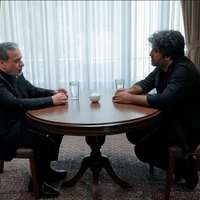
Hossein Mousavian, former diplomat and current Princeton University fellow
Hossein Mousavian, a former Iranian ambassador and now a research fellow at Princeton University, says foreign investors find Iran insecure country for capital.
In an interview with the reformist Ensaf News website in Tehran Mousavian said that politics, ideological biases, and obstacles created by certain interest groups in Iran not only hinder foreign investment, but also dissuade Iranian expats from investing in the country.
The former Iranian official also insisted that Iran can never attract foreign capital as long as it refuses to solve its problems with the United States. While lack of coordination among various institutions inside Iran has paralyzed the system, Tehran’s enmity with Washington has led to devastating US sanctions and all this has made Iran an insecure and high-risk country for investment.
Mousavian recalled that once he invited a prominent German industrialist to Iran, but officials refused to meet him. Speaking of another problem that hinders foreign investment, Mousavian said that despite rich natural and human resources in Iran, the misery index, which was around 14 percent before the Islamic Revolution, has reached 50 percent. This is an index directly linked to corruption, inflation, unemployment, crime and insecurity, he explained.
Mousavian’s remarks are a noteworthy admission by a former Iranian diplomat and operative that the Islamic Republic has failed in many respects.
Mousavian, currently a research fellow at Princeton, has been accused of lobbying for the Islamic Republic in the United States. He has also been implicated in court cases in Europe following the assassination of Kurdish leaders by Iranian and Lebanese terrorists in Germany in 1992. However, he has defended himself in several interviews since then. His explanations have not been convincing for Iranian activists and human rights defenders abroad.
Mousavian recalled, “Once when I was Iran’s ambassador in Germany, I found out that Hossein Sabet, an Iranian in Germany had made a big investment in Spain. I contacted him and urged him to invest in Iran. But as soon as he arrived in Iran security forces confiscated his passport. I chased his case for several days and officials found out that it was another Mr. Sabet with whom they had a problem. Nonetheless, terrified and worried, Sabet left Iran and did not look back again.”
Mousavian said, “The detention of foreigners and dual nationals in Iran is a familiar issue in international media. I invited many Iranian expats to invest in Iran when I was Iran’s ambassador to Germany, but most of them refused to have anything to do with Iran. Sabert was only one of therm.”
Mousavian said that some of Iran’s officials basically do not believe in the importance of foreign investment, others were not able to remove the obstacles.
According to Mousavian, there are around 6 million Iranians living abroad with a total wealth of around $3 trillion but the Iranian government’s policies and ideological biases deprive the country of this huge financial resource. He added that during the past 40 years Iran has been suffering from the adverse effects of brain drain and capital flight.
Meanwhile, Mousavian added that Iran’s poor and problematic foreign relations have pushed capital out of Iran to neighboring countries.
Mousavian, 65, was Iran’s ambassador to Germany (1990-1997). His latest position in Iran was the deputy director of the Presidential Office’s Strategic Research Center (2005-2007). He was briefly jailed in 2007 on charges of espionage but was soon cleared of the charges.
Iranian steel industry officials say that several countries have shifted their orders to Russia, as Moscow offers lower prices, endangering Iran’s revenues.
Speaking with Sharq newspaper in Tehran, Reza Shahrestani, a member of Iran’s steel producers’ associationsaid that Iran’s steel exports have stopped in the past two months as China, Afghanistan, Thailand and South Korea, Iran’s biggest customers have shifted their orders to Russia. He emphasized that this development has deprived Iran of more than $5 billion in steel exports so far.
Shahrestani warned the same scenario is being repeated in case of other metals and could also endanger petrochemical exports, which provide larger export revenues.
Iranian media and analysts have voiced concern in recent weeks that following international sanctions against Moscow, Russian oil has become cheaper and specially China will be enticed to buy crude from Russia instead of Iran.
Despite United States sanctions on oil exports, Tehran has been able to boost crude shipments since the Biden Administration began nuclear talks with Tehran and less enforcement of Trump-era restrictions against third parties doing business with Iran.
Steel destined for customers being loaded in Iran
Iranian officials have been taking credit for the increase in crude deliveries and revenues, although it is not clear how much foreign currency has found its way into Tehran’s coffers. Some say China is paying Iran with deliveries of merchandise and not cash, which would not be easy with US banking sanctions in place against Iran.
In the four years since former president Donald Trump withdrew from the 2015 nuclear agreement and imposed oil export sanctions, Iran has tried to compensate for loss of oil revenue by boosting non-crude exports of petrochemicals and steel. In the last 12 months, Iran’s non-oil exports have reached close to $50 billion.
Shahrestani told Sharq that Russia is offering discounts of 15-20 percent on its steel and already the impact on Iran’s traditional markets is clear. Russia is reportedly also offering a $20 per barrel discount on its crude, which on world markets has climbed above $110 a barrel.
Iran’s steel industry also faces internal hurdles according to Reza Mohtashamipur, an official in the ministry of industry and mines, who told state television last month that a 17-22 percent tax on steel exports hurts the industry. He argued that the tax makes Iranian steel less competitive on international markets. While Iran had offered 15 percent cheaper steel to foreign buyers, Russia is now offering more discounts.
Another impediment for steel producers, according to Shahrestani is lack of electricity in peak seasons. With the approach of hot summer months, electricity is usually rationed, and steel mills receive less energy, which impedes production.
Reduction in export revenues come at a sensitive time for Iran as it has stopped food import subsidies to save foreign currency, triggering a sudden jump in prices. Many analysts and former politicians have been warning of mass protests as millions of people face hunger. Already sporadic anti-government protests have been taking place in smaller cities and towns, but large cities have not erupted.
Ahmadreza Djalali, a Swedish Iranian doctor held hostage in Iran
Amnesty International on Thursday accused the Islamic Republic of taking Swedish-Iranian academic Ahmadreza Djalali "hostage" and using him as “a pawn in a cruel political game."
Amnesty International’s Deputy Director for the Middle East and North Africa Diana Eltahawy said, “The Iranian authorities are using Ahmadreza Djalali’s life as a pawn in a cruel political game, escalating their threats to execute him in retaliation for their demands going unmet. The authorities are attempting to pervert the course of justice in Sweden and Belgium, and should be investigated for the crime of hostage taking".
“The Iranian authorities must halt any plans to execute Djalali, release him immediately and offer reparations for the harm they have caused him,” she added.
Djalali was arrested while visiting Iran on an invitation by a university in 2016 and consequently sentenced to death on unsubstantiated charges of espionage for Israel. Espionage is a charge Iran often uses against foreigners and dual nationals that they want to hold as a bargaining chip.
Amnesty provided a detailed research and analysis to prove that the Iranian authorities are threatening to execute Djalali to compel Belgium and Sweden to hand over two imprisoned former officials, and “to deter them and others from future prosecutions of Iranian officials”.
There has been speculation that the announcement of Djalali’s execution was intended to influence the trial in Sweden of Hamid Nouri, a former Iranian official, over his alleged role in a wave of prison executions in Iran in 1988.
Lt General Erik Kurilla, the new commander of the US CENTCOM
The new United States military commander in the Middle East has told an Abu Dhabi newspaper that Iran is the most destabilizing force in the Middle East.
In an interview with The National published Thursday, General Erik Kurilla of Centcom (Central Command) said the US was also concerned about surging food and fuel prices, and the growing influence of China.
Kurilla travelled to Egypt, the United Arab Emirates and Saudi Arabia less than 45 days after taking the command to hear from America’s strategic partners, he said. The US relationships with the UAE and Saudi Arabia have been strained, while Egypt faces food shortages with 85 percent of its wheat imported from Russia or Ukraine.
Kurilla said that Iran’s uranium enrichment, ballistic missile development, and regional alliances, particularly with Ansar Allah, or the Houthis, in Yemen, had repeatedly been central to his conversations.
“The United States' position is that we will not allow Iran to have a nuclear weapon, however, our concerns about Iran go far beyond their nuclear capability and ambitions,” he said.
Referring to Ansar Allah attacks on Saudi Arabia and the UAE since 2021 – following the Saudi military intervention in Yemen in 2015 – Kurilla said he sought an “integrated air and missile defense program in support of the kingdom [Saudi Arabia] and the Emirates.” His predecessor General Kenneth F McKenzie said during his farewell visit that Iran was the region’s “principal bad actor.”
Jordan’s King Abdullah has expressed concerns about Iran and its proxies filling a vacuum left by Russians in southern Syria, warning that this could lead to issues along the borders.
In response to a question about how to approach the issues created by Iran across the region, Jordan's ruler said that "we want everybody to be part of a new Middle East and to move forward, but we do have security challenges. We're seeing border attacks on a regular basis and we know who's behind that".
He described Russia's presence in southern Syria as a "source of calm because they were making sure that we could deconflict” but as Russia is reportedly removing troops to focus on Ukraine, “that vacuum will be filled by the Iranians and their proxies, so unfortunately, we're looking at maybe an escalation of problems on our borders".
"Do the politics, the negotiations that are going on between Saudia Arabia, the [Persian] Gulf countries, the United States, does that move Iran into a more positive light? I hope so. I'm not seeing it on the ground at the moment," King Abdullah added.