US Senate Calls On FIFA To Hold Iran Accountable For Women Stadium Ban
The United States Senate Foreign Relations Committee has called on FIFA, the world football authority, to hold the Iranian Football Federation responsible for barring women from a match Tuesday.
Although Iran won the game 2-0, thereby qualifying for the World Cup in Qatar, some Iranians are urging FIFA to bar the country from the tournament, with #Fifabaniri (FIFA ban Islamic Republic of Iran) and other hashtags rising to the top of most-used hashtags in Persian-language Twitter.
In a letter to FIFA's deputy secretary general, Mattias Grafstrom, of the United for Navid group set up after the execution of wrestler Navid Afkari in September 2020, backed the call, alleging Iran was practicing "gender apartheid" and continuing “to violate the Olympic Charter and FIFA regulations."
A campaign inside Iran sees some former and current members of Iran's national team pledging not to enter stadiums as long as women are not allowed. “I hope that from now on during home matches, our dear women can also spectate so we can make them happy as well,” Alireza Jahanbakhsh, an Iranian international who plays club football in the Netherlands, told state television.
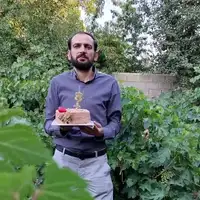
Alirexa Ghorbani, Iranian vocalist residing in Canada.
The refusal of the United States to allow entry to Iranian vocalist Alireza Ghorbani was probably due to his having been in Iran’s Revolutionary Guards.
The Islamic Revolutionary Guards Corps (IRGC) has been listed by the United States since 2019 as a ‘foreign terrorist organization,’ a designation otherwise reserved for non-state bodies. Ghorbani, a Canadian resident, was travelling Friday to perform at a concert marking Noruz (Nowruz), Iranian New Year, at Costa Mesa’s Segerstrom Center, California, Saturday when he was questioned by agents at a Toronto airport and denied entry to the US.
“He got on his flight, sat on his seat and some [US immigration] officers got on the flight and took him out,” Alireza Ardekani, executive director of Los Angeles-area nonprofit Farhang (culture) Foundation, joint host of the event, told the Los Angeles Times.
“They interrogated him for nearly four hours and eventually told him his visa was going to be canceled and he could no longer travel to the US,” Ardekani said Tuesday, adding that he had learned that Ghorbani’s denial of travel likely stemmed from the 49-year-old’s service decades earlier in the IRGC.
The Iranian Canadian Congress (ICC) in a statement on Twitter said it was concerned at Ghorbani's detention and interrogation and had brought the issue of the US refusing entry to Iranian-Canadians conscripted by the IRGC to the attention of Canadian government officials on many occasions.
"We continue our efforts to end discriminatory behavior against our community," the statement said. While Canadian permanent residents may need a non-immigrant visa to enter the US, the US State Department stipulates that“members of a designated FTO, if they are aliens, are inadmissible to and, in certain circumstances, removable from the United States.”
The IRGC is part of the Iranian Armed Forces, which also includes the ‘regular’ Army and Law Enforcement, all under the overall command of Supreme Leader Ali Khamenei. The three branches each includes young men serving a 21-month compulsory military service
Wider worry
Around one-fourth of IRGC's 190,0000 are conscripts and Ghorbani, who like many other young men do military service after graduating from high school, was probably assigned to the IRGC when drafted three decades ago.
Masih Fouladi, deputy director of the Los Angeles chapter of the Council on American-Islamic Relations, told the Los Angeles Times, that the case illustrated a wider worry for Iranians in north America.
“They may have served 20, 25 or 30 years ago, and many of them may have served in clerical roles, nothing that had anything to do with combat,” he said. “And now they’re facing obstacles to residency status… I think [the designation] was intended to marginalize Iran’s government, but the truth it is has really impacted Americans here who identify as Iranian.”
Ghorbani has performed in many countries including with the Vancouver Opera Orchestra in 2019. Among international awards, he took the silver medal of the Global Music Awards in 2020 for outstanding achievement. Singer Sina Sarlak filled in for Ghorbani Saurday, performing “Ey Iran!”
Smoke billows from the fire at the Kavoshgaran Mahshahr petrochemical plant in the port city of Mahshahr in Khuzestan province on April 1, 2022.
An explosion and a large fire in the Bandar Mahshahr Petrochemical Special Economic Zone in southern Iran have left at least two workers injured.
The blast and the blaze happened in Kavoshgaran Mahshahr petrochemical plant in the port city of Mahshahr in Khuzestan province in the early hours of Friday.
According to a spokesman of the company, Mohsen Adibi, the fire has been contained and the cause of the accident is being investigated.
The CEO of the economic zone, Omid Shahidinia, said a tanker loading a hydrocarbon product caught fire and it spread to other parts of the plant.
In February, the petrochemical company came under attack reportedly by armed men, who set a big fire to a dozen vehicles.
The public relations manager of the firm, Hamid Danesh, told Fars news at the time that “breaking the windows of the security compound, like in this incident, clashing with the security forces of the company and also theft have been among similar cases in recent months."
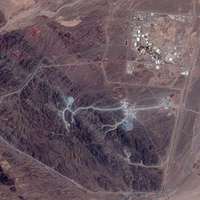
There have been many explosions and fires in Iran’s military and industrial sites since mid-2020, with authorities not giving a full explanation in many instances. However, they have blamed Israel for a series of spectacular sabotage attacks on nuclear facilities, including two explosions at Natanz uranium enrichment center.
The oil and gas industries have also experienced many incidents of exploding pipelines and refineries where large fires were reported.
Security forces barring women from entering the football stadium in Mashhad. March 29, 2022
In an unprecedented turn of events, many Iranians are urging FIFA to ban their country from the World Cup for forcibly barring women from a match on Tuesday.
#Fifabaniri (FIFA ban Islamic Republic of Iran) and similar hashtags rose to the top of most used hashtags in Persian-language Twitter after security forces Tuesday violently barred women, who had tickets in their hands, from entering the Imam Reza Stadium in the religious city of Mashhad. To disperse women, they pepper sprayed them.
People from every walk of life, including former and current members of Iran's national team and top football clubs, politicians, the exiled Prince Reza Pahlavi, and many ordinary Iranians are pledging not to go to stadiums as long as women are not allowed to enter.
"As a member of the football family, I apologize to women who were held behind the stadium gates in Mashhad. The kind of football we want spreads a red carpet for its [female fans] and doesn't spray pepper at them, Javad Nekounam, former national team coach, said in an Instagram post Thursday which he appears to have removed later under pressure.
"Women should be able to come to stadiums. We are the only country, apart from Afghanistan, that doesn't allow women to enter stadiums. Why is it so?" Alireza Biranvand, a member of the national team, said in an interview with Tarafdari sports website Thursday.
Masih Alinejad, an Iranian activist and campaigner against forced hijab has taken it on herself to spearhead a campaign to ban Iran from competing in the World Cup later this year.
"I call on FIFA to ban the Islamic Republic because we, the women of Iran, are banned from entering stadium for 42 years," she told Daily Mail Wednesday. She argued that FIFA would have been stricter in enforcing its own regulations if Western countries had banned women from entering stadiums. "This is a total betrayal that FIFA do not take a strong action against a gender apartheid regime!" she said.
For nearly a decade the world’s soccer authority has tried to convince the Iran’s government to lift an unwritten, four-decade-old ban on women attending stadiums to watch male players. Iranian officials argue that male football fans swear profanities so the atmosphere of stadiums is not suitable for women even if they are seated in a different part of the stadium.
"FIFA's position … is clear: historic progress has been achieved – as exemplified by the milestone in October 2019, when thousands of women were allowed into the stadium … and more recently when some women were allowed again at the FIFA world Cup qualifier match in Tehran in January – and FIFA expects this to continue, as there can be no turning back," FIFA said in a statement Wednesday.
The ban has led to arrests, beatings, detentions, and abuses against women. In September 2019, a female football fan, Sahar Khodayari, who came to be known as the “Blue Girl” after her favorite team, Esteghlal FC, was reportedly sentenced to jail for trying to enter a stadium disguised as a man. She died by self-immolation, causing a domestic and international outcry.
“Iranian authorities have repeatedly demonstrated they are willing to go to great lengths to enforce their discriminatory and cruel ban on women attending football stadiums,” said Tara Sepehri Far, senior Iran researcher at Human Rights Watch (HRW). “Given Iranian authorities’ longstanding violations, FIFA needs to follow its own global guidelines on non-discrimination and should consider enforcing penalties for Iran’s noncompliance,” she said.
Iran’s Revolutionary Guard says its missile program and its sphere of influence in the countries of the region are the redlines that won’t change.
The Islamic Revolution Guards Corps (IRGC) made the remarks in a statement issued on Thursday, warning that Iran will give a destructive response to the “enemy’s slightest move” against the country.
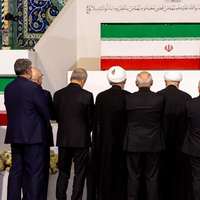
“Iran’s missile power, popularity, and regional sphere of influence are associated with the IRGC”, the statement said, adding that it “will give categorical and destructive response to even the smallest mistake of the evil and adventurist enemy against the Islamic homeland”.
The terse statement came as one year of talks to restore the 2015 nuclear deal known as JCPOA have reached a deadlock over Iran’s demand for the United States to delist the IRGC as Foreign Terrorist Organization (FTO).
The statement went on to say that Iran never defines its deterrence “according to the aspirations, desires and wishes of the rulers of the White House and their evil allies, and will not change it under their pressure, threat or evil media propaganda.”
Earlier in the day, IRGC commander Major General Hossein Salami also boasted about the the combat power of IRGC forces -- especially those deployed to the country’s key islands in the south -- urging the Persian Gulf littoral states to end their dealings with Israel.
The saber-rattling by the IRGC follows recent media reports that an air defense pact between Israel and friendly regional countries is in the works to confront threats posed by Iranian drones and missiles.
Iranian foreign minister Hossein Amir-Abdollahian with his Afghan counterpart.
While many express shock by how Iran on Tuesday pepper sprayed women who wanted to watch a football match, its foreign minister has urged the Taliban to respect women’s rights.
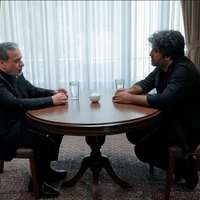
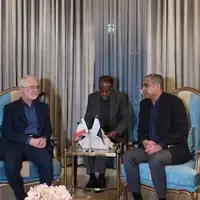
Hossein Amir-Abdollahian made his remark during a meeting with his Taliban counterpart Amir Khan Muttaqi in China, on Thursday, where foreign ministers of Afghanistan’s neighboring countries had gathered.
Amir-Abdollahian called for women’s right to education at all levels and their participation in different sectors of the society.
“The role of women in Afghanistan is very important to us... Islam recognizes the presence of women in various fields as their inalienable right,” he said.
In reaction to Amir-Abdollahian’s remarks, senior Israeli diplomat Joshua L. Zarka posted a tweet in Persian, calling it “utmost hypocrisy”. “What do Iranian and Afghan women think about the role you ‘give’ them?”
Mashhad is home to numerous hardliner clerics who are against women’s presence in male dominated venues. Firebrand representative of the Supreme Leader in the city, Ayatollah Ahmad Alamolhoda has been banning concerts and cultural events for years.
Other than the Taliban regime in Afghanistan, Iran is the only FIFA member country to bar women from football stadiums to watch men’s matches.