• العربية
  • فارسی
Brand
  • Iran Insight
  • Politics
  • Economy
  • Analysis
  • Special Report
  • Opinion
  • Podcast
  • Live TV
  • Iran Insight
  • Politics
  • Economy
  • Analysis
  • Special Report
  • Opinion
  • Podcast
  • Live TV
  • Theme
  • Language
    • العربية
    • فارسی
  • Iran Insight
  • Politics
  • Economy
  • Analysis
  • Special Report
  • Opinion
  • Podcast
  • Live TV
All rights reserved for Volant Media UK Limited
volant media logo

Unveiled runners draw attention at Tehran 10k race

Sep 18, 2026, 18:03 GMT+1
A screen-grab from a viral video shows many women running a 10k race in Tehran without covering their hairs, September 18, 2026

Videos showing women running without headscarves at a road race in Tehran went viral on Friday, months after a similar event on Kish Island prompted action against its organizers.

Several participants in the Tehran 10K competed with their hair uncovered despite Iran’s continuing compulsory hijab rules.

The footage attracted particular attention because the race coincided with the Janfadayan-e Iran rally, a large state-organized gathering elsewhere in Tehran involving Revolutionary Guards, Basij members and volunteers pledging their readiness to defend the country.

While the two events were unrelated, videos of the unveiled runners were also shared by some state-affiliated accounts on X, an unusual degree of amplification for images showing conduct that remains illegal under Iranian law.

The women’s race began Friday morning at Velayat Park, with organizers holding separate competitions for women and men. The course covered 10 kilometers over two laps.

Iranian women have increasingly appeared without hijab in streets and other public spaces since the 2022 Woman, Life, Freedom protests sparked by the death of Mahsa “Jina” Amini in morality police custody.

Compulsory hijab remains law, however, and enforcement continues in various forms. Women without headscarves have become a common sight in public spaces, while government offices and many other official premises generally continue to require hijab for entry.

Friday’s scenes recalled a women’s road race on Kish Island, where participants also ran without headscarves. Authorities subsequently took action against organizers of the event.

Iranian distance runner Parisa Arab, who holds the national women’s records in the 5,000 meters, 10,000 meters and half marathon, finished first in Friday’s race.

Arab later posted a video showing moments from the competition and her crossing the finish line, saying spectators’ encouragement had given her energy during the most difficult stretches of the race.
Most Viewed

US-Iran talks focused on phased deal to reopen Hormuz
1

US-Iran talks focused on phased deal to reopen Hormuz

2
INSIGHT

Pezeshkian straddles Iran’s divide at UN as US talks test balance

3
ANALYSIS

From Hormuz to Indian Ocean: Iran threatens to redraw the map of the war

4

China shipments help sustain Iran’s weapons programs despite US pressure - WSJ

5
VOICES FROM IRAN

'Bully at home, victim abroad': Iranians on Pezeshkian's UN speech

Banner
Banner

Spotlight

  • US and Iran want a deal, but neither wants to move first
    ANALYSIS

    US and Iran want a deal, but neither wants to move first

  • Rushdie returns to the fatwa that nearly cost him his life

    Rushdie returns to the fatwa that nearly cost him his life

  • Iranians report SIM cards blocked over political posts and likes
    VOICES FROM IRAN

    Iranians report SIM cards blocked over political posts and likes

  • Pezeshkian straddles Iran’s divide at UN as US talks test balance
    INSIGHT

    Pezeshkian straddles Iran’s divide at UN as US talks test balance

  • 'Bully at home, victim abroad': Iranians on Pezeshkian's UN speech
    VOICES FROM IRAN

    'Bully at home, victim abroad': Iranians on Pezeshkian's UN speech

  • War deepens Iran’s energy crunch ahead of winter
    ANALYSIS

    War deepens Iran’s energy crunch ahead of winter

Banner
Banner
•
•
•

More Stories

Iran used state machinery to crush 2022 uprising, Amnesty says

Sep 18, 2026, 04:59 GMT+1
100%
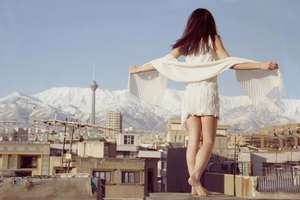
A woman standing on a roof in Tehran (2012)

Iranian state authorities organized a systematic, high-level campaign of murder, torture, and sexual violence to crush the 2022 Woman, Life, Freedom uprising, according to a 1,000-page investigation published by Amnesty International on Wednesday.

The report states that senior officials directed, executed, and subsequently covered up acts that constitute crimes against humanity.

The findings are based on interviews with 270 witnesses, analysis of over 2,000 videos, and leaked official Iranian government documents.

"Amnesty International unequivocally opposes violations of international law by all parties and rejects any attempt to instrumentalize the suffering of victims of human rights violations in Iran to justify unlawful attacks that inflict further civilian harm," said Secretary General Agnès Callamard at the report's press launch, addressing both state repression and broader regional conflict.

  • Amnesty says Iran drove global surge in executions in 2025

    Amnesty says Iran drove global surge in executions in 2025

Calls for international criminal prosecutions

Amnesty International identified 87 Iranian officials, including top IRGC and police commanders, who it said should be investigated for crimes against humanity under superior responsibility principles. Amnesty said that it shared its findings and the list of identified officials with Iran's leadership prior to publication but received no response.

"This investigation exposes the layers of command and coordination behind the Iranian authorities' deadly protest crackdowns," Callamard said. "The agents on the streets operated within a hierarchical and coordinated chain of command linking them to officials who directed, enabled, facilitated and supported crimes committed on a massive scale. It is beyond time to establish an international criminal justice mechanism for Iran before another protest massacre."

The report warned that impunity for the 2022 crackdown directly enabled subsequent mass atrocities, warning that state suppression of demonstrations earlier this year bore the same hallmarks on an even wider and deadlier scale. Amnesty urged the UN General Assembly to establish an independent international criminal justice mechanism to prosecute responsible officials.

  • A generation shaped by Woman, Life, Freedom refuses to go back

    A generation shaped by Woman, Life, Freedom refuses to go back

High-ranking officials named for criminal investigation

Among the top-tier officials listed for criminal investigation under command responsibility principles are Supreme Leader Ali Khamenei, who was killed on February 28, 2026, during military strikes, and former Armed Forces Chief of Staff Mohammad Bagheri, who died on June 13, 2025.

Other key figures identified in the report include Ahmad Vahidi, who served as Minister of Interior during the 2022 crackdown and was subsequently appointed General Commander of the IRGC, Deputy Interior Minister for Security Majid Mir-Ahmadi, Tehran IRGC Commander Hassan Hassanzadeh, and Tehran Deputy Prosecutor Mohammad Shahriari.

  • Security forces deploy as shops in western Iran strike on Mahsa Amini anniversary

    Security forces deploy as shops in western Iran strike on Mahsa Amini anniversary

Leaked documents show early surveillance directives

Minutes from confidential security meetings show that within 48 hours of Mahsa Amini’s death in custody on September 16, 2022, state officials focused on controlling the public narrative and suppressing online protests. Security chiefs discussed strategies to secure public statements from Amini's father to support the official explanation of her death.

A government resolution dated September 18, 2022, assigned the Islamic Revolutionary Guard Corps (IRGC) intelligence unit to monitor athletes and political figures. The same document tasked the Ministry of Intelligence with tracking actors, artists, and opposition movements.

Written orders drove escalation of lethal force

Written instructions issued by the General Staff of the Armed Forces on September 21, 2022, ordered security forces nationwide to deliver a "firm and severe response" to demonstrations. Of the 326 fatalities documented during protest dispersals or in militarized zones, 178 occurred within the first two weeks of the crackdown.

  • Women face forced undressing, breast touching at Iran's Evin Prison

    Women face forced undressing, breast touching at Iran's Evin Prison

Amnesty documented a total of 377 protest-related deaths, including 56 children. State authorities have officially acknowledged only 202 deaths and falsely attributed most fatalities to "rioters" or "armed terrorists" despite overwhelming evidence to the contrary.

Security forces used assault rifles, machine guns, and shotguns loaded with metal pellets at close range, while kinetic impact munitions caused severe long-term physical injuries and loss of vision among survivors.

Disproportionate impact on ethnic minorities

Baluchi and Kurdish protesters and bystanders accounted for 62% of all recorded deaths during protest dispersals, despite representing a much smaller share of Iran's overall population.

Operational guidelines detailed the deployment of Basij militia units and motorcycle patrols of up to 40 vehicles per battalion to maintain street control and prevent anti-government slogans from being written in urban centers.

  • Amnesty says Iran using war to intensify repression

    Amnesty says Iran using war to intensify repression

Systemic detention abuses and judicial cover-ups

The investigation documented widespread torture, beatings, rape, and sexual assault against detained protesters, including minors. Internal judicial communications show that prosecutors classified formal rape complaints against IRGC agents as "completely secret" and instructed staff to close files over time without citing security agencies.

When lower courts delivered murder convictions against security personnel, higher authorities intervened to overturn the verdicts, reclassify the killings as unintentional, or reduce prison sentences. State courts also penalized bereaved families by withholding statutory financial compensation and attempting to coerce false television confessions attributing deaths to opposition groups.

Woman, Life, Freedom and the Iran that cannot go back

Sep 17, 2026, 16:10 GMT+1
•
Lawdan Bazargan
100%
People walk and shop in a local market in Tehran, Iran, summer of 2026

Four years after Mahsa Amini’s death, the deepest legacy of Woman, Life, Freedom may be that Iran cannot simply be returned to the society it was before September 2022.

Four years have passed since Zhina Mahsa Amini, a 22-year-old woman who had travelled to Tehran to visit family, died after being detained by the morality police.

She could never have imagined how her name would appear on walls, streets and university campuses, or on the lips of millions of Iranians, or how three simple words, “Woman, Life, Freedom,” would become one of the most enduring slogans in Iran’s modern history.

The story of 2022 is not only the story of a slogan. It is the story of the price thousands paid to break through the wall of fear.

Zhina’s death on September 16, 2022, sparked protests across Iran. Human rights organizations documented live ammunition and pellet fire, mass arrests, torture, sexual violence and the killing of protesters. HRANA later recorded protests in all 31 provinces, 160 cities and 143 universities, and reported at least 530 people killed, including 68 children and teenagers.

Nika Shakarami and Sarina Esmailzadeh were both sixteen. Kian Pirfalak was nine, remembered for “In the name of the God of the rainbow” and the small boat he built with his own hands. Khodanour Lojei, a 27-year-old Baluch man, lives on in videos of him dancing, alongside the haunting image of him with his hands tied to a pole and water placed before him while in detention.

Their stories were different, but each became part of the collective memory of Woman, Life, Freedom.

Then came the gallows. Mohammad Mehdi Karami, a 22-year-old karate champion, was executed after being sentenced in connection with the fortieth-day commemoration for Hadis Najafi. Seyed Mohammad Hosseini, who worked at a poultry farm and taught martial arts to disadvantaged children for free, was executed the same day; human rights reports say his confessions were obtained under torture. Majidreza Rahnavard, executed only 23 days after his arrest, asked before his death that people not cry at his grave but celebrate and play happy music.

These names are reminders that behind every statistic was a family.

The repression did not end with the street protests. Students, schoolchildren, journalists, artists, athletes and activists were arrested. Families sometimes went weeks or months without news. Some detainees appeared in televised “confessions” that human rights organizations said were tainted by torture. Families seeking the truth about those killed also faced pressure. Others eventually left Iran after imprisonment, threats and persecution, carrying the cost of the uprising into exile, lost careers, interrupted education and separation from family.

And yet one of the movement’s deepest legacies is visible in an ordinary scene: a woman walking down an Iranian street without compulsory hijab.

The state responded with fines, vehicle seizures, arrests, flogging, business closures, cameras and surveillance. But women’s defiance continued. Four years after Zhina’s death, a woman without compulsory hijab is no longer the exceptional image it was in September 2022; it has become part of Iran’s social reality.

That is also where the connection to Dey 1404 (December 2025 and January 2026) becomes important.

The new protests began amid the collapse of the currency, inflation and protests by Tehran bazaar merchants, but quickly moved beyond economic demands. According to HRANA data cited in a UK government report, by January 27 at least 656 gatherings had been recorded in 201 cities across all 31 provinces, compared with 160 cities during the 1401 protests.

There are no reliable data to compare total participation, but the later uprising was documented across more cities and had a far higher reported toll. By March 2026, HRANA had recorded information on more than 7,000 people killed and more than 53,000 arrested in connection with the Dey and Bahman protests, far above the Iranian government’s figures.

HRANA described the confirmed cases as the minimum it could verify, with thousands more still awaiting review. Internet shutdowns, pressure on families and the lack of independent access inside Iran made the full scale harder to establish.

But the difference was not only scale. The society that entered January 2026 was not the same society that had existed before September 2022.

Iranians had lived through a national experience of disobedience, broken taboos, solidarity, bullets, prison, executions, migration and grief.

Abolfazl Hajizadegan’s research on “The Lives of Dey,” based on the social-media traces of 957 of those killed, found people from widely different professions and backgrounds, from baristas, repair workers and sports coaches to lawyers, professors, filmmakers and musicians.

The uprising also entered families in ways that made the breadth of the upheaval painfully visible.

Mehdi Shafiei, 44, and his 18-year-old son Mani were killed in Eslamshahr less than two hours apart. In Bushehr, 37-year-old nurse Mansoureh Heydari and her husband, Behrouz Mansouri, were both killed, leaving behind two children. Elsewhere, fathers and daughters were arrested together.

This does not mean that the 1401 and 1404 uprisings were identical, or that all protesters shared one ideology, leader or vision of Iran’s future. Their immediate triggers were different. But something had changed in society’s relationship with fear.

Repression continued, but the memory of disobedience could not simply be erased. Hajizadegan’s research suggests that those who came into the streets in 1404 did not acquire their anger overnight. Their earlier posts showed dissatisfaction and protest stretching back through previous protest waves, including the November 2019 protests and the 2022 uprising.

Dey 1404 was therefore not simply the explosion of an economic crisis. It was part of a longer accumulation of experience. Perhaps this is one of the most important legacies Woman, Life, Freedom left behind: not a single organization or leadership, but a social experience of the possibility of saying “no.”

The government’s response in Dey 1404 was severe. From January 8, the internet was almost completely shut down. Amnesty International reported widespread killings, mass arrests, enforced disappearances, torture and systematic pressure on victims’ families.

Yet behind every new number was another life: Hamid Mahdavi, Mohammad Jabbari, Mehdi and Mani, Mansoureh and Behrouz, just as Nika, Sarina, Kian and Khodanour had been lives, not statistics, four years earlier.

From September 2022 to January 2026, the names and faces changed and the sparks were different, but each chapter left something for the next: memory, wounds, language, courage and sometimes hope.

Zhina is not only the name of a young woman, and Woman, Life, Freedom is not merely the name of a few months of protest. It became part of the social and political language of a generation that paid an extraordinarily heavy price and emerged with a different understanding of choice, dignity and the possibility of standing firm.

Zhina and thousands of others killed in Iran’s protest movements are no longer with us. But something of them remains: in the hair of a woman who chooses not to cover it; in a mother who refuses to let her child’s name be erased; in a father who rejects the official account of his son’s death; in a family that dances at a loved one’s grave despite threats; and in a generation that has not abandoned its questions about freedom, dignity and the future.

Repression can empty the streets for a time, but it cannot erase what a generation has lived through.

Video of Iran's police sexually abusing teenager draws fury

Sep 17, 2026, 14:25 GMT+1
•
Hooman Abedi
100%
A police officer restrains a teenager in Iran's nortwestern city of Tabriz in footage showing the teenager being beaten, verbally abused and sexually humiliated by officers. The image has been enhanced using AI for improved quality.

A video showing Iranian police beating and sexually humiliating a teenager while officers laugh, insult him and film the abuse has unleashed fury across Iranian social media, with users asking what may happen beyond public view.

The footage shows several uniformed officers surrounding the teenager as he is struck and subjected to sexual humiliation. At one point, an officer appears to expose or touch the boy's buttocks as other officers watch.

The atmosphere captured by the camera has become almost as central to the outrage as the physical treatment itself. The officers can be heard joking during the encounter.

“We haven't seen his buttocks yet,” one voice says in Iranian Turkish during the recording. Another uses a homophobic slur against the teenager.

East Azarbaijan province police confirmed that the confrontation occurred in Tabriz on June 4 after the person was detained following a street fight, according to the police account carried by state media.

The police said "the officers responsible for the improper treatment" of the teenager are in custody. It said it took "internal disciplinary action against the officers as soon as it learned of the incident, but added that this does not preclude judicial proceedings against them."

Dadban, an Iranian legal rights group, argued that the images should not be reduced to “improper behavior” or an internal disciplinary issue.

The beating and humiliation of a detainee by state officers can carry criminal liability under Iranian law, Dadban said. If the person shown is a minor, the sexual conduct would also fall under legal protections covering children and adolescents and should trigger an immediate, independent criminal investigation, the group said.

‘What happens behind closed doors?’

The images quickly produced a torrent of anger online, much of it centered not simply on the violence but on how openly it appeared to take place.

“If they sexually assault a child in front of a camera, what is happening in detention centers?” one social media user wrote, invoking the death of Mahsa Amini after her detention by morality police in 2022.

“When this happens publicly and with this degree of impunity, there can be no guarantee about people's safety in detention centers and behind closed doors,” another reaction said.

Another user returned to the same fear in starker terms: if this can happen to a teenager in front of a camera, “what is happening in detention centers?”

“If we die from this pain, it would be understandable,” another wrote.

Some demanded that the footage be circulated widely enough for every officer involved to be identified.

Another video fuels the anger

The footage emerged only days after another video from Tabriz circulated widely online, showing a police officer holding two young men's heads close to the loud exhaust of their vehicle.

The apparent purpose was to force them to experience the noise their car had been making.

That video drew significant engagement on social media after appearing online.

Dadban argued that even if the men had committed a traffic offense, police had no authority to invent a roadside punishment. Officers could document an offense, take measures permitted by law and refer suspects to the appropriate judicial authority, the group said.

The two recordings circulation within days of each other has intensified an online argument about police power, humiliation and accountability.

Bonuses sharpen anger

The videos have surfaced just as reports of new bonus payments to members of Iran's armed forces have spread online, adding another source of anger over the treatment of security personnel.

Reports published said a presidential bonus linked to service during the recent war had been deposited for armed forces personnel, with 100 million rials ($43) for staff personnel and 150 million rials ($65) for operational personnel.

Normal military personnel generally earn about 300 million rials ($130) a month, according to figures circulating with reports of the payments.

The timing has drawn a darker interpretation from some government critics on social media. They portrayed the payments as an effort to keep security forces loyal and ready to use greater force should another round of anti-government protests erupt.

That fear comes against a charged backdrop. Security forces were deployed in cities across Iran before a gasoline price increase took effect on September 8, with police, special units and Basij forces reported on streets and around fuel stations in cities including Tabriz, Tehran, Mashhad, Shiraz and Isfahan.

For critics circulating the police videos, the combination is combustible: footage they see as evidence of officers abusing their authority arriving at the same time as reports of authorities rewarding members of the security apparatus.

One reaction to the teenager's treatment went further, questioning why people had previously objected to police stations being destroyed by Israel during the war.

George Floyd comparison resurfaces

One social media response to the teenager's video pointed directly to the contrast with the Iranian leadership's reaction to police violence abroad.

“If American police had committed such a crime, what would the Islamic Republic be doing now?” the user wrote.

It is a comparison with a documented precedent.

After Minneapolis police officer Derek Chauvin killed George Floyd in May 2020, former Supreme Leader Ali Khamenei used Floyd's death to criticize the United States and its treatment of Black Americans.

Khamenei described Floyd's killing as revealing the “nature” of the US system and invoked Floyd's dying words, “I can't breathe,” in arguing that they reflected broader grievances against Washington.

Iranian officials and state media devoted extensive attention to Floyd's killing and the demonstrations that followed.

The comparison adds another layer to the anger surrounding the Tabriz footage: For those sharing the teenager's video, the camera has now turned inward.

And beneath the insults, abuse, laughter and blows, one question has persisted across the reaction: if officers can do this while somebody is filming, what happens when nobody is watching?

Iran cancer patients sell household goods to pay for treatment

Sep 17, 2026, 11:27 GMT+1
100%
A cancer patient receives treatment at a hospital in Iran.

Some cancer patients in Iran are selling essential household goods or abandoning medication as soaring drug prices and gaps in insurance coverage put treatment beyond the reach of low-income families, a charity director said on Thursday.

Families have sold refrigerators and televisions to buy cancer drugs, while some patients have stopped taking medication because they can no longer afford it, Hossein Zehtaban, the head of a cancer support charity in the western province of Kermanshah, told Iran's ILNA news agency.

“We are facing patients who explicitly say they cannot afford their medication, that they are no longer taking it and are waiting to see what happens,” he said.

The warning comes during a sharp rise in pharmaceutical costs across Iran. Producer inflation in the pharmaceutical, chemical and herbal products sector reached 114% year-on-year, according to Iranian economic outlet Zooman.

A recently published price list from Iranian pharmaceutical manufacturer Loghman showed increases of more than 500% for some medicines. Donepezil, used to treat symptoms of Alzheimer's disease, rose 543% for a 10-milligram dose, while the price of clarithromycin increased 308%.

Workers struggle with treatment bills

Zehtaban cited one family with three cancer patients whose main breadwinner is a worker. Medication for each patient can cost 400 million to 500 million rials ($174-$217 at an exchange rate of 2.3 million rials to the dollar) a month, he said.

100%
A healthcare worker tends to a patient in an intensive care unit at a hospital in Iran.

Iran’s minimum base wage for workers is about 166 million rials a month, meaning the medication for just one of the three patients could cost roughly two-and-a-half to three times a minimum-wage worker’s monthly pay.

The charity has about 1,700 cancer patients registered for support, though the charity director said the figure does not represent the total number of cancer patients in Kermanshah province because other organizations also provide assistance.

Insurance problems are adding to the financial pressure, he said. Pharmacies facing unpaid insurance reimbursements have reduced provision of some medicines, forcing cancer patients to search multiple pharmacies for prescribed drugs, he added.

Drug prices surge

The financial strain described by Zehtaban extends beyond cancer treatment.

Loghman's published price changes show increases across dozens of medicines, with 23 products rising by at least 100%. Donepezil rose by 427% for the five-milligram dose and 543% for the 10-milligram dose, while Tadalafil, which is used to treat erectile dysfunction, enlarged prostates and pulmonary arterial hypertension, had the largest increase at about 706%, according to reports citing the company's regulatory disclosure.

100%

Rising medicine costs have combined with food and other household expenses to make supporting cancer patients increasingly difficult, Zehtaban said. Vitamins and nutritional supplements recommended during treatment are also often excluded from insurance coverage.

The charity provides financial assistance as well as weekly psychological and physical rehabilitation sessions, but he said its resources cannot cover the mounting treatment costs.

UN says Iran crackdown amounted to crimes against humanity

Sep 17, 2026, 10:05 GMT+1
100%
A masked protester raises both hands in victory signs as crowds gather on a smoke-filled road during protests in Mashhad, Iran, on January 9, 2026.

Iranian security forces committed crimes against humanity in their crackdown on nationwide protests, a UN fact-finding mission said on Thursday, citing mass killings, torture and arbitrary detention.

The Independent International Fact-Finding Mission on Iran said its report examined the 2025-2026 protests and found that killings by state security forces took place across all 31 provinces. It described the repression as an unprecedented escalation from previous crackdowns.

At least 221 children were reported killed, some as young as two, while tens of thousands of people were detained, according to the report submitted to the UN Human Rights Council.

Security forces fired at crowds

The mission said security forces positioned themselves on rooftops and other elevated locations and fired assault rifles into crowds.

In Karaj, forces used tear gas to trap demonstrators in narrow alleys before shooting at them, the report said. Protesters suffered severe injuries to the head, chest and eyes from metal shotgun pellets, with some left permanently blind.

  • Iran used state machinery to crush 2022 uprising, Amnesty says

    Iran used state machinery to crush 2022 uprising, Amnesty says

Security forces also attacked healthcare facilities, beating and arresting wounded protesters and detaining some healthcare workers, according to the mission. It said the actions deterred injured people from seeking treatment.

Five-month internet shutdown

Iranian authorities imposed a nationwide internet and communications blackout on January 8, at the height of the violence, the mission said.

The shutdown lasted more than five months, which the mission described as the longest nationwide communications shutdown on record, restricting access to information and emergency coordination.

The report said tens of thousands of people were arbitrarily detained and that some faced torture, solitary confinement and denial of access to lawyers. Families were in some cases left without information about detainees' whereabouts, raising concerns of enforced disappearances.

Authorities also delayed or refused to return bodies to some families, demanded payments and pressured relatives to sign statements falsely describing victims as state agents, the mission said.

  • Amnesty says Iran drove global surge in executions in 2025

    Amnesty says Iran drove global surge in executions in 2025

Executions linked to protests

The mission said Iran also intensified its use of the death penalty against people linked to the protests.

At least 29 men were executed between March and August 2026 following expedited trials, including five who were executed publicly.

More than 70 people, including five women and three boys, remained at imminent risk of execution, it said.

The mission concluded that violations including murder, imprisonment, torture and other inhumane acts amounted to crimes against humanity because they formed part of a widespread and systematic attack against civilians.

US strikes also examined

The report separately found reasonable grounds to believe the United States committed war crimes in two strikes during the conflict with Iran.

It said US Tomahawk missiles struck the Shajareh Tayyebeh Primary School in Minab, killing more than 150 people, including about 120 children.

A separate US strike in Lamerd dispersed tungsten pellets over a sports complex and nearby residential area, killing 22 civilians, the mission said.

The mission said the attacks amounted to indiscriminate strikes resulting in civilian deaths and damage to civilian objects.