A 46-year-old Baha’í who devoted more than a decade to helping some of Iran’s most vulnerable children has been handed prison sentences totaling 31 years after a trial in which his family says he was denied a lawyer.
Afshin Heyratian’s days often began at 6 a.m. He would leave his home in Tehran and spend the day volunteering with an organization helping working children, Afghan children without birth certificates and others whose legal status could prevent them from accessing education.
Sometimes his work meant teaching. Sometimes it meant painting rooms or repairing tables and chairs. Often, it was simply spending time with the children and trying to make them happy.
“That was his passion,” his older brother, Ramin Heyratian, told Iran International’s Eye for Iran. “If one virtue was supposed to define a person, it is his kindness.”
A playwright and screenwriter, Afshin also helped friends write productions without receiving credit because of restrictions imposed on him, according to Ramin, who said this was his brother’s third imprisonment
A life interrupted
His latest ordeal began after he was questioned at the school where he volunteered. Security forces came to the family home on November 11, 2025, and arrested him.
Agents confiscated phones, tablets, computers, Baha’í books and even Baha’í pictures hanging on the walls, according to his brother.
Afshin then spent 34 days in solitary confinement. For the first days after his arrest, his family did not even know where he was.
Eventually, he was permitted to call his mother and tell her to prepare the deed to the family home, raising hopes that it could be used as collateral for his release.
The release never came.
Ramin said Afshin remained imprisoned for more than 260 days before being charged, while his mother was repeatedly sent between courts trying to find out what was happening.
“They were sending her back and forth almost every day,” he said.
Afshin had an opportunity to build a life outside Iran in the early 2000s and spent time in the United States, but ultimately chose to return.
“He truly loves Iran and Iranians,” Ramin said.
The case has drawn international condemnation. Nobel Peace Prize laureate Shirin Ebadi has called for his release, while the Canadian government described his treatment as an example of Iran’s “continued disregard for human rights.”.
‘No lawyer, no warning’
The ordeal has been particularly devastating for Afshin’s mother, an 80-year-old cancer survivor.
She can now visit her youngest son approximately once every two or three weeks, Ramin said. Afshin is also allowed to telephone her each day.
Ramin said the family had been told Afshin would receive legal representation and that they would be notified before his court date.
Neither happened.
Instead, one of Afshin’s fellow prisoners alerted his own family that Afshin had been taken to court. Afshin’s mother learned what was happening while she was on her way to an oncology appointment.
She rushed to the courthouse.
Ramin said she waited in the hallways, trying to determine where her son was, until she suddenly heard Afshin behind her as he emerged from court.
By then, the hearing was over.
Afshin pleaded not guilty but had no lawyer representing him, Ramin said.
“He was basically his own lawyer,” he said.
When his mother asked how he was doing, Afshin reassured her.
“I’m okay. Don’t worry about it. We’ll be fine,” Ramin recalled him saying.
‘Life sentence’
Branch 26 of the Tehran Revolutionary Court sentenced Heyratian to prison terms totaling 31 years, according to the Hengaw Organization for Human Rights.
The sentences included 12 years for “forming an illegal group,” 11 years for “propaganda activities contrary to the sacred law of Islam,” six years for “assembly and collusion,” and two years over allegations of “obtaining illegitimate property.” Financial penalties were also imposed.
Under Article 134 of Iran’s Islamic Penal Code, only the most severe sentence, 12 years, is expected to be enforceable.
Ramin rejects the allegations against his brother.
“The things that they have attached to those charges … are, first of all, completely untrue,” he said, adding that the organization where Afshin volunteered had been permitted to operate in Iran.
Iran’s Baha’í community has faced decades of state persecution and restrictions on education, employment and other aspects of public life. The Islamic Republic does not recognize the Baha’í faith as one of the country’s protected religious minorities.
Ramin said the length of his brother’s punishment was extraordinary even by the standards of that persecution.
“At Afshin’s age, this can be a life sentence,” he said, adding that the family had not abandoned hope.
“We believe that the future of Iran is absolutely brilliant,” Ramin said. “We are hoping for that to happen soon.”
A participant holds a sign reading “Kill Trump” at a state-backed event in central Tehran, as a giant billboard depicting an avenging warrior looms over the crowd, August 21, 2026
Iran’s leadership may see an end to the war as necessary under mounting US economic pressure, but that does not mean Tehran will heed Washington’s demands, experts say, warning that the pressure could instead drive it toward further escalation.
President Masoud Pezeshkian said Friday that it would be better to end the war now, while Iran remains in what he called a position of “power and dignity.” Parliament Speaker Mohammad Baqer Ghalibaf was more blunt about the stakes of a deteriorating economy.
“No matter how much military power we have, we won't survive if people are hungry and we don't have financial turnover, economic growth and national production,” Ghalibaf said, according to Iran’s official news agency IRNA.
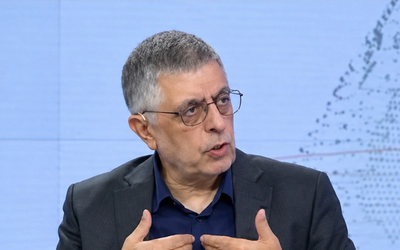
Raz Zimmt, director of the Iran and Shiite Axis Research Program at Israel’s Institute for National Security Studies, believes the statements reflect growing recognition in Tehran that the current situation is unsustainable.
But he says there is a potentially dangerous gap between recognizing that reality and deciding to compromise.
“If they have to make a choice between taking the risk for a new round of war with the United States or making concessions which they consider to be full capitulation to the United States... I think it’s very clear that they are not going to give up,” Zimmt told Iran International’s Eye for Iran podcast.
The dilemma comes as Washington prepares to intensify the pressure. US Treasury Secretary Scott Bessent has promised the “toughest sanctions in history,” alongside a naval blockade already squeezing Iranian trade.
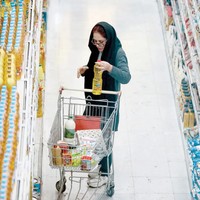
Iran entered the war with high inflation and a weakened currency. By July, annual inflation had reached 66 percent and food prices were 128 percent higher than a year earlier, according to official data.
‘Reasons to resist’
Zimmt says Iran’s ability to use Hormuz as leverage could also erode as the United States makes military gains in opening a corridor through the strait. But he sees no evidence yet of a consensus in Tehran for a change of course.
Iran’s calculation, he argues, is shaped by what happens after any agreement as much as by what happens now. Its leaders do not appear convinced that concessions would guarantee a permanent end to the war.
Instead, they may fear reopening Hormuz and surrendering leverage in exchange for a ceasefire that Washington could abandon after the US midterm elections in November.
Washington’s own messaging may be reinforcing that distrust.
Bessent said Thursday that the combination of the blockade and new sanctions could “collapse this regime,” even as he argued that successful economic pressure could reduce the likelihood of another large-scale military campaign.
From Tehran’s perspective, Zimmt argues, such statements can strengthen those who ask why Iran should make concessions to an administration that is simultaneously talking about its collapse.
The war itself may have given Tehran another reason to resist concessions.
“The conclusion in Iran is that the United States and Israel don’t have the capability to force Iran into major concessions,” Zimmt said.
‘Escalation before negotiations’
Hormuz provides Tehran with another source of leverage. After decades of threatening to close the strategic waterway, Iran has demonstrated its ability to severely disrupt it. Only seven commodity vessels passed through on Thursday, compared with more than 130 a day before the war, according to Kpler data.
Zimmt believes Iran’s leadership may therefore calculate that it can inflict enough economic pain on its Persian Gulf neighbors and the global economy to improve its position before negotiating.
He points to Iran’s behavior after Trump withdrew from the nuclear deal during his first presidency. Tehran initially responded to maximum pressure with what it called “strategic patience” but escalated as the economic damage mounted, including through attacks on Persian Gulf shipping and the downing of a US drone.
He sees the possibility of the same logic asserting itself again.
“If the Iranians reach the conclusion that they can’t resist or they can’t handle the growing economic pressure,” Zimmt said, “their decision would actually be to escalate things even further before returning to negotiations.”
The pressure may be working. The unanswered question is what Tehran chooses to do because of it.
You can watch Eye for Iran on YouTube or listen on any podcast platform.
Covers of five Persian editions of Haruki Murakami’s The Tale of KAHO.
Haruki Murakami’s latest novel has yet to receive an official English translation, but at least six Persian versions have already been published or are in preparation in Iran, with some translators relying on unofficial English texts and AI tools.
The Tale of KAHO was published in Japan on July 3. Within weeks, three Persian translations had reached the Iranian market and at least three more were on the way.
Iran is not a party to the Berne Convention on international copyright, allowing publishers to release competing translations of foreign books without securing exclusive Persian-language rights.
But the latest race to translate Murakami has added a new element to Iran’s already unruly publishing market: AI.
Some translators have worked from an unofficial English version of the novel whose provenance is unclear and which, according to Barseghian, showed signs of having been generated using AI.
That raises the prospect of Persian editions based not directly on Murakami’s Japanese original or an authorized translation, but on an AI-generated intermediary text of uncertain origin.
‘Transparency and responsibilty'
The published versions are by Ali Mojtahedzadeh for Vazn-e Donya, Araz Barseghian for Milkan and Yasmin Davoudi for Chitra. Sahar Bastam is preparing a translation for Didavar, Kazem Kamrava for Sandoghcheh and Amir Behrouz Ghasemi for Kheyzaran.
Mojtahedzadeh told Iranian economic newspaper Donyaye Eqtesad that he obtained an unofficial English translation from a website specializing in such material and completed his Persian version in less than two weeks.
Barseghian said he bought the official Japanese Kindle edition and used an unofficial English version that appeared to have been generated with AI, comparing the texts with AI tools and checking issues including meaning, pronouns, point of view and paragraphing.
“The main issue for me is not whether artificial intelligence is used, but transparency and the translator’s responsibility,” Barseghian told Donyaye Eqtesad.
He said AI served as a tool for comparison and comprehension rather than as the final translator, with questionable passages checked against the Japanese original.
‘It’s only the beginning’
The speed and methods behind the competing editions have drawn criticism on Persian-language social media, particularly over copyright and the use of unauthorized source material.
“The translator proudly says I downloaded the book file from an illegal website and translated it. He doesn’t even seem to think there is anything wrong or ugly about it,” an X user named Milad wrote.
Others argued that AI was accelerating a problem that long predates the technology.
“The main problem is that none of them sees any need to buy the translation and publication rights from the original publisher,” X user Tiro Whakatika wrote. “Otherwise, the rights would normally go to one publisher and we wouldn’t see six simultaneous translations of one book.”
“Artificial intelligence has now reduced the cost and time of translation and turned this unregulated market into a race to publish bestselling books immediately,” the user added. “This is only the beginning, and it will probably get much worse.”
Iran executed another detainee from the January protests after the Supreme Court upheld his death sentence, the judiciary announced on Sunday.
The judiciary accused Majid Adineh of taking “operational action” for Israel, the United States and hostile groups and cooperating with them against Iran’s security and national interests.
Adineh was put to death at dawn. A Revolutionary Court in Karaj had also ordered the confiscation of all his property.
He was arrested with another person on January 9 near Karaj by intelligence forces of the Revolutionary Guards' Alborz provincial branch.
Adineh’s case included charges of “enmity against God through deliberate arson, collusion against internal security, propaganda against the Islamic Republic and unauthorized possession of weapons.”
Iranian authorities have long used broadly worded charges such as espionage, acting against national security, armed rebellion, enmity against God and corruption on earth to crush dissent and remove political opponents. Human rights organizations say these labels are routinely applied to protesters, dissidents and political prisoners to portray them as security threats and provide a legal pretext for execution.
Executions accelerate
Adineh's execution came one week after Shahram Sadeghi, another January protest detainee.
An Iran International review shows about 60 political prisoners have been executed since the beginning of the Iranian calendar year in March, while dozens more have received death sentences on political charges.
UN High Commissioner for Human Rights Volker Türk said on August 5 that at least 56 political prisoners were executed since March 19, including 27 whose cases were connected to the January protests. More than 100 others faced execution, Türk added.
Türk called the lack of fair-trial guarantees "deeply troubling," citing reports of confessions obtained under torture and cases in which only weeks separated arrest from execution.
Amnesty International, Human Rights Watch and UN experts have documented repeated cases in which such convictions were issued by revolutionary courts after grossly unfair or highly expedited proceedings, with defendants denied meaningful access to lawyers and verdicts based on torture-tainted forced confessions. Rights groups therefore describe many executions carried out under these charges as arbitrary and politically motivated, warning that the authorities’ allegations should not be treated as independently established facts.
IRGC commander-in-chief Ahmad Vahidi praised Iran’s state broadcaster for its performance during the war with the US, throwing his weight behind an institution that has clashed with President Masoud Pezeshkian and drawn criticism from Parliament Speaker Mohammad Bagher Ghalibaf.
In a message to IRIB chief Peyman Jebelli, Vahidi described the broadcaster’s performance as a “valuable effort” and “effective role-playing,” saying it had made an important contribution to strengthening the Islamic Republic’s “media front” during the conflict.
Vahidi’s endorsement comes against the backdrop of a broader power struggle between Pezeshkian and senior Guards commanders. Iran International reported in April, citing sources close to the presidential office, that Pezeshkian had accused Vahidi and other senior IRGC commanders of acting unilaterally during the war, undermining ceasefire prospects and pushing Iran toward economic disaster.
Pezeshkian has also repeatedly criticized IRIB. In May, he said the broadcaster presented an unrealistic picture of conditions in the country and needed a serious overhaul.
The confrontation escalated in July when Pezeshkian’s office accused IRIB of censoring part of a televised interview in which the president said the late Supreme Leader Ali Khamenei had privately instructed officials to negotiate with the United States despite publicly ruling out talks. The broadcaster did not publicly explain why the remarks were omitted.
Ghalibaf has had his own clashes with the broadcaster. In July, parliament accused IRIB of censorship after it abruptly cut short a pre-recorded interview with the speaker as he discussed the release of Iranian assets abroad.
Parliament said roughly 20 minutes covering politically sensitive issues had not been aired, including possible IAEA inspections, frozen Iranian assets, the reported $300 billion reconstruction credit in the US-Iran memorandum of understanding and Ghalibaf’s response to President Donald Trump.
IRIB said the interview had been divided into two installments, but parliament said it had received no advance notice that parts would be withheld.
This week, Ghalibaf renewed his criticism, saying IRIB had failed to achieve the necessary results in “cognitive warfare” and referring to what he called the broadcaster’s “structural, approach and performance inefficiencies.”
Three young women hold up red-painted artwork representing the blood of innocent protestors, including handprints and Persian script, while one raises a victory sign.
The Islamic Republic may want the world to forget what happened in January, but the bodies of those who survived make that difficult.
Much of the attention since Iran’s bloody crackdown has rightly focused on those who were killed. Far less has been paid to those who lived.
They went into the streets hoping this time would be different. For many, it was, but not in the way they had hoped.
They survived being shot with metal pellets, beaten and, in some cases, slashed with machete-like weapons. Now doctors warn that some could spend the rest of their lives with permanent disabilities, chronic pain and dependent on opioids simply to manage it.
Raza is accustomed to catastrophic injuries. She works across multiple Level I trauma centers, treating adults and children with gunshot wounds, severe bleeding and injuries from vehicle crashes. But she says nothing in her medical career prepared her for the scale of what she has seen among those wounded in Iran.
“I have never seen this scale,” she said.
Working with Physicians for Human Rights, Raza has remotely assessed hundreds of injured Iranians, often through secure communications because patients fear seeking treatment inside the country. She says every patient she assessed spoke to medical teams from a home, a neighbor’s home or a relative’s home rather than a medical facility.
What she found was a pattern of injuries that could follow survivors for decades.
Hundreds of tiny metal pellets can remain embedded in a single person, lodged in skin, tendons and joints and near major nerves and blood vessels. Raza says more than 95 percent cannot safely be removed because surgery itself could damage arteries, nerves and other surrounding structures.
For some survivors, even ordinary movement may become a source of pain.
“Every time you bend your finger, you’re going to feel that pellet and it’s going to cause pain,” Raza said. “You’re going to have chronic inflammation. You’re going to need to be on steroids to manage the chronic inflammation. You’re going to need to be on opioids.”
The consequences, she warns, can include blindness, nerve damage, chronic inflammation, disfigurement and permanent disability, with some survivors unable to work or even walk.
“These will cause chronic disability, chronic nerve issues, chronic pain to the point of disfigurement, to the point of people being unable to work, walk,” Raza said.
Among the patients she described was a six-year-old boy.
Metal pellets struck his face during the protests and remain embedded in his skull, face and near his eye socket. Because of the concentration of nerves and blood vessels in the area, Raza says they cannot safely be removed.
“He’s going to live his whole life with pellets embedded in his skull, in his face, near his orbit,” she said.
He was six years old when he was wounded. The crackdown could remain physically inside his body for the rest of his life.
For Raza, his injuries represented something even more disturbing.
“This is their way of inflicting lifelong torture,” she said. “This is making someone’s body a prison.”
She described another patient, a 16-year-old construction worker whose mother had died and whose father, in his 70s, has cancer. The teenager was the family’s sole breadwinner.
In addition to pellet wounds, Raza said he suffered a deep laceration across his hand after people entered the crowds striking protesters with what she described as “machete-like objects.” The wound cut down to his tendons.
But his greatest concern was not his own pain.
“How am I going to feed my family?” Raza recalled him asking.
He wanted to know whether he could return to work so he could continue supporting his father and buying his chemotherapy medication.
“What can I do so I can go back to work? I need to feed my father. I need to buy him medicine, chemotherapy medicine,” Raza recalled him saying.
For Raza, his case shows how permanent injury to one protester can ripple through an entire family.
“This is the multi-generational physical, psychological trauma that they have inflicted,” she said.
Raza also believes the location and pattern of the pellet injuries are significant. She says she repeatedly saw pellets concentrated around areas rich in nerves and blood vessels, including the eyes, neck, torso and genitalia.
“This is not crowd control,” she said. “This is an intentional use of this weapon to inflict maximum pain, not only in the moment, but for years on.”
She makes an even more explicit assessment of the injuries she documented.
“This pattern is not coincidental,” Raza said. “It is intentionally inflicted to cause maximum amount of pain, injury throughout your life.”
There is another consequence.
The pellets that injure protesters may also identify them.
Because the fragments are metal and often cannot be removed, Raza says they can remain visible on X-rays and potentially detectable years later. Patients told her they feared their injuries could effectively mark them as people who had participated in the protests.
“Their wounds, their injuries have now become identifying markers for attack and targeted persecution later,” she said.
For survivors, then, the injury can become both punishment and evidence: a source of chronic pain that may never leave their bodies, and a physical record of what happened to them.
The dead can be counted.
The lifetime carried by those who survived is much harder to measure.