Iran risks its most valuable Arab partner over Hormuz

Iran's attack on facilities supporting US naval operations in Oman has plunged relations with one of Tehran's closest regional partners into their deepest crisis in decades, turning a dispute over shipping through the Strait of Hormuz into a direct military confrontation.
Relations deteriorated sharply after Iran's Revolutionary Guards (IRGC) said they had launched a "heavy and surprise attack" on logistical support facilities and aircraft carrier refueling infrastructure at the Omani port of Duqm on Sunday.
Oman condemned what it described as "irresponsible acts" and summoned Iran's ambassador in protest, marking a dramatic deterioration in relations between the two countries.
The military escalation appears to have followed the collapse of negotiations over a proposed framework for managing maritime traffic through the Strait of Hormuz.
Read the full article hrere.




Iran's attack on facilities supporting US naval operations in Oman has plunged relations with one of Tehran's closest regional partners into their deepest crisis in decades, turning a dispute over shipping through the Strait of Hormuz into a direct military confrontation.
Relations deteriorated sharply after Iran's Revolutionary Guards (IRGC) said they had launched a "heavy and surprise attack" on logistical support facilities and aircraft carrier refueling infrastructure at the Omani port of Duqm on Sunday.
Oman condemned what it described as "irresponsible acts" and summoned Iran's ambassador in protest, marking a dramatic deterioration in relations between the two countries.
The military escalation appears to have followed the collapse of negotiations over a proposed framework for managing maritime traffic through the Strait of Hormuz.
According to a CNN report, Oman proposed maintaining the existing system for vessels using the southern shipping lane through Omani territorial waters. Ships entering Iranian territorial waters, however, would require Tehran's approval, though they would not pay transit fees.
The proposal appears to have fallen short of Tehran's broader ambition to assert greater authority over traffic through the strategic waterway, including a reported plan to charge ships for "management services."
Iranian officials confirmed that such discussions had taken place.
Foreign Minister Abbas Araghchi said he had discussed “management of the Strait of Hormuz and maritime traffic" with Omani counterpart Badr Albusaidi. Foreign Ministry spokesman Esmail Baghaei later confirmed the talks had failed, blaming US pressure on Oman.
"Our effort was to reach, through consultations with Oman, a mechanism that would ensure the safe passage of ships through the Strait of Hormuz. Unfortunately, because of overt and covert US pressure on Oman, this was not achieved," he said.
Tehran hardens its position
The collapse of negotiations was followed by increasingly confrontational rhetoric from Iranian military officials and hardline politicians.
On Tuesday, the spokesman for Iran's Khatam al-Anbiya Central Headquarters warned that Iran's armed forces would respond forcefully to "any disruption or insecurity affecting commercial vessels and oil tankers by the US military outside the routes designated by Iran and without authorization from the armed forces."
He also warned regional states that "any cooperation with the United States and logistical support for its military will be regarded as a war against Iran's sovereignty and national security," adding that any wider conflict would engulf the region.
Ali Khezriyan, a member of parliament's National Security Committee, declared that Iran would pursue control of the Strait of Hormuz "with or without Oman." He warned that if Muscat failed to cooperate or secretly assisted Iran's adversaries, "its territory will not be safe from Iranian missiles."
Other lawmakers echoed the message. Ebrahim Rezaei said Oman should recognize Iran as the region's dominant power, while Mahmoud Nabavian argued that the IRGC should impose "exclusive management" of the strait, rejecting any arrangement requiring Iran to share authority with Oman.
Beyond Hormuz
Analysts suggested the confrontation extends well beyond the immediate military exchange.
Middle East analyst Ahmad Taqaddosi noted that Duqm sits on the Arabian Sea, outside the Strait of Hormuz, allowing US naval vessels to dock, refuel and undergo maintenance without entering the Gulf. Under a 2019 agreement, the United States has access to both Duqm and Salalah.
"From this perspective, Iran's claimed attack targeted not merely a port but part of the US Navy's operational rear base in the northern Indian Ocean," he wrote.
Energy analyst Abdollah Babakhani argued that the dispute ultimately reflects Tehran's fear of losing strategic leverage.
"Any mechanism that creates a permanent and independent route through Omani waters for the bulk of global energy trade could, over the long term, reduce Iran's geopolitical weight in Hormuz," he wrote, arguing that restoring the traditional shared shipping corridor would better preserve Iran's strategic position.
Debate inside Iran
Hardliners argued that allowing unrestricted passage through Omani waters while requiring authorization only for ships entering Iranian waters would surrender Tehran's leverage, insisting that management of the Strait of Hormuz must remain exclusively in Iranian hands.
Critics countered that Oman has long served as one of Tehran's most important diplomatic intermediaries.
One moderate commentator wrote: "The Strait of Hormuz is not our exclusive property. Oman's territorial waters are part of it, and Oman's wishes must also be respected. Claiming absolute control is adventurism and folly."
Others warned that another regional war could leave Tehran simultaneously alienating its own population, undermining relations with mediators such as Oman and Pakistan, and weakening its strategic position in the strait.
The confrontation leaves Tehran facing a strategic paradox. Its effort to convert military leverage in Hormuz into political control over regional shipping has pushed it into conflict with one of its closest Gulf partners while encouraging alternatives to the very influence it is trying to preserve.
Supreme Leader Mojtaba Khamenei’s renewed call for revenge over his father’s killing has emboldened hardliners demanding concrete action, while raising questions over how such threats can be reconciled with Tehran’s stated openness to diplomacy.
In a message issued after the burial of former supreme leader, Mojtaba Khamenei described retaliation for his father’s death in a February 28 airstrike as “a national demand”, adding that it “will most certainly be carried out.”
Judiciary chief Gholamhossein Mohseni-Ejei, recently reappointed by Khamenei for another five-year term, immediately welcomed the declaration that revenge for his slain father was inevitable.
“We will pursue and punish the murderers of the martyred Imam,” he wrote on X.
Read the full article here.
Supreme Leader Mojtaba Khamenei’s renewed call for revenge over his father’s killing has emboldened hardliners demanding concrete action, while raising questions over how such threats can be reconciled with Tehran’s stated openness to diplomacy.
In a message issued after the burial of former supreme leader, Mojtaba Khamenei described retaliation for his father’s death in a February 28 airstrike as “a national demand”, adding that it “will most certainly be carried out.”
Judiciary chief Gholamhossein Mohseni-Ejei, recently reappointed by Khamenei for another five-year term, immediately welcomed the declaration that revenge for his slain father was inevitable.
“We will pursue and punish the murderers of the martyred Imam,” he wrote on X.
Former IRGC commander Mohsen Rezaei, now a military adviser to the supreme leader, said US president Donal Trump and Israeli Prime Minister Benjamin Netanyahu had crossed the Islamic Republic’s “red lines” and “must be met with decisive and proportionate punishment.”
“Revenge is part of the path of the Revolution,” he added.
The declaration revived a contradiction at the heart of Iranian policy: whether Tehran can negotiate with Washington while presenting revenge against its president as a national or religious obligation.
Hours before Khamenei’s message, Trump said 1,000 US missiles were “locked and loaded” and aimed at Iran, with thousands more ready to follow if the Iranian government acted on threats to kill him.
The message also intensified pressure on officials viewed as favouring engagement with Washington.
Some hardline commentators portrayed it as drawing a clear line between the supreme leader and supporters of negotiations, while others complained that senior officials and institutions had been slow to endorse it publicly.
President Masoud Pezeshkian had earlier affirmed Iran’s right to avenge what he called the “historic crime,” while Parliament Speaker and chief negotiator Mohammad-Bagher Ghalibaf said those responsible would face justice.
Neither had publicly commented on Khamenei’s latest message at the time of writing.
Former nuclear negotiator Saeed Jalili said avenging Khamenei would be “a defence of every nation’s sovereignty” and “the greatest service to international law.”
Hardline political activist Ahmad Ghadiri argued that advocating Trump’s assassination fundamentally contradicts negotiations with Washington.
Amir Chizari, a political activist close to Ghalibaf, disagreed. He maintained that the obligation to seek revenge, which he said Khamenei had imposed on all Muslims, “does not contradict the negotiations that have taken place so far.”
Reformist journalist Ahmad Zeidabadi questioned the logic of pursuing both tracks simultaneously.
“Those who say Iran should negotiate and reach an agreement with the United States while at the same time planning to cut off Trump’s head, or demanding his extradition to Iran to be killed, what framework of political or practical logic are they following?” he wrote.
Some hardline figures called for the rhetoric to be translated into action.
Political analyst Ehsan Salehi told Hamshahri’s online television channel that security agencies should establish dedicated units to carry out revenge operations.
“The word ‘revenge’ is neither ambiguous nor open to interpretation,” he said. “It has a clear meaning: punishing and eliminating the killers. It cannot be diluted into harmless slogans or symbolic projects.”
Salehi argued that a stronger response to the US killing of Qasem Soleimani in 2020 might have deterred subsequent attacks.
Cleric Mohammad Fayyazi said Khamenei’s declaration had effectively made revenge official policy and urged the government to endorse it formally, without what he called “pointless diplomatic considerations.”
The debate exposed broader disagreements over Iran’s priorities.
The news website Rouydad24 argued that while parts of the political and military establishment consider revenge the country’s foremost objective, others see the deteriorating economy and declining public trust as the more immediate threats.
It warned that becoming trapped in “a vicious cycle of emotional decisions” could bring tougher sanctions, greater economic hardship and deeper domestic discontent.
One reformist-leaning user argued that revenge also required the capacity to carry it out.
“A country that could not guarantee the security of its late leader, and cannot fully guarantee the security of its current leader, should first restore its own strength before thinking about revenge,” the user wrote. “Otherwise, the result will be no different from before.”
Religious scholar Saeed Sadoughi raised a more fundamental question.
“Suppose Trump and Netanyahu are gone and revenge is achieved. Will the country’s problems be solved?” he wrote. “Will issues such as high-level uranium enrichment and the Strait of Hormuz simply disappear? Will the country suddenly move towards development and prosperity?”
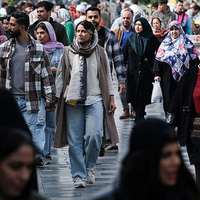
Years of high inflation have pushed millions of Iranian households into a struggle over basic expenses, with new estimates showing wages barely cover food costs before rent, healthcare and other necessities are even considered.
While the government continues to provide monthly cash subsidies and electronic food vouchers to a large share of the population, many families say these measures no longer come close to covering rapidly rising living costs.
An analysis by economic news website EcoIran comparing official food prices, a minimum nutritional basket and the minimum wage found that the salary of a married worker with one child is now enough to cover little more than the minimum monthly food needs of a three-person household.
The analysis estimated that an individual needed around 78 million rials in June to meet minimum nutritional requirements.
For households relying solely on the minimum wage, it found that almost all monthly income would be consumed by food purchases alone, leaving little for rent, utility bills, transportation, healthcare, education or clothing.
Unrelenting inflation
The squeeze comes as many Iranian families already spend between 50% and 70% of their income on housing costs.
Food prices have continued to climb sharply, with staples including red meat, poultry, dairy products, rice, eggs, cooking oil, fruit and vegetables increasingly out of reach for many households.
According to data cited from the Statistical Center of Iran, annual inflation currently stands at about 66%, while year-on-year inflation has jumped by roughly five percentage points over the past month to exceed 88%.
Food and beverage inflation has climbed above 130%, with some categories recording even sharper increases. Prices of red meat and poultry have risen by nearly 180% compared with a year earlier, according to Iranian market reports, causing demand to fall significantly.
Many Iranians say their personal experience of inflation is significantly worse than official figures suggest.
Economists note that inflation indexes measure a broad basket of goods and services, while lower- and middle-income families spend a much larger share of their income on essentials such as food, rent, transportation and medical care.
Dwindling middle class
Economist Kamran Nadri told Tejarat News that years of sustained inflation have inflicted lasting damage on household finances.
“Economic pressure on low-income groups and the middle class may be tolerable for a short period, but when it persists for years, it leaves broad social and economic consequences,” he said.
“Since 2018, following the United States' withdrawal from the nuclear agreement, Iran has experienced average annual inflation of around 40 to 45 percent,” Nadri said. “During that period, wages did not increase in line with inflation under successive governments, and the purchasing power of the middle class has declined markedly.”
Economists caution that even if Iran reaches an agreement with the United States and the risk of military conflict subsides, inflation is unlikely to fall quickly.
Political economy researcher Kamal Athari told ILNA that even under the most optimistic scenario—including sanctions relief and removal of obstacles such as Iran’s inclusion on the Financial Action Task Force (FATF)—it would still take years for Iran to restore normal commercial relations with the global economy.
“Under such circumstances, inflation could eventually decline, but the process would not be rapid,” he said.
‘It’s all on Pezeshkian’
Growing concern over living standards has prompted renewed calls for additional government support.
Mohsen Bagheri, a board member of the Tehran Islamic Labour Councils' Coordination Council, told Khabar Online that wages, which were set in early April, should be revised upward in the coming months.
He also argued that the value of electronic food vouchers should increase, saying they have remained unchanged despite rising prices and earlier government promises.
The economic pressure has also become part of the wider battle over Iran’s political direction after the war.
Hardline critics who continue to advocate confrontation with the United States and Israel have blamed President Masoud Pezeshkian’s administration for the deteriorating situation.
“Pezeshkian destroyed the country,” one hardline user wrote on X. “He created limitless inflation. He allowed us to be deceived by the enemy three times. Zero achievements, countless losses.”
Others have pushed back, arguing that continued calls for confrontation ignore the country’s worsening economic reality.
“Families are literally being destroyed, education, healthcare, housing, inflation, employment, and every economic indicator point to a bleak future,” one user wrote. “Yet some profiteers have forgotten the suffering of the people and keep calling for more war.”
As Iran navigates renewed confrontation with the United States and uncertainty over a fragile diplomatic process, a deeper crisis is returning to the center of public debate: how much longer ordinary Iranians can absorb the economic cost.
Outlets from different political camps are warning of mounting pressure from inflation, falling purchasing power, unemployment and infrastructure failures, even as they sharply disagree over who is responsible.
Independent and reformist-leaning publications such as Sharq, Etemad and Tose’e Irani have focused on the rising cost of basic goods, reporting that food prices have surged far beyond wage growth.
They point to basic commodities such as bread, poultry and vegetable oil rising between 130% and more than 200%, while wages cover only a fraction of estimated household costs.
Even outlets close to the government, including ILNA and Etemad, have highlighted the growing gap between income and survival, noting that the minimum wage of around 16.6 million tomans covers less than 40% of the estimated 45-million-toman basic subsistence basket for an average family.
Beyond inflation and market instability, Iranian media have also focused on a worsening infrastructure crisis.
Severe rolling summer blackouts have returned, disrupting factories, increasing pressure on businesses and making daily life harder during peak heat.
The search for blame mirrors Tehran’s broader political divisions.
Moderate and reformist outlets such as Sharq, Etemad and Arman Melli emphasize structural failures, isolation and the economic toll of years of confrontation.
They argue that sanctions, conflict, damaged infrastructure and policy failures have intensified pressure on the economy.
Some commentators have warned of an “inflation bomb” and questioned whether decision-makers understand the “accumulation of public dissatisfaction.”
Earlier this week, Jahan Sanat published industrial analyst Alireza Mahdiyeh’s commentary under the headline “The sound of an inflation bomb,” citing Central Bank figures that he said showed the economy facing one of its worst periods in decades.
“Inflation has now reached even the price of bread,” he wrote. “Bread is still available, but more expensive than before. Yet inflation in bread does not give the baker more bread. It only means that what reaches people’s tables is smaller and less than before.”
Moderate outlets have also pointed to domestic policy decisions, including severe internet restrictions and blackouts, arguing they have damaged the digital economy and created widespread “hidden unemployment.”
Hardline dailies Kayhan and Resalat offered a different diagnosis, placing responsibility on the United States and Israel.
They argue that Washington’s declaration that the June interim agreement is “dead,” combined with renewed military pressure, proves that Western economic warfare is driving instability.
These outlets have also accused “economic saboteurs,” domestic speculators and merchants of manipulating currency markets and hoarding essential goods.
The proposed solutions reveal two competing visions for Iran’s future.
Hardliners have called for a “resistance economy,” including tighter controls on markets, action against price gouging and expanded rationing networks.
Moderate economists and commentators writing for outlets such as Donya-ye-Eghtesad argue that internal crackdowns cannot solve deeper structural problems.
They say economic stability depends on reducing tensions, restoring international trade, easing restrictions on businesses and creating conditions for investment and reconstruction.
But optimism remains limited as the damaged diplomatic process between Tehran and Washington offers little immediate relief.
As economist Mehdi Pazouki told reform-leaning Fararu, further escalation could push the country into even more dangerous territory.
“If Israel’s warmongering policies and the hardline approaches of certain actors inside Iran intensify, there is a serious possibility that we will move toward hyperinflation and the dollarization of the economy,” he said.