Sirens sound in Jordan – state TV
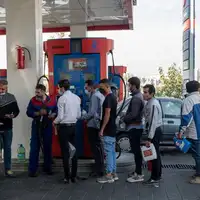
Sirens sounded in Jordan on Thursday, state TV reported, amid a widening confrontation between Iran and the United States.





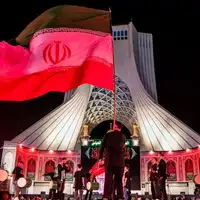
The Islamic Republic sought to turn Ali Khamenei’s funeral ceremonies in Iraq into a regional show of loyalty, using processions in Najaf and Karbala to suggest that his authority reached beyond Iran even as Tehran’s allied network faces growing pressure.
After funeral processions in Tehran and Qom, the coffins of Khamenei and several members of his family, who were killed in the February 28 US-Israeli attack, were taken on Tuesday to Najaf, home to the shrine of Imam Ali, one of the holiest sites in Shiite Islam.
They were transferred on Wednesday to Karbala, home to the shrine of Imam Hussein. Both cities carry deep religious symbolism for Shiites, especially in narratives of martyrdom, sacrifice and political defiance.
Political analyst Iman Aghayari told Iran International that the Islamic Republic was using the ceremonies to present Khamenei’s influence as extending beyond Iran’s borders.
He said Tehran also wanted to signal to Western governments that its influence in countries hosting allied armed groups “is not confined to those proxy forces, but is rooted among the people of those countries as well.”
A funeral staged across Shiite centers
A number of current and former Iraqi officials, including Prime Minister Ali al-Zaidi, along with Shiite and Sunni political, military and religious figures, welcomed the funeral delegation at Najaf airport.
The delegation was led by Khamenei’s eldest son, Mostafa Khamenei, and accompanied by President Masoud Pezeshkian, who cut short his visit and returned to Tehran early Wednesday following renewed US military strikes.
The Iraqi government declared Wednesday a public holiday to facilitate attendance and organized transportation for mourners traveling to Najaf and Karbala.
Iranian state media, citing Iraqi officials and the Popular Mobilization Forces, said more than two million people attended the ceremony in Najaf, while participation in Karbala was reported to be more than double that number.
The figures could not be independently verified.
A claimed display of strength
Supporters of the Islamic Republic portrayed the ceremonies as proof of regional solidarity behind the so-called Axis of Resistance, Tehran’s network of allied governments, militias and political movements across the Middle East.
Esmail Qaani, commander of the IRGC’s Quds Force, said the funeral procession in Iraq would “make the red line of vengeance more prominent” and “further strengthen the united resolve of the Iraqi and Iranian peoples against American conspiracies.”
Defa Press, a news agency affiliated with Iran’s armed forces, described the ceremonies as “a transnational display of the Axis of Resistance’s power and confidence,” saying they showed political unity between Iran and Iraq.
Writing for the IRGC-affiliated Fars News Agency, political commentator Aghil Emami argued that the funeral proved the two nations’ loyalty to “shared ideals and the transnational leadership of the Islamic Revolution.”
Religious symbolism and political messaging
Holding funeral ceremonies in Iraq – home to one of the world’s largest Shiite populations after Iran – carried both religious and political value for the Islamic Republic.
Iranian state media and some Iraqi Shiite politicians and outlets framed the processions through the language of Imam Hussein’s martyrdom, presenting Shiites as a unified political community confronting what they called “American arrogance” across the region.
For Tehran, the symbolism was especially important after Khamenei’s death and amid uncertainty over the future of its regional network.
The ceremonies allowed Iranian officials and supporters to link Khamenei’s legacy to the shrines of Najaf and Karbala, while also trying to reinforce the religious legitimacy of the Islamic Republic and of his successor.
The hardline X account Rah-e Deylami argued that Iraq, once Iran’s wartime enemy in the 1980s, had become “one of the pillars of the Axis of Resistance thanks to the blood of the martyred leader” and his policies.
It also pointed to mourners carrying photographs of Mojtaba Khamenei, saying the funeral had become “a ceremony of allegiance to his worthy successor” and that “Khamenei’s Iraqi followers have come to declare that they will continue this path.”
Such claims are difficult to measure against actual public sentiment in Iraq, where attitudes toward Iran and Iran-backed groups have long been mixed and politically contested.
A Finnish supermarket group has found itself unexpectedly drawn into Ali Khamenei’s funeral ceremonies after footage from Iraq appeared to show his coffin being unloaded from a refrigerated truck carrying K-Group branding.
The scene, filmed in Karbala and circulated by Reuters, showed a large crowd surrounding a refrigerated truck marked with orange-and-white logos resembling those of Finland’s K Group, part of the retail giant Kesko. Men in dark clothing then pulled a coffin from the frosted rear compartment and carried it above the crowd.
The footage was filmed during the Iraqi leg of Khamenei’s funeral processions, which moved through Najaf and Karbala before his planned burial in Mashhad on July 9.
The image quickly drew attention in Finland, where Finnish tabloid Ilta-Sanomat described the sight as “incredible” and said Finns may have had to “rub their eyes” when they saw what looked like familiar K-Market-style branding in the middle of Khamenei’s funeral. Helsingin Sanomat, Finland’s largest daily newspaper, also reported the story.
Yle, Finland’s public broadcaster, ran the story under the headline: “Was Khamenei’s coffin pulled from a K-Group vehicle in Iraq?” It said the Reuters video showed a cold transport truck with orange coloring and repeated K letters that appeared to resemble K Group logos.
Kesko told Yle it had no information about the vehicle and had only become aware of the case through the images.
The company said its deliveries are handled by partner-owned vehicles and that Kesko does not have its own fleet. It suggested one possibility was that a transport partner had sold a vehicle onward without removing K-Group markings.
“This may be a situation where one of our transport partners failed to remove decals referring to us when selling equipment onward,” Kesko told Yle by email.
The company said it would remind transport operators that such decals must be removed before vehicles are sold.
There is no indication that Kesko or K-Market had any involvement in Khamenei’s funeral procession or that the company owned or operated the truck.
The strange visual detail stood out because of the contrast: one of the Islamic Republic’s most symbolic funeral ceremonies, a coffin kept cold after months of delayed burial, and what appeared to be the branding of a Finnish grocery chain on the vehicle carrying it through Karbala.
Iran summoned the British ambassador in Tehran on Thursday, two days after Britain called in Iran's most senior diplomat in London following the conviction of two Romanian men over the stabbing of an Iran International journalist.
Iran's foreign ministry said it handed the ambassador a protest note rejecting what it called "groundless and false" British statements that Tehran had sought to carry out security-related activities in the United Kingdom.
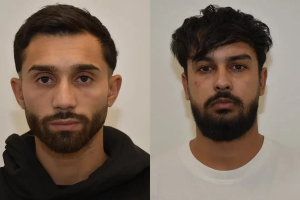
Britain summoned Iran's chargé d'affaires on Tuesday after George Stana and Nandito Badea were sentenced to 12 years and eight years in prison, respectively, for their role in the 2024 attack on Pouria Zeraati, an Iranian-British journalist who works for Iran International.
Zeraati was stabbed three times in the leg near his home in southwest London in March 2024.
British prosecutors said the two Romanian nationals were acting as proxies for the Iranian government. They had pleaded not guilty to wounding with intent but were convicted at London's Woolwich Crown Court.
Judge links attack to Iranian state
The British Foreign Office said the judge had concluded that the attack was carried out "in the interests of, and on behalf of, the Iranian state."
According to a police statement, the judge ruled that the "foreign power condition" under Britain's National Security Act was met in Stana's case because of "extensive planning and his lengthy involvement in the plot", indicating that he knew, or at least should have known, of the connection to the Iranian state.
The police statement said the condition was not met in Badea's case because he was not aware of the Iran connection as the reason for the attack.
Tehran rejects British move
Iran's foreign ministry rejected Britain's statements as "groundless and false" and said they amounted to an attempt to divert attention from Britain's own conduct.
Britain's Foreign Office said the case followed "a longstanding pattern of hostile activity by the Iranian intelligence services on UK soil" and said Iran must stop such activity immediately. Iran's embassy in London has rejected what it called "unfounded, politically motivated and hostile allegations."
Iran's foreign ministry also called on Britain to stop hosting media outlets that Tehran said were "funded and directed by the Israeli regime." It said Britain should end such activity "as soon as possible."
Hamas says it is stepping away from governing Gaza. But is it actually giving up power or turning away from its longtime backers in Tehran?
The group’s announcement that it is dissolving the governing body that administered Gaza for nearly two decades has been presented as a significant political concession under a US-backed roadmap for the enclave’s future.
But analysts who spoke to Iran International say the move is largely cosmetic, leaving Hamas’s military structure intact and doing little to alter its long-standing relationship with Iran.
Rather than abandoning Hamas, Iran has simply shifted its priorities, they argue, placing Hezbollah and Lebanon ahead of Gaza while quietly maintaining ties with the group.
"It's not even symbolic, it's a lie," said Beni Sabti, an Iran researcher at the Institute for National Security Studies (INSS). "The real thing is not even the disarmament. The ideology is still there."
The announcement dissolves Hamas’s civilian governing body, but leaves unanswered whether the group is willing to surrender its weapons and relinquish control over Gaza’s security apparatus.
For Sabti, that omission is the entire story.
"Iran is acting behind the curtains, also for Hamas," he said.
Recent developments suggest the relationship remains active despite Tehran’s muted public rhetoric.
Before the Iran-US memorandum was signed, a Hamas military spokesman said Iranian officials had pledged to help secure a ceasefire in Gaza.
Hamas representatives also traveled to Tehran for Ali Khamenei’s funeral, where they met senior Iranian officials, including Parliament Speaker Mohammad Bagher Ghalibaf.
To Sabti, those contacts suggest Tehran has not changed its long-term strategy. Instead, it has temporarily reordered its priorities.
"Hezbollah is the most important," he said, arguing Iran has historically never abandoned its proxy groups.
The timing of Hamas’s announcement also reflects mounting pressure on the group.
It comes amid a US-backed political process for Gaza’s future, sustained pressure from Egypt and Qatar, renewed political competition from Palestinian Authority President Mahmoud Abbas and growing anti-Hamas protests inside Gaza itself.
Dalia Ziada, a Middle East analyst with ISGAP, argues Hamas’s announcement was designed to respond to those pressures without making the one concession demanded by Israel and much of the international community.
"They were forced to say something, not to do something," she said.
According to Ziada, Hamas has not agreed to disarm, dismantle its military wing or remove the network of loyalists embedded throughout Gaza’s civilian institutions.
"The international community is dealing with Hamas as a political entity," she said. "But no. This is a terrorist militia."
Ziada believes Tehran’s current restraint reflects pragmatism rather than a strategic break.
"Hamas is not profitable anymore," she said, arguing the group has become more of a liability than an asset following Israel’s campaign against its leadership. "If Hamas survives this situation... of course Iran will snap back."
Former Israeli intelligence official Avi Melamed agrees Hamas’s announcement should not be mistaken for a genuine transfer of power.
"I don't think that anyone really takes it seriously," he said.
Melamed argues Iran views Hamas primarily as a strategic instrument rather than an ideological partner.
"The relationship has been always clear. Hamas is a useful servant for the Iranian regime."
For Tehran, he says, Hezbollah remains the crown jewel of its regional network, while Hamas occupies a lower place in what he describes as the "food chain."
"Hamas and Islamic Jihad know their place in the food chain," Melamed said.
That hierarchy helps explain why Lebanon featured prominently in the Iran-US memorandum while Gaza did not.
The announcement may ease diplomatic pressure and create space for negotiations over Gaza’s future. But without disarmament, analysts argue, it changes little about the balance of power on the ground.
Hamas may be stepping away from civilian administration. Its military structure remains intact. And despite Tehran’s public silence, few expect Iran’s relationship with Hamas to disappear.
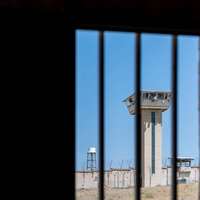
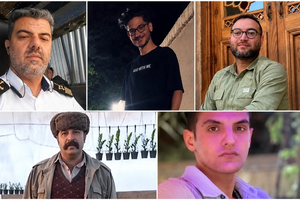
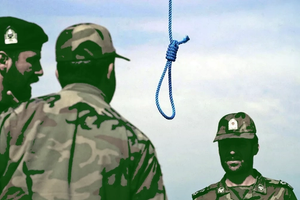
Twelve protesters in Isfahan face imminent execution after Iran’s Supreme Court upheld death sentences in a case built around the alleged killing of four Basij members, a lawyer familiar with the case told Iran International.
The case stems from protests on January 8 at Alikhani Square in Isfahan, where authorities said four Basij members were killed.
According to the lawyer, 59 people were initially arrested after the incident.
The lawyer said 23 of those detained were sentenced to between five and 10 years in prison, even though they were not accused of directly taking part in the deaths and appeared to have been added to the case to strengthen the prosecution’s broader narrative.
Twelve others were sentenced to death.
The lawyer said the Supreme Court upheld the death sentences on July 5 and the case has now been sent to the sentence enforcement branch of the Isfahan Revolutionary Court, raising fears that the executions could be carried out soon.
The prosecutor in the case is Mohammad Nakhjavan, according to the information received. The judges are Mohammad Barati-Dorcheh and Mohammad Tavakoli, also known as Vakili.
Tavakoli previously served as a judge in the “Khaneh Isfahan” (Isfahan House) case, another protest-linked case in Isfahan that ended with the execution of Saleh Mirhashemi, Majid Kazemi and Saeed Yaghoubi in May 2023.
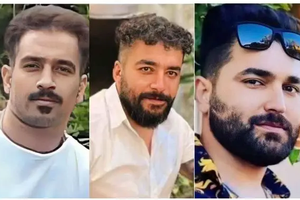
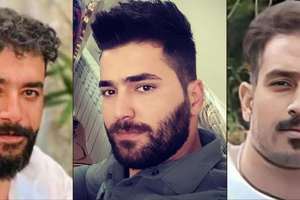
The lawyer said the defendants in the Alikhani Square case were denied access to independent lawyers during the trial stage and were represented by court-appointed attorneys.
The lawyer also said the court blocked defense lawyers from accessing the full case files.
The 12 protesters sentenced to death are mostly very young men. Three were born in 2007 and were around 17 or 18 at the time of the January 2026 protests. Several others were born between 2004 and 2006, and one is an Afghan national. Two brothers are among those facing execution.
The judiciary has not publicly responded to the allegations about denial of access to independent counsel and case files.
The case fits a pattern seen in several protest-linked capital cases in Iran, where the reported deaths of security personnel or pro-government forces have been followed by broad arrests, charges carrying the death penalty and claims by families, lawyers and rights groups that defendants were denied fair trial guarantees.
Rights groups have warned that Iran’s use of death sentences in protest cases has become a tool of intimidation, particularly after periods of unrest, with executions used to send a message far beyond the individual defendants.
Amnesty International said in February that at least 30 people were facing the death penalty over alleged offences linked to the January 2026 protests, including eight people sentenced to death after expedited and “grossly unfair” trials.
The Center for Human Rights in Iran said in April that at least 22 political prisoners had been executed in six weeks, including 10 people detained during the January protests, in cases it said were marked by secretive proceedings, torture, forced confessions and lack of due process.
Human Rights Watch said the January unrest was met with mass killings, arbitrary arrests and severe communications restrictions, with thousands of protesters and bystanders believed to have been killed after protests escalated on January 8.
The new Isfahan case raises the number of protest-linked prisoners facing imminent execution and adds to fears that Iran’s judiciary is accelerating capital punishment in cases tied to the January uprising.