• العربية
  • فارسی
Brand
  • Iran Insight
  • Politics
  • Economy
  • Analysis
  • Special Report
  • Opinion
  • Podcast
  • Iran Insight
  • Politics
  • Economy
  • Analysis
  • Special Report
  • Opinion
  • Podcast
  • Theme
  • Language
    • العربية
    • فارسی
  • Iran Insight
  • Politics
  • Economy
  • Analysis
  • Special Report
  • Opinion
  • Podcast
All rights reserved for Volant Media UK Limited
volant media logo

OPEC+ to raise oil output for fifth time since Iran war began

Jul 5, 2026, 17:08 GMT+1

Seven OPEC+ countries agreed on Sunday to raise oil production by 188,000 barrels per day in August, the group said, marking the fifth consecutive increase since Israel and the United States began attacks on Iran on February 28.

Saudi Arabia, Russia, Iraq, Kuwait, Kazakhstan, Algeria and Oman decided on the increase during a virtual meeting to review global oil market conditions and the outlook, OPEC said in a statement.

The group did not mention the US-Iran conflict or disruptions in the Strait of Hormuz, where traffic remains below prewar levels, but said it would continue to monitor market conditions and retain flexibility to increase, pause or reverse the phase-out of voluntary production cuts.

Most Viewed

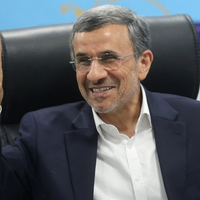
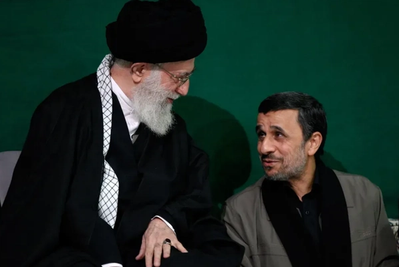
Mossad recruited Ahmadinejad for Iran regime-change plot - report
1

Mossad recruited Ahmadinejad for Iran regime-change plot - report

2

Trump reinstates Iran naval blockade, notifies Congress of renewed fighting

3
ANALYSIS

Why so few Iranians have jobs despite low unemployment

4

UK says support for Iran's IRGC outlawed under new state threats law

5
INSIGHT

Iran risks its most valuable Arab partner over Hormuz

Banner
Banner
Banner

Spotlight

  • Iran parliament drops two hardline critics of US talks from security panel posts

    Iran parliament drops two hardline critics of US talks from security panel posts

  • Did Mossad recruit Iran’s Holocaust-denying president?
    ANALYSIS

    Did Mossad recruit Iran’s Holocaust-denying president?

  • Iran risks its most valuable Arab partner over Hormuz
    INSIGHT

    Iran risks its most valuable Arab partner over Hormuz

  • Why so few Iranians have jobs despite low unemployment
    ANALYSIS

    Why so few Iranians have jobs despite low unemployment

  • January protesters trapped in 'hell' of Greater Tehran prison, inmates say
    EXCLUSIVE

    January protesters trapped in 'hell' of Greater Tehran prison, inmates say

  • Iran faces region’s harshest mix of wartime contraction and inflation

    Iran faces region’s harshest mix of wartime contraction and inflation

•
•
•

More Stories

Mojtaba Khamenei reappoints Ejei as judiciary chief

Jul 5, 2026, 16:50 GMT+1

Iran’s Supreme Leader Mojtaba Khamenei reappointed Gholamhossein Mohseni Ejei as head of the judiciary, state media reported.

“With appreciation for your valuable and sincere efforts, and pursuant to Article 157 of the Constitution, I appoint you as head of the judiciary,” Khamenei said in a decree dated July 4.

Ejei was sanctioned by the United States in 2010 over serious human rights abuses after Iran’s disputed 2009 presidential election. Rights groups have repeatedly accused him of involvement in the repression of dissidents, protesters and journalists during decades in senior security and judicial posts.

Senior Iran lawmaker says armed forces adopted more aggressive doctrine

Jul 5, 2026, 15:50 GMT+1

The head of the Iranian parliament’s national security committee said the Islamic Republic’s armed forces had moved from a “deterrent doctrine” to an “offensive, deterrent and regret-inducing doctrine.”

Ebrahim Azizi said the world should know that the Islamic Republic would avenge the killing of Ali Khamenei, military commanders and members of the “resistance front.”

He said Iran would seek revenge for all those killed, including Khamenei and military commanders.

Ghalibaf tells Hamas official Iran has ‘no peace’ with US

Jul 5, 2026, 15:05 GMT+1
100%
A senior Hamas official meets Iran's parliament speaker Mohammad Bagher Ghalibaf on the sidelines of the funeral ceremonies for slain supreme leader Ali Khamenei, July 4, 2026

Iranian Parliament Speaker Mohammad Bagher Ghalibaf told Mohammad Darwish, chairman of the Hamas Shoura Council, that the Islamic Republic had “no peace” with the United States and described vengeance for slain former Supreme Leader Ali Khamenei as “the liberation of Jerusalem,” state media reported.

“We have no peace with the United States and will not recognize Israel,” Ghalibaf said.

“Vengeance for the martyred imam is the liberation of Jerusalem,” he added.

Ghalibaf said Iran would continue to help Muslims and the “resistance front” under the guidance of Iran’s new Supreme Leader, adding that the assistance would be “with missiles” if needed, and through negotiations if political pressure was required.

Ghalibaf said diplomacy and negotiations should be able to “resolve the military deadlock” and preserve the gains of fighters, adding that this could be achieved only if the country was prepared for defense alongside diplomacy.

He also said Muslim governments had realized that cooperation with the United States and Israel would not bring them security.

Darwish said what was achieved in the Iran-US memorandum of understanding was “a major victory for the resistance front,” adding that every clause of the memorandum was “a victory for Iran and a defeat for the United States.”

Iran's top security official vows to continue Ali Khamenei’s path under his son

Jul 5, 2026, 14:46 GMT+1

Iran's Supreme National Security Council Mohammadbagher Zolghadr said on Sunday that officials would continue the path of slain Supreme Leader Ali Khamenei and serve alongside his son.

“We promise to continue his path and thinking as we should, to preserve the dignity he brought to the nation, and to serve more fully alongside his son, our dear Leader, carrying the path forward as always,” he said.

He said Islamic Republic officials would try to carry forward the flag Khamenei had held for more than 40 years.

Oil, gas tankers cross Hormuz on Oman-side route – Bloomberg

Jul 5, 2026, 14:13 GMT+1

Oil and gas shipping along a US-protected corridor in the Strait of Hormuz showed signs of recovery on Sunday, with six freighters seen using a route close to Oman’s coast, Bloomberg reported.

The movement came a day after several vessels made unexplained U-turns and detours in the key energy passage, according to the report.

Many ships are known to transit with their transponders off, meaning observable traffic may not show the full picture, it said.

Western navies continued to assess the threat risk as “substantial,” while saying the center of the strait had been mined, the report added.