• العربية
  • فارسی
Brand
  • Iran Insight
  • Politics
  • Economy
  • Analysis
  • Special Report
  • Opinion
  • Podcast
  • Iran Insight
  • Politics
  • Economy
  • Analysis
  • Special Report
  • Opinion
  • Podcast
  • Theme
  • Language
    • العربية
    • فارسی
  • Iran Insight
  • Politics
  • Economy
  • Analysis
  • Special Report
  • Opinion
  • Podcast
All rights reserved for Volant Media UK Limited
volant media logo

Prospect of US-Iran deal fuels attacks on Ghalibaf

May 25, 2026, 02:58 GMT+1
Iranian Parliament Speaker Mohammad Bagher Ghalibaf meets with chief of Defence Forces of Pakistan, Field Marshal Asim Munir, in Tehran, Iran, May 23, 2026.

Talk of a possible agreement between Tehran and Washington has intensified political attacks on parliament speaker Mohammad Bagher Ghalibaf, a central figure in Iran’s diplomatic push and a politician widely seen as backing a more pragmatic approach to negotiations.

The pressure comes as parliament prepares to elect its new presidium on Monday.

An unusually blunt report published Sunday by the semi-official Iran Labour News Agency (ILNA) described what it called “organized destruction,” media pressure campaigns and coordinated text-message attacks targeting Ghalibaf ahead of the vote.

A lawmaker interviewed by ILNA, Rouhollah Lak Aliabadi, accused political rivals of orchestrating text-message campaigns against Ghalibaf in an effort to influence members of parliament before the leadership vote.

He said opponents were portraying support for negotiations as a form of surrender or deviation from revolutionary principles, even though decisions regarding diplomacy ultimately rest with Iran’s top leadership.

The attacks reflect broader tensions inside Iran’s conservative establishment as indirect negotiations with Washington appear to be gaining momentum.

US President Donald Trump struck a cautiously optimistic tone over the weekend, saying negotiators should “not rush into a deal” because “time is on our side,” while administration officials indicated progress had been made on the outlines of a possible agreement.

At the same time, officials and media outlets close to the Revolutionary Guards have emphasized deep skepticism toward Washington, insisting major disagreements remain unresolved and warning against excessive optimism.

Among the most contentious issues are restrictions affecting the Strait of Hormuz, sanctions relief, the future of Iran’s enriched uranium stockpile and the sequencing of commitments by both sides.

The growing attacks on Ghalibaf suggest hardliners fear that even a limited diplomatic breakthrough could shift the balance of power within the Islamic Republic toward figures advocating a more controlled and pragmatic form of engagement with the West.

A similar dynamic is also visible in Washington, where prominent Republican hawks and conservative commentators have begun warning against any agreement they believe would leave Iran’s military or nuclear infrastructure substantially intact.

Senator Ted Cruz has been among those signaling concern that the administration may be softening its position, while Democratic critics such as Senator Chris Murphy argue the war failed to achieve its objectives and ultimately left Tehran in a stronger position.

Most Viewed

Iran demands access to $12B in Qatar funds as precondition for US MoU
1
EXCLUSIVE

Iran demands access to $12B in Qatar funds as precondition for US MoU

2

Iran executes another political prisoner, bringing tally to 37 since March

3

Iran, US edge toward deal to end war and reopen Hormuz

4
VOICES FROM IRAN

Citizens voice anger, distrust over possible US-Iran deal

5

Iran’s digital market buckles after war disrupts imports

Banner
Banner

Spotlight

  • Trump vs Tehran: how not signing became the deal
    OPINION

    Trump vs Tehran: how not signing became the deal

  • Iran is turning the internet into a privilege
    ANALYSIS

    Iran is turning the internet into a privilege

  • Trump’s strongest leverage over Tehran may run through Beijing
    PODCAST

    Trump’s strongest leverage over Tehran may run through Beijing

  • Pakistan continues quiet push to stop another Iran war
    ANALYSIS

    Pakistan continues quiet push to stop another Iran war

  • Iran scrambles for Omani back channel around the Hormuz blockade
    INSIGHT

    Iran scrambles for Omani back channel around the Hormuz blockade

•
•
•

More Stories

Iran is turning the internet into a privilege

May 25, 2026, 01:54 GMT+1
•
Nima Akbarpour

The internet was once seen in Iran as a gateway to the outside world, but it is increasingly being reshaped into something narrower and more conditional: a privilege that can be restricted, filtered or priced at will.

After two months offline, Morteza finally managed to reconnect for a few minutes and send a message to a group of old friends.

“Hi guys, do you know any VPN that actually works?” he wrote. “I’m locked out of my hearing-aid account. I can’t update it.”

The message captured something many Iranians have been trying to explain for months: the country’s internet crisis is no longer just about Instagram, Telegram or access to foreign news websites. The internet has become woven into nearly every aspect of daily life: from work and banking to transportation, education and healthcare.

Iran’s latest shutdown, which began on February 28 and continues in various forms, has become one of the longest nationwide internet disruptions in the world.

Even global tech companies have begun to feel its effects. Meta, the owner of WhatsApp, Facebook and Instagram, recently reported that the average daily users of its apps fell from 3.58 billion to 3.56 billion in the first quarter of the year, partly because of internet disruptions in Iran.

The decline was small by Meta standards but striking nonetheless: Iran’s blackout had become large enough to leave visible marks on the usage charts of some of the world’s biggest technology platforms.

The whitelist

During wars, outages caused by attacks on infrastructure are not unusual. But in Iran’s case, the authorities themselves ordered and implemented the restrictions while simultaneously insisting that no real “internet shutdown” had occurred.

Officials instead describe the measures as restrictions on “foreign platforms” imposed because of wartime conditions.

Rasool Jalili, a member of Iran’s Supreme Council of Cyberspace, argued that when foreign media speak about an internet shutdown, they really mean access to Instagram and Telegram. He went further, placing those platforms in the same category as American fighter jets and missiles.

The comparison reflects a broader shift in how parts of the Iranian establishment increasingly view the internet: not as infrastructure, but as a threat to governance and security.

The same argument is often echoed abroad by commentators close to the government. Mohammad Marandi, for example, argued in response to an Al Jazeera report that because some domestic applications and services remained functional, describing the situation as an “internet blackout” was misleading.

Technically, internet filtering usually means blocking specific websites or services from a global network—a system based on blacklists.

But what Iran is now moving toward goes further than blocking Instagram, X or Telegram. Increasingly, access itself is being reorganized around approved users and approved services through a system marketed as “Internet Pro.”

Internet as privilege

The idea emerged publicly after the ceasefire alongside official talk of domestic governance of foreign platforms. 

The government presented the plan—reportedly approved by Iran’s Supreme National Security Council—as a temporary measure designed to reduce pressure on businesses during wartime.

In practice, it creates different layers of internet access based on profession, identity and official approval.

A doctor’s package may allow access to YouTube while keeping Instagram blocked. A businessman’s package may permit Instagram but not other services. The result is a more formalized version of what critics inside Iran have long described as “class-based internet.”

The prolonged restrictions have inflicted severe damage on businesses already weakened by inflation and war. But they have also created new economic opportunities.

Pursuit of workarounds

VPNs sold in Iran vary widely. Some are commercial products, others are homemade “configurations” that function only through specific servers and routes, while some reportedly rely indirectly on systems such as Starlink.

For users, however, they all mean the same thing: paying increasingly large sums for fragments of connection to the outside world.

Reports suggest VPN prices have multiplied several times since the beginning of the war, though free anti-censorship tools developed by independent developers occasionally disrupt the market and drive prices down.

But here is the contradiction: if unrestricted internet access is truly considered a security threat, why does that same access become available to approved groups through money, permits or connections?

Independent investigative journalist Yashar Soltani has argued that the “Internet Pro” system is tied partly to the financial interests of major telecom operators and networks linked to powerful state institutions.

Whether or not all aspects of those claims withstand scrutiny, one reality is already visible inside Iran: alongside the shutdown itself, a market has emerged for selling different levels of digital access.

The result is a growing divide between those who remain connected and those effectively cut off from the outside world.

At the same time as restricting access to the global internet, the Islamic Republic has increasingly redefined connectivity not as a public right but as a controlled privilege—one that can be priced, restricted and distributed according to political and economic priorities.

In Iran today, internet access is becoming not just a tool of communication, but a commodity and an instrument of control.

Iran demands access to $12B in Qatar funds as precondition for US MoU

May 24, 2026, 18:00 GMT+1

Iranian negotiators are demanding the immediate release of $12 billion in frozen assets held in Qatar as a precondition for advancing talks with the United States, an informed source with direct knowledge of the negotiations told Iran International.

According to the source, the release of these specific funds in Qatar is a strict precondition for the initial Memorandum of Understanding (MoU) stage.

Tehran has insisted that actual, guaranteed access to this $12 billion must be granted during this first phase before any preliminary diplomatic understanding can move forward, the source said.

The source emphasized that this $12 billion represents only the immediate tranche required to initiate the diplomatic roadmap, and is not the only capital Iran is claiming.

Tehran's broader negotiating position is that all of its frozen assets globally must be unfrozen and fully released as part of any eventual comprehensive agreement, according to the source.

Earlier in the day, IRGC-linked Tasnim News reported that differences between Iran and the United States over one or two clauses of a possible memorandum of understanding remained unresolved.

Tasnim also reported on Sunday that Iran has insisted any initial memorandum of understanding with the United States should include the release of at least part of its frozen assets in the first step.

The report said Tehran had stressed that the released funds must be accessible to Iran.

It added that Washington had sought in recent weeks to link the release of the assets to a possible final nuclear agreement.

Iran wants part of the funds released at the start of any MOU and a mechanism set for releasing the rest during negotiations, according to the report.

Later in the day, Tasnim said US obstruction of some clauses in a potential agreement with Iran, including the release of Tehran’s blocked assets, was still continuing.

Accordingly, there is still a possibility that the agreement could be canceled, Tasnim's report added.

In April, Reuters reported that Washington had agreed to release $6 billion in frozen Iranian assets held in Qatar and other banks.
The funds, linked to Iranian oil sales to South Korea, were moved to Qatari accounts under a 2023 prisoner swap but remained restricted to humanitarian use under US oversight, according to the report.

Iran, US edge toward deal to end war and reopen Hormuz

May 23, 2026, 22:17 GMT+1

Iran and the United States appeared to move closer Saturday to a framework to end the war and reopen the Strait of Hormuz, after President Donald Trump said an agreement had been largely negotiated and regional leaders urged Washington to accept a deal.

The latest signs of movement followed a flurry of regional diplomacy involving Pakistan, Qatar, Saudi Arabia, the United Arab Emirates, Turkey, Egypt, Jordan and Bahrain, as several Middle Eastern leaders urged Washington to accept a deal and prevent a renewed escalation.

Trump said in a Truth Social post that an agreement involving the United States, Iran and several regional countries had been “largely negotiated” and was awaiting finalization.

“Final aspects and details of the Deal are currently being discussed, and will be announced shortly,” Trump said, adding that “the Strait of Hormuz will be opened.”

Trump said the statement followed what he called a “very good call” with leaders from Saudi Arabia, the UAE, Qatar, Pakistan, Turkey, Egypt, Jordan and Bahrain concerning Iran and “a Memorandum of Understanding pertaining to peace.”

He also said he had spoken separately with Israeli Prime Minister Benjamin Netanyahu, describing that call as having gone “very well.”

Trump's remarks came after Iran submitted a revised proposal to the United States through Pakistani mediators to end the war and reopen the Strait of Hormuz, with a US response expected by Sunday, Reuters reported citing two Pakistani sources familiar with the negotiations.

Several Middle Eastern leaders involved in Trump’s call urged him to accept a deal with Iran, Axios reported citing a source briefed on the call. A regional source said the message from Arab and Muslim leaders was: “Please stop the war for the benefit of the whole region.”

Reuters separately reported citing a Pakistani security official briefed on Pakistani army chief Asim Munir’s visit to Tehran that an MoU was being “fine-tuned” to end the US-Iran war.

The official said Munir’s visit had made “significant progress” on points discussed in the Islamabad talks, describing the interim deal as “fairly comprehensive to terminate the war,” while cautioning: “It is never over till it is done.”

The Pakistani military said in a statement Saturday that negotiations conducted during Munir’s visit, after he returned to Islamabad as a mediator, had produced “encouraging progress toward a final understanding.”

'A deal very far and very close'

In Tehran, Foreign Ministry spokesman Esmail Baghaei said the parties were finalizing a 14-point memorandum of understanding that would create a temporary framework for diplomacy.

Parliament Speaker and head of Iran’s negotiating team, Mohammad-Bagher Ghalibaf, recently appointed Baghaei as the team’s spokesman.

Speaking on state television Saturday, Baghaei stressed that “Iran’s focus at this stage is on ending the war.”

Under the proposed arrangement, he said, Iran and the United States would spend 30 to 60 days after signing the memorandum negotiating the details of the most contentious issues, including Iran’s nuclear program, sanctions relief, the release of frozen Iranian assets and disputes over the Strait of Hormuz.

Baghaei nevertheless cautioned against assuming a breakthrough was imminent. “It cannot be said that an agreement is near,” he said, adding that the differences between Tehran and Washington are “so deep and extensive” that no one can expect several rounds of meetings over a few weeks or months to necessarily produce results.

In a phrase that quickly circulated across Iranian media and social platforms, Baghaei summarized the uncertainty surrounding the talks by saying: “The agreement is both very far and very close.”

US Secretary of State Marco Rubio also struck a cautious tone Saturday, saying “some progress” had been made in talks on Iran and suggesting there could be news soon, while warning that no breakthrough was certain.

“There may be news later today. I don’t have news at this very moment, but there might be some news a little later today,” Rubio told reporters in New Delhi. “There may not be. I hope there will be, but I’m not sure yet.”

He added that there was “a chance” the United States could have something to say “whether it’s later today, tomorrow, in a couple days,” but said the issue needed to be solved “one way or another.”

The Financial Times reported citing mediators and people briefed on the talks that the United States and Iran were close to extending their ceasefire by 60 days under a framework that would gradually reopen the Strait of Hormuz and launch discussions over Tehran’s highly enriched uranium stockpile.

'Collapse of talks still likely'

Despite these cautiously positive signals, skepticism remains widespread in both political circles and the Iranian public.

Fada-Hossein Maleki, a member of the Iranian parliament’s National Security Committee who attended Saturday’s meeting between Asim Munir and Ghalibaf, accused Washington of undermining the talks.

In comments to the Iranian Students News Agency, Maleki claimed that both Iranian and Pakistani officials agreed that the United States itself had created many of the obstacles threatening the negotiations.

He specifically accused US envoy Steve Witkoff of providing “unrealistic reports” to Trump, saying Trump’s social media posts based on those reports had “created sensitivity in Iran and even upset our Pakistani friends.”

According to Iran’s state news agency IRNA, the process “could collapse at any moment because of America’s maximalist approaches.”

The IRGC-linked Fars news agency reported citing a source close to the Iranian negotiating team that talks would fail unless the United States showed flexibility.

The source said Tehran would not discuss its nuclear program at this stage and would make any such talks conditional on US confidence-building measures.

Fars reported that the release of Iran’s blocked funds was among Tehran’s main conditions for starting negotiations, while rules for ship passage through the Strait of Hormuz remained another point of dispute.

Despite Washington accepting some of Tehran’s positions, the three issues remain unresolved and Iran is preparing other options, Fars reported citing the source.

Talks will fail, war will resume: poll

Public opinion inside Iran also appears deeply pessimistic about the prospects for a lasting agreement.

In an online poll conducted by the conservative Iranian website Tabnak, nearly 70 percent of more than 110,000 respondents predicted that no agreement would ultimately be reached and that the war would resume.

Trump kept the military option on the table Saturday, saying it was a “solid 50/50” whether the sides would reach an agreement or the US would “blow them to kingdom come.”

“I think one of two things will happen: either I hit them harder than they have ever been hit, or we are going to sign a deal that is good,” Trump said.

Iran cleric says hijab should not divide wartime mobilization

May 23, 2026, 10:35 GMT+1

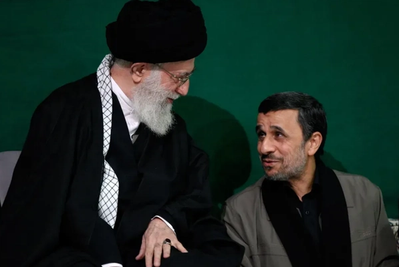
A senior Iranian cleric said women without proper hijab should not be excluded from wartime gatherings, while Nour News, affiliated with Iran’s Supreme National Security Council, called for reason and moderation over ideological confrontation.

Ayatollah Mohammad Javad Fazel Lankarani said Iranians should not be divided by issues such as hijab when the country and Islam were under threat.

He said the issue of hijab remained a religious duty, but argued that it would be wrong to tell women without proper hijab not to attend nightly gatherings organized in support of the war effort.

“When the country itself and the foundation of Islam are in danger, we should not deal with second- and third-tier issues... we should not ask the man who has taken up a weapon and entered the field whether he prays or not, let alone raise the issue of hijab,” Fazel Lankarani said.

The comments came as Nour News, affiliated with Iran’s Supreme National Security Council, published an essay calling for a return to “reason and moderation” in Iranian public life.

Marking the day honoring the philosopher Mulla Sadra, the outlet argued that Iran needed a form of rationality that sees religion “not as a tool of control, but as a light for illumination.”

The essay criticized what it described as emotional and irrational forms of religiosity, as well as currents that reject religion entirely in the name of modernity.

It said Iran needed dialogue instead of conflict, and a reinterpretation of tradition rather than either blind imitation or outright rejection.

The shift does not amount to a formal retreat from policies such as mandatory hijab, but it reflects a growing recognition inside parts of the system that ideological confrontation at home could weaken the wartime unity authorities are trying to preserve.

Hope for US-Iran deal faces hardliner hostility in Tehran

May 23, 2026, 03:37 GMT+1
•
Behrouz Turani

Hope for a limited US-Iran agreement gained momentum Friday as regional mediators intensified efforts to stabilize the ceasefire, but the fragile diplomacy faced hostility from Iranian hardliners who cast negotiations as a prelude to renewed conflict.

Iranian Foreign Ministry spokesman Esmail Baghaei said Friday morning that despite growing speculation surrounding the talks, “no significant progress” had been made.

Diplomatic sources say discussions have focused on a possible memorandum of understanding envisioned as a first step toward broader negotiations, including over Iran’s nuclear program.

The proposed framework would reportedly seek to stabilize the ceasefire and establish mechanisms for managing shipping and navigation disputes in the Strait of Hormuz.

Such an arrangement could provide both sides with temporary political breathing room while reducing pressure on global energy markets already shaken by weeks of conflict and shipping disruptions.

But neither Tehran nor Washington has ruled out military escalation if negotiations collapse before an agreement is finalized.

The Trump administration was preparing on Friday for a fresh round of military strikes against Iran, CBS reported citing sources familiar with the planning, even as indirect diplomacy continues.

The fragility of the process was also underscored Friday by continued attacks from Iranian hardliners who argue the ceasefire itself represented a strategic mistake.

Tehran University lecturer Mohammad Sadegh Koushki said in an interview with the IPTV program Zoom, affiliated with the Fararu website, that Iran had halted military operations just as it had gained the upper hand.

“It’s like a football team that is up by a goal and can score one or two more,” he said. “The momentum of battle was brought to a screeching halt under the name of negotiations and a ceasefire.”

Koushki dismissed the idea that Iran’s conflict with the United States could ultimately be resolved through diplomacy, arguing that years of negotiations had only resulted in greater sanctions and pressure.

Similar arguments appeared across hardline political circles Friday. MP Alireza Salimi said Iran’s control over the Strait of Hormuz was “not negotiable” and that Tehran alone would define and enforce the strait’s “new rules.”

Diplomatic activity nevertheless appeared to intensify throughout Friday as Pakistani Interior Minister Mohsin Naqvi returned to Tehran, with CBS citing a senior Pakistani official as saying his meetings had helped negotiations move “in an important direction,” prompting Pakistan’s Field Marshal Asim Munir to join the mediation effort.

Reuters also reported that a Qatari negotiating team arrived in Tehran in coordination with the United States to help secure an agreement aimed at ending the war and resolving outstanding disputes.

Still, similar moments of optimism earlier in 2025 and again in early 2026 ultimately collapsed into waves of US and Israeli strikes on Iran, leaving deep skepticism about the durability of diplomacy.

In a widely circulated post on X, establishment academic Foad Izadi argued that Washington had paid too little a cost for the conflict to abandon long-term pressure on Iran.

“The cycle of attack, ceasefire, negotiation and attack will repeat,” Izadi wrote, warning against rapid concessions or reopening the Strait of Hormuz too quickly.

The remarks reflected broader hardline skepticism toward the diplomatic push even as intensified mediation efforts suggested Tehran and Washington may still see a narrow path toward a limited deal.