“I think it’s only a matter of time before the US will conduct strikes against the Islamic Republic,” Lt Col Jonathan Conricus said in an interview with Iran International's English podcast Eye for Iran.
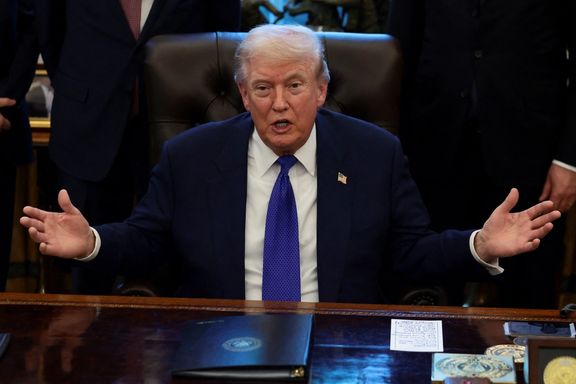
President Donald Trump said this week that the United States was prepared to act with “speed and violence, if necessary,” while Iranian officials have threatened immediate retaliation.
Trump also suggested Friday that Tehran may ultimately seek negotiations rather than face American military action.
“I can say this, they do want to make a deal,” confirming that he had given Iran a deadline to enter talks without specifying what it was. “We have a large armada, flotilla, call it whatever you want, heading toward Iran right now,” he added.
'Almost everything is in place'
Conricus, a senior fellow at the Foundation for Defense of Democracies (FDD), argued that the military tools required for meaningful action are already positioned.
“I think most of those capabilities and assets are in place and are ready to be deployed,” he said, adding: “Judging by the way things look now, almost everything is in place.”
He said the remaining question is timing—“the tactical operational opportunity” and political considerations around when to strike.
Secretary of State Marco Rubio also told lawmakers this week that the Islamic Republic is “probably weaker than it’s ever been."
Iran’s Foreign Minister Abbas Araghchi said Friday that Tehran was ready for talks only “on an equal footing,” but stressed that Iran’s missile and defence capabilities would “never be subject to negotiation.”
What would strikes target?
Conricus told Iran International any US strikes would likely prioritize crippling the regime’s internal control and ability to sustain repression.
He suggested an initial focus on “command and control” and the Islamic Republic's capacity “to exercise power domestically,” including “specifically targeting IRGC and Basij, but not limited to that.”
He also flagged cyber and communications disruption, saying he would “assume cyber and communications warfare against the networks and the communications infrastructure of the regime.”
In addition, he said missile infrastructure would be central—“related to Iran’s ballistic missiles,” including launch sites, silos and supply chains.
Nuclear-related facilities could also be targeted if the conflict escalates, particularly amid renewed American demands that Iran halt uranium enrichment and curb its missile program.
Israel watching, bracing and waiting
The Trump administration is also hosting senior Israeli and Saudi defense and intelligence officials in Washington this week amid discussions of possible strike scenarios and regional fallout.
From an Israeli perspective, Conricus described a mood focused less on whether action will happen, and more on when—and what retaliation might follow.
“People are waiting for when will it happen? What will the consequences be for Israel?” he said, adding that Israeli forces remain at “elevated readiness.”
He argued that a weakened Islamic Republic would also undercut Tehran’s regional proxy network, including Hamas, Hezbollah, and the Houthis.
“Getting rid of this horrible, terror-supporting, destabilizing regime would be very beneficial,” Conricus said.
You can watch the full episode on Eye for Iran on YouTube or listen on any podcast platform of your choosing.