Third day of Iran protests marked by multiple arrests, attack on students
Day three of nationwide anti- government protests in Iran included university students taking part.
Demonstrations across Iran, initially sparked by economic hardship and the sharp fall of the national currency, continued for a third day on Tuesday, drawing in university students as authorities deployed force and made multiple arrests.
Protests spread across Iran on Tuesday, with universities and commercial districts emerging as key hubs amid a widening strike by shopkeepers in Tehran and other cities.
Human rights and student groups said at least 11 protesters were arrested near Tehran’s Shoush Square.
Five students were also detained at universities in the capital, four of whom were later released.
Student outlets reported that one student at Tehran’s Amirkabir University was severely injured during a campus crackdown after members of the Basij militia of the Islamic Revolutionary Guard Corps attacked their gathering.
Videos circulating on social media showed students chanting anti-government slogans, dismantling signs linked to the office of the Supreme Leader’s representatives and confronting security forces at campus gates.
In some clips, officers appeared to retreat as crowds advanced; in others, security forces were seen firing tear gas and, in several locations, shooting toward demonstrators.
The protests coincided with the government’s announcement that public offices would close in nearly 25 provinces, including the capital on Wednesday - a move officials said was necessary to conserve energy amid a severe cold snap. However, online weather data showed no significant drop in temperatures.
The unrest began Sunday after shopkeepers in several Tehran malls and later the Grand Bazaar launched a strike in response to the rial hitting a record low against the US dollar.
Since then, videos verified by Iran International have documented protests in Tehran, Karaj, Qeshm Island, Isfahan, Kermanshah, Shiraz, Yazd, Kerman and several other cities.
Government spokeswoman Fatemeh Mohajerani acknowledged widespread frustration, saying the protests reflected “intense economic pressure” and that peaceful assembly is recognized under Iran’s constitution.
President Masoud Pezeshkian said he instructed the interior minister to engage in dialogue with representatives of the demonstrators to hear their “legitimate” demands. He later attended a meeting with a handpicked group of trade officials on Tuesday.
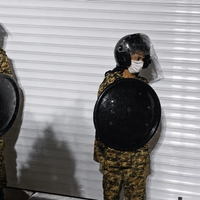
Heavy security deployments were reported in Tehran, Mashhad, and Kermanshah, with residents describing checkpoints, constant patrols, and the presence of both uniformed and plainclothes officers.
In Hamadan, footage appeared to show security forces opening fire toward protesters, while riot police in Tehran and the nearby city of Malard used tear gas to disperse crowds.
Demonstrations were held on Tuesday night in several parts of Iran, and are expected to continue into a fourth day, with more Iranian businesses announcing on social media that they will close in solidarity with the movement.
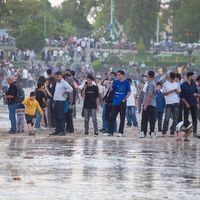
A man holding a picture of Iran's Supreme Leader Ali Khamenei is reflected in a pool of water, as balloons are seen behind him, during a rally to mark the 32nd anniversary of the Islamic Revolution in Tehran February 11, 2011
A spokesman for Iran’s Revolutionary Guards and top state officials on Tuesday warned Israel and the United States against launching any new attack on Iran, vowing a harsher and unpredictable response.
“Israel should remember the blows it received in the recent war and take a lesson from the previous attack before thinking of entering a new one,” IRGC spokesman Brigadier General Mohammad Ali Naeini said.
“Iran’s power is increasing by the day, and Israelis only talk about a weak Iran in the media while they themselves know very well how strong our missile capabilities are,” Naeini said.
Trump said on Monday he would support possible Israeli strikes on Iran if the Islamic Republic develops its ballistic missile or nuclear programs, warning Tehran against rebuilding military capabilities destroyed in Israeli and American airstrikes in June.
Parliament Speaker Mohammad Bagher Qalibaf on Tuesday issued a separate warning, saying that Tehran’s defensive actions do not require external approval.
“Iran does not ask anyone’s permission to defend itself. The Iranian people’s response to any adventurism and wickedness will be broad, uncompromising and even unexpected,” he said.
“Iran’s decisions and actions to secure national interests and exercise its legitimate self-defense will not necessarily be predictable or similar to the past,” he added.
President Masoud Pezeshkian posted a message on X earlier on Tuesday saying the Islamic Republic’s response to any “tyrannical aggression would be harsh and remorse-inducing,” adding that any new attack “will make the enemy regret what it has done."
The United States held five rounds of negotiations with Iran over its nuclear program earlier this year, for which Trump set a 60-day deadline.
When no agreement was reached by the 61st day on June 13, Israel launched a surprise military offensive followed by US strikes on June 22 targeting key nuclear facilities in Isfahan, Natanz and Fordow.
The attacks killed nuclear scientists along with hundreds of military personnel and civilians. Iranian counterattacks killed 32 Israeli civilians and an off-duty soldier.
Iran denies seeking nuclear weapons and says its nuclear program is for peaceful purposes. Supreme Leader Ali Khamenei has said dealing with Trump is beneath the dignity of the Islamic Republic, while Iranian officials have rejected US demands to end uranium enrichment and curb missile capabilities.
The United States has long insisted that Iran must completely halt its uranium enrichment program, stop supporting its armed allies in the Middle East and accept restrictions on its ballistic missile program.
Tehran rejects the conditions as a non-starter for any talks.
Iran’s foreign minister Abbas Araghchi (right) and US President Donald Trump
Iran’s foreign minister appealed directly to Donald Trump in a Guardian op-ed on Tuesday, urging him to reopen negotiations with Tehran, reconsider Washington’s alignment with Israel and acknowledge what he described as Iran’s invincibility.
“For those willing to go where no one has gone before, there is a brief window of opportunity,” Abbas Araghchi wrote.
Standing beside Netanyahu, Trump warned that renewed Iranian missile expansion or nuclear advances would trigger a US response.
"We’ll knock the hell out of them," said Trump. “Now I hear that Iran is trying to build up again, and if they are, we’re going to have to knock them down."
In June, Israel and the US carried out coordinated strikes on Iran that severely damaged several key nuclear facilities. Iran retaliated with missile attacks on a US base in Qatar and on Israeli targets. After 12 days of escalation, a ceasefire was reached under US pressure.
Israeli officials say Iran is quietly rebuilding systems damaged during the conflict.
Trump on Monday expressed his support for possible Israeli attacks on Iran if Tehran continues to develop its ballistic missile program.
Israel shaped US policy through 'myths'
Araghchi argued that what he called a “manufactured crisis” over Iran’s nuclear program has long been driven by Israeli narratives, misleading Washington into abandoning the 2015 nuclear deal and adopting a “maximum pressure” strategy that produced only resistance, according to the foreign minister.
“Those myths encouraged Washington to abandon a functional diplomatic framework in favor of ‘maximum pressure’ that only produced ‘maximum resistance’,” he wrote.
He also pointed to what he described as shifting opinion among Trump supporters, saying Israel is increasingly seen as a liability rather than an ally.
“A growing number of Americans – particularly those who want a focus on rebuilding the US – are publicly acknowledging what has been taboo: that uncritical acceptance of Israel’s narratives has drained American resources, undermined American credibility, and entangled the US in conflicts that do not serve American interests,” Araghchi wrote.
Araghchi also said recent conflicts across Gaza, Lebanon, Syria, Iran, Yemen and Qatar have led regional governments to view Israel’s actions as “a threat to us all,” opening space for new diplomatic alignments.
Iran open to negotiations
Araghchi said “mutual friends of Iran and the US” are prepared to help facilitate talks and guarantee implementation of any future agreement, without naming those mediators.
Iran, Araghchi insisted, remains open to negotiations but not to surrender.
“Despite Israel’s attack on diplomacy amid Iran-US nuclear negotiations, Iran remains open to an agreement that is built on mutual respect and mutual interest,” he wrote, warning that Iran’s restraint should not be mistaken for weakness.
Araghchi reiterated that Iran will not give up what it regards as its rights under the Nuclear Non-Proliferation Treaty, including domestic enrichment for civilian use, and said any future deal must include “tangible and verifiable sanctions lifting.”
The unrest, driven by the plunging rial and surging prices, is widening in scope against the leadership and some analysts warn it could threaten the Islamic Republic itself.
A group of Bazaar merchants in the northern city of Zanjan attend a state-organized rally against Israeli attacks on Gaza in April 2025.
Three days after merchants ignited strikes across Iran, the country’s bazaar is now openly defying the Islamic Republic, marking a historic break between conservative traders and a state accused of sacrificing livelihoods to missiles and security spending.
Historically, in Iran, religious institutions and conservative merchants—the Bazaaris—were inseparable allies. It was the Bazaaris who bankrolled the anti-state revolution of 1979, famously chartering the plane that carried Ayatollah Khomeini back to Tehran.
Yet, 46 years later, the Islamic Republic has managed to alienate its oldest and most critical constituency. For the Iranian merchant today, that alliance is dead, and commerce has become a losing game.
Despite having no hand in inflation, merchants are often blamed as price gougers. If they reject state-mandated pricing, they are accused of hoarding and tampering with the market; if they comply, they may not be able to afford to restock their inventory, selling their way into bankruptcy.
Simultaneously, the centralized allocation of foreign currency for imports drags on for months, while exporters are forced to sell their hard-earned foreign currency at losses due to state pressure.
The atmosphere grew more volatile last week with the announcement of a new gasoline pricing policy, which exacerbated existing anxieties about the economy.
The release of the next year’s budget was the last straw. With oil revenues projected to cover a mere 5% of administrative costs, the government wants the public to foot the bill through deficit spending and significant tax increases.
The trade-off is stark: while every subsidy has been stripped from the ledger, the budget for security and defense has increased. By prioritizing the military and security over public welfare, the state has effectively transferred the entire burden onto the people’s dinner tables.
The market is rejecting this pressure. Merchants argue that they are being suffocated to fund the state's regional ambitions. Facing chronic 60% inflation and the weight of sanctions, business owners can no longer survive, let alone profit.
The message from the bazaar is clear: the economy cannot sustain the vows to rebuild the missile arsenal.
The state’s response to the protests has been predictable: a photo-op meeting with a handpicked group of supportive businessmen and the scapegoating of the Central Bank Governor.
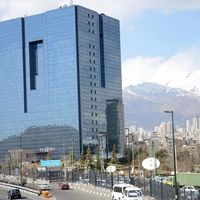
The dismissal of Mohammad-Reza Farzin had been on the table for months, held in reserve as a sacrificial offering. Now, with protests spreading throughout the country, the administration offers his firing as a promise of change.
But the Iranian people see through this theater. They know the Central Bank Governor is not an independent policymaker, but a mere functionary. Replacing him with Abdolnaser Hemmati—a recycled official previously fired from the same post over rial's devaluation—signals continuity, not reform.
Public slogans reveal that the bazaar and the street are now speaking with one voice. The grievances have moved beyond daily economics; they challenge the specific governing priorities that drive this decline. The public understands that their economic distress is not an accident of mismanagement, but the calculated cost of the state's strategic choices.
This leaves the Islamic Republic with a binary choice: abandon regional ambitions and missile proliferation to return to the negotiating table, or double down on repression.
As evidenced by the direct fire opened on protesters yesterday, the regime has chosen the path of force. The market’s message is unmistakable: the people want fundamental change. The government’s answer is not reform, but bullets.
Iran’s president has offered to rewrite his proposed 1405 budget after parliament rejected the draft, opening talks with lawmakers on pay rises, taxes and subsidies, the parliament speaker said.
Parliament Speaker Mohammad Bagher Ghalibaf said on Tuesday that President Masoud Pezeshkian’s letter to parliament seeking talks with lawmakers over changes to the government’s proposed 1405 budget amounts to a withdrawal and revision of the bill and the submission of a new budget plan.
Ghalibaf’s comments came after parliament’s presiding board read out a letter from Pezeshkian addressed to the speaker, in which the president said his government was ready to engage with lawmakers and the powerful joint budget committee to amend the draft budget while observing inflation constraints and the overall spending ceiling.
In the letter, Pezeshkian said the government was open to revising the bill to raise salaries and benefits for state employees and pensioners, adjust effective tax rates to ease pressure on businesses, recalibrate tax exemptions to favor lower-income earners, modify planned value-added tax increases so proceeds fund food voucher schemes, and pursue broader changes aimed at expanding subsidies to support household livelihoods.
The move follows Monday’s decision by the joint parliamentary committee to reject the budget’s general framework by a wide margin, citing concerns over inflationary pressures, falling purchasing power and doubts over the government’s revenue projections.
Parliament’s budget committee said it rejected the bill chiefly because the government’s proposed 20% pay raise for state employees and pensioners would lag inflation and cut real purchasing power, with lawmakers warning of a further squeeze on household living standards.
The committee also flagged the inflationary impact of the government’s plan to raise value-added tax by two percentage points (to 12%), saying it was unclear how the resulting price pressures would be offset for lower-income groups, including via promised subsidies such as food vouchers.
In addition, lawmakers cited ambiguities over revenue assumptions, including the transparency and reliability of oil income and foreign-currency inflows, as well as uncertainties around how subsidized exchange-rate allocations and other subsidies – such as bread support – would reach end consumers rather than being lost to inefficiency or rent-seeking.
Iranian President Masoud Pezeshkian called on officials to engage in dialogue with protesters as unrest spread across the country.
Iran’s President Masoud Pezeshkian on Monday issued his first official response to the latest protests over worsening economic conditions, saying he has instructed his interior minister to hold talks with demonstrators.
In a post on X, Pezeshkian said he had ordered Interior Minister Ahmad Vahidi to “listen to the legitimate demands of protesters” and help the government “respond responsibly.”
Pezeshkian said improving people’s livelihoods remains his “daily concern,” and that reforms to the banking and monetary system are on the agenda.
But it remains unclear how the dialogue he has proposed will work or whether it can contain protests that are increasingly political in tone.
The unrest began with anger over the surging price of the US dollar and the collapse of the rial but quickly broadened.
Strikes and demonstrations spread nationwide on Monday, turning violent in several cities as nighttime crowds chanted against the ruling system and bazaar merchants vowed to continue their shutdowns.
In Tehran, large parts of the Grand Bazaar were shuttered, while clashes were reported in central streets.
While the slogans were mainly focused on economic issues on the first day, the second day's chants underscored a transition from economic frustration to more explicit political dissent.
Chants in several cities targeted Iran's political authority, with crowds shouting slogans such as "death to the dictator" and "Seyyed Ali (Khamenei) will be toppled this year".
The turmoil has been fueled by a currency crisis that pushed the dollar to roughly 144,000 tomans over the weekend. The head of Iran’s central bank resigned amid the turmoil, and Pezeshkian appointed former chief Abdolnaser Hemmati in a move seen as aimed at calming markets.