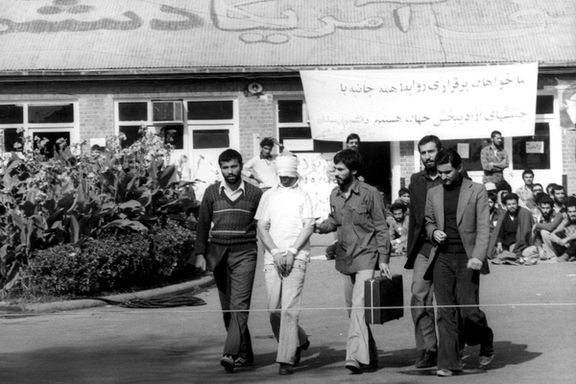
Supporters of Iran's revolutionary leader Ruhollah Khomeini walk a blindfolded American hostage shortly after the seizure of the US embassy in Tehran, November 4, 1979
Barry Rosen, a hostage during the 1979 US embassy takeover in Tehran, told Iran International that the recent deportations of Iranian nationals back to Iran echoes the oppression he faced as a captive.
“I feel distressed,” Rosen told Iran International. “It seems as if I’m living the situation that I had as a hostage. My due process and the loss of my human rights now seem to be equal to those ... who are now being sent back to Iran."
The first US deportation flight to Iran departed in late September with 120 deportees, representing a rare moment of cooperation between Washington and Tehran.
Many say they fled Iran fearing persecution including Christian converts, LGBTQ Iranians and dissidents. The Trump administration has defended its immigration crackdown as a measure to make America safer and remove what it deems “illegal alien criminals.”
Millions of immigrants entered the United States illegally under President Joe Biden and Trump's pledge to seal US borders and conduct mass deportations helped deliver him re-election last year.
Iran is on a growing list of countries from which Trump has banned entry to the United States. In the wake of a deadly attack by an Afghan immigrant on national guard troops last month, the administration said even green card holders from the flagged countries might face expulsion.
Some Iranians had already been deported to third countries earlier in the Trump administration.
Among them is 27-year-old Christian convert Artemis Ghasemzadeh who crossed the southern border seeking asylum but was instead handcuffed, shackled and flown by US authorities to a remote camp in Panama.
Iran International spoke to her in March. “We are not criminals,” she said in a voice message, explaining that she fears execution if returned to Iran.
Rosen, the co-founder of the research and information non-profit Hostage Aid Worldwide, said he was disturbed, alarmed and angry to learn about Iranians at risk of persecution being deported - not only religious minorities, but anyone who could be targeted by the state.
“I just read a story about two Christian Iranians who would be sent back and there seems to be no regard by the government that there would be persecution for them,” he said. “It really gets me. I'm very angry in in many ways because I feel there’s a sense of hopelessness."
Faith leaders in Virginia have also raised alarms after US Customs and Border Protection arrested two Iranian Christian sisters — Mahan and Mozhan Motahari — in the US Virgin Islands despite the women having documents allowing them to remain in the country while their asylum cases proceed, according to Religion News Service (RNS).
Their attorney told RNS that CBP publicly posting photos of the sisters without
They remain detained in Florida while their lawyer seeks to expedite their case.
For Rosen the deportations conflict with values he believes the United States has long claimed to uphold.
“What’s happening right now is all these people who thought of America as the shining light on the hill, they’re losing their human rights in the United States, something that I could never conceive of in my entire life.”
Attorney Mahsa Khanbabai, an Elected Director of the Board of Governors for the American Immigration Lawyers Association (AILA) told Iran International that the United States is contravening its founding principles.
"The Constitution doesn’t apply sometimes to some people — it applies to all people, all of the time," said Khanbabai, "It’s hypocritical for the US to criticize Iran for human rights violations while unfairly targeting Iranians here by weaponizing immigration laws to get around due process rights."
Khanbabai underscore the broader systemic issue Rosen has been warning about.
Rosen served as a Peace Corps volunteer in Iran from 1967 to 1969, returned as press attaché in 1978 and was taken hostage during the upheaval of the revolution.
He says he never imagined he would one day defend Iranian refugees in the United States but feels compelled because of his connection to the country he once called his “second home.”
“I feel that we’re living in the dark ages in the United States right now,” he said. “It’s absolutely ugly.”
Barry Rosen in an interview with Iran International's Negar Mojtahedi during the United Nations General Assembly (UNGA) in 2024.
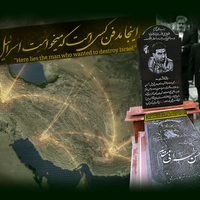
Iranian commander Qassem Soleimani and Iraqi militia leader Abu Mahdi al-Muhandis were killed in a US airstrike at Baghdad airport in January 2020.
A draft US defense budget for 2026 set to be mulled by Congress will for the first time condition aid for the Iraqi military on verifiable steps to rein in militias backed by Washington's Mideast arch-nemesis Tehran.
The over 3,000-page $900 billion plus National Defense Authorization Act outlines US military priorities around the globe. A compromise version of the proposed legislation emerged on Sunday.
It contains provisions to repeal the 1991 and 2002 Authorizations for Use of Military Force (AUMFs) against Iraq passed by Congress to confront US foe Saddam Hussein, in a win for the legislative branch's powers to declare war which remain a flashpoint.
According to the text, no more than half of the funds allocated for Iraq's military can be delivered until the Secretary of Defense submits to Congress a verification that Baghdad has implemented "credible steps" to rein in Tehran-backed militias.
These include steps "to reduce the operational capacity of Iran-aligned militia groups not integrated into the Iraqi Security Forces," moves to strengthen the authority of the Iraqi Prime Minister as commander in chief of the security forces.
It further requires Iraq to "investigate and hold accountable members of militias or members of security forces operating outside the formal chain of command who engage in attacks on United States or Iraqi personnel or otherwise act in an illegal or destabilizing manner."
The NDAA allows for a waiver of 180 days if the Secretary of Defense invokes national security reasons.
Recent elections
Emerging from years of civil war which followed a US invasion in 2003, Baghdad is caught between the competing influence of Tehran and Washington.
Tehran-aligned groups such as the Popular Mobilization Forces and Kata’ib Hezbollah fielded candidates in parliamentary polls last month, rebranding themselves as civilian organizations even as their armed presence persists.
Prime Minister Mohammed Shia al-Sudani, who has plied a middle course between the two foreign rivals vying over the future of the war-battered Arab nation, looks set to stay in office after months of bargaining wraps up.
He has taken few steps to defang the armed groups even as overall security nationwide has improved, earning criticism from hawks in Washington.
Republican Representative Joe Wilson of South Carolina
'Make Iraq Great Again'
"It does not matter who wins elections or forms a government, as the entire country is deeply infiltrated by Iran," Republican Congressman Joe Wilson said on Tuesday.
"Congress will not continue to issue blank checks forever," he added in the post on X. Baghdad, he said, "should take sovereign decisions on behalf of their own people rather than obeying the dictates of Iran and its puppet militias and kleptocrats."
The administration of US President Donald Trump has stepped up sanctions on Iraqi people and entities it accuses of helping enrich Tehran, and his special envoy to Baghdad Mark Savaya has vowed to "Make Iraq Great Again."
Hamstrung by US and international sanctions, Iran shares long historical and religious ties with parts of Iraq and views it as a valuable conduit for conducting international business.
Tehran armed and funded the militias which helped the country defeat Islamic State militants but which lingered after their defeat and continue to exert a strong influence over the security forces and government.
The Baha'i shrine is seen in the northern city of Haifa, File Photo.
Iranian authorities are stepping up the use of courts and security agencies to target members of the Baha’i community through prison sentences, arbitrary detention and property seizures, the Baha’i International Community and Human Rights Watch said.
“Iranian authorities are relentlessly persecuting Baha’is, depriving them of the most basic human rights in what amounts to ongoing crimes against humanity – solely because of their faith,” said Human Rights Watch Iran researcher Bahar Saba, quoted in the statement.
The groups said the crackdown intensified after the Israel-Iran war in June and involved arrests, interrogations, unfair trials and asset confiscation.
Between June and November, the Baha’i International Community recorded more than 750 cases of harassment across Iran, three times the number in the same period last year. The incidents included more than 200 raids on homes and businesses and the arrest of at least 110 Baha’is. Courts issued prison sentences of between two and ten years, including against mothers separated from young children.
“A justice system that should deliver fairness and neutrality instead serves as a weapon of persecution,” said Simin Fahandej, the Baha’i International Community’s representative to the UN in Geneva.
EU pressure builds over Iran record
The statements follow moves in Europe to raise pressure on Tehran. In April, the EU imposed sanctions on parts of Iran’s judiciary and several judges and prosecutors over human rights violations, including the persecution of Baha’is.
Last month, the European Parliament adopted a resolution urging EU governments to sanction Iranian officials involved in abuses against the Baha’i community and to press for the release of those jailed for their beliefs.
Iran does not recognize the Baha’i faith, the country’s largest non-Muslim religious minority, which rights groups say has faced sustained repression since the 1979 Islamic Revolution.
A placard is seen during a protest against the Islamic Republic of Iran following the death of Mahsa Amini, in Berlin, Germany, December 10, 2022
In November alone Iran executed at least 260 people, the highest monthly total in more than two decades, while officially announcing only two, the United States Department of State said in a Persian-language post on X on Tuesday.
“This year, more than 1,500 people have been killed in Iran, many without fair trial or due process,” the post said. “The Islamic Republic uses the death penalty to instill fear and silence every dissenting voice.”
The same account earlier denounced what it called the suspicious death of Iranian human rights lawyer Khosrow Alikordi, saying his case highlights the severe risks faced by those defending basic freedoms in the Islamic theocracy.
Alikordi, a 46-year-old prominent lawyer for jailed protesters and a former political prisoner, was found dead under unclear circumstances on Friday night, prompting some attorneys and activists to suggest possible Islamic Republic involvement.
“The world cannot turn a blind eye,” the post said. “The United States stands with the people of Iran and will continue to condemn these horrific violations.”
Iranian authorities executed at least 24 people across the country on Saturday and Sunday, underscoring what monitors describe as a rapid escalation in the use of capital punishment, human rights groups reported.
The figures indicate an average of 12 executions per day — roughly one every two hours.
The executions took place in prisons in different cities across Iran, reports from the US-based Human Rights Activists News Agency (HRANA) and the Oslo-based Iran Human Rights (IHR) said. Iranian state media acknowledged only one case.
Authorities in Iran have blocked the Instagram pages of two female singers as part of an intensifying crackdown on women’s public performances and online presence.
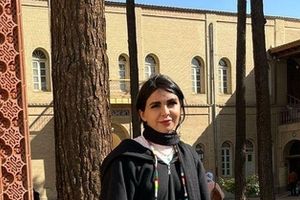
Iran’s cyber police, known as FATA (Iran’s internet crime enforcement agency), blocked the account of Niousha Mofidi, a young woman who performed solo at a concert by Iranian pop singer Hamid Hami.
All posts on her Instagram account, which had nearly 12,000 followers, were deleted. Security officials said the page was closed for “producing criminal content.”
A video shared on social media showed Mofidi singing along from the audience while Hami told others, “Let her sing,” then remained silent so her voice could be heard alone. Mofidi had previously posted videos of her singing on Instagram.
Evi Instagram page
The Instagram account of Iranian rapper Evi, which had nearly 26,000 followers, was also taken offline on Monday. She had previously said security agencies contacted her, demanding she delete her page within 24 hours—a demand she refused.
“I will stand with my people for the rest of my life and will not accept anything that contradicts living freely, even if it is presented in the name of religious law,” she said in a post.
Niousha Mofidi blocked Instagram page
Since the 1979 Islamic Revolution, women in Iran have been banned from singing in the presence of men, based on religious interpretations. The policy ended the official careers of female singers active before the revolution and pushed their work to the margins.
More than 160 artists, civil activists, and organizations, including 19 based inside Iran in April condemned the government’s increasing crackdown on female singers, describing it as part of a systematic effort to suppress women and reinforce a gender-discriminatory system.
The US State Department on Tuesday denounced what it called the suspicious death of Iranian human rights lawyer Khosrow Alikordi, saying his case highlights the severe risks faced by those defending basic freedoms in the Islamic theocracy.
Alikordi, a 46-year-old prominent lawyer for jailed protesters and a former political prisoner, was found dead under unclear circumstances on Friday night, prompting some attorneys and activists to suggest possible Islamic Republic involvement.
"He devoted his life to defending Iranians who were fighting for freedom — including imprisoned protesters and the families of those killed by the Islamic Republic — even though he knew it meant putting his own life at risk," the State Department said in a post on its Persian-language X account.
"Years ago, he wrote: 'If I am killed, I am just one person — it is nothing. Do not let my homeland fall into the hands of the vile.' He never fought for himself alone; his struggle was for the people of Iran and for his country."
His death, the State Department said, "is a stark reminder of the dangers faced by those who fight for their rights in Iran."
"The United States continues to stand with the people of Iran in their pursuit of freedom and justice."
Alikordi died of cardiac arrest in his office in Mashhad, northeastern Iran, according to a report on Saturday by Iranian lawyers news agency (Vokala Press).
His body was transferred to the forensic institute for determination of “the main cause of cardiac arrest,” while police restricted entry to and from the office, according to media reports.
However, fellow lawyer Marzieh Mohebbi wrote on X that Alikordi died from “a blow to the head”, according to what she called "trusted contacts". Security officers, she said, removed cameras from the area and that access to his family had become impossible.
Alikordi, originally from Sabzevar and living in Mashhad, had represented political detainee Fatemeh Sepehri, several people arrested during the 2022 Woman, Life, Freedom protests, and bereaved families including that of Abolfazl Adinezadeh, a teenager killed during protests.
“We find his death highly suspicious and do not believe he died of a heart attack," Adinezadeh's sister Marziyeh said in an Instagram post about their lawyer's death.