Iran warns Persian Gulf neighbors after GCC revives claims on islands, gas field
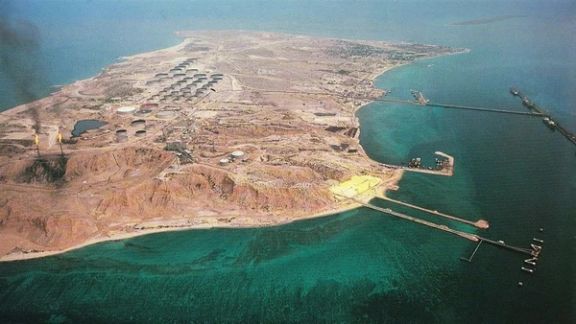
An aerial view of Abu Musa island in the Persian Gulf
Senior Iranian official Ali Shamkhani cautioned Persian Gulf neighbors after the GCC renewed claims over three Iranian islands and backed Saudi and Kuwaiti ownership of the Arash/Durra gas field, framing the dispute as a test of regional red lines amid post-war tensions.
Shamkhani, a former secretary of Iran's Supreme National Security Council and now the Supreme Leader’s representative to Iran’s Defense Council, called the GCC stance unconstructive in a post on X.
He wrote: “The GCC claims about the Iranian islands and the Arash field in the middle of US and Israeli hostility are unconstructive.”
He added that Iran “showed restraint” during the recent 12-day conflict with Israel despite “some backing for the aggression,” and said: “Iran’s power in the Persian Gulf should not be misread; the role of neighbors is to create security, not to test the red lines of the Iranian nation.”
GCC communiqués regularly reprise two Iran-related disputes: sovereignty over the three islands at the Strait of Hormuz (Abu Musa and Greater and Lesser Tunb), and more recently the offshore Arash/Durra gas field claimed by Iran, Kuwait and Saudi Arabia.
Iran administers the islands and rejects any third-party arbitration, citing sovereignty dating to 1971.
After most GCC ministerials, summits, or joint meetings with partners (EU, China, etc.), the closing statement typically “supports UAE efforts” on the islands and urges peaceful settlement or ICJ referral, alongside formulaic lines on Iran’s nuclear program and missiles.
The pattern is cyclical: after each communiqué, Iran rejects the islands language as a sovereignty red line and often summons ambassadors or issues warnings.
Tehran did so following the October EU-GCC meeting, and has also bristled when partners like China echoed the “peaceful settlement” formula, summoning Beijing’s envoy in 2024.
Arash/Durra has become the newer staple in GCC texts, with Kuwait and Saudi Arabia asserting joint ownership and Iran maintaining overlapping claims.
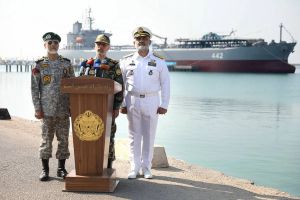
An Iranian warship and Revolutionary Guards speed boats take part in a naval war game in the Persian Gulf and the Strait of Hormuz, southern Iran, April 2010.
Iran’s IRGC Navy will launch a two day exercise on Thursday in the Persian Gulf, the Strait of Hormuz, the Oman Sea and around the country’s southern islands, state media said.
The Strait of Hormuz is a key waterway where Iranian officials have at times warned they could restrict traffic during periods of tension.
The IRGC Navy public relations office said the drill is named after Mohammad Nazeri, a commander and founder of the IRGC Navy’s special forces unit who was killed in 2016, and will run for two days.
Earlier this week, Iran began Sahand-2025, a five-day Shanghai Cooperation Organization (SCO) counter-terrorism drill led by IRGC Ground Forces around Shabestar near Tabriz in East Azarbaijan province.
Designed by Iran’s Armed Forces General Staff with input from the foreign ministry and the SCO’s Regional Anti-Terrorist Structure, the exercise targets the bloc’s “Three Evils” – terrorism, separatism and extremism.
An Iranian court said it has ordered the United States government to pay more than $22 billion in damages for what it described as support for protesters during the 2022 Woman, Life, Freedom movement, state media reported on Tuesday.
The verdict, announced by Tehran’s civil court, was described by state media as stemming from a lawsuit filed by 607 people said to be families of those killed or injured during the unrest that followed the death of Mahsa Amini in police custody.
The court accused Washington of providing “financial and moral backing” to what Iranian officials call “rioters.”
Iran’s judiciary said the US actions violated the country’s sovereignty and international law. The ruling cited several Iranian laws addressing what Tehran terms “terrorist or subversive acts” by the United States.
According to the court, the damages include $5.8 billion in material losses, $11.6 billion for moral damages, and billions more in punitive payments, totaling more than $22 billion.
The judgment is largely symbolic since Iranian court rulings against the United States are not enforceable abroad. Similar verdicts in past years have served as political statements amid strained relations between Tehran and Washington.
'Woman, Life, Freedom'
The Woman, Life, Freedom movement began after 22-year-old Mahsa Amini died in the custody of Iran’s morality police in September 2022. Her death sparked months of nationwide protests demanding greater freedoms and an end to compulsory hijab laws.
Rights groups say hundreds were killed and thousands detained in the crackdown that followed. Iranian authorities have blamed the United States and Israel for inciting the unrest—allegations Washington denies.
A UN fact-finding mission later concluded that Iran’s security forces committed crimes against humanity during the protests.
The mission said it found evidence that state agents were responsible for the “physical violence” that led to Amini’s death and the killing of at least 551 protesters, including 49 women and 68 children. It also documented cases of rape and other sexual violence against women and girls in custody.
Senior clerics have since framed women who refuse to wear the headscarf as acting under foreign influence. In a recent sermon, Tehran’s Friday prayer leader Ahmad Khatami said defiance of the hijab amounted to collaboration with Israel and the United States.
Despite such rhetoric, many women continue to appear unveiled in public spaces, and enforcement of dress codes has weakened.
South Korea’s foreign ministry said on Monday that South Korean nationals have been arrested in Iran on suspicion of smuggling, adding its embassy is in contact with Iranian authorities and providing consular assistance.
The ministry declined to confirm how many were detained or give details of their occupations or the alleged offenses.
South Korean media outlet Yonhap, citing diplomatic sources, reported that two South Koreans and an Iranian national were taken into custody around November 20 in Iran’s southwest on smuggling charges.
One of the South Koreans was described as an employee of a Korean public institution and the other a Korean resident in Iran, Yonhap said.
It added that Seoul officials have been liaising with Iran since the incident and are offering consular support.
The South Korean ministry said it could not disclose further information while the case remains under investigation by Iranian authorities.
Turkey's Foreign Minister Hakan Fidan (L) and Iran's Foreign Minister Abbas Araghchi hold a joint press conference in Tehran on November 30, 2025.
Iran and Turkey have agreed to start building a new joint rail line that will serve as a strategic trade corridor between Asia and Europe, Iranian foreign minister Abbas Araghchi said Sunday.
The Marand–Cheshmeh Soraya transit line, which will run toward Turkey’s Aralik border region, will span about 200 kilometres and cost roughly $1.6 billion.
Iranian authorities say construction is expected to take three to four years to complete.
Speaking in Tehran alongside his Turkish counterpart Hakan Fidan, Araghchi said the two sides had agreed in their meeting “to begin work, on a priority basis, to connect the two countries’ railway lines at the border.”
Earlier this month, Iran’s transport minister Farzaneh Sadegh said the project would transform the southern section of the historic Silk Road into an “all-rail corridor ensuring the continuity of the network between China and Europe”.
She said it would enable “fast and cheap transport of all types of cargo with minimal stops”.
The ancient Silk Road linked East Asia to the Middle East and Europe for centuries before declining with the rise of maritime trade routes.
China launched its Belt and Road Initiative in 2013, seeking to revive those connections through major maritime, road and rail projects. Despite close political relations with China, Iran has been largely left out of the initiative’s major investments.
Iran has sought to expand infrastructure and trade ties with neighbouring states as it works to revive its strained economy.
Iranian Foreign Minister Abbas Araghchi meets with Turkish Foreign Minister Hakan Fidan in Tehran, Iran, November 30, 2025.
Turkey’s Foreign Minister Hakan Fidan said Ankara would do “whatever we can” to help resolve Iran’s nuclear issue through dialogue and international law, Iranian state media reported on Sunday, following talks in Tehran with his Iranian counterpart Abbas Araghchi.
Fidan said sanctions on Iran should be lifted and that regional security, including developments in Gaza, Lebanon and Syria, required sustained cooperation between Ankara and Tehran, according to the reports.
He also said Turkey was ready to expand border crossings and deepen energy and transport links with Iran.
Araghchi said both countries backed removing obstacles to trade and investment and were preparing for the next session of their High-Level Cooperation Council in Tehran.
Iranian Foreign Minister Abbas Araghchi and Turkish Foreign Minister Hakan Fidan attend a joint press conference in Tehran, Iran, November 30, 2025.
He called Iran a reliable energy supplier for Turkey and said the two sides discussed US sanctions and the snapback dispute at the UN Security Council.
Fidan’s visit comes ahead of the planned ninth meeting of the High-Level Cooperation Council, as the two countries seek to boost annual trade toward a $30 billion target and expand coordination on security and counterterrorism, according to TRT World.
The agenda also covered the Russia-Ukraine war, developments in the South Caucasus and efforts to ease tensions between Pakistan and Afghanistan.