• العربية
  • فارسی
Brand
  • Iran Insight
  • Politics
  • Economy
  • Analysis
  • Special Report
  • Opinion
  • Podcast
  • Iran Insight
  • Politics
  • Economy
  • Analysis
  • Special Report
  • Opinion
  • Podcast
  • Theme
  • Language
    • العربية
    • فارسی
  • Iran Insight
  • Politics
  • Economy
  • Analysis
  • Special Report
  • Opinion
  • Podcast
All rights reserved for Volant Media UK Limited
volant media logo

Jailed Iranian poet's death sentence upheld by Supreme Court
Sep 24, 2025, 18:24 GMT+1
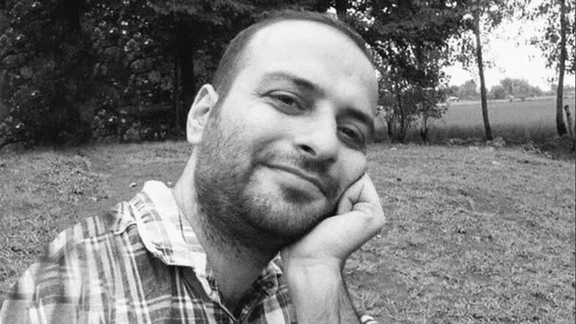
Jailed Iranian poet Peyman Farahavar

Iran’s Supreme Court has upheld the death sentence of a poet from northern Iran whose works focused on social justice and civil rights, his lawyer said on Wednesday.

“The death sentence of Peyman Farahavar, which had been issued by Branch 1 of the Revolutionary Court of Rasht, was reviewed in Branch 39 of the Supreme Court following an appeal. The appeal was rejected and the death sentence of my client was upheld,” defense lawyer Ramin Safarnia wrote on X.

“A request for a retrial will be submitted to the Supreme Court, and we hope that through legal means, this prisoner’s death sentence will be overturned,” he added.

Farahavar, from Gilan province in northern Iran, was arrested by security forces in 2024.

He was sentenced to death on April 30, this year on alleged charges of baghi (armed rebellion) and moharebeh (waging war against God).

The US-based rights group Human Rights Activists News Agency, citing an informed source close to the family, said the charges were based on his poems and protest activities related to social justice and civil rights.

Iran has executed at least 1,000 people so far this year, according to Norway-based Iran Human Rights (IHR).

At least 30 people have been executed this year on security-related charges such as baghi (armed rebellion) and moharebeh (waging war against God), according to IHR.

Most Viewed

Iran diplomacy wobbles as factions compete to avoid looking soft on US
1
INSIGHT

Iran diplomacy wobbles as factions compete to avoid looking soft on US

2
VOICES FROM IRAN

Bread shortages, soaring prices strain households in Iran, residents say

3
ANALYSIS

The politics of pink: how Iran uses cuteness to rebrand violence

4

Scam messages seek crypto for ships’ safe passage through Hormuz, firm warns

5
EXCLUSIVE

Family told missing teen was alive, then received his body 60 days later

Banner
Banner

Spotlight

  • Diplomacy tolls at Hormuz as conflict returns to its doorstep
    OPINION

    Diplomacy tolls at Hormuz as conflict returns to its doorstep

  • Opposition to US talks grows in Tehran as ceasefire deadline nears
    INSIGHT

    Opposition to US talks grows in Tehran as ceasefire deadline nears

  • Tehran moderates see ‘no deal–no war’ limbo as worst outcome
    INSIGHT

    Tehran moderates see ‘no deal–no war’ limbo as worst outcome

  • The future has been switched off here
    TEHRAN INSIDER

    The future has been switched off here

  • Lights out, then gunfire: Witnesses recount Mashhad protest crackdown
    VOICES FROM IRAN

    Lights out, then gunfire: Witnesses recount Mashhad protest crackdown

  • Is Iran entering its Gorbachev moment?
    INSIGHT

    Is Iran entering its Gorbachev moment?

•
•
•

More Stories

Iran officials double down on martial rhetoric after sharp Khamenei speech

Sep 24, 2025, 17:34 GMT+1

Senior Iranian officials highlighted what they called intelligence successes and the urgency of backing armed groups against their arch-foe Israel on Wednesday, a day after Supreme Leader Ali Khamenei delivered a defiant speech.

Esmael Khatib, Iran’s intelligence minister, announced that Iranian operatives had penetrated Israeli intelligence circles and stolen significant data, without citing any evidence.

“Westerners and regime officials admit Iran’s influence within the Zionist regime. The arrest of their citizens and members has been publicized, and acknowledging Iran’s penetration and power is a great blessing … documents stolen from this regime and valuable intelligence obtained are additional blessings,” Khatib was cited as saying by Tasnim News.

Following Israel’s 12-day strike in June, Iran cracked down on networks it claimed were linked to Israel, arresting about 700 alleged Mossad collaborators and executing 6 people for espionage. Israel also charged several of its citizens with spying for Iran.

Khatib praised Iran’s domestic response during the conflict, saying it showcased national unity.

“Many may have made mistakes in their political lives, but their presence, solidarity, and empathy with the people during this 12-day war is another impactful factor that should be encouraged by officials,” he said.

Khamenei, Iran's ultimate decision-maker, delivered a rare televised speech on Tuesday in which he ruled out talks with the United States and emphasized a hard line against what he described as Israeli and American threats.

Concessions to Washington, he said, would mean "Iran’s hands should be so tied that if it were attacked, it could not even respond to the US bases.” Lebanese armed group Hezbollah, Khamenei added, is a "treasure" and should not be counted out.

Support for proxy groups

Parliament Speaker Mohammad Bagher Ghalibaf emphasized Tehran’s commitment to supporting allied groups such as Hamas, Islamic Jihad and Hezbollah, saying they defend Iran’s security interests.

“Our support for these groups defends Iran’s national security and interests. After Operation True Promise 3, the enemy knows that if we don’t stand against the Zionist regime in the Golan, it will advance to Julula in Iraqi Kurdistan, 30 kilometers from Iran’s border,” Ghalibaf was quoted as saying by Revolutionary Guards-linked Tasnim.

“Operation True Promise 3” was Iran’s retaliatory campaign against Israel during the 12-day war, involving multiple waves of ballistic missiles and drone strikes on Israeli targets.

Israeli attacks in the surprise campaign killed nuclear scientists along with hundreds civilians and military personnel. Iranian counterattacks killed 31 Israeli civilians and an off-duty soldier.

Ghalibaf also pointed to challenges in Syria and Iraq, saying Iran remains focused on those fronts.

“Defending the Islamic world, regional security, and human rights requires us to defend ourselves in the Golan, which is why we support resistance groups,” he said.

Addressing Hamas’s October 7 attack on Israel, Ghalibaf stressed that the operation was planned solely by Hamas.

“There was no mistake in Hamas’s October 7 strategy. The legitimacy and righteousness of the resistance remain intact. The decision was entirely Hamas’s, and neither the Islamic Republic of Iran nor Hezbollah in Lebanon were aware of the operation’s details,” he said.

Israel is currently continuing its military campaign in Gaza and has demanded the release of all hostages as a condition for halting the offensive.

Iran rebuilding missile sites hit by Israel but key component missing - AP

Sep 24, 2025, 11:53 GMT+1

Iran has begun rebuilding missile production facilities damaged in June’s 12-day war with Israel, but experts say a crucial element for solid-fuel production remains missing: planetary mixers, according to an Associated Press report analyzing satellite imagery.

Satellite images reviewed by AP show construction at missile sites in Parchin and Shahroud, where buildings housing mixers appear under repair.

“If they’re able to reacquire some key things like planetary mixers, then that infrastructure is still there and ready to get rolling again,” said Sam Lair of the James Martin Center for Nonproliferation Studies.

Solid-fuel missiles are central to Iran’s deterrence strategy after Israeli strikes decimated much of its air defense.
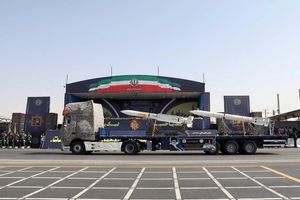

  • Iran says it has new, more advanced missiles ready if attacked

    Iran says it has new, more advanced missiles ready if attacked

  • Rare missile tests streak through Tehran twilight

    Rare missile tests streak through Tehran twilight

Iran operates solid-fuel missile production facilities at Khojir and Parchin, both near Tehran, as well as at Shahroud, about 350 kilometers (215 miles) northeast of the capital. All three sites were struck by Israel in October 2024, during earlier hostilities between the two countries.

Experts say the June strikes appeared designed to destroy buildings housing mixers, the machines essential for evenly combining missile fuel.

Iran had been producing more than 200 solid-fuel missiles a month before the war, according to AP.

  • Trump allows Iran oil sales for post-war rebuilding

    Trump allows Iran oil sales for post-war rebuilding

  • Iran must quickly prove it can rebuild across all fronts, vice president says

    Iran must quickly prove it can rebuild across all fronts, vice president says

Iran fired more than 570 ballistic missiles during the conflict, depleting an estimated third of its arsenal, according to the Jewish Institute for National Security of America.

Western officials believe Tehran could try to source mixers and propellant chemicals from China, which has previously supplied materials for Iran’s missile program. Beijing said it supports Iran’s sovereignty but voiced “deep concern” over rising regional tensions.

Iran’s Defense Minister Aziz Nasirzadeh said last month the country was now focused on producing “military equipment with higher precision and greater operational capabilities.”

Israel says Iran-backed rocket threat expanding in West Bank

Sep 24, 2025, 11:27 GMT+1

The Israeli military said it uncovered a rocket in the West Bank city of Tulkarm on Tuesday, the second such incident in recent weeks, in what security officials described as part of an Iranian-directed effort to develop rocket capabilities in the territory.

Border Police sappers neutralized the device, and troops swept the area, the army said.

A week earlier, security forces raided a site near Ramallah, seizing dozens of rockets and arresting three suspects after an attempted launch.

Defense officials said, “foreign elements, led by Iran,” were working to promote rocket fire from the West Bank, which could place cities in central and northern Israel within range.

Iran has not commented on the allegations.

A rocket recovered in Tulkarm by the IDF on September 23, 2025
100%
A rocket recovered in Tulkarm by the IDF on September 23, 2025

British couple detained in Iran to face court on espionage charges

Sep 24, 2025, 09:12 GMT+1

A British couple held in Iran since January on espionage charges are due to appear in court on Saturday, their family said, expressing alarm at what they described as horrific conditions and repeated rights abuses.

Lindsay and Craig Foreman, from East Sussex, were arrested during a motorcycle world tour and accused of spying -- allegations they deny. Their son, Joe Bennett, said the pair were enduring “survival conditions” and urged the UK government to act.

The BBC reported that the couple’s family said they were “in the dark” about the upcoming court appearance, with their son confirming they had only been told the pair were due in court on Saturday.

“The systematic harassment and violations must stop. They need real, tangible support for their court appearances and to ensure proper medical attention, regular family contact and the urgent securing of their release,” Bennett said in a statement.

  • British couple detained in Iran taken to court without notice, family says

    British couple detained in Iran taken to court without notice, family says

  • Iranian authorities tortured British couple in prison, source says

    Iranian authorities tortured British couple in prison, source says

Rights groups and a source familiar with the case have alleged the couple were held in solitary confinement, beaten and threatened with execution by Iranian intelligence agents seeking forced confessions.

The Foreign, Commonwealth and Development Office said it was “deeply concerned” and continued to raise the case with Iranian authorities.

Britain has repeatedly rejected Tehran’s charges and pressed for the couple’s release. Western governments and rights organizations say Iran has a history of detaining foreign nationals as leverage in disputes, an accusation Tehran denies.


Iran accuses US of harassing diplomats at UN with new restrictions

Sep 24, 2025, 07:28 GMT+1

Iran accused the United States on Wednesday of using new restrictions on its delegation to the United Nations as a tool of political pressure, after Washington limited Iranian diplomats’ movements in New York and denied visas to much of President Masoud Pezeshkian’s media team.

Foreign Ministry spokesman Esmail Baghaei said the curbs, which include restrictions on daily activities such as grocery shopping, were aimed at “disrupting Iran's diplomatic performance” during the UN General Assembly.

He described them as “a blatant violation” of US obligations under the 1947 UN Headquarters Agreement.

“The systematic harassment of Iranian diplomats has obstructed delegates from attending several multilateral events outside the so-called ‘permitted parameters’ this week alone,” Baghaei wrote on social media, calling the measures “a new low” in US hostility toward Iranians.

The US State Department said Monday that the restrictions were intended to prevent Iran’s delegation from “lavish shopping” in New York while ordinary Iranians face economic hardship, and to limit Tehran’s ability to “promote its terrorist agenda.”

It confined delegates to the area between UN headquarters and their hotel, with transit allowances for official meetings.

Iran’s semi-official Fars news agency reported separately that most of Pezeshkian’s media staff were denied visas, leaving only two aides -- his press chief and deputy -- to cover what it called a large number of events during the trip.

It noted that under the new rules, even the purchase of fountain pens is classified as a “luxury” requiring special permits.

The dispute comes as Pezeshkian prepare to address the 80th UNGA amid heightened tensions over Iran’s nuclear program, the looming reimposition of UN “snapback” sanctions later this month, and the fallout from a 12-day war with Israel in June.