Political awakening
First of all, I would like to add that this is my first book, and my second book - in which I wrote about the reason why I left Iran and the fate of Iran today - I wrote in another book titled Until We Are Free.
But about Mr. Bani-Sadr, in the book (Iran Awakening) whom you asked about, I must say that it was not Bani-Sadr the president. It was the brother of the president - the first president, who at that time ran the justiciary. He headed the judiciary.
When he told me this, he said, put on your headscarf even if it's not in your belief, as a sign of respect, as someone who has come as a guest to our home - by which he meant Khomeini's.
I told him, why are you encouraging me to be hypocritical or pretend? I realized very quickly that all the things Khomeini was saying were lies and meant for deception, and for that reason from the very first months I separated my path.
In the articles that I wrote at the very beginning of the revolution, given that during the first year of the revolution there was more freedom, I was able to write articles and they were published.
But, that very moment was the reason that, after I left the judiciary and wanted to obtain my law license, they did not give me a license for seven years and kept me waiting because of the articles I had written.
Women as 'slaves'
In any case, unfortunately the Islamic Revolution sought to use women as slaves, although women resisted too, and because of their resistance the Islamic Republic was not able to shape the kind of woman it desired according to its own ideology.
Still, as much as it could, it tried to impose its culture on the women of Iran through unjust laws.
My first encounter with Khomeini being a liar, and the revolution not being what I wanted, was on March 8, 1979. I remember listening to the radio news. There was an interview with Mr. Eshraghi, the son-in-law of the Imam, and he quoted Khomeini as saying that women working in government offices and state-owned companies must wear hijab, and without hijab no one would be allowed in.
That was when I realized that Khomeini did not stand by the things he had said. He had lied. After that, one discriminatory law after another was passed against women, and the situation of women became much worse than before. It meant that we even lost the rights we had won.
Disillusionment
I am a defender of human rights and naturally sought peaceful change in Iran. That's why, when Khatami was elected, I felt that perhaps his words could be trusted and that maybe reforms could improve conditions without bloodshed or heavy costs. But
I grew more hopeless day by day, and my despair came after the events of July 9, [1999] — the day when the Tehran University student dormitory was attacked and a young man named Ezzat Ebrahimnejad was killed. I was Ezzat Ebrahimnejad's lawyer, and I saw and had information in this regard about what a tragedy had occurred.
We expected Khatami and the reformist government to take the students' side. But unfortunately, we saw that many students were arrested without any justice being carried out as to why that tragedy had been brought upon the students.
And that was when I thought nothing could be done any longer. Many more events afterwards only strengthened this belief. I hope you will read Until We Are Free to understand what events took place.
For this to happen, first of all the constitution must be changed. As a lawyer, I only look at the laws. And based on the constitution, there are principles that the constitution itself has stipulated are unchangeable forever.
All our problems stem entirely from these principles. One of these principles is that all laws must be based on Islamic criteria. Another principle is that the ones who determine this are the six jurists of the Guardian Council, who are directly appointed by the [Supreme] Leader, the Vali-e Faqih. The Vali-e Faqih's powers are among the principles that are unchangeable.
Overthrow 'must take place'
In my view, the current ruling body must be deposed. This means that in reality an overthrow must take place. I hope this overthrow will happen without a heavy price and in a short time.
To achieve that, there is no other way except for the people inside Iran to take to the streets and with one voice say, they do not want this government, stop working, and then this [ruling] system will become paralyzed and through people's resistance it collapses.
Then, the people who brought down this government can easily establish their desired [ruling] system through a referendum.
In such a situation — that is, when a government falls and is left without one, the United Nations can intervene, sending representatives to oversee the transitional period and help hold a fair and proper referendum.
Of course, US policies-and those of Western governments in general-will have an impact, but the final and ultimate impact lies with the people of Iran. That means, it is the people of Iran who in the end must change the destiny of their country in the way they wish.
From grumbling to action
You see, as long as people submit to oppression despite their dissatisfaction, and in other words remain in a so-called gray state...which now the gray stratum is gradually breaking away toward those who believe in overthrowing this regime. And only under these circumstances will something good happen.
I repeat: people are dissatisfied, and they have gradually realized that they must move beyond staying at home, grumbling, and complaining, and instead display their protest in the streets to the government and to the world. And now we are now seeing protests breaking out in the streets over electricity and water shortages.
Our streets must be occupied by the people again. I know this may come at a price, but living under the rule of this government is even more costly for the people.
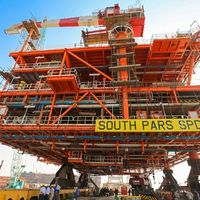
Even ordinary life — water, electricity, and gas - has been withheld from the people. While we are sitting on a sea of oil, we are facing shortages — or as the government calls it, facing an imbalance — of electricity and gas. What kind of government is this? It has ruled for forty-six years and has destroyed Iran.
Human rights in international talks
I have always said, Western governments that claim they respect human rights must also talk about human rights violations in all dealings and meetings they have with the leaders of the Islamic Republic.
But over these forty-six years we have seen the opposite. That is, The Iranian government imprisons innocent people—indeed, takes them hostage-to extort the West. And how easily Western governments pay ransom.
You saw how Obama sent a plane of cash. You saw how Britain, in exchange for the release of several innocent people who had British nationality, gave ransom so that they would be freed. You saw how the Iranian terrorist diplomat who had been sentenced to twenty years in prison was released. You saw how Hamid Nouri was freed.
These are ransoms given to a terrorist and terror-filled government. This behavior has been wrong, we have always objected.
I hope that one day Western governments realize that they must respect the human rights situation in Iran, it must matter to them, and if they deal or negotiate with a criminal government like Iran, they must also talk about human rights issues, and it must be at the top of the matters they ask the government to improve.
Western governments must be put under pressure. How? Through their own people. That is why the main duty of human rights activists, especially those outside Iran, is to inform, to speak out, and to raise awareness in Western civil society. We know that, for example, France or Britain - after all, they have democracies and are elected by the people's vote.
So the voters must be made aware to elect those who care about humanity. In my view, the most important way [to do this] is raising awareness, and in this regard both human rights defenders and the media have a duty. The media must echo the voice of the defenseless people of Iran to the world and show what Iranians are enduring.
Iranian unity
I was not at the Munich conference. I only sent a message. And in that message I repeated what I have always said: I am not a monarchist, nor am I a republican. I am for Iran. My wish is to live in a homeland that is democratic and secular-that is, exactly what the people of Iran want. And this will not be possible unless Iranians unite.
The disputes that for many years they pointlessly had with each other over minor issues must be set aside, and they must form a coalition with each other and help so that an overthrow can happen.
Then, at the ballot box, during the referendum, it will be determined what Iran's political system will be in the future. My message to the people has always been unity, because I know that unity is the key to our victory.
I was invited [to Munich]. I did not go because I was somewhere else and did not have the possibility to attend. They asked me to send a message, and I did. And any other group that invites me and is willing to broadcast my message, I will gladly give them the same message.
Now is the time for us to unite and form a coalition. For forty-six years we have been fighting among ourselves. You see, in these forty-six years it has been proven that neither the monarchists alone, nor the republicans alone, nor the left alone, nor the right alone - no group on its own can succeed in overthrowing the government of Iran and freeing us from tyranny. We must all unite, hand in hand, and work together.
And my goal is not that we should all think the same. The unity I speak of is different from the "unity of word" that Khomeini talked about. What I mean by unity is that we become willing to work together while also maintaining our own political preferences and beliefs.
At the referendum it will then be determined what the future of Iran will be. But right now we all have one demand — overthrow.
Arrests and executions
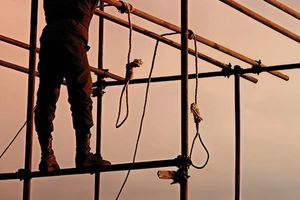
So we must join hands to achieve it. I completely agree with you. Look, right now at least three people are executed every single day. The number of arrests is extremely high. For the smallest comment or even a short social media post, someone can be imprisoned.
When a cherished national treasure is sentenced to prison just for posting a dot - then you can imagine what the situation of freedom of expression in this country is. That's why I say this government must be overthrown-because there is no other solution.
The longer this government remains, the more crimes it commits.
These crimes bring us to this firm conviction that an end point must be put to these crimes. This end point is the downfall of the regime. For this reason, unfortunately, no path remains except overthrow.
It may come at a cost, but the people have been left with no alternative. No path of reconciliation remains.
Resource-rich, yet poor
Look, this is not just one sign - there are many signs. Iran has abundant oil, yet people live with at least three hours of power outages each day. The lakes have dried up. There is no water. This is not due to drought.
We look at our neighbors - Qatar, the Emirates, Kuwait - those who are in worse conditions than us. Yet none of them are suffering like we are, where people are forced to buy water.
The economy is on the brink of collapse. All of Iran's banks are bankrupt, surviving only by document fabrication and false accounting. The national currency loses value every single day. By the government's own statistics, about one-third of Iranians have fallen into poverty, though the real figure is higher.
Housing and rent prices are so high that it is beyond the means of many. Our top university graduates all dream of leaving the country not because they do not love Iran, but because there is no work in Iran.
When you get into a Snapp car or a taxi, you find that the drivers are engineers or doctors—because there is no work, they are forced to work [as drivers].
In such conditions, the government relies only on violence, repression, executions, and prisons to try to silence everyone.
'Demon of tyranny'
Well, no way forward remains. No hope remains. All the signs show clearly that this government cannot continue.
It thrashes about to delay its fall, but it can't hold on for much longer. Day by day, we are moving closer to the end of the Islamic Republic.
My message to the people of Iran, to all political groups, and to anyone dissatisfied with the current situation is this: if we unite, hand in hand, we can achieve victory over the demon of tyranny that has coiled itself around Iran.
What has allowed this regime to survive is the divisions among Iranians themselves. But those divisions are starting to fade. I now see that inside Iran, different groups are beginning to work together. Outside the country, there are signs of solidarity as well, even if small.
These must grow stronger. If we can become united, cohesive, and speak with one voice, then we can easily topple the Islamic Republic and bring to power the government of our choosing- under which we will finally be able to live a normal life. Because right now in Iran, nothing is normal.