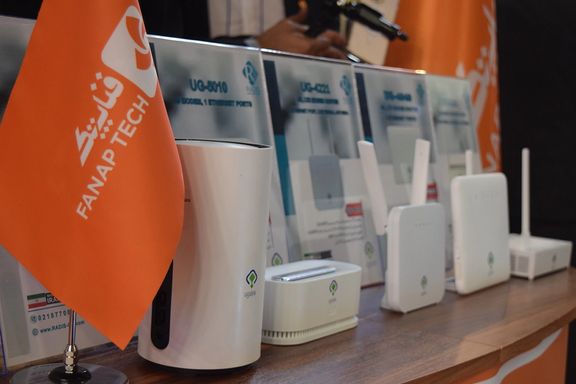
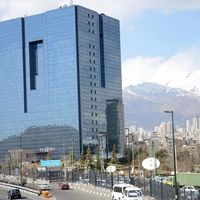
FANAP develops financial and banking technologies in Iran and has expanded into surveillance systems.
The latest round of US sanctions imposed on Iran mark a shift in Washington’s strategy, moving beyond conventional financial limits to target the intertwined financial and digital networks that sustain Tehran’s economy and political control.
US officials say software, fintech, and digital payment systems are now as important as oil profits in helping Iran evade sanctions and quell dissent.
The measures introduced earlier this month also seek to counter Tehran’s growing ties with China and Russia by disrupting both illicit revenue generation and technological control systems.
What’s new about the sanctions?
The latest sanctions move beyond traditional banks to strike at the broader financial-technology system that supports sanctions evasion and internal repression.
Digital infrastructure—including alternative payment platforms, shadow banking channels, and local fintech firms embedded with surveillance tools—is becoming a core part of Iran’s resilience.
Targeting these elements signals a systemic effort to weaken Tehran’s ability to operate at home and abroad.
Who and what is targeted?
Entities named by Washington include:
RUNC Exchange System Company, which US officials say runs an alternative interbank messaging network enabling transactions with sanctioned partners such as China’s Bank of Kunlun, bypassing SWIFT.
Cyrus Offshore Bank, based in the Kish Free Zone and allegedly linked to Parsian Bank, which the US claims hides transactions and channels oil revenue to the Islamic Revolutionary Guard Corps (IRGC).
FANAP, a Pasargad Bank affiliate, which develops fintech platforms for Iran’s National Information Network — a domestic internet infrastructure used for censorship and surveillance, replacing foreign apps favored by protesters.
These firms illustrate how sanctions now target two pillars of Iranian resilience: authoritarian digital control systems and clandestine economic networks.
What are the implications?
Economically, the sanctions cut off access to offshore intermediaries in hubs such as Hong Kong and the UAE, complicating trade-related transfers and oil-export revenue flows.
The disruption of fintech and alternative payment systems forces Tehran to continually adjust its financial workarounds.
Geopolitically, the measures deepen Iran’s reliance on China and Russia, whose “no limits” partnership offers diplomatic cover, technology, and economic channels through multilateral bodies like the UN Security Council, Shanghai Cooperation Organization, and BRICS.
US officials say these same networks help fund Iran’s nuclear and missile programs and regional proxies.
What are the risks?
Tighter integration with Chinese and Russian systems could shield Tehran from Western pressure, eroding US influence and complicating diplomacy.
This diversification may also encourage regional instability.
Why This Matters
The 2025 sanctions highlight Washington’s recognition that the digital-financial nexus is as central to Iran’s power as its oil revenues.
By striking both, the US aims to weaken Tehran’s repressive capacity and illicit funding streams—but the strategy also accelerates geopolitical realignments that may, over time, blunt Western leverage in the Middle East.
Stalks of wheat grow at a farm near Gonbad, 550 km (342 miles) northeast of Tehran, May 6, 2008
Iran’s customs data indicates that strategic reserves of animal feed have declined, raising warnings about potential impacts on the country's food security.
“Customs data shows a 60% decrease in soybean meal imports and an 8% decrease in corn imports in the first four months of this year compared to the same period last year,” ILNA news agency reported.
“Animal feed inputs of very low quality have reached end consumers at prices about twice the approved rates due to import monopolies — a trend that seriously threatens the country's food security in the sensitive period following June’s 12-day war with Israel,” ILNA quoted Mojtaba Aali, the CEO of the National Livestock Farmers Union, as saying, referring to June's 12-day war with Israel.
Aali said that livestock farmers in Fars province, a key hub for livestock production, recently held protests over the issue.
According to Iranian media, over the past five months, reserves of supplies such as corn and soybean meal, which are mostly imported from countries such as Brazil, have been significantly lower than the country’s monthly consumption.
In the same period, a rise in prices has been recorded, affecting most livestock farmers and their ability to purchase animal feed.
“Corn has been traded at 130,000 rials ($1.30), barley at 220,000 rials ($2.30), and soybean meal at 230,000 rials ($2.40),” ILNA reported.
According to S&P Global, the June war has left behind many issues facing the country's food security, not least regarding essential imports.
"Exporters of corn and soybeans in Brazil and Basmati rice from India have already raised alarms about trade with Iran due to rising insurance premiums, delayed payments, and wartime dangers such as jamming of navigation or communication systems," its analysts wrote.
As of 2025, data from Iran’s Statistics Center shows that the country’s agricultural land has shrunk to 15.43 million hectares, a decrease from 18 million hectares in previous years.
Farming continues to be a major source of livelihood, supporting over 4.5 million people, 89% of whom live in rural areas and 11% in urban settings, with the agricultural sector contributing roughly 8.3% to Iran’s GDP and employing about 27% of the national workforce.
Compounding this, over the past year, the country has experienced a 1.5°C increase in average temperatures and a 45% decline in rainfall, leading to further desertification across the country.
A demonstrator peeks from under an Iranian flag during a ceremony to mark the 33rd anniversary of the 1979 Revolution, in Tehran's Azadi square February 11, 2012.
Iranian officials said on Thursday they are seeking ways to prevent the return of UN sanctions and are ready to hold talks with the United States over Tehran's disputed nuclear program, provided they are not used as a pretext for another military campaign.
Foreign Minister Abbas Araghchi and Supreme National Security Council Secretary Ali Larijani both said the Islamic Republic prefers the path of peace and is determined to block the Europeans' bid to reinstate the UN sanctions via the so-called "snapback" mechanism.
“Europeans have until October 28 to trigger the snapback mechanism," Araghchi told the state TV.
He acknowledged the three European countries could technically trigger snapback but argued the move would lack legitimacy.
"In our view—given their positions, including their insistence on zero enrichment despite Iran’s enrichment rights under the 2015 nuclear deal—they lack the legitimacy to discuss or apply any part of the deal, including snapback."
“Iran, China, and Russia are in a legal dispute with the three European countries in the UN Security Council over whether they have the right to trigger snapback. Our view is they do not, and even if they did, it lacks legitimacy,” he said.
France, Germany, and the United Kingdom have told the United Nations they are prepared to reimpose international sanctions on Iran unless it resumes nuclear negotiations with the United States and other powers, according to a letter shared by the French foreign ministry on Wednesday.
“There is no doubt something must be done to stop it, and we will spare no effort until the last moment,” Araghchi said.
The snapback mechanism, part of UN Security Council Resolution 2231, allows any JCPOA party to accuse Iran of non-compliance. If no agreement is reached within 30 days to keep the bans lifted, all previous UN sanctions automatically return, including arms embargoes, cargo inspections, and missile restrictions.
If European powers trigger the snapback mechanism against Iran, the country would face isolation from global financial markets, a sharp drop in oil exports, with foreign investment blocked by legal hurdles, US-based National Security Journal said in an analysis piece on Thursday.
Iran’s Ministry of Intelligence on Monday reportedly issued secret guidance instructing ministries and major companies to prepare for the likely return of UN sanctions.
'Talks with US possible'
Iran's top security official Ali Larijani said on Thursday talks with the United States are possible but only if aimed at a genuine resolution.
“If the United States realizes it cannot defeat the Islamic Republic through war and then seeks negotiations, we will respond positively. But if they negotiate to prepare for the next war, it will be of no benefit to us,” Larijani said in an interview Lebanon’s Al-Mayadeen.
“Some believe negotiations can solve everything. Negotiations are only useful when both sides accept and understand they cannot achieve their goals through war,” Larijani added.
France, the United Kingdom and Germany told Iran they would restore UN sanctions unless it reopened talks on its nuclear program immediately and produced concrete results by the end of August.
Negotiations under the Trump administration began with a 60-day ultimatum to Iran. On the 61st day on June 13, Israel launched a surprise military campaign.
The Israeli strikes began on the eve of the sixth round of negotiations with the United States.
On the ninth day of fighting, the United States bombed three Iranian nuclear sites which US President Donald Trump has consistently said "obliterated" the country's nuclear program.
A general view of Tehran city, in Tehran, Iran June 12, 2020
The average time to save for a home in Tehran is about 80 years, even as the capital witnesses a major wave of price decreases, the head of the Tehran Real Estate Consultants Union said.
“Currently, about half of tenants’ income is spent on rent, and to buy a house worth five to six billion tomans ($54,000 to $64,000), one would need to save for approximately 80 years,” Kianoosh Goodarzi said.
“The price per square meter of housing in northern Tehran has dropped by 30 to 50 million tomans ($321 to $535), but the 12-day war has had no impact on this price decline or the ongoing recession, which began during the COVID-19 period,” ISNA news agency cited Goodarzi as saying.
The costs of even basic items such as food continue to soar and the value of the Iranian currency continues to fall. The rial has lost over 90% of its value since US sanctions were reimposed in 2018.
Sanctions, corruption and economic mismanagement have contributed to the widespread economic hardship.
At least a third of the country is now forced to live below the poverty line, and the vast majority of Iranians are dissatisfied with the government’s economic policies, according to a poll by the country’s leading economic newspaper Donya-ye Eqtesad.
The poll results published on Monday showed that 89% of respondents were dissatisfied with the economic policies implemented by the Islamic Republic.
According to April statistics from the International Monetary Fund, unemployment in Iran now stands at 9.5%, up from 7.8% last year.
Impact of war
Asked if the 12-day war between Iran and Israel played any role in the real estate recession, Goodarzi said the downturn began long before that.
“The property market is very large, and the current recession is not due to the war, as we were already in recession beforehand."
He said suggested prices have dropped by 30 to 50 million tomans per square meter, but there have been no changes in contract agreements.
Israel launched land and air strikes targeting senior Iranian military leaders, nuclear scientists, and politicians, while damaging or destroying Iranian air defenses and nuclear facilities. The airstrikes killed over 1,000 people according to official statistics.
Iran's national security chief Ali Larijani waves to Hezbollah supporters, Beirut, Lebanon, August 12, 2025
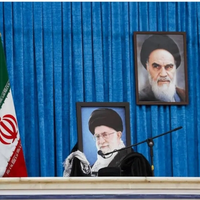
Ali Larijani’s tour of Iraq and Lebanon a few weeks after his Russia visit underscores his re-emergence as a trusted envoy and crisis manager tasked with shoring up Tehran’s defences in the twilight of supreme leader Ali Khamenei’s rule.
In just three weeks, Larijani has traversed the highest corridors of Moscow, Baghdad, and Beirut.
The veteran conservative met Russia’s President Vladimir Putin in Moscow late July. This week, met Iraqi leaders, laid a wreath at the site of Qassem Soleimani’s killing, and visited Lebanon amid a push to disarm Tehran-allied Hezbollah.
Once sidelined from presidential politics, the former parliament speaker and IRGC founding member is now back at the centre of power—chairing the new Defence Council and is dispatched abroad to steady alliances and project resilience at a moment of regional strain and looming succession.
The itinerary reflects his rebirth: Moscow for geopolitical depth, Baghdad to reinforce Iran-aligned proxies, Beirut to guard influence amid Western-backed disarmament moves.
Syria lies outside the traditional axis: Assad has fallen, Jolani governs Damascus and IRGC forces have withdrawn, yet some Iranian influence endures through discreet networks and shadow intermediaries.
War mode reloaded
Larijani’s revival is no accident but a deliberate restoration of wartime instincts.
During the Iran–Iraq War, real power shifted from Khamenei’s ceremonial presidency to Majlis Speaker Rafsanjani, the acting Deputy Commander-in-Chief.
The slight was deeply felt by Khamenei, who spent much of his second presidential term at the front, forging bonds with commanders like Soleimani—ties that became the backbone of the Beyt-e Rahbari after he became Supreme Leader in 1989.
Khamenei disappeared from public view during Israeli strikes on Iran in June. The so-called 12-day war, in which many of his key protégés were killed, reinforced Khamenei’s long-held belief in relying on loyal men willing to risk all to preserve him.
That’s where Larijani enters the picture.
Unqualified no more
A former chief nuclear negotiator, he was deemed unfit to run for the presidency as late as 2024. Now, he has been placed at the helm of the Defence Council, positioned as both succession strategist and potential wartime coordinator.
Precedent underpins this orchestration.
In 2011, Ahmadinejad’s 11-day disappearance during a succession standoff left a vacuum between the presidency and the Leader’s office.
As speaker and a member of the Supreme National Security Council (SNSC), Larijani navigated the crisis amid speculation that IRGC-linked governance was filling the gap.
Today, Khamenei is again turning to the tools that preserved the theocracy in its formative years: centralised command, crisis-tested operatives, and the fusion of media, military, and diplomacy.Beirut’s standoff illustrates the stakes.
Lebanon test case
The US plan to disarm Hezbollah—paired with Israeli withdrawal and reconstruction aid—has exposed Lebanon’s political fault lines.
On the eve of Larijani’s arrival, Hezbollah denounced the plan as a “grave sin” and rejected it in cabinet, while the Lebanese army was tasked with drafting legislation to give the state a monopoly on arms.
Former President Michel Aoun and others have called for “arms under state authority” through dialogue, while Hezbollah insists on Israeli withdrawal first, warning it will resist any state compulsion.
Amid these fractures, Larijani’s mission is not the defence of state sovereignty but the calculus of regime survival—Khamenei’s answer from the past to a future laden with uncertainty.
Larijani is not simply a returning statesman but a recycled instrument from the Islamic Republic’s most turbulent chapters, tasked now with holding the line until the next hand—willing or not—seizes the tiller.
A logo of Standard Chartered is displayed at its main branch in Hong Kong, China, Aug. 1, 2017
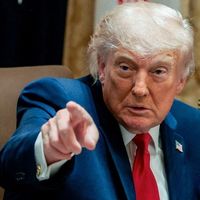
US president Donald Trump has spotlighted whistleblower allegations that Standard Chartered Bank’s New York branch moved billions of dollars to entities linked to Iran and Hezbollah.
Sharing a report from The Gateway Pundit on Truth Social Wednesday, the president cited claims that at least $9.6 billion in illicit payments were cleared through the branch to names on the US Treasury’s sanctions list, including designated terrorist organizations.
The allegations, first published on July 22 and updated with new material from bank insiders, center on transactions said to involve Euro African Group Ltd—controlled by Hezbollah financier Mohammad Bazzi—alongside Koussani Steel, Kuwait Automotive Group, Bank of Algeria, Iranian oil trading intermediaries, and other sanctioned entities.
“With all oil trade required to be in US dollar currency, China is using SCB and its NYC branch to buy Iranian oil in US dollars,” the story reads.
The Trump administration has imposed a sweeping sanctions campaign on Iran aimed at curbing its oil sales network, while tightening enforcement measures to cut off Tehran’s access to the US financial system and global banking channels.
In June, however, Trump announced on social media that China could now buy Iranian oil — a shift from his previous hardline stance.
China remains the only major buyer of Iranian crude, taking in the vast majority of Tehran’s exports. Despite years of sanctions and stepped-up enforcement, the flow of oil to Chinese refiners has not been halted, with shipments often routed through intermediaries or mislabeled to disguise their origin.
According to The Gateway Pundit, the case is supported by 40,000 internal emails containing foreign exchange trade records.
The report alleges that senior officials, including New York Attorney General Letitia James, were briefed on the matter in early 2024 but took no action.
Trump, in his post, called James “a disgrace” but offered no further details on what action he believed should follow.