Two refinery workers in southern Iran die of suspected heatstroke
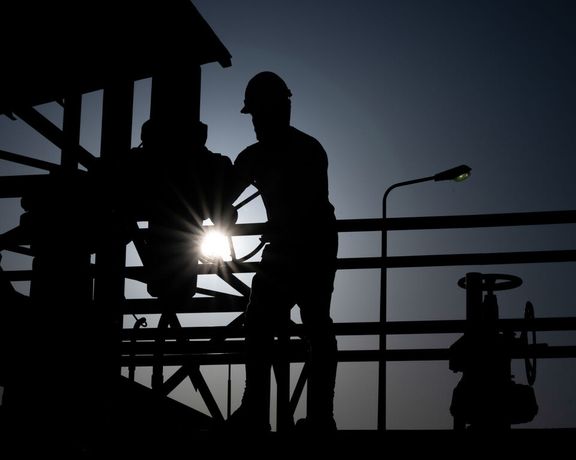
Two refinery workers in southern Iran died of suspected heatstroke while on the job amid soaring summer temperatures, Iranian media reported.

Two refinery workers in southern Iran died of suspected heatstroke while on the job amid soaring summer temperatures, Iranian media reported.
ILNA news agency said Ali Mousavi, a contractor at South Pars Phase 13, collapsed from heat-induced cardiac arrest, while labor sources said Jamshid Asadi, a Bandar Khomeini petrochemical worker, also died the same day.
Authorities disputed heat as the cause in the latter case, citing pre-existing illness. Experts have long warned of deadly risks for outdoor laborers in Iran’s hot, humid south.
Summer temperatures in Iran's Bushehr province, a major hub for the country's oil and gas production, are extremely hot. Average daytime temperatures from June to August often range from 38°C to 48°C (100°F to 118°F), regularly exceeding 40°C (104°F).


Iran's ability to access fresh water is deteriorating, the government-run office of managing water supply said on Tuesday, adding that the capital Tehran faces a serious risk of land subsidence.
“The water crisis in Iran has gone far beyond the point of urgency and requires absolute full attention,” said Issa Bozorgzadeh, Iran's water industry spokesman.
“Subsidence is a direct consequence of excessive groundwater extraction, driven by poor management and lack of coordination,” Bozorgzadeh told the news website Payam-e Ma.
In May, a member of parliament warned that over-extraction of groundwater had caused land subsidence in 30 provinces, and that 66 percent of the country’s wetlands had turned into dust storm sources.
Environmental activists have long cautioned that Iran’s sprawling capital — home to nearly 10 million people — is highly vulnerable to water shortages due to inefficient infrastructure, leaky pipes and limited investment in modern conservation technologies.
Bozorgzadeh said Tehran’s municipality controls about 50 drinkable wells that should be connected to the city’s potable water network, while the rest should be sealed to help balance the aquifer.
Soudabeh Najafi, head of Tehran City Council’s Health Committee, said in May that subsidence in Tehran is estimated at 24 to 25 centimeters annually.
Tehran water authorities will cut supplies for 12 hours to households deemed heavy consumers who ignore three official warnings, a senior utility official said on Tuesday, as the capital faces its worst drought in more than a century.
Iran’s meteorological organization says the country has faced an almost continuous drought for more than two decades, with rainfall sharply reduced this year and snowpack levels at historic lows.

Ontario’s top court has upheld a ruling that Ukraine International Airlines must pay full compensation to the families of passengers killed when Iran shot down Flight PS752 in 2020. But families say the ruling doesn’t diminish Iran’s responsibility.
The unanimous Ontario Court of Appeal decision leaves intact a 2024 ruling that found the airline negligent for allowing the flight to depart despite escalating military tensions in the region.
Just minutes after takeoff, two Iranian surface-to-air missiles struck the Boeing 737, killing all 176 people on board, including 55 Canadian citizens and 30 permanent residents. Many others had deep ties to Canada.

The case hinged on the Montreal Convention, an international treaty governing air travel. The convention caps airline liability at US$180,000 per passenger unless the carrier is found negligent, in which case full damages may be awarded.
Last year, an Ontario judge concluded that UIA failed to conduct a proper risk assessment before the flight left Tehran, falling short of the “standard of care” required under international law. That finding meant the airline could not rely on the treaty’s liability limit.
Families: Ruling doesn’t diminish Iran’s responsibility
The Association of Families of Flight PS752 Victims welcomed the decision but stressed that it does not absolve Iran or the Islamic Revolutionary Guard Corps (IRGC), which fired the missiles.
The group noted the ruling addresses only the airline’s responsibility for assessing conflict-zone risks, not Iran’s culpability in the attack.
They also highlighted that the lower court dismissed Iran’s official explanation — blaming “human error” — as implausible, calling its report flawed and contradictory.
Lawyers Paul Miller and Jamie Thornback, who represent some of the families, called the decision “a landmark.” In a joint statement, they said, “At a time of heightened conflicts around the world, the judgment sends a clear message to international airlines that open airspace cannot be assumed to be safe airspace. Airlines must exercise extreme caution and diligence when operating in or near a conflict zone.”
Accountability efforts continue in international courts
Separate legal proceedings against Iran remain underway at the International Civil Aviation Organization, the International Court of Justice, and the International Criminal Court.
Canada, along with the UK, Sweden and Ukraine, has pledged to continue pressing for accountability under international law, though those cases are expected to take years.
The ruling follows the Supreme Court of Canada’s 2024 decision not to hear an appeal from families seeking to enforce a $107 million default judgment against Iran. That effort was blocked after an Ontario court ruled Iranian assets in Canada were protected by diplomatic immunity.
The families said in a statement that they hope the ruling will help prevent similar tragedies in the future.

A rare invitation from the Financial Action Task Force (FATF) for talks on removing Iran from its global money-laundering blacklist has reignited a years-long political battle in Tehran.
The moderate camp, led by President Masoud Pezeshkian, has hailed the invitation as an economic lifeline. But hardliners say it could compromise the country’s sanctions-busting networks.
Even if Iran’s divided leadership presses ahead, the road to full clearance is expected to be slow, contested and closely monitored by the watchdog.
Praise and pushback
Economy Minister Ali Madanizadeh, appointed last month, called the FATF’s overture “good news” for Iran’s economy in a state TV interview.
Official administration outlets IRNA and the Iran newspaper were quick to celebrate the development, describing it as recognition of Iran’s reform efforts and a potential removal of the “self-inflicted blockage” that could pave the way for wider global engagement.
Hardliners see it differently.
Fars News, affiliated with the Revolutionary Guards, warned that FATF is about national security, not just banking, citing the “bitter experience” when Iran’s oil sales network was exposed through the FATF process.
With international reports pointing to record-high oil exports, Fars urged the economy ministry to approach the meeting with “heightened caution.”
Legislation years in limbo
In May, Iran’s hardline-dominated Expediency Council finally approved the Palermo Act, one of two key measures FATF requires to curb money laundering and terrorism financing.
The other, the Combating the Financing of Terrorism (CFT) convention, remains under review after years of delay.
The legislative process for both began in 2019 but stalled under hardliner resistance, with opponents warning that accession would hand sensitive financial data to Western governments.
What is FATF and why removal is slow
FATF is a Paris-based intergovernmental body that sets global standards for anti-money-laundering and counter-terrorist-financing (AML/CFT) frameworks.
Iran was first blacklisted in 2008, briefly downgraded to the “grey list” after partial compliance, then re-blacklisted in 2020.
As of June 2025, the grey list had 25 countries and the black list only three: Myanmar, North Korea and Iran.
Countries leaving the blacklist typically move to the grey list—a category for states with “strategic deficiencies” that have pledged to fix them under FATF monitoring.
They often remain there for years to prove reforms are being implemented in practice. Those failing to follow through can be blacklisted again.
What’s at stake
Shifting to the grey list could ease Iran’s access to international banking and reduce transaction costs, though FATF itself does not lift sanctions.
Its recommendations guide members to apply “countermeasures,” including rigorous bank scrutiny, termination of correspondent banking ties, and mandatory reporting of all Iranian transactions, even small or routine, to financial intelligence units, creating delays and extra costs.
For now, the FATF meeting offers only a narrow opening that is shaped as much by Iran’s domestic power struggle as by the technical demands of the watchdog.

The Iranian Baha’i community has faced systematic repression, arrests, and nearly 1,500 years in prison sentences over the past five years, according to the Human Rights Activists News Agency (HRANA).
At least 284 Baha’is were arrested and 270 were summoned to security or judicial institutions in Iran between August 2020 and 2025, the US-based rights group said on Monday.
Other violations of Baha’i rights in Iran over the same period included 419 cases of home searches, 147 trials, 127 travel bans, 108 prison sentence enforcements, 106 denials of education and 57 restrictions on economic activities, it added.
The Bahaʼi faith emerged in nineteenth century Persia, challenging Islamic orthodoxy with its teachings on universal religion and progressive revelation.
Iranian authorities perceive it as a threat to religious and political control, calling it a false religion and a cult.
Over the past five years, 388 Baha’is in Iran have been sentenced by judicial or security institutions to a total of 17,948 months of imprisonment, HRANA reported, equivalent to 1,495 years and 8 months.
Additionally, 91 individuals were fined about 503 billion tomans ($12 million), and 103 were deprived of social rights. Twenty-five individuals were sentenced to 600 months of exile, HRANA said.
Imprisoned for being Baha’i
Many Baha’i prisoners received long-term sentences during this period, often without fair trial procedures and based on charges such as “propaganda against the regime” or “forming illegal groups.”
The figures include 17,324 months of mandatory imprisonment and 624 months of suspended sentences.
The HRANA report identified 2023 as the most repressive year, with 162 documented violations, and 2024 as having the highest number of arrests 76, and a total of 5,220 months of imprisonment.
Other forms of pressure
Beyond judicial prosecution, Baha’is in Iran face other forms of repression, including economic and educational exclusion, interference with burials, cemetery destruction, and property confiscation, HRANA reported.
The pressure and harassment have intensified in recent years, with Baha’is facing more security and judicial actions than any other religious minority in Iran.
Over the past three years, an average of 72% of all reported religious minority rights violations in Iran have targeted Baha’is, HRANA reported.
The 1979 constitution of the Islamic Republic of Iran recognizes only Islam, Christianity, Judaism, and Zoroastrianism as official religions.
Iran’s Supreme Leader Ali Khamenei has on several occasions called the Baha’i faith a cult, and in a 2018 religious fatwa, he forbade contact including business dealings with its followers.
Iran's ministry of Intelligence said last month it had made arrests targeting the Baha'i religious minority, evangelical Christians, foreign-based dissidents, Sunni Muslim jihadists, separatists, monarchists and media organizations acting in league with Israel as part of its post-war crackdown.

The US State Department on Tuesday condemned Iran’s death sentences against protesters from the 2022 Woman, Life, Freedom protest movement, warning that at least 11 people face imminent execution.
"The United States of America calls on Iran to immediately halt these executions, release all those unjustly detained, and end its campaign of repression against those seeking their fundamental freedoms," the State Department said in a post on its Persian-language X account.
The protests erupted nationwide in 2022 after the death of 22-year-old Mahsa Jina Amini in morality police custody after she allegedly violated hijab rules. Hundreds of demonstrators were killed and thousands arrested in a sweeping crackdown.
Demonstrator Mojahed (Abbas) Kourkour was hanged in June after what Amnesty International decried as a "sham" trial.
The rights group said he was subjected to enforced disappearance, tortured into making televised confessions and denied a lawyer during the investigation. His execution, it added, was "utterly appalling" and aimed to crush dissent and instill fear.
Six men face execution after being convicted of killing a member of Iran's domestic enforcement militia in Tehran in the 2022 protests. One of their lawyers said last week that Iran’s Supreme Court has yet to respond to their appeal.
Last week, two Kurdish brothers from western Iran — civil activist Amirali Zakerifard, 44, and his brother Emad — who were charged for their participation in the 2022 protests, were sentenced to a combined 65 years in prison and 148 lashes.
Rights groups say the charges include insulting Islamic sanctities and assembly and collusion against national security.
They say the recent wave of repression is not only linked to the Woman, Life, Freedom protests but has also intensified under the pretext of security following a June war with Israel, disproportionately targeting ethnic and religious minorities.
Between June 13 and August 10, the Center for Human Rights in Iran (CHRI) documented at least 58 arrests and eight new death sentences, including several people from Kurdish minority.
Since 2022, Iranian authorities have executed 11 people over the Woman, Life, Freedom protests, with many more at risk.