Iran warns of regional security shift if Europe triggers snapback sanctions
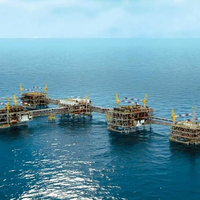
An aerial view of the Strait of Hormuz, a critical global oil chokepoint
A senior Iranian lawmaker warned on Monday that Tehran could halt its regional maritime security cooperation, including in the Strait of Hormuz, if European powers move to reimpose United Nations sanctions via the so-called snapback mechanism.
Abbas Moghtadaei, deputy chair of Iran’s parliamentary committee on national security and foreign policy, said the potential activation of the mechanism by the UK, France, and Germany would be viewed as a hostile act akin to military aggression.
“If pressure continues, our self-restraint may come to an end,” Moghtadaei told Borna news, adding that Iran has so far prevented harm to Western interests in the region but reserves the right to respond with measures across the security, economic, political, and cultural spheres.
Abbas Moghtadaei, deputy chair of Iran’s parliamentary committee on national security and foreign policy
"We have many tools in our disposition. We can withhold our commitment to security in the region, Persian Gulf and Hormuz Strait as well as other maritime areas," Moghtadaei said in reference to Tehran's potential counter-measures.
The remarks follow growing tensions between Iran and European parties to the 2015 nuclear deal, who accuse Tehran of breaching its commitments.
The three European states, known as E3, have said they would restore international sanctions on Iran by the end of August if the country did not enter productive talks on its nuclear program with Western powers.
Moghtadaei urged European governments to reconsider their approach and instruct their ambassadors to provide more accurate assessments of Iran’s domestic conditions.
“Europe is dependent on Iran’s cooperation in the region,” he said. “They should calculate the consequences of continued hostility.”
"Europe is not in a position to endanger itself in the... Hormuz Strait when it is itself in political, economic and cultural conflicts with Russia, China and even the United States."
In recent months, E3 countries and Iran have held inconclusive talks on Tehran's nuclear program, in parallel to indirect nuclear negotiations between Tehran and Washington. Israel's attack on Iran in June led to the suspension of such talks.
Iran and the European troika will hold nuclear talks on Friday in Istanbul, Turkey, Iran's state TV announced on Sunday, citing the foreign ministry spokesman.
A recent flurry of high-level meetings across Central Asia and the Middle East signals a quiet but marked shift: Iran and Russia are increasingly sidelined in the region’s political and economic realignments in favor of Arab states.
Once dominant mediators in the Armenia-Azerbaijan conflict, both were notably absent as the United Arab Emirates hosted direct talks between Armenian and Azerbaijani leaders late last week.
The meeting—described as positive by both sides—was the first time the two met face-to-face without intermediaries, according to Azerbaijani lawmaker Arzu Naghiyev.
Baku has long sought a way to connect the two territories of Azerbaijan separated by a tract of Armenian land. An existing plan for a 'corridor' is backed by Ankara but categorically rejected by Yerevan.
“Azerbaijan’s position on opening the Zangezur corridor to connect with Nakhchivan and Turkey is unequivocal,” Naghiyev told Iran International. “But the positions of Russia, Iran and others remain unclear.”
Tehran had previously threatened military action to prevent the corridor’s creation. But today, it appears unable to influence the outcome.
Tensions between Baku and Moscow have also escalated following the deaths of several Azerbaijani citizens in Russian custody.
In response, Azerbaijan shut down the Russian state-run Sputnik news bureau in Baku and arrested several of its staff. Meanwhile, Armenia’s pivot toward the West has further strained ties with Moscow.
Energy diplomacy
On July 4, the Nagorno-Karabakh region hosted an Economic Cooperation Organization (ECO) summit attended by leaders from Central Asia, Pakistan, Iran, and Turkey.
Russian officials were frustrated by Iranian President Masoud Pezeshkian’s participation, according to Israel’s Channel 12, especially as Azerbaijan was arresting Russian nationals.
Moscow made no public objection when Kazakhstan and Azerbaijan held joint drone drills days later.
Baku also hosted the head of Syria’s interim government last week, and reports suggest Israeli and Syrian officials held indirect discussions during the visit.
This followed Azerbaijan’s state oil company Socar acquiring a 10% stake in Israel’s Tamar gas field.
During the ECO summit, Turkish President Recep Tayyip Erdogan revealed Azerbaijan’s interest in exporting gas to Syria. A memorandum was signed on July 12 during the Syrian delegation’s visit to Baku.
Qatar has already begun supplying gas to Syria via Jordan, while Saudi Arabia and the United Arab Emirates are backing reconstruction efforts in opposition-held areas—bypassing the Assad regime and its traditional backers, Iran and Russia.
UAE leads the charge
Among Persian Gulf states, the UAE has emerged as the most active in regional diplomacy.
On July 13, Erdogan held a call with UAE President Sheikh Mohammed bin Zayed Al Nahyan, discussing the Kurdistan Workers Party (PKK) disarmament, the Armenia-Azerbaijan talks, and broader regional initiatives.
Trade reflects this deepening partnership: Turkish exports to the UAE surged 65% in the first half of 2025—the fastest growth among Turkey’s trade partners. Exports to Syria rose 46% in the same period.
Direct investment from Persian Gulf states abroad has jumped 50% since 2022, with 90% flowing to Central Asia, according to the Eurasian Development Bank.
Emirati firms manage all of Turkmenistan’s Caspian Sea oil production and own 30% of Azerbaijan’s Absheron gas field—the second-largest in the Caspian.
The UAE has invested more than $12 billion in Central Asia, with Saudi Arabia and Qatar accounting for almost $4 billion.
Arab states are stepping up across the region, increasingly appears to be at the expense of Iran and Russia.
Iran’s ambition to serve as a regional energy hub is faltering, with key neighbors losing confidence in Tehran’s ability to fulfil its commitments and shifting to alternative suppliers.
Turkey, long a major customer, imported over 5 billion cubic meters of liquefied natural gas (LNG) from the United States in the first quarter of 2025, according to Turkey’s Energy Market Regulatory Authority (EMRA).
That’s nearly the same volume as in all of 2024—which itself marked a 38% jump from 2023. The United States is now Turkey’s second-largest gas supplier after Russia, displacing Iran.
Meanwhile, Iran is grappling with year-round gas deficits. Last winter, domestic shortages roughly equaled Turkey’s daily seasonal demand.
EMRA data shows that Iran’s winter deliveries to Turkey have halved over the past two years, failing to meet the agreed quota in every month of the cold season.
A 25-year agreement between Tehran and Ankara expires next year. Despite repeated offers to renew, Turkey has shown little interest, bolstering its energy ties with Russia, Azerbaijan, and the US.
In March, Ankara began importing gas from Turkmenistan through swap deals via Iran—further reducing direct reliance on Iranian supply.
Iraq and Syria: shrinking markets
Iraq, Iran’s only remaining major gas customer, has also reported a sharp drop in supply.
Reduced deliveries from Iran have cut electricity production by 3,000 megawatts, according to Iraqi officials, just as summer demand peaks. Iran now supplies only 3% of Iraq’s electricity needs, down from 10% just a few years ago.
Turkey has stepped into the void, doubling its electricity exports to Iraq in 2025 and now supplying more than twice the volume Iran provides.
Tehran earns an estimated $5.5 billion annually from electricity and gas exports. Yet the strategy of converting regional political leverage into economic gains appears to be unraveling.
For years, Iran spent tens of billions of dollars supporting armed groups in Iraq, Syria and Lebanon, hoping to convert influence into energy contracts and infrastructure projects. But the hard-gained influence all but vaporised with Israeli strikes and the fall of Bashar al-Assad in Syria.
Syria, once a central partner in Tehran’s ambitions, has effectively cut ties. Iraq plans to end reliance on Iranian gas within two years.
Lost Ground
From 2012 to 2023, Iran sent more than 300 million barrels of free crude oil to Syria—worth $23 billion, according to energy analytics firm Kpler— in hopes of securing energy and industrial dominance in postwar reconstruction.
Last week, Syria’s interim government signed a $7 billion deal with Qatari, Turkish and US firms to build 6,000 megawatts of new generation capacity.
Turkey will supply 2 billion cubic meters of gas annually, while Qatar began gas shipments via Jordan in March, bypassing Iran entirely.
Even before Assad’s fall, Iran lagged behind. Turkey exported 15 times more goods to Syria than Iran. Today, Iran’s trade has all but stopped, while Turkish exports to Syria topped $1 billion in the first four months of 2025 — a 32% increase over the same period last year.
A prisoner exchange involving Elizabeth Tsurkov, an Israeli-Russian academic kidnapped in Baghdad in 2023, is expected to be finalized within days, multiple Iraqi and regional sources have said, amid quiet negotiations between Washington, Baghdad, and groups aligned with Tehran.
An Iraqi interior ministry security source confirmed to Iran International that Tsurkov’s release will come in exchange for “several Iranian prisoners,” some of whom are convicted in Iraq of security-related offenses, including kidnapping and murder.
Tsurkov, a PhD student at Princeton University and fellow at the New Lines Institute, disappeared in March 2023 while conducting research in Iraq.
Israeli officials believe she is being held by Kata’ib Hezbollah, an Iran-backed Shi’ite militia. While the group has denied involvement, an Iraqi official told Israel’s Channel 11 that she was first detained by Iraq’s intelligence service—or by individuals impersonating officers—before being transferred to the militia.
Earlier on Saturday, Iraq’s Al Rabaa TV, which is aligned with Iranian-backed groups, reported that Tsurkov would be released in a deal involving one Iranian and six other individuals detained over attacks on US interests in Iraq.
Saudi-owned Al Hadath and other regional outlets said the agreement came after a senior Iraqi security official visited Washington, and that Tsurkov may first be sent to a neutral country before returning to Israel.
Who is the Iranian involved?
While no official comment has been made by Tehran, an Iraqi security source told Iran International that among those considered for the exchange is Mohammadreza Nouri, a member of Iran’s Islamic Revolutionary Guard Corps (IRGC) Quds Force.
Nouri was sentenced to life imprisonment in Iraq in September 2023 for orchestrating the murder of American citizen Stephen Troell in Baghdad in November 2022.
Troell, a Tennessee native and English teacher, was shot while driving through Baghdad’s Karrada district. According to US and Iraqi officials, Nouri, along with members of the Iran-aligned Harakat Hezbollah al-Nujaba, attempted to kidnap Troell for ransom.
A militant group called Ashab al-Kahf later claimed responsibility, citing retaliation for the 2020 US drone strike that killed IRGC commander Qassem Soleimani and Popular Mobilization Forces (PMF) leader Abu Mahdi al-Muhandis.
Iran’s judiciary official Kazem Gharibabadi has denied the charges against Nouri, calling him a "defender of the shrine"—a title Iran uses for personnel active in Syria.
Gharibabadi acknowledged that the US had requested Nouri’s extradition, but said Baghdad rejected the request. Although Iraq and Iran have an extradition treaty, Iraq did not transfer Nouri to Iran either.
Israeli officials had confirmed diplomatic efforts to secure Tsurkov’s release, with support from the United States and other allies. “We continue to seek her release through multiple channels,” an Israeli official told Ynet.
Tsurkov’s sister, Emma, said the family had no details about the reported deal but remained hopeful.
Meanwhile, a source close to Iraqi Shi'ite factions told Israel’s Kan public broadcaster that Kata’ib Hezbollah had not yet given final approval for Tsurkov’s release.
If done, this would mean a complex negotiation involving the Iraqi government, Iran-aligned militias, and indirect coordination with Israel and the US.
President Donald Trump’s high-profile trip to Saudi Arabia has drawn renewed attention to the often fraught relationship between the Middle East’s main heavyweights: Sunni Saudi Arabia and its Shi'ite rival Iran.
While Trump’s trip may not have fundamentally shifted the course of Iran-Saudi relations, it underlines how central their evolving dynamic remains to the region’s future especially as nuclear negotiations between Tehran and Washington continue to unfold.
On Wednesday, Saudi Foreign Minister Faisal bin Farhan underscored the importance of the US-Iran nuclear talks, saying the kingdom fully supports them and hopes for a positive outcome.
Iran's Foreign Minister Abbas Araghchi, in turn, visited Saudi Arabia on Saturday before the fourth round of talks with the US to brief them on the latest developments. He had said last Wednesday that Tehran seeks regional consensus on the talks and any potential deal.
Rivalry and diplomatic tension
The two regional powerhouses have long been vying for influence across the Middle East. Their rivalry has played out in a series of proxy conflicts over the past two decades — from Iraq and Bahrain to Syria and Yemen — where the two sides supported opposing factions.
One of the most acute flashpoints came in 2015, when Riyadh launched a military campaign in Yemen against the Iran-backed Houthi rebels. Although Tehran has always denied direct military involvement, it has been widely accused of supplying weapons and political support.
Relations deteriorated further in 2016 after Saudi Arabia executed prominent Shia cleric Sheikh Nimr al-Nimr. The move sparked violent protests and attacks on Saudi diplomatic missions in Tehran and Mashhad, prompting Riyadh to sever diplomatic ties. This marked one of the lowest points in bilateral relations in decades.
Aramco attack
A September 2019 drone and missile attack on the state-owned Saudi Aramco oil hub that disrupted about five percent of global oil supply marked one of the most significant escalations in the Tehran-Riyadh relations in recent years.
Although the Houthis claimed responsibility and Iran denied any involvement, the sophistication of the weaponry used in the attacks led not only Riyadh and Washington but also European powers to directly blame Iran.
Riyadh appeared to change tack away from years of direct and indirect confrontation with Tehran gradually after the assault on its economic lifeline, paving the way for detente.
Signs of a diplomatic thaw
The recent years have seen a cautious thaw in relations. After the initiation of direct talks in April 2021, a breakthrough came in 2023 with Chinese-brokered talks that led to the restoration of diplomatic relations. Since then, both sides have tentatively explored cooperation and re-engagement, even as deep-seated mistrust remains.
From early 2025 to now, Iranian and Saudi officials have held multiple high-level meetings.
Diplomatic momentum picked up pace in October 2024, when the newly appointed Araghchi visited Riyadh and met with Crown Prince Mohammed bin Salman and foreign minister amid growing the growing Gaza conflict.
The timing — just days before another round of Tehran-Washington nuclear talks — underscored Saudi Arabia’s possible diplomatic involvement.
Araghchi returned to Riyadh on May 10, ahead of the fourth and most recent round of nuclear talks in Doha. Iranian media reported that he delivered a response to the Saudi king’s letter, continuing what appeared to be an unprecedented backchannel of direct communication.
Toward a regional nuclear consortium?
During Trump’s meetings in Riyadh, the possibility of a civil nuclear agreement between the US and Saudi Arabia was reportedly discussed.
The initiative, not officially confirmed by either Tehran or Riyadh so far, may have been pitched as a confidence-building measure designed to reassure the West about Iran’s nuclear intentions while embedding regional powers and the United States in a shared framework.
Saudi Arabia, long intent on developing its own civilian nuclear capabilities, may view such a proposal as an opportunity to gain influence over regional nuclear policy while maintaining checks on Iran’s activities. However, significant technical and political obstacles would need to be overcome.
US President Donald Trump told Persian Gulf leaders on Wednesday that Iran must end its support for what he called Tehran's proxy forces and cease its nuclear weapons ambitions if it hopes to reach a deal with Washington.
Speaking at the US-GCC summit in Riyadh, Trump said, “I want to make a deal with Iran. But for that to happen, it must stop sponsoring terror, halt its bloody proxy wars and permanently and verifiably cease its pursuit of nuclear weapons.”
Iran maintains its nuclear program is for peaceful purposes.
Last month, the head of the UN's nuclear watchdog, Rafael Grossi, said: “Iran is not far from having a nuclear problem. They don’t have it, we know it, but the material for it is already there. To make a few warheads.”
Trump accused his predecessor, President Joe Biden, of emboldening Iran and undermining US allies in the Persian Gulf. “Everyone at this table knows where my loyalties are,” he said. “Those days are over.”
The summit in Riyadh took place during the first leg of Trump’s tour of the Persian Gulf as the US seeks to revitalize ties with regional allies and broker new economic and security partnerships. Trump traveled to Doha on Wednesday.
During the visit in Riyadh, Trump also announced a $600-billion investment agreement with Saudi Arabia, covering sectors from energy and defense to mining and technology.
On Tuesday, Trump, speaking before Crown Prince Mohammed bin Salman and other top Saudi and US officials, delivered a wide-ranging speech criticizing Iran while expressing willingness to strike a new nuclear deal.
Framing Tehran as the main obstacle to regional peace, Trump said, “The biggest and most destructive of these forces is the regime in Iran,” blaming it for destabilizing Syria, Lebanon, Gaza, Iraq, and Yemen.
He contrasted Iran’s decline with the Persian Gulf’s growth, noting that while “you have been constructing the world’s tallest skyscrapers,” Iran’s infrastructure is “collapsing into rubble.”
“If Iran’s leadership rejects this olive branch,” he warned, the US would impose massive maximum pressure to stop it from acquiring a nuclear weapon.
Iranian officials swiftly pushed back. Foreign Minister Abbas Araghchi, speaking on the sidelines of a cabinet meeting in Tehran on Wednesday, dismissed Trump’s remarks as provocative and misleading.
“Trump tries to portray Iran as the source of insecurity. But who killed 60,000 people in Gaza? Are we the ones spreading chaos?” Araghchi asked, in comments aired by state television, referring to US support of Israel in its war on Iran-backed Hamas in Gaza.
He rejected Trump’s threat of renewed pressure, saying, “The policy of maximum pressure has already failed.”
Araghchi added that Iran remains committed to dialogue and is awaiting further coordination by Oman, which has been mediating backchannel talks between Tehran and Washington.
Iran's Foreign Minister Abbas Araghchi speaking to reporters in Tehran on May 14, 2025
“It is America that, through its sanctions over the past forty-some years, along with its pressures and its military and non-military threats, has hindered the progress of the Iranian nation; the one responsible for the economic problems is America,” he said.
Iranian Foreign Ministry spokesman Esmail Baghaei also denied that nuclear negotiations were at an impasse.
“The fact that both Iran and the US want the talks to continue means the negotiation process is still ongoing,” he said.
He said details about the next round of talks will be announced by Oman soon.
President Masoud Pezeshkian said on Tuesday evening, “If we stand together, America will be powerless against us.”
Syrian President Ahmed al-Sharaa meets with US President Donald Trump and Saudi Crown Prince Mohammed Bin Salman and other officials in Riyadh, Saudi Arabia, in this handout released on May 14, 2025.
In a surprise move during his stay in Riyadh, Trump also announced the lifting of US sanctions on Syria, following a landmark meeting with Syrian President Ahmad al-Sharaa—the first such encounter between leaders of the two nations in over two decades.
“We’re taking them all off. Good luck Syria, show us something very special,” Trump said at a US-Saudi investment forum.
The US leader also touted a recent ceasefire with Yemen’s Houthi rebels, a key Iran ally, and a diplomatic breakthrough in South Asia, where American mediation reportedly helped de-escalate tensions between nuclear-armed India and Pakistan.
As the summit convened on Wednesday, Saudi Foreign minister Prince Faisal bin Farhan Al Saud said Riyadh fully supports the US-Iran nuclear talks and hopes for positive results.
"Regarding the nuclear file, there is full support for the ongoing talks between the United States and Iran. We hope that these talks will lead to a positive outcome that ensures the stability of the region."
Oman’s Deputy Prime Minister for International Affairs, Al Sayyid Asaad Tariq Taimur Al Said, also expressed optimism that a nuclear deal with Iran could still be reached.
Bahrain’s King Hamad bin Isa Al Khalifa echoed that sentiment, saying continued dialogue would “bolster stability and improve prosperity across the region.”
Whether Oman’s mediation can bridge the divide remains to be seen.