Khamenei resurfaces after 22-day absence, drawing both criticism and praise
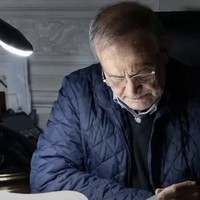
Iran's Supreme Leader Ali Khamenei attends a mourning ceremony in Tehran on July 5, 2025
Iran’s Supreme Leader Ali Khamenei’s first public appearance in over three weeks has drawn mixed reactions, with state officials and media hailing his return as a sign of strength while some online reactions from Iranians were dismissive or critical.
Former Foreign Minister Mohammad Javad Zarif heaped praise on the leader who had not been seen in public since June 10 before his reappearance at a religious ceremony Saturday night.
“The fearless presence of Ali Khamenei in a traditional public gathering permanently shattered the delusional lies that paid pundits have been pushing. Time to wake up and admit that Iranians never surrender,” he said.
Throughout the three-week gap, social media users widely mocked Khamenei’s invisibility, some likening it to a contradiction of his own past rhetoric.
In a 2005 speech, Khamenei had derided US leaders for “disappearing” after 9/11 and said, “If a bitter experience happens to Iran, we ourselves will don battle garb and stand ready to sacrifice.”
Supporters hail ‘steadfast’ image
Government-aligned figures such as Zarif had earlier insisted that Khamenei’s absence was a leadership tactic, but shifted their tone following the ceremony on Saturday to label it a sign of bravery.
Foreign Minister Abbas Araghchi, called the reappearance “the most beautiful image I saw upon arriving in Brazil” as he arrived for the Brics summit, and added: “With you, one can brave the seas.”
Mehdi Fazaeli, a member of Khamenei’s office, wrote on X that "the mourning hall exploded", referring to the crowds' excitement for the reappearance of the elusive leader at the mourning ceremony held on the occasion of Ashura.
"The waves of this explosion will sweep through Tel Aviv and the White House. It was an explosion of love, devotion, and union," he said.
Mohsen Rezaei, a senior member of the Expediency Council and a former IRGC commander, portrayed the event as a rallying moment for a nation still suffering the fallout of the 12-day war launched by Israel on June 13.
“When people’s eyes fell on our Leader’s stature, all understood this house’s pillar is firm and no storm can uproot it,” he said.
Iran International editor Morteza Kazemian argued the reappearance is unlikely to restore the status quo of pre-war normalcy, citing the weight of insecurity now surrounding Iran’s defense posture.
“The war showed the country’s skies are defenseless, putting Khamenei squarely among Israel’s potential targets," he said.
Naim Qassem, the Secretary General of Iran's largest regional ally, Hezbollah in Lebanon, praised Khamenei for “his courage, faith, support, and guidance."
Yet while praise flowed from allies, Iranian state institutions remained notably silent on Khamenei’s prolonged absence. Neither his office nor official media offered explanations for his whereabouts during or after the Israeli strikes.
Critics cast ceremony as political theater
Some citizens saw Khamenei’s appearance not as courage, but desperation. A video submitted to Iran International mocked his choice of song, “Ey Iran”, a patriotic anthem rarely embraced by the clerical establishment.
One viewer's message to Iran International said, “If I were him, I’d have preferred to be killed by Israel than to return in this shameful way."
Iranian Nobel laureate and lawyer Shirin Ebadi criticized Khamenei on her Telegram page, saying that while he emerged from his bolthole, the Iranian public who had no shelter from the Israeli barrage were left mourning.
”History will record him as a dictator of the same era as Saddam Hussein, Gaddafi, and Mubarak—but one who lacked even a shred of dignity," Ebadi said.
"Unlike other dictators who at least believed in themselves, he begged for power, and in complete contradiction to the ideals he once shouted from the rooftops, appeared on the eve of Ashura with a smile among a group of hand-picked loyalists saying they were ready to sacrifice their lives for him—while political prisoners and ordinary people had already been sacrificed as his human shields.”
Human rights news agency HRANA said that 1,190 Iranians were killed in the war, 4,475 injured.
Another viewer of Iran International said, “After 20 days, the ‘Great Satan’ crawled out of his hole just to say he wasn’t scared. But we’ve already understood what we needed to—you are a coward and completely spineless.”
“He came out of hiding after 22 days. If I were in his place, I would’ve rather been killed by Israel than show up among the people like this,” said another.
”Since last night, ever since this 'Supreme Mouse' crawled out of his hole, the news has been subtitling it as 'his appearance in public'. But 'public' meant when he used to attend funerals for his commanders or visited missile-struck areas. This wasn’t a public appearance—it was more like a private gathering, where everything on land and in the air had been secured just so this mouse could come out,” said another citizen.
In Israel as news of Khamenei's reemergence broke, the Jerusalem Post called it a "rectifiable mistake" that Israel did not kill Khamenei and his son Mojtaba, a potential successor.
Outside the building of the General Directorate of Prisons of Semnan Province
A Swiss citizen Iran says died by suicide in prison was a 64-year-old tourist, a Swiss foreign ministry spokesman told Iran International, adding that Switzerland is seeking more details on his arrest and death from Tehran.
The foreign ministry added on Friday that the individual had been living in South Africa for the past 20 years and was traveling in Iran as a tourist.
The email response from the ministry said that the Swiss embassy in Iran was earlier denied access to the prisoner and now wants Tehran to provide full information about his arrest and death.
"Since Switzerland was informed of the arrest, the Swiss Embassy in Tehran has been in daily contact with the Iranian authorities to obtain more information about the circumstances of the arrest and to gain access to the detained Swiss citizen," the foreign ministry said.
"However, due to the accusations (espionage – national security), the requested consular access was not granted," it added. "Switzerland is demanding that the Iranian authorities provide detailed information."
The Swiss citizen who allegedly committed suicide in Semnan Prison on Thursday had been arrested while collecting soil samples in Iran’s central desert during an Israeli airstrike, media affiliated with Islamic Revolutionary Guard Corps reported.
Meanwhile, local media quoted unnamed Iranian official as saying that person was conducting espionage when he was arrested. The name of the Swiss citizen and the circumstances of his arrest and death remain unclear.
“This individual used prior intelligence training to take their own life during a specific opportunity,” Mashregh News, a publication affiliated with the Islamic Revolutionary Guard Corps (IRGC), reported late Thursday, citing an unnamed security official.
"Switzerland is demanding that the Iranian authorities provide detailed information on the reasons for his arrest and a full investigation into the circumstances of his death," the Swiss foreign ministry said.
The individual, detained by the IRGC Intelligence Organization, was accused of gathering information in a sensitive area during Israel's October air attack. The media report specifically said that this occurred during the Shahroud attack, which targeted an IRGC missile facility. Satellite imagery from Planet Labs later revealed significant damage to the site, known for building ballistic missiles and launching rockets as part of Iran’s space program.
After their arrest, the person was transferred to Semnan Prison, where they allegedly revealed information about their network and communication links, according to the outlet.
A local judiciary official confirmed the death on Thursday, saying that the Swiss national, facing espionage charges, had committed suicide in their cell.
Switzerland has also confirmed the death. "The FDFA confirms the death of a Swiss citizen in Iran," spokesperson Pierre-Alain Eltschinger told Iran International. "The Swiss Embassy in Tehran is in contact with the local authorities to clarify the circumstances of the death in an Iranian prison," he added.
According to Mizan, Iran's judiciary news website, the detainee asked their cellmate on Thursday morning to purchase food from the prison canteen. While alone in the suite, the detainee reportedly took their own life. "Prison officials immediately intervened to save the individual, but their efforts were unsuccessful," Mohammad Sadegh Akbari, a local judiciary official, was quoted as saying. “Suicide has been definitively confirmed.”
Iran has arrested dozens of dual nationals and foreigners in recent years, often on charges of espionage or security-related offenses. Some of these detainees have been released in exchange for deals involving Iranians held in foreign prisons.