French President Emmanuel Macron in a phone conversation with his Iranian counterpart called for Tehran's return to the negotiating table to address ballistic and nuclear issues, and for the resumption of the IAEA's work in Iran, his X account said.
He also called on Tehran to respect the ceasefire with Israel and to help restore peace in the region, the post on his X said.
Macron said he also called for the release of French nationals Cécile Kohler and Jacques Paris and the protection of French nationals and facilities in Iran, which "must not be subject to any threats."
The United States intercepted private communications between senior Iranian officials discussing the US strikes on Iran’s nuclear facilities, in which the officials said the attacks were less damaging than expected, The Washington Post reported, citing four people familiar with classified intelligence circulating within the US government.
In the exchanges, Iranian officials speculated on why the strikes ordered by President Donald Trump were not as extensive or destructive as they had anticipated, the report added citing the unnamed sources.
The Trump administration did not dispute the existence of the intercepted messages but firmly rejected the Iranian assessment, casting doubt on Tehran’s ability to evaluate the level of destruction at the three targeted nuclear facilities.
“It’s shameful that The Washington Post is helping people commit felonies by publishing out-of-context leaks,” said White House press secretary Karoline Leavitt. “The notion that unnamed Iranian officials know what happened under hundreds of feet of rubble is nonsense. Their nuclear weapons program is over.”
"The US president exaggerated what happened in an unusual way, revealing that he needed to do so," reads a new post on the X account of Iran’s Supreme Leader Ali Khamenei.
"Anyone hearing those remarks could sense that behind the surface, there was another reality. They failed to achieve anything and are exaggerating in order to cover up and conceal the truth."
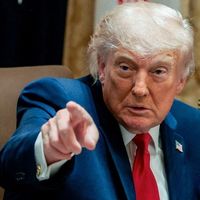
US President Donald Trump said on Sunday he would consider lifting sanctions against Iran, including those targeting its oil exports, if the country shows it is willing to stop hostile behavior and pursue a more peaceful course.
“Sanctions cost us a lot of money but I would... start waiving them for countries like Iran, if they behave themselves, where they can sell oil and they can do the things that you want to be able to do," Trump told Fox News in an interview aired on Sunday.
Trump denied suggestions that his administration had allowed China to buy sanctioned Iranian oil, insisting that sanctions remained in place.
But he added that “if they do a job, and if they can be peaceful, and if they can show us they’re not going to do any more harm, I would take the sanctions off.”

US President Donald Trump said on Sunday he would consider lifting sanctions against Iran, including those targeting its oil exports, if the country shows it is willing to stop hostile behavior and pursue a more peaceful course.
“Sanctions cost us a lot of money but I would... start waiving them for countries like Iran, if they behave themselves, where they can sell oil and they can do the things that you want to be able to do," Trump told Fox News in an interview aired on Sunday.
On June 24, Trump declared on Truth Social that that China can now resume purchasing oil from Iran. One day later, he said he was not aiming to cut off Iran’s oil revenues as it needs it to rebuild after the war with Israel.
However, Trump said on Friday that he halted his work on lifting sanctions on Iran to support its recovery following Iran’s Supreme Leader Ali Khamenei's "statement of anger, hatred, and disgust."
In his Sunday interview, Trump denied suggestions that his administration had allowed China to buy sanctioned Iranian oil, insisting that sanctions remained in place.
But he added that “if they do a job, and if they can be peaceful, and if they can show us they’re not going to do any more harm, I would take the sanctions off.”
Trump also touched on the Israel normalization deals called Abraham Accords, saying the Iranian threat had previously been a major obstacle to broader regional peace.
“Iran was the primary problem,” he said. “I actually thought we had a period of time where I thought Iran would join the Abraham Accords along with everybody else. And, frankly, they would have been better off than where they are right now.”
He added that new countries have shown interest in joining the accords following Iran’s setbacks, without naming specific states.
Iran’s Foreign Ministry has strongly condemned the US president's remarks targeting the country’s Supreme Leader, calling them offensive, undiplomatic, and a violation of international norms.
"Iran's foreign ministry strongly condemns the offensive remarks and undignified behavior of the President of the United States regarding the Supreme Leader and the people of Iran," the ministry said in a statement on Sunday.
It described the comments as an insult not only to Iran but to the broader Muslim world, saying they "deeply wounded the sentiments of hundreds of millions of Muslims in the region and around the world."
The statement warned that such rhetoric only deepens animosity toward the United States. "Undoubtedly, these insulting and bullying remarks and actions against Iran and the respected political and religious figures of Iranians and Muslims will only intensify disgust and hatred toward America’s short-sighted policies and further discredit its claims of seeking dialogue and engagement."