Iran’s 60% enrichment has no civilian justification, US tells IAEA board
The US told the IAEA Board of Governors on Wednesday that Iran’s ongoing nuclear escalation, including enrichment to 60%, has “no credible civilian application” and raises serious proliferation concerns.
"Iran is the only country in the world producing uranium enriched to 60 percent that does not have nuclear weapons, an act that has no valid civilian application," Chargé d’affaires Howard Solomon said.
“Iran now has a clear opportunity to build confidence: by providing the Agency with greater transparency, not less; by implementing the Additional Protocol, not limiting inspections; by ending its production of highly enriched uranium, not accelerating it; by accepting the designation of Agency inspectors, not undermining the Agency’s verification,” he added, warning that continued escalation would only deepen mistrust.
"This path forward starts with Iran ceasing its escalatory nuclear activities, fulfilling its safeguards obligations, and allowing the Agency to provide assurance that its nuclear program is exclusively peaceful. Continuing to move in the opposite direction will only move Iran further from its goals."
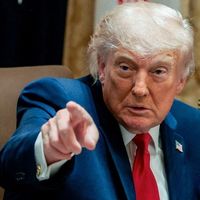
US President Donald Trump speaks during a swearing-in ceremony of Special Envoy Steve Witkoff in the Oval Office at the White House in Washington, May 6, 2025
US President Donald Trump said he is growing increasingly doubtful that Iran will agree to halt uranium enrichment as part of a renewed nuclear deal with Washington, while reaffirming his commitment to preventing Tehran from acquiring a nuclear weapon.
“They seem to be delaying, and I think that’s a shame, but I’m less confident now than I would have been a couple of months ago,” Trump said in an interview released Wednesday on Pod Force One, a podcast hosted by New York Post columnist Miranda Devine.
“Something happened to them, but I am much less confident of a deal being made.”
Despite the growing pessimism, Trump stressed that Iran will not be allowed to develop a nuclear bomb. “If they don’t make a deal, they’re not going to have a nuclear weapon, too. So it’s not going to matter from that standpoint.”
“But it would be nicer to do it without warfare, without people dying — it’s so much nicer to do it,” Trump added. “But I don’t think I see the same level of enthusiasm for them to make a deal. I think they would make a mistake, but we’ll see. I guess time will tell.”
In March, Trump threatened to bomb Iran if a new deal was not reached within a deadline which he did not state publicly.
His latest comments come amid a stalled diplomatic effort led by his Middle East envoy, Steve Witkoff, who has held five rounds of indirect talks with Iranian representatives for the past few months without significant progress.
Witkoff has previously suggested allowing limited uranium enrichment for civilian use, echoing terms from the 2015 nuclear deal brokered under President Barack Obama. Trump withdrew from that agreement in 2018, calling it “deeply flawed.”
However, US officials in both the State Department and White House have maintained a hard line, insisting Iran should not be allowed to enrich uranium at all — even for peaceful purposes.
Asked whether China might be influencing Iran’s reluctance to engage, Trump dismissed the idea. “I just think maybe they don’t want to make a deal. What can I say? And maybe they do. So what does that mean? There’s nothing final.”
Also on Wednesday, Iran's Foreign Minister Abbas Araghchi said that a nuclear deal with the US is within reach, framing Tehran’s opposition to nuclear weapons as a potential basis for agreement.
Araghchi wrote on X that Trump says Iran should not acquire nuclear weapons, adding, “That is actually in line with our own doctrine and could become the main foundation for a deal."
Talks are set to resume Sunday, and Araghchi expressed optimism about a rapid resolution, provided key conditions are met.“An agreement that can ensure the continued peaceful nature of Iran's nuclear program is within reach—and could be achieved rapidly.”
Any deal, he added, must preserve Iran’s enrichment capabilities while lifting sanctions: “That mutually beneficial outcome relies on the continuation of Iran's enrichment program, under the full supervision of the International Atomic Energy Agency’s (IAEA), and the effective termination of sanctions.”
In a statement delivered at the IAEA Board of Governors meeting in Vienna earlier in the day, the European Union warned that Iran’s continued production of highly enriched uranium is pushing the Middle East toward a potential nuclear proliferation crisis.
On Tuesday, the Europe-based opposition group National Council of Resistance of Iran (NCRI) released a report estimating Tehran has spent at least $2 trillion on its nuclear program over the past three decades.
Iran’s nuclear program will be a key topic in the next round of US-Russia bilateral talks, Russian Deputy Foreign Minister Sergei Ryabkov said Wednesday.
The talks are set to take place “very soon” in Moscow. The negotiations follow earlier rounds in Turkey and are aimed at addressing deepening tensions and restoring diplomatic channels between Washington and Moscow.
Ryabkov said Russia is prepared to offer practical help to both sides, including the removal of enriched nuclear material from Iran for conversion into reactor fuel.
“We are ready to provide assistance to both Washington and Tehran, not only politically, not only in the form of ideas that could be of use in the negotiation process, but also practically: for example, through the export of excess nuclear material produced by Iran and its subsequent adaptation to the production of fuel for reactors,” he told Russian media.
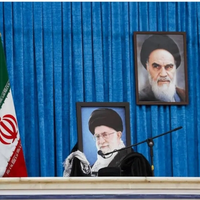
The fate of Iran’s enrichment program remains the core sticking point: President Trump insists Tehran must not acquire nuclear weapons, while Supreme Leader Ali Khamenei has ruled out abandoning enrichment.
The Kremlin said last week that President Vladimir Putin had informed Trump by phone of Russia’s readiness to use its ties with Iran to help bridge differences.
Russia’s ambassador to Washington, Alexander Darchiev, confirmed that the third round of talks will be held in Russia and will include discussions on wider Middle East issues, including Iran’s nuclear trajectory.
President Donald Trump said he is less confident that Iran will agree to a revised nuclear deal but insisted Tehran will not obtain a nuclear weapon under any circumstances.
Speaking on the debut episode of Pod Force One with the New York Post's Miranda Devine, Trump said, “They seem to be delaying, and I think that’s a shame, but I’m less confident now than I would have been a couple of months ago. Something happened to them, but I am much less confident of a deal being made.”
“If they don’t make a deal, they’re not going to have a nuclear weapon… If they do make a deal, they’re not going to have a nuclear weapon,” he said.
“But it would be nicer to do it without warfare, without people dying, it’s so much nicer to do it. But I don’t think I see the same level of enthusiasm for them to make a deal. I think they would make a mistake, but we’ll see. I guess time will tell.”
On external influences, Trump denied China’s role in Iran’s resistance, saying, “I just think maybe they don’t want to make a deal.”
His remarks follow new claims from the exiled National Council of Resistance of Iran that Tehran has spent $2 trillion on its nuclear program in the last three decades, pointing to the so-called “Kavir Plan”—a suspected covert weapons project—as evidence that “Tehran’s dash to obtain nuclear weapons has intensified.”
Iran’s conflict with the United States is ideological and enduring, said IRGC commander Major General Hossein Salami on Wednesday.
“Our enmity with America is a matter of belief and part of the struggle against arrogance,” he said.
Salami added that sanctions are only one aspect of a deeper confrontation, which “will not end because it stems from our convictions.”
The IRGC chief described today’s tensions as a continuation of the 1980s Iran-Iraq war, calling that war a defining moment that “revealed and revived our identity.” The struggle, he said, continues across different battlefields.
European Union flags outside the European Commission headquarters in Brussels, Belgium
The European Union warned on Wednesday that Iran’s continued production of highly enriched uranium—now theoretically exceeding nine weapon-grade quantities—is pushing the Middle East toward a potential nuclear proliferation crisis.
In a statement delivered at the International Atomic Energy Agency’s (IAEA) Board of Governors meeting in Vienna, the EU said Iran’s nuclear trajectory poses serious proliferation risks and accused Tehran of gaining irreversible knowledge through its expanding uranium enrichment program.
“The risk of a nuclear proliferation crisis in the region is increasing as a result of Iran’s escalating nuclear trajectory," the statement read.
“Iran’s unabated nuclear advances over the last five years are of utmost concern,” the EU said. “These actions have no credible civilian justification and carry very significant proliferation-related risks.”
Citing the IAEA’s latest report, the EU said that Iran is now producing more than one Significant Quantity of uranium enriched to 60% each month. A "significant quantity" of highly enriched uranium is defined by the agency as the amount of nuclear material where the possibility of manufacturing a nuclear explosive cannot be excluded.
Iran is currently stockpiling 60-percent enriched uranium, which can be quickly refined to the 90% threshold required for nuclear weapons. Estimates suggest Iran could achieve this level within weeks.
Iranian officials are vocal about weapons, EU warns
The EU further warned that former Iranian officials have made public statements about the country having all capabilities to assemble a nuclear weapon, deepening suspicions about Tehran’s intentions.
"The statements made by former high-level Iranian officials about Iran having all capabilities to assemble a nuclear weapon raise grave concerns about Iran’s intentions,” the EU said without elaborating. “Iran is the only non-nuclear weapon state to produce and accumulate highly enriched uranium in significantly increased amounts.”
In the past few years, Iranian officials have become increasingly explicit about the country’s readiness to produce nuclear weapons and the potential abandonment of its long-standing opposition to them.
A general view before the start of quarterly Board of Governors meeting at the IAEA headquarters in Vienna, Austria, June 9, 2025.
Islamic Republic officials say that according to a fatwa (Islamic decree) by the Supreme Leader, the construction of an atomic bomb is not on Tehran's agenda. Experts note such rulings can be reversed.
Kamal Kharrazi, a senior advisor to Ali Khamenei and head of the Strategic Council on Foreign Relations, said on several occasions that Iran “already has the technical capabilities to produce weapons” and would revise its military doctrine if faced with an existential threat.
His remarks in November followed similar statements by former nuclear chief Ali Akbar Salehi, who said Iran has crossed all technological thresholds needed for a bomb.
Parliamentarian Ahmad Bakhshayesh Ardestani explicitly urged the decision-makers to escalate enrichment and begin weapon production, arguing further sanctions are unlikely to change Iran’s strategic calculus.
Calls for weaponization have also emerged on media affiliated with the Revolutionary Guards amid rising regional tensions.
Reza Najafi, Iran’s envoy to the IAEA, at the 1762nd Board of Governors meeting held at the agency headquarters in Vienna, Austria, June 9, 2025
Iran’s cooperation with IAEA
The EU also condemned Iran’s decision to cease implementation of monitoring measures under the 2015 nuclear deal and to remove IAEA surveillance equipment, actions that it said have irreparably disrupted oversight.
“The agency has lost continuity of knowledge in relation to the production and current inventory of centrifuges, rotors and bellows, heavy water and uranium concentrate, which it will not be possible to restore. This has detrimental implications for the agency’s ability to provide assurance of the peaceful nature of Iran’s nuclear program,” the EU said.
While expressing support for a diplomatic solution, the EU urged Iran to reverse course and return to compliance with its nuclear-related commitments.
“We strongly urge Iran to return to the provisional implementation of the Additional Protocol, to ratify it, and to resume implementation of all JCPOA-related verification measures.”
The EU also called on Iran to fully cooperate with the IAEA and expressed support for Director General Rafael Grossi’s efforts to re-establish monitoring access. “Timely and full cooperation with the IAEA remains absolutely crucial,” the EU said.
The statement was endorsed by multiple European countries, including Norway, Ukraine, and North Macedonia.
The EU also requested that the IAEA’s latest report on Iran be made public.
Iran should implement NPT additional protocol, US says
Later in the session, the United States also called on Iran to halt its accelerating nuclear activities, warning that its enrichment of uranium to near weapons-grade levels lacks any credible civilian justification and raises serious proliferation concerns.
US chargé d’affaires Howard Solomon said the IAEA's latest report makes clear that Iran is the only non-nuclear-weapon state enriching uranium to 60%, a level with no valid civilian purpose.
“Iran continues to accelerate its nuclear activities without any credible civilian justification,” Solomon told the Board of Governors. “The Director General’s report is an impartial statement of verifiable facts.”
“Iran now has a clear opportunity to build confidence… by implementing the Additional Protocol, not limiting inspections,” Solomon said.
The Additional Protocol to Iran's Non-Proliferation Treaty (NPT) safeguards agreement, signed in 2003, granted the UN watchdog broader rights of access and more detailed information on Iran's nuclear activities.
Although Iran never formally ratified it, it implemented the Additional Protocol from 2003 to 2006 before announcing it would no longer do so. In January 2016, Iran resumed provisional implementation of the Protocol in line with the terms of the 2015 nuclear deal.
However, in February 2021, Iran suspended its implementation—at the direction of its parliament— nearly three years after Trump pulled out of the accord and adopted its so-called maximum pressure sanctions.
Washington voiced its commitment to preventing Iran from obtaining nuclear weapons, with Solomon saying that the US is “negotiating in good faith” toward a diplomatic resolution.
“This path forward starts with Iran ceasing its escalatory nuclear activities,” Solomon said.