A police motorcycle burns during popular protests in Iran, September 19, 2022.
Warnings of unrest are growing louder in Iran, with the hardline daily Kayhan the latest to raise the alarm—pointedly avoiding Tehran’s governance failures and instead pinning potential protests on Washington and its alleged scheming.
Warnings of unrest are growing louder in Iran, with the hardline daily Kayhan the latest to raise the alarm—pointedly avoiding Tehran’s governance failures and instead pinning potential protests on Washington and its alleged scheming.
“All evidence suggests that, contrary to its public posture, America is not genuinely focused on Iran’s nuclear issue or enrichment levels,” wrote Kayhan editor Hossein Shariatmadari, who is appointed by Supreme Leader Ali Khamenei.
“From America’s perspective, the final destination of the negotiations is inciting sedition and creating unrest inside the country,” Shariatmadari said, suggesting that Washington aims to drag out the talks until protests erupt.
The tone is notable. While Kayhan routinely blames foreign actors for domestic troubles, its explicit anticipation of unrest places it—at least on the outcome—in rare alignment with more moderate voices warning of a volatile summer.
“Chaos is imminent,” former vice president Eshaq Jahangiri told the reformist daily Arman Melli on Monday, “not just because of sanctions, but because public trust in the state has collapsed.”
Jahangiri blamed successive governments for failing to implement the 20-year development plan launched in 2005 to position Iran as the region’s leading economic and technological power.
“Not a single administration has carried out the vision set in the five-year strategies,” he said. “Iran was once on par with Saudi Arabia and Turkey… now we lag behind them—and behind smaller Persian Gulf states.”
Such warnings have intensified in recent weeks, as Iran’s energy crisis deepens. The country faces a 25-gigawatt electricity shortfall this summer, according to the influential economic daily Donya-ye Eqtesad, which on Monday warned of a looming “socio-economic explosion.”
The paper—typically technocratic in tone—now says the power shortage has escalated from a solvable issue to a full-blown national crisis.
In recent days, poultry farmers, bakers, and produce vendors have voiced their frustration in interviews with foreign-based Persian media. Meanwhile, truck drivers in over a hundred towns and cities continue their strike despite a police crackdown and arrests.
Touching on the broader climate of discontent, Jahangiri warned that the Islamic Republic’s social capital has been steadily eroding for two decades.
“This level of regression will not be easily remedied,” he concluded.
Iranian President Masoud Pezeshkian said on Monday that Iran can survive without engaging in negotiations with the United States and even withstand increased sanctions as Tehran stands firm amid tough nuclear talks and US demands to cease uranium enrichment.
“It’s not like we will die of hunger if they refuse to negotiate with us or impose sanctions. We will find a way to survive,” Pezeshkian said referring to indirect nuclear negotiations with the US.
Speaking at a ceremony marking the anniversary of the founding of Islamic Azad University, Pezeshkian emphasized self-reliance, unity, and the mobilization of Iran’s domestic talent. “If we reach agreement internally with our people and elites, we will not need anyone else,” he said.
Pezeshkian, a moderate politician elected last year, expressed optimism about Iran’s ability to overcome economic and political challenges, including sanctions. “There are hundreds of ways to overcome problems. We must unite and let our experts act,” he added.
Iran and the United States have engaged in indirect nuclear talks through intermediaries in recent months. While no formal deal has been announced, US officials have hinted at progress toward de-escalation.
Iran has been under heavy US sanctions since Washington withdrew from the 2015 nuclear deal in 2018. Those have since increased since 2022 with the Woman, Life, Freedom protests leading to further global sanctions for rights abuses and Iran's support of Russia's war on Ukraine garnering others.
Pezeshkian’s administration has signaled a willingness to resolve domestic and international challenges through a combination of dialogue, resilience, and national unity. “Whether the enemy wants it or not, we will bring our country to the place it deserves,” he said.
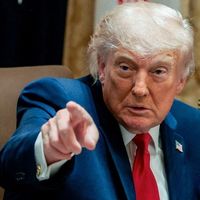
US President Donald Trump has warned Iran that if a new nuclear deal is not reached, the US will 'bomb' Iran.
However, talks are sticking over the issue of Iran's uranium enrichment which the US wants Iran to stop completely, but which Iran says is its red line.
A nationwide truck drivers’ strike in Iran entered its fourth day on Sunday, with protests spreading to dozens of cities and major highways despite a police crackdown and arrests.
The Union of Iranian Truckers and Heavy Vehicle Drivers said in a statement on Sunday that police used pepper spray on protesting drivers and arrested several of them.
Launched on May 22 in the southern port city of Bandar Abbas, the coordinated protest has since spread widely across the country, with truckers pledging to hold out for a full week or longer if their demands remain unmet.
Drivers are demanding better working conditions, higher freight rates, and relief from high insurance costs and fuel restrictions.
On Sunday, drivers in the southeastern cities of Jiroft and Sirjan, the western cities of Shabab in Ilam province and Asadabad in Hamadan province, and several locations in Tehran province, including Pakdasht, joined the strike.
Videos show parked freight trucks, drivers refusing cargo, and protest actions such as horn-blaring. The strike has disrupted traffic on key highways and industrial zones.
Footage received by Iran International on Sunday showed strikes continuing in cities across the provinces of South Khorasan, Ardabil, Bushehr, Sistan and Baluchestan, Gilan, Fars, Isfahan, Qazvin, West Azarbaijan, Yazd, and Razavi Khorasan.
Government response
Despite state media efforts to portray freight operations as normal, the scale of the strike has prompted responses from senior officials.
Parliament speaker Mohammad Bagher Ghalibaf on Sunday called truckers a “key link in the production and supply chain” and urged the government to act quickly. He cited high costs of vehicles and spare parts, insurance burdens, and unfair freight distribution.
Mehdi Khezri, deputy head of the Road Maintenance and Transportation Organization, said base fuel quotas would remain unchanged and that the issue was under review.
He added that meetings were being held with the Social Security Organization and the interior ministry, and that a cabinet-level proposal to reduce insurance costs was under discussion.
Khezri acknowledged that a 45% rise in insurance premiums earlier this year had triggered discontent.
Mohammad Mohammadi, deputy head of the Social Security Organization, said the government continues to pay 50% of the 27% insurance contribution for truckers and that this had not changed.
The IRGC-affiliated Fars News Agency called reports of steep insurance hikes “rumors.”
Previous truckers' strikes
Iran’s truck drivers have staged several large-scale strikes in the past.
In 2018, drivers across dozens of cities stopped work for several weeks over low freight rates, high insurance costs, and access to parts, leading to arrests and government warnings.
In 2022, truckers again walked off the job in solidarity with nationwide protests following the death of Mahsa Amini, who died in police custody over an alleged hijab violation.
Director Jafar Panahi, Palme d'Or award winner for the film "Un simple accident" (It Was Just an Accident), poses with award next to a team of the film, Juliette Binoche, Jury President of the 78th Cannes Film Festival, Cate Blanchett and Master of ceremony Laurent Lafitte , during the closing ceremony of the 78th Cannes Film Festival in Cannes, France, May 24, 2025.
Iranian dissident filmmaker Jafar Panahi received the Palme d’Or at the 78th Cannes Film Festival for his film It Was Just an Accident, earning widespread praise from political, civic and cultural figures around the world.
The award for his film It Was Just an Accident, hailed as a milestone for Iranian cinema and a symbolic victory for freedom of expression, also sparked harsh criticism from pro-government media in Iran.
Panahi, a former political prisoner banned from travel and filmmaking for over a decade, received a standing ovation at the award ceremony.
The Palme d'Or was presented by acclaimed actress Cate Blanchett on Saturday night. In his acceptance speech, Panahi struck a unifying tone, calling on Iranians inside and outside the country to "set aside our differences" and work collectively toward democracy, dignity and human rights.
“Let no one tell us what to wear, what to do or what films to make,” he said, drawing repeated applause from the audience.
The moment was described by French Foreign Minister Jean-Noël Barrot as a "symbolic act of resistance" against repression. “Jafar Panahi’s Palme d’Or revives hope for freedom fighters around the world,” Barrot wrote on X.
A national and global moment
The win drew emotional reactions from across Iranian political and artistic figures at home and abroad.
Nobel Peace Laureate Narges Mohammadi, writing from inside Iran, described Panahi as a “brave and distinguished director” whose recognition was the result of years of relentless effort to deepen human and civil values through art.
Prince Reza Pahlavi, the exiled heir to Iran’s former monarchy, congratulated Panahi and called the award a “great honor for Iran.” He expressed hope that Iranian filmmakers could one day work “without censorship or restriction” in their homeland.
Iranian activist Hamed Esmaeilion called Panahi a “true hero,” praising his resilience in the face of censorship and repression. “His courage inspires all who fight for justice and freedom,” he said.
Political prisoner Mehdi Mahmoudian, speaking from Tehran’s Evin Prison, said the award was “not just a cinematic honor, but a victory of truth over censorship.”
Iranian-British actress Nazanin Boniadi also praised Panahi’s speech, calling him a “unifying voice” at a time when Iranians are searching for solidarity and vision.
The wave of celebration was echoed by 135 civil, political, and cultural activists, who issued a joint statement lauding Panahi as a symbol of artistic integrity and human rights advocacy.
The statement said that Panahi had joined a rare class of filmmakers alongside legends like Michelangelo Antonioni and Robert Altman—to win all three major European film prizes: the Golden Bear (Berlin), Golden Lion (Venice), and now the Palme d’Or (Cannes).
Director Jafar Panahi, Palme d'Or award winner for the film "Un simple accident" (It Was Just an Accident), poses during a photocall after the closing ceremony of the 78th Cannes Film Festival in Cannes, France, May 24, 2025.
Film made in defiance
It Was Just an Accident, a political thriller, was shot clandestinely in Iran without government authorization and in open defiance of mandatory hijab laws.
The film’s production and Panahi’s public defiance of censorship laws have drawn admiration from international film communities and rights groups.
The Cannes jury also awarded Panahi the Festival’s Citizenship Prize, recognizing his broader contributions to freedom of expression.
An increasing number of Iranian filmmakers are defying the country's strict ideological censorship by making movies without seeking the Culture Ministry's permission for screening abroad.
Last year, prominent Iranian filmmaker Asghar Farhadi said he will not produce any films in Iran until the ban on showing women without headscarves is lifted, as people demand.
Official backlash in Tehran
Inside Iran, however, the award was met with either silence or anger from state-linked outlets.
The conservative daily Farhikhtegan, affiliated with Islamic Azad University, dismissed the honor with the headline: “Palme d’Or Turns to Rust”.
The editorial accused European film festivals of orientalist bias and suggested that Panahi’s acclaim was driven by political motives rather than artistic merit.
The Student News Agency (SNN) went further, branding Panahi a “middleman” and “Iran-seller.” It called the ceremony a “political show” orchestrated by “PR marketers.”
Despite the criticism, Panahi’s victory has reignited conversations around freedom of expression, artistic resistance, and national unity among Iranians worldwide.
As he left the stage in Cannes, Panahi expressed a simple hope: “I dream of an Iran where artists are not silenced, where truth has no borders, and where no one lives in fear for telling a story.”
File photo of women without mandatory hijab in Tehran
Iran's Parliament Speaker Mohammad-Bagher Ghalibaf said on Sunday that the Supreme National Security Council (SNSC) has instructed the legislature not to enforce a contentious law mandating stricter hijab regulations.
“Although I had no intention of publicly declaring this in such explicit terms, the SNSC has formally written to the Parliament, directing us not to promulgate the hijab and chastity law for now," Ghalibaf told lawmakers.
His remarks came in response to a demand from hardline MP Mohammad-Taghi Naghdali, who urged the Speaker to forward the bill for executive enforcement.
The legislation—officially titled The Law to Support the Family by Promoting Chastity and Hijab—was passed by Parliament in December 2023 but has remained unenforced amid internal disagreements and widespread public opposition at home and abroad. The United Nations said the proposal amounted to "gender apartheid".
Ghalibaf emphasized that, under Article 176 of Iran’s Constitution, the SNSC has overriding authority on matters of national security.
“When the Council issues a directive of this nature, the Speaker has no legal authority to proceed with enforcement,” he said.
Behind-the-scenes power struggles
The decision underscores an intensifying struggle between Iran’s ultra-conservative factions, who demand immediate enforcement, and state institutions seeking to avoid further social unrest.
In recent months, hardliners and religious vigilante groups have mounted increasing pressure on authorities to enforce the law, even staging sit-ins outside Parliament that were eventually broken up by police.
Mohammad-Mannan Raisi, a firebrand MP closely aligned with the ultraconservative Paydari (Steadfastness) Front, recently accused the SNSC of betraying the Islamic Republic’s core supporters by halting enforcement of what he called “God’s commandments.”
The SNSC’s September 2024 decision to quietly shelve the law followed a wave of public backlash, echoing the protests that erupted in 2022 after the death of 22-year-old Mahsa Amini in morality police custody. The unrest marked one of the most significant challenges to the Islamic Republic in decades.
Surveillance without legislation
While the law itself remains suspended, authorities have pursued enforcement by other means.
Since late March, women in Tehran, Shiraz, and Isfahan have reported receiving text-message warnings for alleged hijab violations detected via surveillance footage.
Activists and digital rights experts say the messages are powered by AI-enabled facial recognition systems, cross-referenced with government ID databases and mobile phone data.
Critics have condemned the approach as unconstitutional and ethically fraught.
“Does the Headquarters for the Promotion of Virtue and Prevention of Vice even have legal access to people’s personal data?” asked Abdollah Ramezanzadeh, a former government spokesman and law professor, in a popular post on X.
In March, the UN's Fact Finding Mission on Iran said, "surveillance online was a critical tool for State repression," including against those rejecting the mandatory hijab.
"This enforcement increasingly relies on technology, surveillance and even State-sponsored vigilantism," the investigators said, with methods including dedicated apps to report violators and the monitoring of social media.
Despite government denials, the crackdown has continued.
In April, Iran’s police signed a cooperation agreement with the Education Ministry allowing enforcement measures in schools, sparking backlash from teachers’ unions who warned of “militarizing education.”
The standoff over hijab enforcement highlights deeper political dilemmas which continue to challenge Iran’s clerical leadership.
Public defiance continues to rise. Across major cities, women are increasingly seen without headscarves in public spaces, often posting videos online in acts of civil disobedience.
Truck drivers across Iran staged a third consecutive day of strikes on Saturday, with videos sent to Iran International showing a broad and coordinated stoppage from Isfahan and Borujerd to Mashhad and ports in the south.
The strike, called by the national union of truckers and drivers, has emptied highways, halted freight movement, and drawn in voices from across the country demanding action on long-standing sector grievances.
In a video from Kaveh Industrial City in Markazi province, a driver said: “Please respect each other. These men have debts, they have loans, but they stood their ground so we can fix things.”
Another video from Firoozkouh showed drivers refusing to take loads, stating: “Not a single truck moved freight today. Every driver is on strike.”
Protesters cite steep insurance costs, delays in diesel quota refills and low cargo rates as key reasons for the strike.
A driver from Dezful sent a message saying, “These trucks’ freight rates are too low. They either don’t get fuel or the diesel fuel cards are topped up late. Why has truck and driver insurance gotten so expensive?”
The scale of the action was visible in near-empty transport corridors. A driver on the Tehran-Isfahan highway filmed the road devoid of freight trucks, saying: “Today is Saturday, May 24. This is the Tehran–Isfahan highway, and there’s not a single trailer or truck in sight.”
Another video from Sabzevar showed trailers honking in unison.
In Kazerun, farmers were seen protesting the lack of available transport for their produce.
A driver from Zarand, Kerman, urged others to maintain discipline: “This video is from Zarand. No one should enter the city until we can support each other. Stand together.”
The drivers’ union, which earlier announced, “Our trucks are silent, but our voices are louder than ever,” said the strike would continue until authorities formally commit to resolving their demands.
“We won’t be deceived again,” the union said in a statement. “No driver will turn on the engine until our demands are officially recognized and enforced.”
Exiled prince Reza Pahlavi expressed support for the truckers’ nationwide strike on Friday, writing on X: “As one of the country’s vital economic pillars, your protest against unjust working and living conditions gives voice to the shared suffering of millions of Iranians crushed for years under injustice, incompetence, and corruption.”
Launched on May 18 in Bandar Abbas, the coordinated protest has since spread to over 35 cities, with truckers pledging to hold out for a full week or possibly longer if their demands remain unmet.