An Iranian lawmaker said growing public awareness has led to greater interest in the details of ongoing negotiations with the United States, despite economic hardships.
“Public awareness has increased. People want to know what we are going to give and what we are going to take,” Hassan Qashqavi said on state TV on Wednesday.
He added that national consensus on red lines is stronger now because “our achievements are more significant.”
The conservative Khorasan newspaper wrote Thursday that US policy has shifted from military threats to driving a wedge between the Iranian public and the government—a long-term project it said will persist regardless of any agreement.
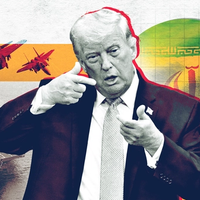
It said this strategy “can empty the negotiators’ support base and block Iran’s desired agreement,” adding, “Trump’s direct access to Iranian public opinion remains dangerous and effective and may repeat throughout his presidency.”
Ali Khamenei’s recent speech “clearly exposed the line of America’s betrayal” and warned the nation against trusting the US, said Ahmad Rastineh, a member of Iran’s parliament on Thursday.
He criticized pro-Western factions in Iran for seeing talks with Washington as a solution. Rastineh said ignoring Khamenei’s guidance had caused unnecessary costs for Iran, calling the Supreme Leader’s stance on nuclear negotiations “wise and transparent”.

Iranian media reported that the fifth round of negotiations between Tehran and Washington will be held at noon Friday in Rome.
The announcement came after Supreme Leader Ali Khamenei warned the talks may lead nowhere.
“We are still weighing whether to attend the next round,” Foreign Minister Abbas Araghchi said Wednesday, casting uncertainty over Iran’s participation just two days before the meeting.
Israel is making preparations to rapidly attack Iranian nuclear facilities if ongoing negotiations between Tehran and Washington collapse, Axios reported citing two Israeli sources with knowledge of the discussions, confirming an earlier report by CNN.
Israeli intelligence community has shifted just in the past few days from believing a was close to thinking talks could soon break down, the sources say.
Israeli Prime Minister Benjamin Netanyahu “is waiting for the Iran talks to collapse and for the moment US President Donald Trump will be disappointed about the negotiations and open to giving him the go ahead,” Axios said citing an Israeli source.
"No one dares to attack Iran,” as all parties are aware of the Islamic Republic’s defensive capabilities, Iranian Foreign Minister Abbas Araghchi told Saudi TV channel @AsharqNews.
“The language of threats does not work against Iran," he said, referring to the US threats to use the military option against Iran.
He described uranium enrichment as a “fundamental issue” for the Islamic Republic and said that major differences with the United States persist, particularly over uranium enrichment.
Responding to European threats to trigger the so-called "snapback" mechanism and restore UN sanctions against Iran, Araghchi said, “The threat is completely irrational and lacks legal and political basis. If Europe proceeds with it, it will be making a grave mistake and must accept the consequences.”