Lebanon to summon Iranian envoy over disarmament remarks – Report
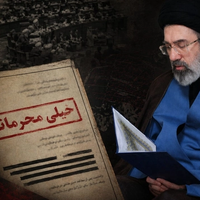
Lebanon’s Foreign Minister Youssef Raji will summon Iran’s ambassador to Lebanon, Mojtaba Amani, in the coming days following his comments on social media criticizing international disarmament efforts, Lebanese news agency Al-Markazia reported on Tuesday.
Last Friday, in a post on X, Amani called disarmament efforts a conspiracy against nations, accusing the United States of arming Israel while pressuring other countries to dismantle their arsenals.
“We in the Islamic Republic of Iran understand the danger of this conspiracy and its threat to the security of the region’s peoples. We warn others against falling into the enemy's trap,” Amani wrote. “Preserving deterrent capability is the first line of defense for sovereignty and independence and must not be compromised.”
The head of Iran’s Atomic Energy Organization said Tuesday that the country's nuclear sites are protected against threats, just weeks after US President Donald Trump threatened to bomb Iran if it did not agree to a new nuclear deal.
“Good measures have been considered, and effective steps have been taken to fortify them," Mohammad Eslami said, speaking at an event marking the anniversary of the establishment of Iran's Islamic Revolutionary Guard Corps (IRGC).
Last month, US President Donald Trump warned of bombing Iran if Tehran failed to reach a deal over its nuclear program, vowing to quash Iran's ability to build nuclear weapons. Israel has also repeatedly threatened to bomb Iran’s nuclear sites.
Eslami said effort to fortify the facilities are ongoing. "Extensive efforts have been made in recent years, and many vulnerabilities have been addressed. The current safety conditions are not comparable to the past,” Eslami added.
According to Axios, in addition to extensive damage to air defense systems, the Israeli air attack on Iran last October destroyed an active top secret nuclear weapons research facility in Parchin.
Amid a national energy crisis, Tehran emphasizes on the importance of its nuclear program, with Eslami pointing to the Bushehr power plant as a key example of nuclear energy's value.
He said that Iran spent $1.87 billion on the Bushehr plant, which has led to $8 billion in fuel savings.
"Electricity produced from nuclear power plants can effectively reduce the total cost of electricity production and return energy subsidies directly or indirectly to people's tables," Eslami said.
However, he acknowledged that nuclear power currently makes up a small fraction of Iran’s energy mix, limiting its impact on average electricity prices. “We are still in the early stages of broad nuclear electricity use, and its share in the national energy basket is very low,” he added.
Local authorities are deploying advanced surveillance technologies in Isfahan to identify and threaten women who defy the country’s strict hijab regulations, according to research by internet watchdog Filterwatch.
The NGO, which specializes in internet freedoms in Iran and the Middle East, released a report last week detailing new technologies and tools allegedly used by authorities in Isfahan, Iran's third most populous city, for hijab enforcement.
These include International Mobile Subscriber Identity-Catchers (IMSI-Catchers), data from contactless card readers, and urban surveillance cameras.
IMSI-Catchers—also known as fake cell towers—can intercept and track mobile phone communications by impersonating legitimate towers. A portable fake cell tower carried by a hijab enforcer, for instance, can connect to the cell phone of a woman not wearing the hijab on the street and identify her number.
“The combined use of IMSI-Catchers, contactless card readers, and surveillance cameras—along with access to government databases and the cooperation of telecom operators—has created a powerful, multilayered tool to systematically violate women’s rights through identification, tracking, and intimidation,” Filterwatch said in its report.
Stricter hijab enforcement in Isfahan
So far, this surveillance-driven enforcement strategy appears limited to Isfahan, a conservative bastion where hardliners have pushed for stricter hijab enforcement—even after the Supreme National Security Council (SNSC) temporarily shelved a controversial new 'hijab and chastity law' in September to avoid sparking unrest if it was brought into effect.
The law has been slammed globally by rights groups and the UN which said it amounted to gender apartheid.
In December, Iranian media unveiled the details of the new law which had been kept secret. Stricter measures against women who unveil in public would include travel bans, social media bans, prison sentences, and lashes. It also criminalizes anyone promoting the encouragement of hijab defiance.
“The Isfahan case is a serious alarm bell about the escalation of digital authoritarianism and the use of technology as a weapon against the rights of citizens, especially women, in Iran,” Nima Akbarpour, a tech expert and filmmaker, warned in a post on X.
Warning text messages reveal extent of data access
In recent weeks, dozens of women reported on social media that they received threatening text messages after visiting public places in Isfahan during the Nowruz (Iranian New Year) holidays in late March as the crackdown escalates.
Screenshots shared online show messages from various state entities, including the provincial branch of the Office for the Promotion of Virtue and Prevention of Vice, the Department of Justice, and the police.
The first two agencies warned recipients of potential legal prosecution should the violation of hijab rules be repeated. The third message, from the police, informed recipients that “evidence of the crime” had been submitted to the judiciary.
The messages included the women’s full names and specified the exact locations where the alleged violations occurred—indicating the authorities had access to their personal and location data.
In some cases, the same messages were reportedly sent to the recipient’s husband or father, demonstrating the extent of data collected.
While reports of such warnings first emerged in June 2023, local authorities only recently confirmed the practice after it appears to have become more widespread.
Last week, Amir-Hossein Bankipour, an ultra-hardline lawmaker from the province, said, "[Sending text messages] began some time ago, and its impact has already been observed, with approximately 80–90 percent of recipients complying after receiving the text message. This method has proven effective without causing social tension".
Public defiance continues
Public acts of defiance against the hijab have grown to new heights in the past year despite authorities' threats of severe legal crackdowns, occasional violence against women on the streets, and measures such as impounding vehicles if unveiled women are spotted in them.
A nationwide movement against compulsory hijab intensified following the death of Mahsa Amini in the custody of the morality police in September 2022. Her death sparked protests across Iran under the slogan "Woman, Life, Freedom," shifting public sentiment decisively against compulsory hijab.
Many women now refuse to wear the compulsory head covering, long tunics, and trousers as dictated by the country's Shariah law. They are also now often seen singing and dancing in public in defiance of the religious establishment.
Iranian Foreign Minister Abbas Araghchi will visit China on Wednesday at Beijing's invitation, the Chinese foreign ministry announced on Tuesday.
Ministry spokesperson Guo Jiakun told a regular press conference that the two sides would discuss bilateral relations, as well as international and regional "hot-spot issues of common concern."
Guo added that the visit was believed to hold great significance for deepening political mutual trust between the two nations.
Negotiations between Iran and the United States over Tehran's rapidly advancing nuclear program will move to the expert level on Wednesday, a development analysts suggest indicates the talks are progressing swiftly, according to an Associated Press opinion.
However, experts not directly involved in the discussions cautioned the AP that this step does not necessarily mean a deal is on the horizon. Instead, it shows that the initial high-level discussions between Iranian Foreign Minister Abbas Araghchi and US Mideast envoy Steve Witkoff have not collapsed over the core issue: Tehran limiting its atomic program in exchange for the lifting of economic sanctions.
Kelsey Davenport, the director for nonproliferation policy at the Arms Control Association, told the AP that "agreeing to technical talks suggests both sides are expressing pragmatic, realistic objectives for the negotiations and want to explore the details." She added that Iran would likely not engage at the technical level if Washington presented maximalist demands like the dismantling of its enrichment program.
Richard Nephew, an adjunct fellow at the Washington Institute for Near East Policy, who previously worked on Iran sanctions at the US State Department, told the AP that the value of expert talks hinges on an existing commitment to do something, with experts tasked with determining the specifics. Without such political agreement, he warned, the expert discussions could be unproductive.
The AP opinion also talked about the crucial role of technical experts in the 2015 nuclear deal, citing the understanding reached between then-US Energy Secretary Ernest Moniz and Ali Akbar Salehi of the Atomic Energy Organization of Iran.
(From left) Former US Secretary of Energy Ernest Moniz, former US Secretary of State John Kerry, former Iranian Foreign Minister Mohammad Javad Zarif and Ali Akbar Salehi, former head of Iran’s Atomic Energy Organization
Iran said on Tuesday that Russia’s position as a permanent member of the UN Security Council, coupled with its close nuclear cooperation with Tehran, positions Moscow as a key player in efforts to reach a nuclear deal with the US.
“Russia’s role as a permanent Security Council member is important, and the nuclear cooperation between Iran and Russia naturally gives it a key part to play,” government spokeswoman Fatemeh Mohajerani said on Monday, according to Iranian media.
The remarks come as speculation grows over Russia’s potential role in Iran-US talks.
According to a Guardian report published Sunday, Russia could play a central role in any future nuclear deal, with Moscow being considered not only as a potential destination for Iran’s stockpile of highly enriched uranium, but also as a possible arbiter in the event of breaches to the agreement.
The report said that one option under discussion would allow Russia to "return the handed-over stockpile of highly enriched uranium to Tehran" if the US were to violate the deal, ensuring Iran is not penalized for American non-compliance.
Mohajerani said Iran is “hopeful the good management we’re seeing from that side [the US] will help move things in a positive direction,” but emphasized that Tehran will not accept prolonged negotiations.
“We do not welcome exhausting, lengthy negotiations. A good agreement that protects our national interests is possible in the short term," she added.
Reiterating the importance of sanctions relief, she said, “Lifting sanctions should have a real impact on people’s lives".
Only Sunday, she told the state news agency, “In the continuation of the negotiation path, we will welcome any practical initiative aimed at lifting sanctions".
Not only is Iran under sanctions for its nuclear program, but since the 2022 uprising, has been sanctioned for human rights abuses in addition to sanctions for its support of Russia's war on Ukraine.
Saudi Defense Minister Prince Khalid bin Salman and Iran's Supreme Leader Ali Khamenei
Saudi visit 'beyond ordinary,' signals deeper ties
Highlighting the country's strengthening ties with its Arab neighbors, Mohajerani described the recent visit of Saudi Arabia’s defense minister to Tehran as a significant and strategic development.
“This visit went beyond a routine trip,” she said. “It carried a message from the Saudi King and included important talks. It reflects Saudi Arabia’s resolve to deepen cooperation with Iran.”
The two nations had cut diplomatic ties between 2016 and 2023 after an attack on the Saudi embassy in Tehran, but today, Iran views Saudi Arabia as a critical regional partner, she said.
Strengthening ties with neighbors—especially Muslim countries—is a priority under the Pezeshkian administration's foreign policy.
It has also seen growing ties with the United Arab Emirates, which also cut diplomatic relations in the wake of the Saudi embassy incident, until reinstating them in 2022.