Iran may propose an interim nuclear deal in talks with US - Axios
Iran is considering proposing during talks with the US that the two countries work on an interim nuclear agreement before pursuing negotiations over a comprehensive deal, Axios reported Thursday citing a European diplomat and a source familiar with the issue thinking.
Iran is looking for the interim deal as it believes achieving a deal before the two-month deadline set by Trump is not realistic, according to the report.
“The Iranians seem to believe that a sustainable deal is unlikely to be achieved in the timeframe that President Trump has in mind. It might therefore be necessary to consider an interim agreement as a way station toward a final deal," the report said citing Ali Vaez, director of the Iran project at the International Crisis Group.
Iranian and American delegations are scheduled to arrive in Muscat on Saturday morning and the negotiations are set to begin in the afternoon, the Revolutionary Guard-affiliated Tasnim News reported.
The talks will begin after separate meetings with Oman's Foreign Minister, who will act as the mediator between the two sides, it added.
The report cited sources familiar with the matter saying Iran has clearly outlined its red lines ahead of the talks. "These include a strict rejection of any threatening rhetoric from the American delegation, a firm refusal to entertain excessive demands or frameworks regarding its nuclear program, and an insistence that no discussions related to Iran’s defense industry be raised."
"Iran will not tolerate any form of threat or attempts to cross these red lines during the negotiations," the report said citing the sources.
"However, they added that Iran remains open to building confidence around the peaceful nature of its nuclear program—provided that sanctions are lifted in return."
"If the US is genuinely concerned only about the possibility of an Iranian nuclear bomb, the path to agreement should not be difficult," Tasnim cited the sources as saying.
"But if the Americans enter the talks with duplicity and excessive demands, they must be prepared to shoulder the international blame for any obstruction of the negotiation process."
Iran's former foreign minister expressed hope that upcoming talks between Iran and the United States in Oman would lead to Mideast peace.
"Muscat means birthplace. Thirteen years ago, during my service in the foreign ministry, direct pre-JCPOA talks with the United States were born in this very city," Ali Akbar Salehi wrote in a post on X Thursday, referring to a 2015 nuclear deal.
"In politics, prediction is neither possible nor desirable, but we have always returned from Muscat with great success. I hope this city will be the foundation of a lasting spring in the Middle East," Salehi added.
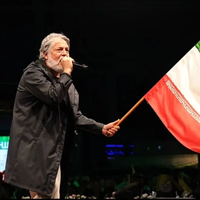
A group of hardliners gathered in front of the Iranian Foreign Ministry on Thursday to protest the Islamic Republic's upcoming negotiations with the United States.
The protesters held placards reading, "You'll make a deal again, they'll scrap it again" and "We need guarantees."
Another placard read, "We need a few wise, dignified and honorable officials," referencing Khamenei's earlier stance that negotiations with the US are "unwise, undignified and dishonorable."
Similar protests were held on Wednesday in Tehran's Palestine Square, during which hardline demonstrators torched and trampled on US and Israeli flags.
The United States on Thursday criticized a suggestion by influential former Iranian security chief Ali Shamkhani that US threats could prompt Tehran to end cooperation with United Nations nuclear inspectors and hide its uranium.
“These actions—the threat of that kind of action—are inconsistent with Iran’s claims of a peaceful nuclear program,” State Department spokesperson Tammy Bruce said during a press briefing.
“Iran is the only non-nuclear weapons state producing highly enriched uranium at this level,” she said.
“Why would one need to do that if it was for peaceful energy work? Doesn't make much sense.”
Mai Sato, Special Rapporteur on the situation of human rights in the Islamic Republic of Iran
Iran plans to amputate the fingers of three men convicted of theft on Friday just days after executing five political prisoners, prompting alarm from UN human rights experts and international rights groups.
"Three men in Iran face imminent finger amputations that may be carried out as early as tomorrow (11 April 2025). The prohibition of torture and ill-treatment is absolute and allows no exceptions," Mai Sato, Special Rapporteur on the situation of human rights in the Islamic Republic of Iran, said in a post on X.
UN experts, which include Sato, expressed deep concern over the planned amputations, saying it violates international law and called for the immediate halt of such punishments.
In their statement, the UN experts said the three men were convicted of theft in 2019 and sentenced to amputation, with the Supreme Court upholding the verdict in 2020 despite allegations of torture.
Iran executes five political prisoners
The planned amputations come just days after Iran executed five political prisoners on Tuesday in Mashhad Central Prison, in northeastern Iran.
Left to right- Farhad Shakeri, Abdolhakim Azim Gorgij and Abdolrahman Gorgij.
The five prisoners, identified as Farhad Shakeri, Abdolhakim Azim Gorgij, Abdolrahman Gorgij, Taj Mohammad Khormali, and Malek Ali Fadayi Nasab, were convicted of “armed rebellion” for their affiliation with banned political groups, according to Norway-based rights group Iran Human Rights (IHR).
In a statement on Wednesday, IHR said the five men were executed without the opportunity for a final visit with their families. Their executions came after years of detention, including long periods in solitary confinement and allegations of torture during their trials.
“These prisoners were subjected to torture and sentenced to death following an unfair trial in the Revolutionary Court,” said Mahmood Amiry-Moghaddam, Director of Iran Human Rights (IHR). "The international community and the people of Iran must respond seriously to these executions."
The executions of the five men came on the same day as Amnesty International warned that the vast majority of the executions in Iran last year were linked to political repression.
The rights group reported that Iran accounted for 64% of all known global executions in 2024, with at least 972 people executed, in what Amnesty said is the government's ongoing campaign of mass suppression of dissent.